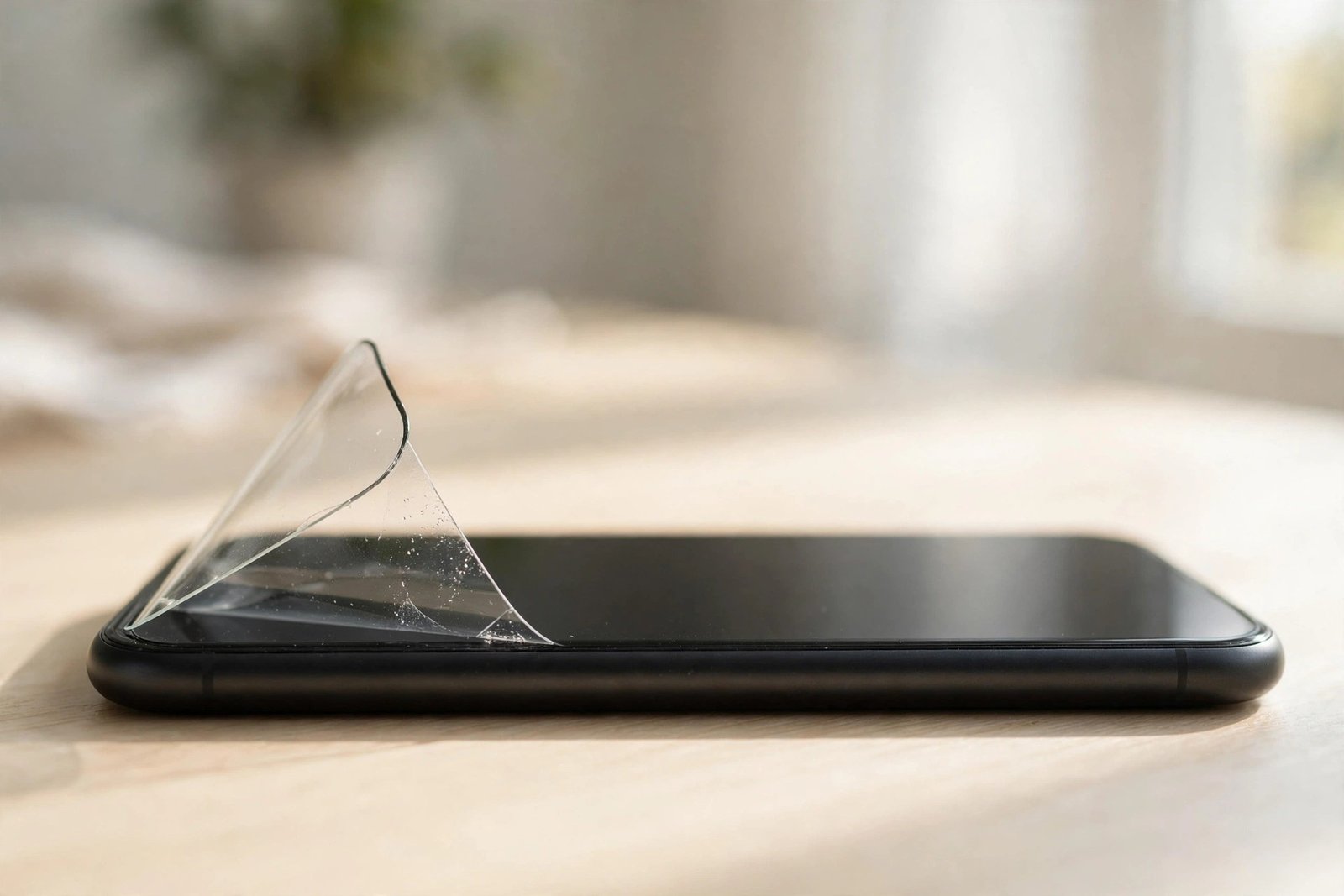
You pressed it down this morning and it sat perfectly flat. By evening, one corner has curled up again, and no amount of thumb pressure makes it stay. If your screen protector keeps lifting, the good news is that it is rarely bad luck — there is almost always a specific, fixable cause behind it.
Lifting edges are the single most common complaint about screen protectors, and they matter more than they look: a raised edge lets dust and grit creep underneath, weakens the adhesive further, and eventually lets the whole protector peel off. This guide walks through the five usual causes — case pressure, a dirty or curved screen, worn adhesive, heat, and a protector that was never quite the right size — and how to fix or prevent each one.
Key Takeaways
- The most common cause is your phone case — a lip that overlaps the protector’s edge slowly prises it up.
- Dust, oil, or screen curvature under the edge prevents a proper seal from the start.
- Adhesive wears out over time, especially with heat from charging, gaming, or a hot car.
- A protector that is even slightly too large or off-centre will lift at the overhanging edge.
- Once an edge has lifted and collected dust, it will not reseal permanently — replacement is usually the honest fix.
Cause 1: Your Case Is Prising the Edge Up
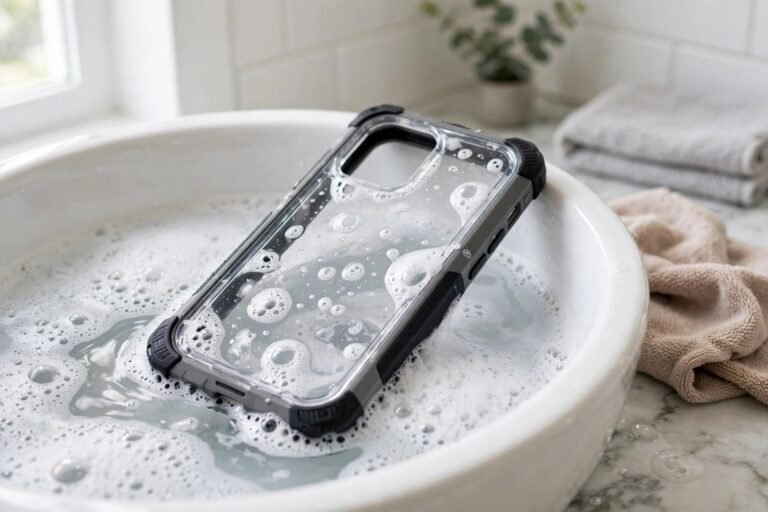
Start here, because this causes most lifting. Many cases have a raised lip that wraps slightly over the front of the phone to protect the screen in a face-down drop. If your protector extends close to the edge of the glass, that lip sits directly on top of the protector’s edge — and every time you put the phone down, squeeze it, or the case flexes, it works the edge upward a fraction of a millimetre.
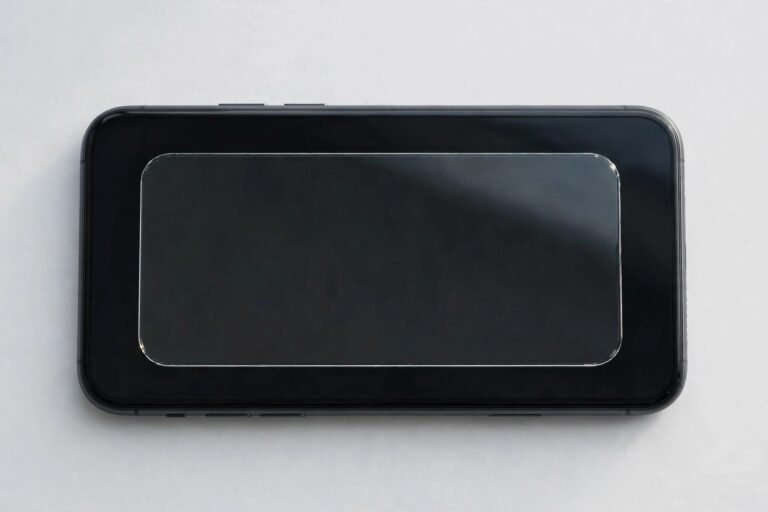
The tell-tale sign is lifting that starts at one corner or one side only, usually within days of fitting a new case. The fix is a case-friendly protector: these are cut slightly smaller on all sides, leaving a small gap between the protector’s edge and the case lip so the two never touch. If your current protector claims full edge-to-edge coverage, that is likely your problem.
Cause 2: The Screen Wasn’t Perfectly Clean or Flat
Adhesive needs a spotless, flat surface. A fingerprint’s worth of skin oil near the edge, a single grain of dust, or residue from an old protector can stop the seal forming properly in that spot — and the weak point becomes where lifting starts. This is why edges often lift within the first 24–48 hours: the bond there was never complete.
Curved screens make this worse. On phones with glass that curves away at the edges, a flat tempered-glass protector can only bond to the flat central area. Cut too wide, its edges hover over the curve with only a weak adhesive ring holding them — the classic halo effect — and they lift at the first knock. For curved screens, choose a protector specifically designed for that model, often a flexible film or a smaller, case-friendly glass cut.
- Before fitting a new protector, wipe the screen’s edges and corners twice — skin oil collects there from handling, and it is exactly where lifting begins.
- Run a fingernail gently around the bare screen’s edge first. If you feel any rough spot or old adhesive residue, clean it off before the new protector goes anywhere near the phone.
Cause 3: The Adhesive Has Worn Out
Screen protector adhesive is not permanent. Over months of use it gradually loses grip, and heat accelerates the process dramatically. A phone that regularly gets hot — wireless charging, long gaming sessions, navigation on a sunlit dashboard, or simply being left in a warm car — will soften and fatigue the adhesive far sooner than a gently used one.
Lifting from worn adhesive usually appears on an older protector that was fine for months, often along the bottom edge or near the charging port where heat concentrates. There is no way to restore tired adhesive. Pressing the edge down may hold it for an hour, but once the bond has gone, replacement is the only real answer — which is fine, because a protector that has served for many months has done its job.
Cause 4: Wrong Size or Slightly Off-Centre Fit
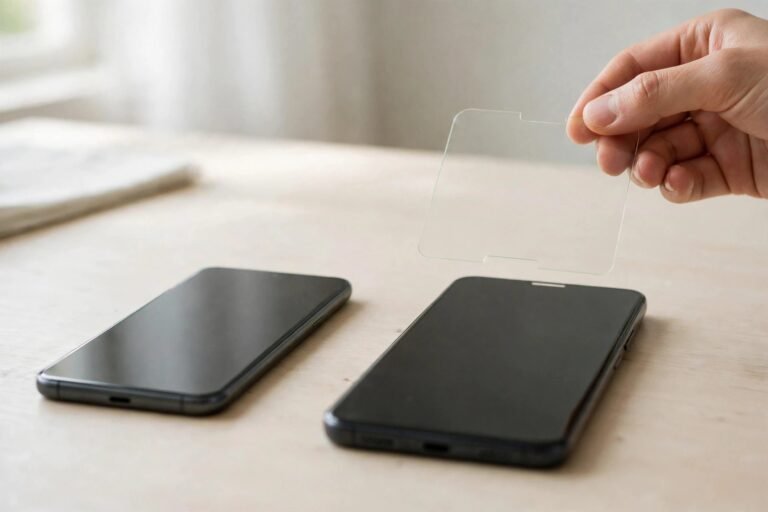
A protector does not have to be the wrong model to fit badly. A generic or “universal fit” protector, or even the correct one installed a millimetre off-centre, can leave one edge sitting on the very rim of the screen glass or overlapping the phone’s frame. That overhanging edge has nothing solid to bond to, catches on pockets and fingers, and lifts first.
This is also why protectors for a similar phone model often disappoint: two models can share a screen size yet differ by a fraction of a millimetre in glass dimensions or corner radius, and that fraction is exactly where the lifting happens. Always buy the protector made for your exact model, and use the alignment frame if one is included — it removes the off-centre problem entirely.
- If one edge has only just started to lift and the area underneath is still clean, you can sometimes save it: press the edge down firmly and hold for 30–60 seconds, then leave the phone case off overnight while the adhesive re-grips.
- If you can see dust or a grey, fuzzy edge under the lifted section, do not bother — the adhesive is contaminated and will never seal again. Replace it.
How to Stop It Happening Next Time
Most lifting is preventable with four habits. Choose a case-friendly protector matched to your exact model. Clean the screen meticulously, paying extra attention to the edges. Let the adhesive cure for at least half an hour — ideally overnight — before snapping on a tight case. And keep the phone out of prolonged heat where you can; if your car gets hot, the phone comes with you.
Finally, set realistic expectations. A screen protector is a consumable: even a perfectly fitted one typically lasts somewhere between a few months and a year or so before edges, scratches, or a crack call time on it. Lifting after long service is not a defect — it is the protector telling you it has finished its shift.
Frequently Asked Questions
Can I glue a lifting screen protector back down?
No — never add glue, tape adhesive, or any other substance under a protector. It can damage the screen’s oleophobic coating, trap dirt against the glass, and make removal messy or risky. If firm pressure and a case-free night do not reseal a clean edge, the protector needs replacing.
Why does only one corner of my protector lift?
A single lifting corner usually means localised pressure or contamination: a case corner pressing on it, a speck of dust sealed under that corner during installation, or the protector was fitted very slightly off-centre so that corner overhangs. Check the case fit first — it is the most common culprit.
Is a lifting protector still protecting my screen?
Partially. The bonded central area still offers scratch and impact protection, but the lifted edge is a weakness: grit works underneath, the loose section can catch and peel the whole protector off, and a drop can flex the raised edge into the screen. Treat lifting as a prompt to replace the protector soon rather than immediately — but do not ignore it for months.
A lifting edge is your protector asking for help. Find the cause — case, cleanliness, heat, or fit — fix that first, and the next protector will stay exactly where you put it.