Glare on your phone screen is the enemy of outdoor readability — and of anyone who’s tried to watch a video on a train with the sun blazing through the window. Matte screen protectors promise to fix that with an anti-glare finish. But what exactly makes a protector “matte”, and what do you give up in return?
This guide explains what a matte screen protector is, how the anti-glare effect works, the real-world benefits, and the trade-offs in clarity you should know about before buying.
Key Takeaways
- Matte protectors use a frosted, micro-textured surface that scatters reflected light instead of mirroring it.
- They dramatically cut glare outdoors and under harsh office lighting, and hide fingerprints far better than glossy glass.
- The trade-off is slightly reduced sharpness and vibrancy — the same scattering that kills glare softens the image a touch.
- The textured surface gives a paper-like feel that’s popular with stylus users and mobile gamers.
- Matte is ideal for outdoor use and bright environments; glossy is better for photo editing and media where colour accuracy matters.
What Makes a Protector “Matte”?
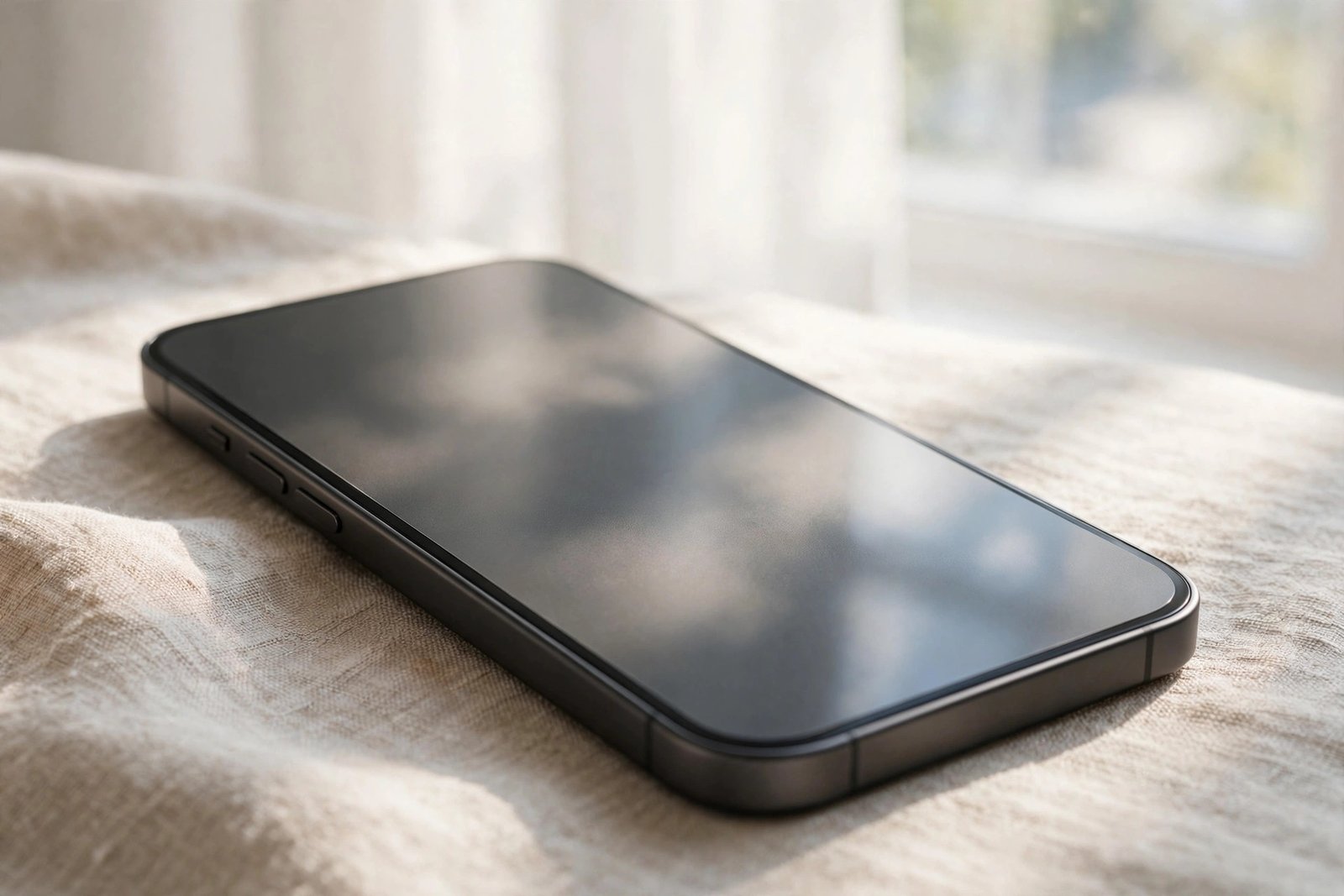
A standard screen protector is glossy: its surface is polished smooth, so it reflects light like a mirror. A matte protector is manufactured with a micro-etched or frosted texture — thousands of tiny surface irregularities, invisible individually, that scatter incoming light in all directions instead of bouncing it straight back at your eyes.
This is the same principle as matte photo paper versus glossy prints. The protector itself is usually PET film or specially etched glass; the “matte” quality is entirely about the surface finish, not the underlying material. You can get matte tempered glass, matte PET, and matte TPU — the anti-glare behaviour is similar across all three.
The Benefits of Going Matte
Glare reduction
This is the headline benefit and it’s substantial. Where a glossy screen turns into a mirror outdoors, a matte protector diffuses reflections into a soft haze, keeping text and images readable in direct sunlight. Office workers under fluorescent panels notice the difference just as much — no more repositioning your phone to dodge ceiling lights.
Fingerprint resistance
The textured surface is dramatically better at hiding fingerprints and smudges than glossy glass. Oils from your fingers settle into the micro-texture instead of forming visible prints. Your screen looks cleaner for longer between wipes — a bigger quality-of-life win than most people expect.
Feel and control
Matte surfaces have a distinctive smooth-but-grippy feel — less slippery than glass, with a slight paper-like drag. Mobile gamers love it because thumbs don’t skid during intense play. Stylus users on tablets prefer it because the pen feels like writing on paper rather than skating on ice.
- Matte protectors pair brilliantly with high screen brightness. The anti-glare scattering costs a little perceived brightness, so bump your brightness up 10–15% outdoors to compensate — modern phones have brightness to spare.
- If you use a stylus, look for matte protectors marketed as “paper-feel” — they’re the same anti-glare texture tuned slightly rougher for the most pen-on-paper sensation.
The Trade-Offs: What You Lose
Slightly softer image
Physics doesn’t give free lunches: the scattering that kills glare also scatters a little of the display’s own light. The result is a very slight softening of sharpness and a small reduction in perceived contrast. On modern high-resolution screens most people stop noticing after a day — but if you’re the type who scrutinises pixel density, you’ll see it.
The “rainbow” or grain effect
On some matte protectors, especially cheaper ones, you may notice a faint sparkly grain or rainbow shimmer on white backgrounds. This is light diffracting through the micro-texture. Quality matte protectors minimise it; bargain ones can make white screens look slightly dirty. It’s the main thing separating good matte from bad.
Reduced oleophobic performance
The textured surface can’t hold an oil-repelling coating as effectively as polished glass. Matte protectors hide fingerprints well, but they can feel slightly less slick over time as skin oils build up in the texture. A quick wipe with a microfibre cloth restores them.
Matte vs Clear: Which Should You Choose?
Choose matte if you use your phone outdoors regularly, work under harsh lighting, game on your phone, use a stylus, or are simply tired of wiping fingerprints off glossy glass. Choose clear/glossy if colour accuracy and maximum sharpness matter to you — photographers, video editors, and anyone who watches a lot of HDR content will prefer the untouched image of glossy glass.
There’s no universally “better” option — it’s an environment and use-case decision. Many people who try matte for outdoor readability end up keeping it permanently for the fingerprint resistance alone, accepting the tiny clarity cost as a fair trade.
Frequently Asked Questions
Do matte screen protectors reduce screen brightness?
Not the actual brightness output, but perceived brightness drops slightly because the texture scatters some light. Raising brightness by 10–15% fully compensates, and outdoors the glare reduction more than makes up for it.
Are matte protectors worse for your eyes?
No — if anything, the opposite. By cutting harsh reflections, matte protectors reduce eye strain in bright environments. The slight image softening doesn’t harm your eyes; squinting at glare does.
Can I get a matte tempered glass protector, or only film?
Both exist. Matte tempered glass is chemically etched and offers the best combination of anti-glare plus drop protection. Matte PET film is cheaper and thinner but offers less impact resistance. Either delivers the anti-glare effect.
Will a matte protector affect my fingerprint sensor?
Generally no more than a glossy protector of the same thickness. The texture is on the outer surface; the sensor reads through the material underneath. Re-register your fingerprints after installing any new protector, matte or not.
Matte is the practical person’s finish: a small, honest trade of ultimate sharpness for a screen you can actually see in sunlight and rarely need to wipe. For most daily use, that’s a trade worth making.