If you’ve been shopping for screen protection lately, you’ve probably noticed a third option sitting next to the familiar tempered glass and PET film: hydrogel. It sounds high-tech, but the idea is beautifully simple. A hydrogel screen protector is a soft, flexible plastic film that smooths over its own minor scratches. Instead of cracking when life gets rough, it bends, absorbs the abuse, and quietly repairs itself.
Hydrogel films rose to popularity as phones grew curved edges and foldable displays that rigid glass simply can’t wrap around. But even on perfectly flat screens, plenty of people prefer them. Here’s everything worth knowing before you buy one.
Key Takeaways
- Hydrogel is a soft TPU-based film, not glass — flexible, thin, and self-healing.
- It heals minor scratches on its own, usually within a few hours, as the soft polymer settles back into place.
- It won’t crack or shatter, making it ideal for curved, edge-to-edge, and foldable screens.
- It offers less impact protection than tempered glass — it guards against scratches, not hard drops.
- Most hydrogel films are applied wet and need 24–48 hours to fully cure and bond.
- Touch and fingerprint sensors generally work well through hydrogel film.
What Hydrogel Actually Is
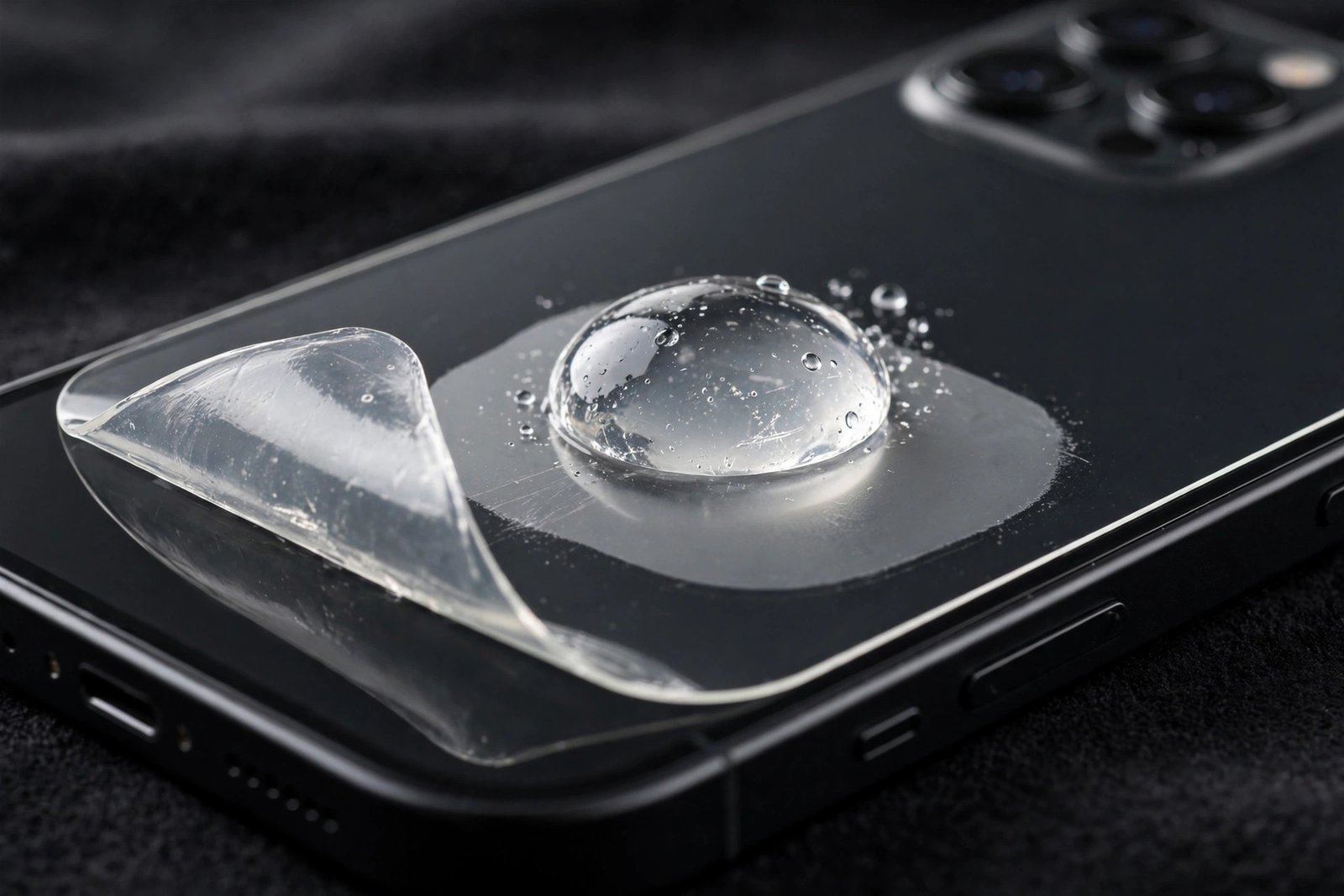
Despite the name, there’s no actual gel involved. “Hydrogel” screen protectors are made from a soft thermoplastic polyurethane (TPU) — the same family of flexible plastics used in phone cases and car paint-protection films. The material arrives as a thin, slightly rubbery sheet, usually somewhere between a PET film and tempered glass in thickness, with a self-healing top coating.
That self-healing layer is the whole point. The polymer is soft enough that at normal room temperature its molecules slowly flow back into place, closing up light scratches and scuffs over the course of a few hours. It won’t fix a deep gouge or a cut made by something sharp — but the everyday micro-scratches from keys, coins, and sliding across a desk gradually fade away on their own.
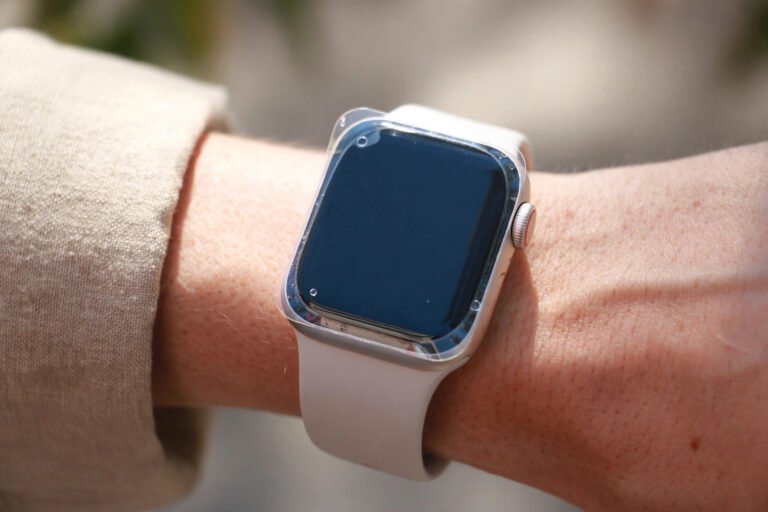
Its flexibility lets it cover curved edges and wrap fully edge-to-edge — the reason it became the go-to for waterfall displays and folding screens: it goes where glass can’t.
- If your phone has a curved or wraparound display and tempered glass keeps lifting at the edges, hydrogel film is usually the fix — its flexibility lets it bond to the curve instead of bridging over it.
- Look for hydrogel films marketed as having an oleophobic (oil-repelling) coating; they resist fingerprints far better than basic versions.
How Self-Healing Works
The healing isn’t magic — it’s soft chemistry. The TPU’s polymer chains are loosely linked, so when a scratch displaces them, they gradually relax back into place. Gentle warmth speeds this up, which is why marks often vanish faster after time in a warm pocket.
It’s important to keep expectations realistic. The healing handles hairline scratches and surface scuffs — the kind you’d need to tilt under a light to notice. A key dragged hard across the film or a deep score from something sharp will leave a permanent mark. Think of it as maintenance-free tidiness, not invulnerability.
Hydrogel vs Tempered Glass vs PET Film
Choosing between the three comes down to what you’re actually protecting against. Here’s how they compare on the things that matter day to day.
Feel and clarity
Hydrogel feels smooth but slightly soft — not the slick hardness of glass, but nicer than plasticky PET film. Clarity is excellent on quality films, with barely any effect on brightness or colour. Cheaper hydrogel can show a faint “orange peel” texture at an angle, so buy from a reputable maker.
Scratch and impact protection
For scratches, hydrogel punches above its weight: light marks heal themselves, while tempered glass keeps every scratch it earns (though it’s harder to scratch in the first place). For impacts, the order reverses. Tempered glass is a sacrificial shield — it cracks to absorb the energy of a drop so your screen doesn’t have to. Hydrogel has no such trick; it will cushion a light knock, but a hard face-down drop is mostly on your phone’s own glass.
Coverage and compatibility
This is hydrogel’s home turf. It wraps curved edges, covers folding screens, and sits edge-to-edge without the lifting or “halo” gaps that plague rigid glass on curved phones. It’s also thin enough that in-display fingerprint sensors usually read through it with no fuss — though registering your fingerprint after applying the film gives the best results.
Lifespan and price
Hydrogel typically costs about the same as a mid-range tempered glass protector and lasts six months to a year with normal use. The self-healing keeps it looking fresh longer than PET film, but the soft surface eventually picks up permanent marks, and the edges can start to lift or collect grime. Tempered glass often lasts longer — until it cracks, at least.
Who Hydrogel Suits (and Who Should Skip It)
Hydrogel suits curved, edge-to-edge, or foldable displays, anyone tired of cracked glass, and devices where pocket scratches — not drops — are the main threat. It’s also a fine pick for desk-bound tablets.
Skip it if you’re clumsy with drops, work on building sites, or hand your phone to small children regularly. In those cases, tempered glass — ideally paired with a decent case — is simply the safer bet. The sacrificial crack that annoys you is the same crack that saved your screen.
- Many people run hydrogel on the front and tempered glass nowhere — but there’s no rule against mixing: some users put hydrogel on a curved phone screen and rely on a rugged case for drop protection.
- If you game a lot, note that some hydrogel films create slightly more finger drag than glass; look for “matte gaming” hydrogel variants designed for low friction.
Installing and Caring for Hydrogel Film
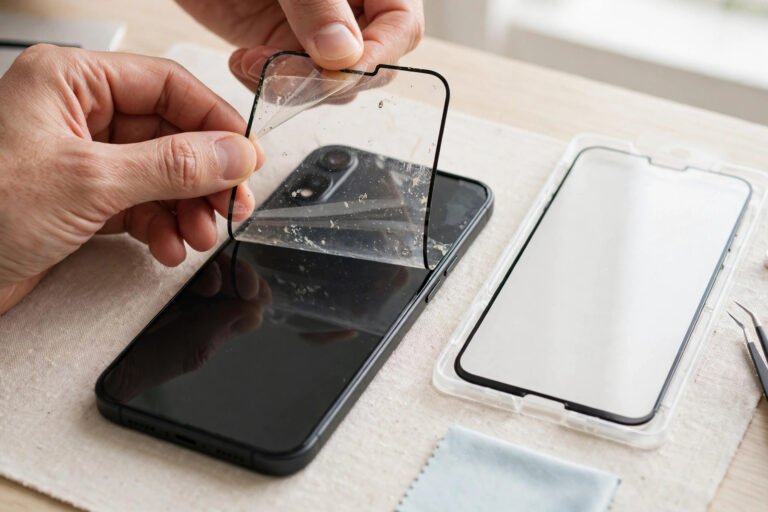
Most hydrogel protectors use a wet installation: you mist the screen (and sometimes the film) with the included spray solution, position the film, then squeegee the liquid out from the centre toward the edges. It feels messier than dropping on a glass protector, but the wet layer lets you slide the film into perfect alignment — a genuine advantage.
After installation, leave it alone for 24–48 hours. Small bubbles and slight cloudiness are normal and clear as the moisture evaporates. Go easy on the fingerprint sensor during this window. Once cured, a damp microfibre cloth is all the maintenance it needs — replace the film when edges lift permanently or scratches stop healing.
Frequently Asked Questions
Is hydrogel better than tempered glass?
Neither is universally better. Hydrogel wins on curved screens, self-healing scratches, and never shattering; tempered glass wins on drop protection, hardness, and feel. Choose based on whether scratches or drops worry you more.
Will it work with my in-display fingerprint sensor?
Usually, yes — optical and ultrasonic sensors generally read through thin hydrogel without trouble. For best results, re-register your fingerprints after the film has fully cured (48 hours), and enable any “touch sensitivity” setting if recognition feels sluggish.
How long does a hydrogel protector last?
Expect six to twelve months of normal use. Self-healing keeps it looking new far longer than plain PET film, but deep scratches accumulate and edges may lift over time — especially if your case rubs them. Replace it when lifting or permanent marks bother you.
Can I use hydrogel on a foldable phone?
Yes — this is one of hydrogel’s standout uses. Rigid glass can’t bend with a folding display, but flexible hydrogel film folds right along with it. Many foldable phones actually ship with a factory-fitted flexible film for exactly this reason; never peel that factory layer off, as it’s part of the display assembly.
Hydrogel won’t save your phone from a concrete drop — but for scratches, curved screens, and anyone tired of staring at cracked glass, its self-healing flexibility is genuinely hard to beat.