Apple describes the iPhone 14’s Ceramic Shield front as tougher than any smartphone glass — and for once, the marketing has substance. Drop an iPhone 14 and it stands a genuinely good chance of walking away unscathed. Which raises the obvious question from owners: does it still need a screen protector?
The short answer is yes, for most people — but not for the reason you might expect. Ceramic Shield is a specialist: superb against the drops it was designed for, ordinary against the quiet, everyday enemy that actually marks most screens. Here is the full picture for this model.
Key Takeaways
- Ceramic Shield gives the iPhone 14 class-leading shatter resistance — drops are the threat it handles best.
- Its scratch resistance is no better than conventional phone glass: sand, grit and hard particles will still mark it.
- An out-of-warranty iPhone 14 screen replacement costs several hundred pounds; a good protector costs a few pounds.
- The iPhone 14’s flat display makes protectors easy to fit perfectly — no curved-edge lifting, full adhesive contact.
- Most iPhone 14 owners should fit one; only careful owners with AppleCare+ can reasonably go without.
What Ceramic Shield Actually Does
Ceramic Shield is glass with ceramic nano-crystals grown inside its matrix, introduced with the iPhone 12 and carried through the iPhone 14. The crystals make the material harder to fracture: when the phone lands on a corner or face-down on concrete, the structure resists the crack formation that turns a drop into a repair bill. Apple claimed four times better drop performance when the technology launched, and independent drop testing has broadly supported the idea that these phones survive falls that would have shattered their predecessors.
This is a real advance, and it changes the risk calculation — the single most catastrophic screen event, shattering in a drop, is now significantly less likely. But shattering was never the only way screens get damaged, and it is not the most common one.
The Scratch Problem Nobody Advertises
Ceramic crystals improve toughness — resistance to cracking — without meaningfully increasing hardness, the property that resists scratching. On the Mohs scale the iPhone 14’s front glass behaves like other premium phone glass, around 6 to 7, which means materials at 7 and above cut into it. Quartz is 7, and quartz is everywhere: sand at the beach, grit in pockets and bags, dust on workshop benches, even particles embedded in cleaning cloths.
The result is familiar to owners of every recent iPhone generation: a screen that never cracks but accumulates a constellation of fine scratches and micro-marks, visible whenever light rakes across it. Alongside that, the factory oleophobic coating — the layer that makes the glass feel slick and resist fingerprints — wears away with use. A protector takes both the scratches and the coating wear on itself, and can be swapped for a fresh one in minutes.
- Be especially careful after the beach or a day outdoors. A quick wipe of the screen with a sleeve feels harmless, but if grit is on the glass, wiping grinds it across the surface. Shake and blow loose particles off first, then wipe.
What a Replacement Screen Costs
If the worst does happen, an out-of-warranty screen replacement for the iPhone 14 at Apple runs to several hundred pounds — before you count the time without the phone. Third-party repairs can be cheaper, but may affect True Tone calibration and water resistance, and the parts pairing on recent iPhones means some functions behave best with genuine components. AppleCare+ reduces the excess to a modest fee, which is precisely why AppleCare+ owners are the exception in this guide: their risk is already bought down.
Set against that, a quality tempered glass protector for the iPhone 14 costs a few pounds in a multi-pack. The protector does not need to save the screen from a dramatic drop to be worth it — preventing two years of scratch accumulation, and preserving the phone’s resale value, justifies it on its own.
Why the iPhone 14 Is an Easy Phone to Protect
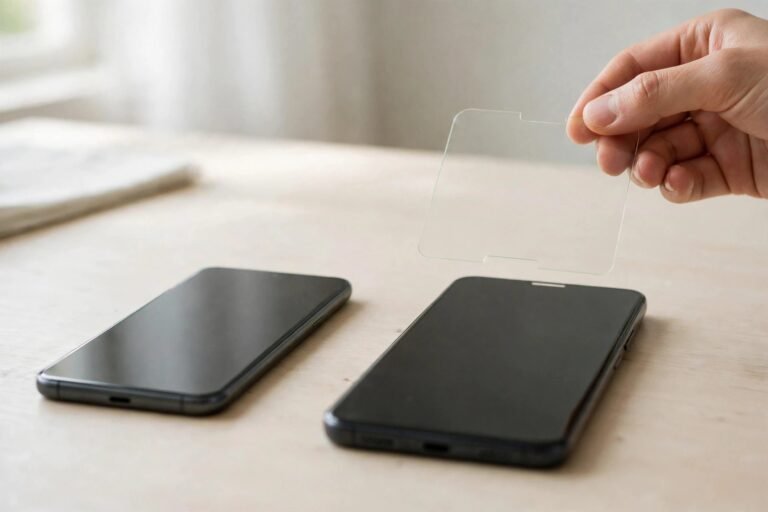
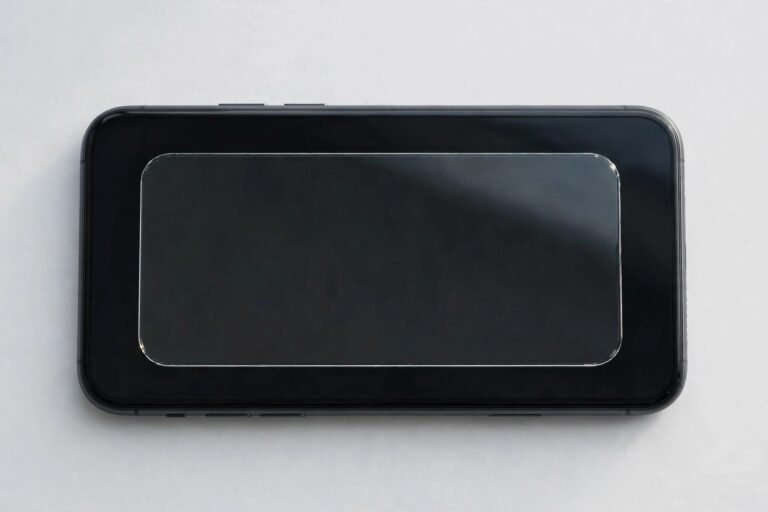
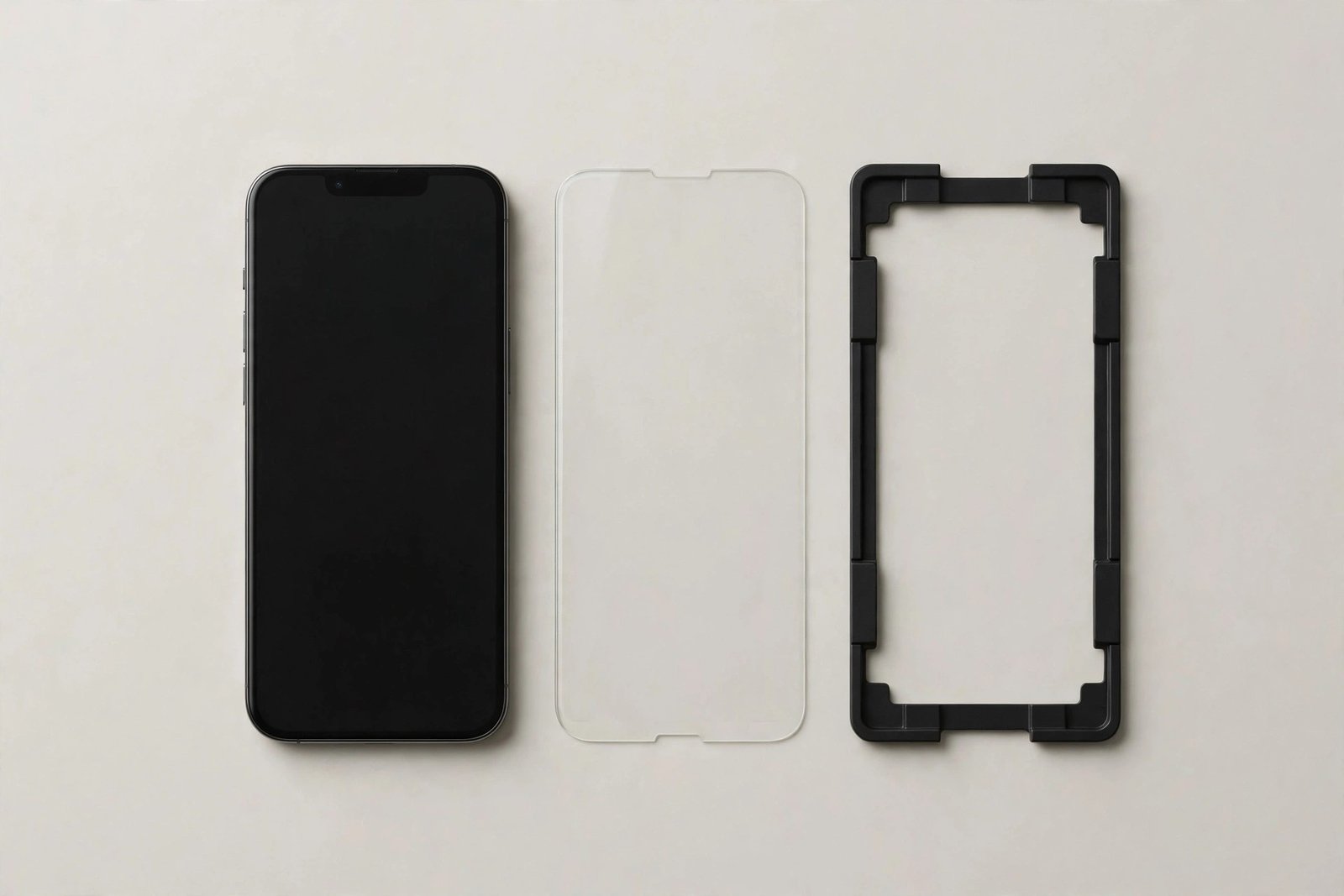
Some phones fight their protectors; the iPhone 14 is not one of them. Its display is completely flat — no curved edges for glass to lift from — so a tempered glass protector adheres fully across its surface with no halo at the borders. Protectors for this model are a mature, standardised product: alignment frames are common, case-friendly cuts leave room for case lips, and the notch cutout leaves the TrueDepth camera system entirely clear, so Face ID works exactly as before.
Touch sensitivity is unaffected by quality glass, the front camera takes unobstructed selfies through the cutout, and MagSafe cases and chargers neither know nor care that a protector is fitted. In other words, the usual compromises people cite against protectors are at their smallest on this model.
- Choose a “case-friendly” cut if you use a protective case — it leaves a hair’s breadth of clearance so the case lip can’t lever the protector’s edge up over time.
Who Can Skip It — Honestly
There is a defensible bare-screen minority: owners with AppleCare+ who would pay only a small excess for a replacement; the exceptionally careful, whose phones live in soft pockets and never meet sand; and those planning to trade the phone in within a year regardless of condition. If that is genuinely you, the expected cost of going bare is small, and you get the screen exactly as Apple made it. Everyone else is relying on toughness against the one threat — scratching — that this glass was never improved against.
Frequently Asked Questions
Doesn’t Ceramic Shield make a screen protector pointless?
No. Ceramic Shield targets shattering from drops; it does not improve scratch resistance. A protector’s main job on an iPhone 14 is stopping the scratches and coating wear that Ceramic Shield does nothing about — plus adding a sacrificial layer for the drops that do go wrong.
Will a screen protector affect Face ID on the iPhone 14?
Not when it is the correct model with a proper notch cutout. The TrueDepth system sits in the notch and needs an unobstructed view; quality iPhone 14 protectors are cut precisely around it. If Face ID becomes unreliable after fitting, the protector is misaligned or the wrong model.
Tempered glass or film for the iPhone 14?
Tempered glass for most owners: it feels like the original screen, adds a measure of impact absorption, and the flat display makes it easy to fit. Film is thinner and cheaper but is scratch protection only, and shows wear sooner.
Ceramic Shield made the iPhone 14 hard to break — it did not make it hard to scratch. A few pounds of tempered glass covers the gap in its armour, and on this phone, fitting it perfectly is the easiest it has ever been.