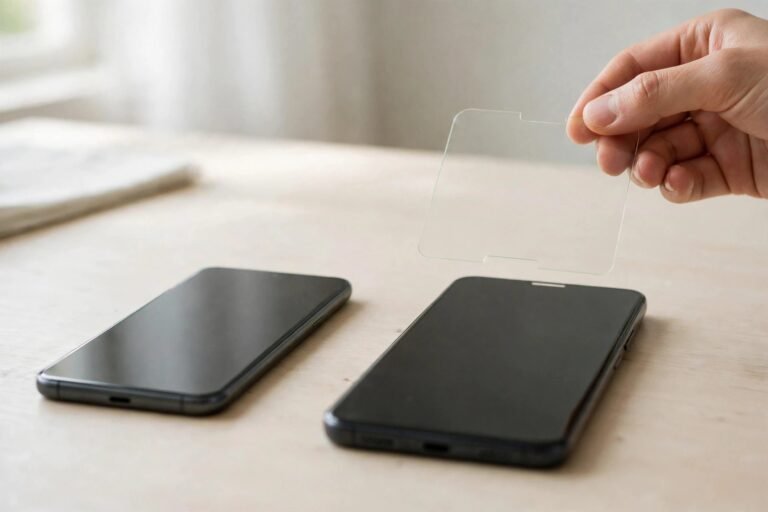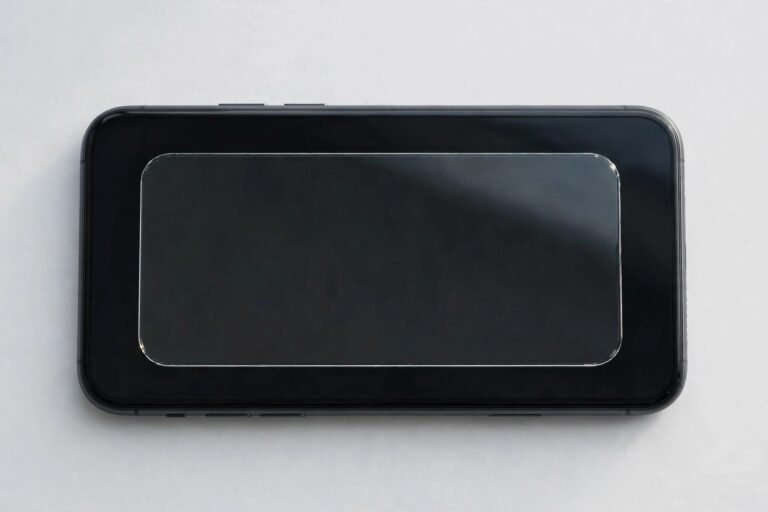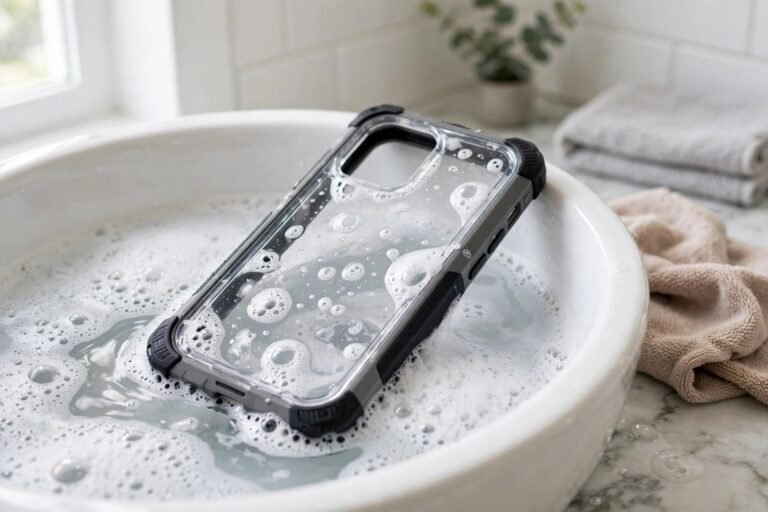
Your screen protector is covered in fingerprints, pocket grime, and a faint sticky film that no amount of wiping on your shirt seems to shift. The obvious question follows: can you just take it off and wash it properly — soap, water, the works? The answer depends entirely on what your protector is made of, because water is a friend to some materials and a quiet enemy to others.
This guide explains which protectors you can safely rinse, how to wash the sticky side without ruining it, and the drying technique that decides whether you end up with a clean protector — or one full of trapped dust.
Key Takeaways
- Film and TPU protectors can usually be rinsed under water without harm — their adhesive is designed to be washed and reapplied.
- Tempered glass protectors are riskier to wash: water can creep under the adhesive layer and weaken the bond permanently.
- Use distilled water if you can — tap water leaves mineral spots that show up as cloudy marks.
- Drying matters more than washing: most failed washes are actually failed dries, with dust settling on the wet adhesive.
- If a glass protector is old, hazy, or lifting, washing is rarely worth it — a fresh protector costs little and bonds better.
It Depends on the Material
Screen protectors fall into two camps. PET film and TPU protectors use a silicone-based adhesive that is famously forgiving — many are even marketed as washable, because the sticky layer can be rinsed clean of dust and fingerprints and will re-stick once dry. If you peel a film protector off and it has picked up pocket lint, a rinse genuinely restores it.
Tempered glass is a different story. The glass itself does not care about water, but the adhesive layer underneath is a thin, precisely applied coating. Flooding it with water — especially warm water or water with detergent — can soften the adhesive, let moisture wick in from the edges, and leave the protector unable to bond evenly again. Many people have washed a glass protector, dried it beautifully, and watched it refuse to stick flat ever after. It is not impossible, but it is a gamble.
How to Wash the Sticky Side Safely
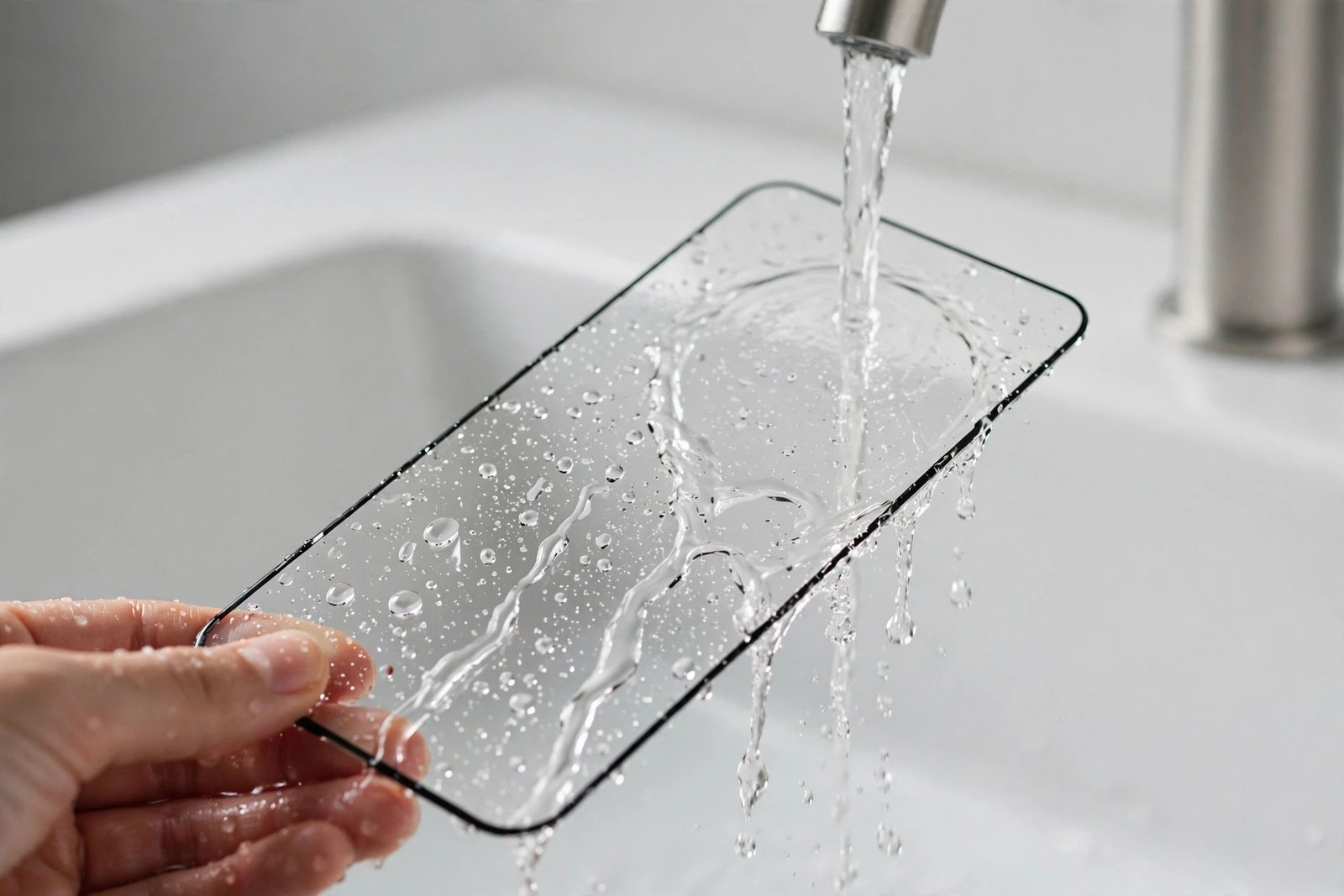
If you decide to wash — film protector, or a glass one you are prepared to risk — the technique is gentle and deliberate. Peel the protector off slowly, holding it by the edges, and take it straight to a clean sink. Run lukewarm distilled water over the sticky side and use your clean fingertips, never a sponge or brush, to ease off grime. The adhesive clings to dust with surprising strength, so most dirt lifts away with water alone.
A single tiny drop of mild washing-up liquid can help with greasy residue on film protectors, but rinse far longer than feels necessary afterwards — any soap film left behind will show as rainbow smears and interfere with re-sticking. Never use alcohol, glass cleaner, or solvents on the adhesive side: they attack the sticky layer itself, not just the dirt on it.
- Wash in a steamy bathroom with the shower run hot for a few minutes first. The humidity pulls dust out of the air, which matters enormously in the next step — drying a sticky protector in dusty air undoes the whole wash.
Drying Without Inviting Dust Back
Here is where most washes fail. A wet, sticky surface is a dust magnet: every second it sits exposed, it collects the very particles you just rinsed away. Shake off the excess water, then pat the non-sticky side dry with a microfibre cloth. For the sticky side, let it air-dry face-up in your steamed bathroom, or hold the protector by its edges and let gravity do the work. Do not wipe the adhesive with a cloth — fibres transfer, and a fibre under a protector is permanent.
Work quickly once it is dry. The longer a clean protector waits, the more dust it gathers. Have the phone screen already cleaned and ready — wet wipe, dry cloth, dust sticker — before the protector finishes drying, so reapplication happens in one smooth sequence. If a speck does land on the adhesive, lift it off with a dust-removal sticker rather than your fingers.
When Washing Isn’t Worth It
Be honest about what you are rescuing. A protector that is scratched, yellowed, hazy, or lifting at the edges will still be all of those things after a wash — washing removes dirt, not wear. The same goes for a protector you have already peeled and reapplied several times: each cycle weakens the adhesive and adds micro-dust that no rinse fully clears.
Tempered glass protectors in particular are cheap, often sold in multi-packs, and perform best on their first application. If yours is more than a few months old, replacing it gives you a fresh oleophobic coating, full-strength adhesive, and a flawless surface — none of which washing can restore. Save the wash technique for film protectors and for a good glass protector that is merely dusty, not worn out.
- Before washing, photograph the protector’s position on the screen. Realignment is the second-hardest part of reapplying a washed protector, and a reference photo of the cutouts and margins saves several frustrating attempts.
Frequently Asked Questions
Can I wash a tempered glass screen protector?
You can, but it is a risk. Water can work under the adhesive layer and stop the protector bonding flat again. If the protector is fairly new and only dusty, a gentle distilled-water rinse may save it — but go in knowing a replacement might still be needed.
Will washing remove the stickiness?
Done gently, no — washing removes the dust that was blocking the stickiness, which is the whole point. Aggressive scrubbing, hot water, soap residue, or solvents are what damage adhesive. Lukewarm water and fingertips preserve it.
How do I stop dust getting on it while it dries?
Dry it in a steamed bathroom, keep the drying time short, and reapply immediately onto a pre-cleaned screen. Speed and humid, settled air are your two defences — a protector left drying on a kitchen counter for ten minutes will need washing all over again.
A washable protector is a renewable one — treat the adhesive gently, dry it in clean air, and film and TPU will reward you with a second, third, and fourth life.