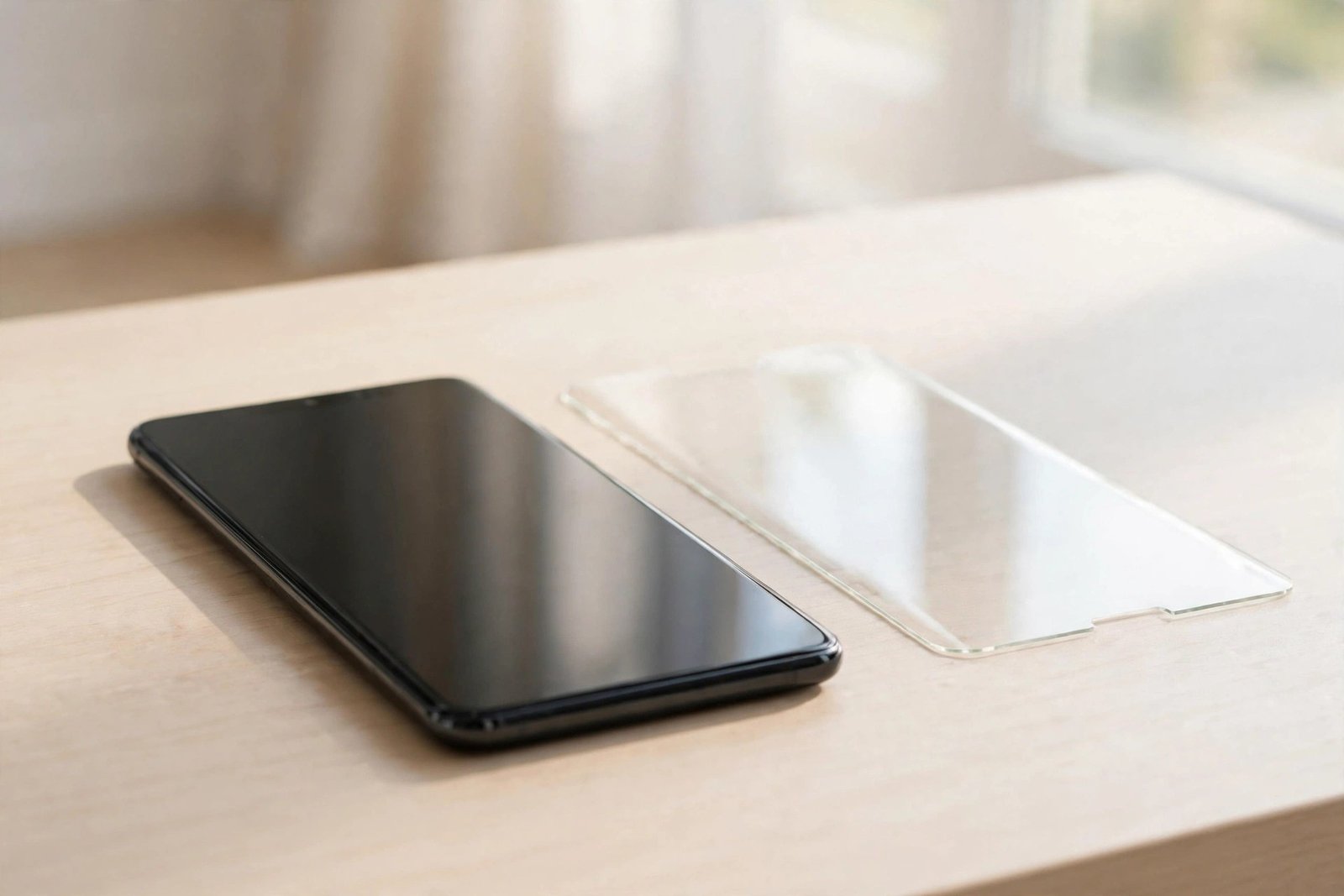
Pick up a phone fitted with a mirror screen protector and, with the display asleep, you are not looking at a phone at all — you are looking at your own reflection. Mirror protectors are tempered glass or film with a reflective coating that turns the front of your phone into a small mirror whenever the screen is dark, then lets the display shine through when it wakes.
They are part screen protection, part fashion accessory, and they come with real trade-offs that glossy product photos rarely mention. This guide explains how the mirror effect works, what it costs you in brightness and clarity, and how it differs from a true privacy protector — so you know exactly what you are getting before you fit one.
Key Takeaways
- A mirror protector has a reflective coating: with the screen off it behaves like a mirror; with the screen on, the display shows through.
- The display is dimmer and slightly less sharp through the coating — you will usually need to raise the brightness.
- Outdoor readability suffers most: bright surroundings can wash the screen out or turn it back into a mirror.
- It is not a true privacy protector — it does not narrow the viewing angle, so people beside you can still read a lit screen.
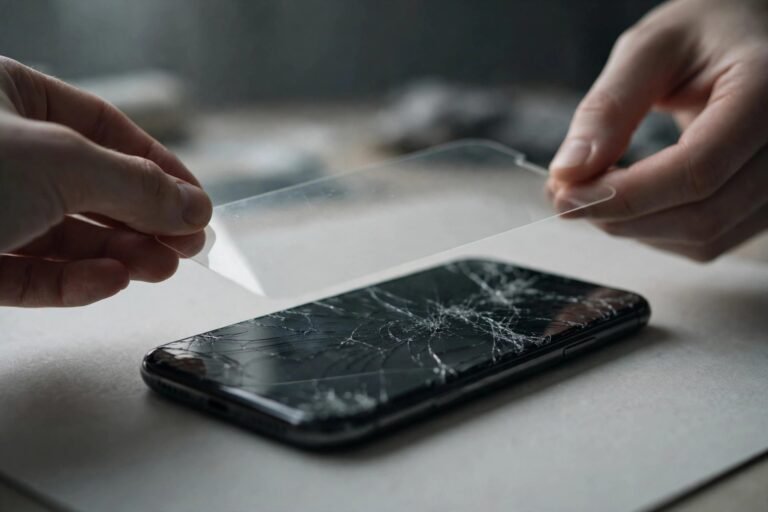
- As physical protection it behaves much like ordinary tempered glass, guarding against scratches and minor knocks.
- Best thought of as a style accessory with protection included, rather than the other way round.
How a Mirror Screen Protector Works
The effect relies on a very thin, semi-reflective metallic coating bonded to the glass or film. It works on the same principle as a two-way mirror: the coating reflects a good portion of the light hitting it while still letting some light pass through. Whichever side is brighter wins. With your phone’s screen off, the room around you is far brighter than the dark display behind the coating, so the surface reflects your surroundings — and your face — like a mirror.
Wake the phone and the balance flips. The display is now the brightest thing in the stack, and its light passes through the coating to your eyes, so your apps and messages appear as normal — almost. Because the coating always reflects some light and absorbs some of what passes, the image you see is never quite as bright or punchy as it would be through clear glass. The mirror never fully disappears either; in darker rooms you may notice a faint reflection of yourself hovering over dark scenes and videos.
The Trade-Offs: Brightness, Clarity and Touch
The biggest cost is brightness. Depending on the coating, a noticeable share of your screen’s light never reaches you, so most mirror protector owners end up running the brightness higher — which in turn drains the battery faster. Sharpness takes a smaller hit: text stays readable, but fine detail and contrast are slightly softened, and colours can look a touch muted. If you edit photos on your phone or care about accurate colour, this is not the protector for you.
Sunlight is the mirror protector’s worst enemy. Outdoors, the ambient light bouncing off the coating competes with your screen, and the mirror effect can return even while the display is on — leaving you shading the phone with your hand to read a map. Touch sensitivity is usually close to normal with well-made versions, though the extra coating can make the surface feel slightly different under a fingertip, and some in-display fingerprint sensors may struggle through certain coated glass; results vary by phone model and protector.
- Before committing, test the effect cheaply: turn your brightness to the level you normally use outdoors and imagine it noticeably dimmer. If you already run your screen near maximum brightness, a mirror protector will frustrate you.
Mirror Protector vs Privacy Protector: Not the Same Thing
Mirror protectors are often sold with privacy language, but the two technologies work differently. A genuine privacy protector uses a filter that narrows the viewing angle: the screen looks normal from directly in front and darkens to black from the sides, so a stranger on a train cannot read over your shoulder. A mirror protector does nothing to the viewing angle. Anyone looking at your lit phone from the front or side sees what you see — just a bit dimmer.
Where the mirror does help privacy is only when the screen is off or very dark: a sleeping phone shows a reflection rather than a tell-tale dark rectangle of notifications. That is a modest benefit at best. If your real concern is shoulder-surfing on public transport or in the office, choose a proper privacy protector and accept its own brightness trade-off; if your real desire is a phone that doubles as a pocket mirror, the mirror finish is the honest choice.
Who Mirror Protectors Suit — and Who Should Avoid Them
The natural audience is anyone who enjoys the look and the convenience: a quick hair or make-up check without opening the camera app, a distinctive mirror finish that stands out from every other black slab, and perfectly decent scratch protection underneath it all. For indoor, everyday use — messaging, social feeds, music — the dimmer display is a compromise many owners happily accept.
Avoid one if you spend a lot of time outdoors, rely on your phone for navigation in daylight, shoot and review photos, or already find your screen hard to read. Gamers and heavy video watchers may also find the faint reflections in dark scenes distracting. In short, it is a novelty finish with genuine protective ability — buy it for the mirror, tolerate it for the screen, and you will get along fine.
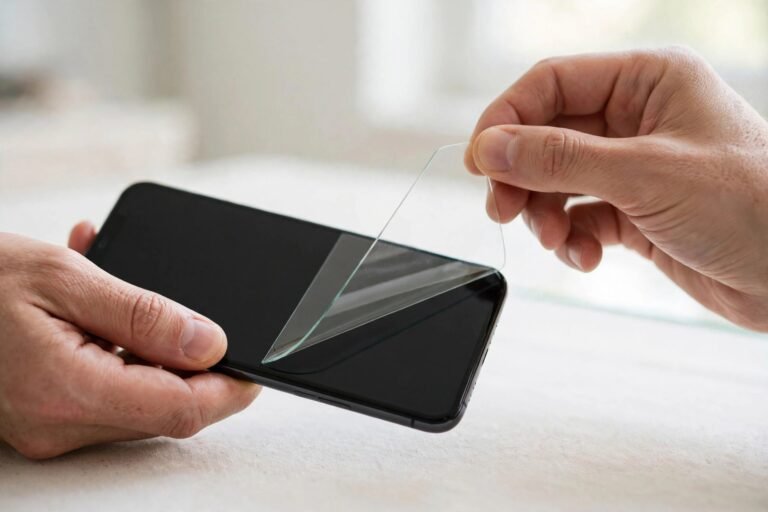
- Fit a mirror protector in a brightly lit room and check it at several angles before pressing the edges down. The reflective finish exaggerates trapped dust and bubbles — every speck shows as a bright dot in the mirror — so the dust-free fitting routine matters even more than usual.
Frequently Asked Questions
Can other people see my screen through a mirror protector?
Yes, when the screen is lit — from most angles, your display is visible to anyone nearby, just dimmer than usual. The mirror effect only hides the screen when it is off or very dark, which is why a mirror protector should not be relied on for privacy.
Does a mirror protector work with Face ID and fingerprint unlock?
Usually, provided the protector is made for your phone model with the correct cut-outs or sensor-friendly areas. Some in-display fingerprint sensors can be less reliable through coated or thicker glass, and results vary — if unlocking becomes inconsistent, the protector is the first thing to suspect.
Will a mirror protector drain my battery faster?
Indirectly, yes. The protector itself uses no power, but because it dims the display, most people turn the brightness up to compensate — and screen brightness is one of the biggest battery draws on any phone. The effect is modest indoors and more noticeable if you are outdoors a lot.
A mirror protector is a statement piece that happens to protect: your phone becomes a pocket mirror with a dimmer, moodier screen attached. Love the look and accept the trade-offs, and it is a perfectly enjoyable way to keep scratches at bay.