It goes on as an invisible wipe, it promises hardness and shine, and then — for one reason or another — you want it gone. Maybe the application came out uneven. Maybe you are fitting tempered glass instead, trading the phone in, or you simply do not like the feel. So, can a liquid screen protector be removed? The honest answer is: not in the way you are imagining. There is no layer to peel, no edge to lift, and no solvent that lifts it off.
That is not the dead end it sounds like. This guide explains what a liquid protector actually is once cured, how it does eventually disappear, what polishing can and cannot do, and — importantly — why most of the reasons people want it removed turn out not to require removing it at all.
Key Takeaways
- A cured liquid protector cannot be peeled or washed off — it bonds to the glass at a molecular level and is only a few nanometres thick.
- It removes itself: everyday friction and cleaning wear it away gradually, typically over 6 to 12 months.
- Polishing can strip it sooner, but polishing also removes the factory oleophobic coating and risks micro-scratching — it is not a sensible DIY job.
- Alcohol, solvents, and scrubbing do not dissolve a cured silica coating; they mainly damage the surface treatments you want to keep.
- You do not need to remove it before fitting tempered glass — glass adheres perfectly well over a cured coating.
Why There Is Nothing to Peel
A liquid screen protector is not a sheet of anything. It is a silicon-dioxide (SiO₂) nano coating: you wipe it on as a liquid, it spreads into the microscopic pores and texture of the glass surface, and it cures into a bonded layer measured in nanometres — thousands of times thinner than a film protector. There is no film, no adhesive layer, and no edge anywhere. It is better understood as a surface treatment of the glass itself than as something sitting on top of it.
That is why every removal instinct fails. Peeling needs a layer. Dissolving needs a solvent the cured silica is vulnerable to, and there is not one on a bathroom shelf — cured SiO₂ is chemically much the same family as glass itself. Anything aggressive enough to attack it is aggressive enough to attack the screen’s own surface.
How It Actually Comes Off: Wear
The coating leaves the same way it would even if you loved it: gradually, through use. Every swipe of a thumb, every slide in and out of a pocket, every wipe with a cloth abrades it microscopically. Manufacturers know this — it is precisely why they recommend reapplying every 6 to 12 months. A coating that is never topped up fades unevenly and is effectively gone within roughly a year of normal use, leaving the original glass surface exactly as it was.
So if your goal is simply “eventually, no coating”, time and normal handling achieve it with zero risk. Clean the screen as you ordinarily would, use the phone, and let friction do the work. There is no shortcut that is both faster and safe — only faster and risky.
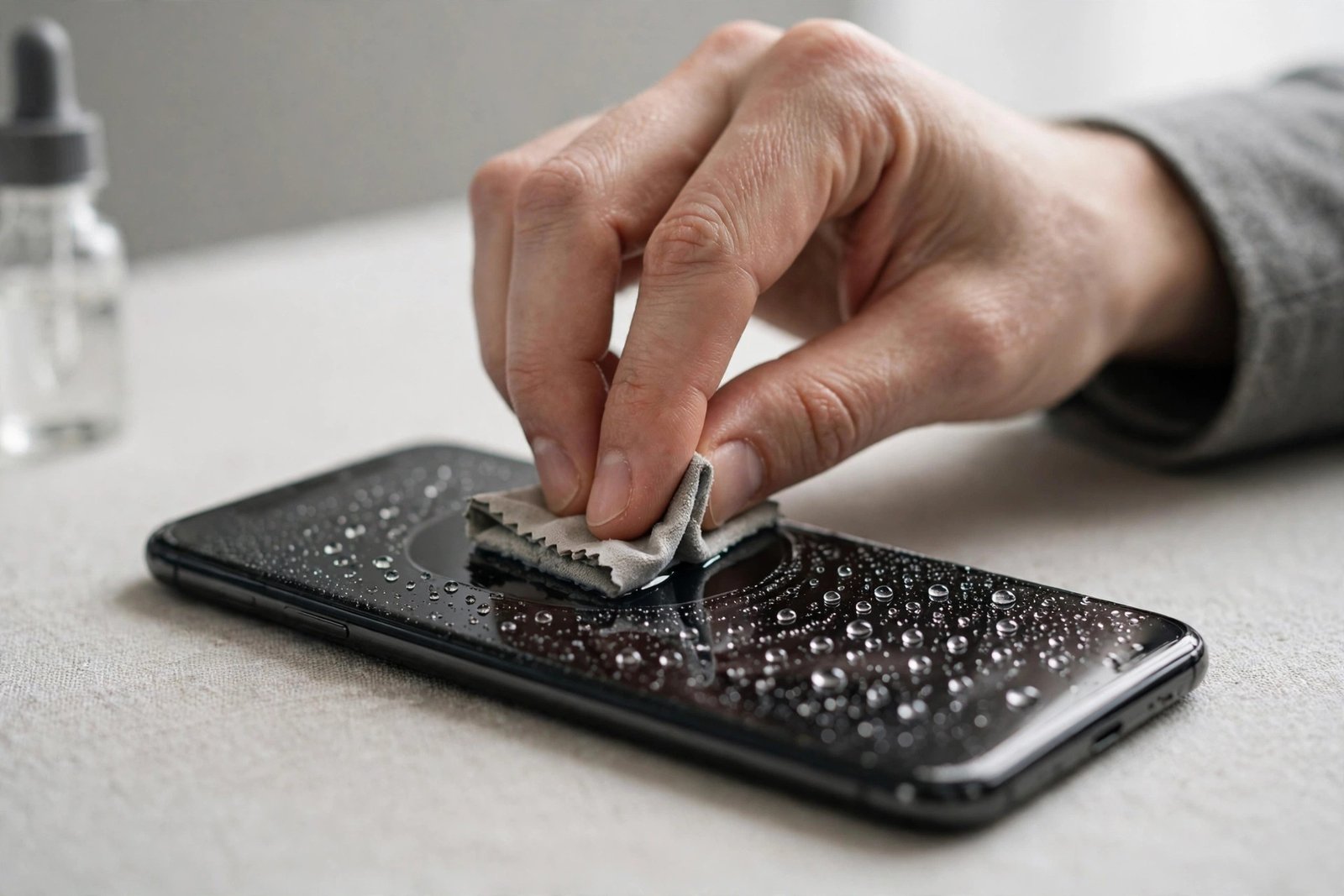
- Want the coating gone a little sooner without chemicals? Regular cleaning with a plain microfibre cloth is the gentlest accelerator there is — each wipe takes a microscopic amount of coating with it. Slow, but the screen underneath is never at risk.
Can Polishing Remove It?
In principle, yes — and in practice, think carefully. Glass polishing compounds such as cerium oxide remove material from the surface, so a thorough polish would take the nano coating off. But it cannot take only the coating. It will also strip the screen’s factory oleophobic coating — the treatment that makes the glass feel slick and resist fingerprints — leaving a surface that smudges faster and feels different. Uneven hand polishing can also leave micro-scratches or slight optical haze that you will see every time the screen is off.
Professional polishing with proper equipment reduces those risks, but it is a disproportionate response to an invisible, self-fading coating. Reserve it for a scenario where a coating was applied badly enough to affect the display’s appearance — and even then, ask the shop to confirm they are willing to polish phone glass at all, because many will not touch it.
Reasons People Want It Gone — and Why Most Don’t Matter
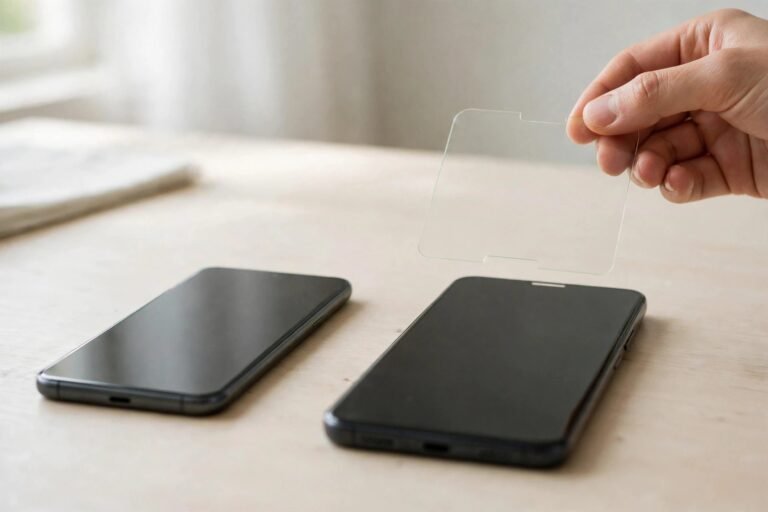
Run through the usual motives and most dissolve on inspection. Fitting tempered glass instead? A cured nano coating is so thin and smooth that glass protectors adhere over it without issue — no removal needed. Trading the phone in? The coating is invisible and undetectable in a normal inspection; it neither adds nor subtracts value. Warranty repair? A surface coating does not interfere with servicing the phone. Uneven application? You cannot selectively strip one patch — but a fresh coat applied over the whole screen evens the surface out, which solves the actual problem.
The one genuinely valid frustration is feel: some people simply dislike the slightly different glide of a coated screen. For that, there is no fix but patience — and the useful lesson that a liquid protector is a months-long commitment disguised as a two-minute wipe, which is worth knowing before the next application, not after.
- Before applying a liquid protector to a new phone, do a patch test of your own patience: coat a spare piece of glass or an old phone first. If you dislike the feel, you have learned it on something that does not matter — the real screen stays untreated.
Frequently Asked Questions
How long does a liquid screen protector last before it wears off?
Typically 6 to 12 months of normal use, which is why makers recommend reapplication on roughly that cycle. Heavy use, frequent cleaning, and abrasive environments wear it faster; a phone that mostly sits on a desk keeps its coating longer.
Will isopropyl alcohol or nail polish remover strip it off?
No. Cured silica coatings are resistant to alcohol, and stronger solvents such as acetone will attack the screen’s oleophobic coating and can damage plastics around the display long before they trouble the nano layer. You would harm the surface you want to keep and keep the coating you wanted gone.
Does a liquid coating affect my phone’s resale or trade-in value?
No. Graders assess the screen for scratches, cracks, and function. A nano coating is invisible, does not register as damage or as a modification, and by the time most phones are traded in it has largely worn away anyway.
A liquid protector is the one protector you cannot take off — only wait out. The good news is that it asks very little of you while it fades, and almost nothing you might want to do next actually requires it to be gone.