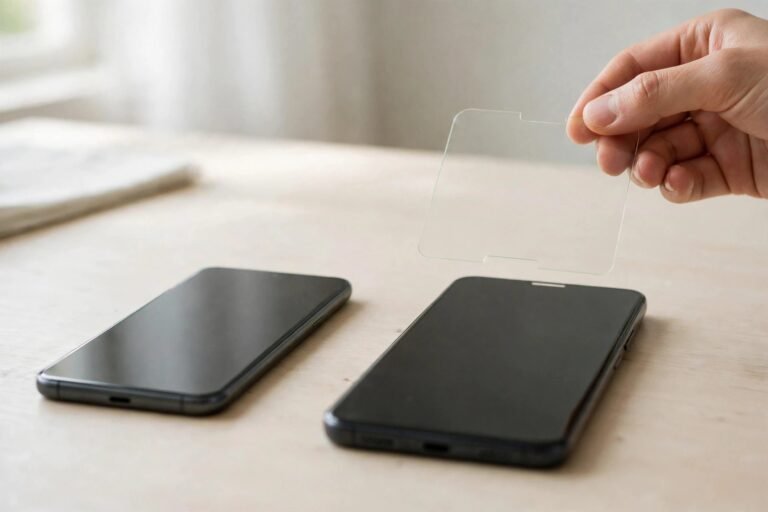
The iPhone 14 Pro and the standard iPhone 14 share a 6.1-inch display, so it is natural to assume their screen protectors are interchangeable. They are not — and buying the wrong one is one of the most common reasons for a protector that fits badly, covers a sensor, or leaves the top of the screen looking oddly mismatched.
This guide explains the size you actually need for the iPhone 14 Pro, why the standard iPhone 14 version causes problems despite the identical screen measurement, and how to choose between case-friendly and full-coverage cuts so you get the right sheet of glass first time.
Key Takeaways
- The iPhone 14 Pro needs a protector made specifically for the 14 Pro — not one labelled only for the standard iPhone 14.
- Both phones have 6.1-inch displays, but the 14 Pro replaces the notch with the Dynamic Island, so the top cutouts are completely different.
- A standard iPhone 14 protector on a 14 Pro will misalign around the front camera and sensors and can interfere with how they work.
- Case-friendly protectors are cut slightly smaller to leave room for case lips; full-coverage versions run closer to the edges.
- The reliable check is the packaging: it should say “iPhone 14 Pro” by name, not just “6.1 inch”.
Same Screen Size, Different Phone
The confusion starts with the headline measurement. The iPhone 14 and iPhone 14 Pro both have 6.1-inch displays measured diagonally, and the two handsets are very close in overall dimensions. Screen protector sizing, though, is not really about the diagonal — it is about the exact outline of the glass and, crucially, the position of everything that sits in and around the top of the display.
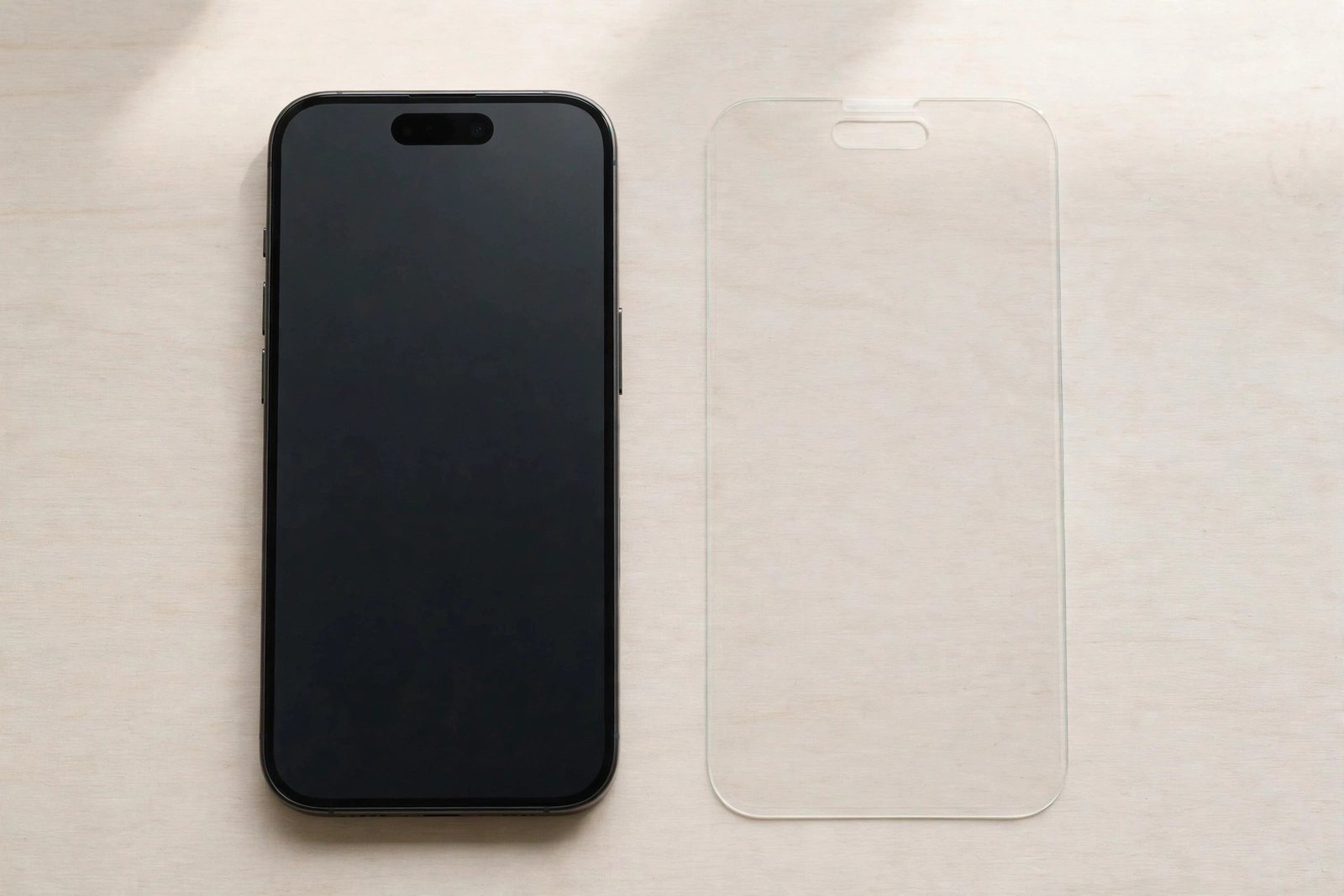
That is where the phones part company. The standard iPhone 14 keeps the familiar notch: a wide cut-in at the top housing the front camera and Face ID sensors. The iPhone 14 Pro removes the notch entirely and replaces it with the Dynamic Island — a pill-shaped cutout that floats below the top edge, surrounded by live screen. A protector is cut around one arrangement or the other; it cannot suit both.
What Goes Wrong With a Standard iPhone 14 Protector
Fit a notch-era protector to a 14 Pro and the opening at the top lands in the wrong place. The cutout does not line up with the floating Dynamic Island, so parts of the protector’s adhesive edge can cross over or crowd the camera and proximity sensor area. In practice that can mean a protector that looks visibly wrong, edges that will not settle around the island, and — in the worst cases — interference with the sensors that handle Face ID, automatic brightness, and switching the screen off during calls.
The reverse mistake causes fewer dramas but looks just as bad: a 14 Pro protector on a standard 14 leaves a pill-shaped window floating in the middle of the notch area. Either way, the lesson is the same — treat “fits iPhone 14” and “fits iPhone 14 Pro” as two different products, because they are.
- Do not rely on the screen-size figure on a marketplace listing. Scroll to the compatibility line and confirm it names the iPhone 14 Pro specifically — listings that say “14 / 14 Pro” for a single sheet of glass should be treated with suspicion.
Case-Friendly vs Full-Coverage: Which Cut Do You Want?
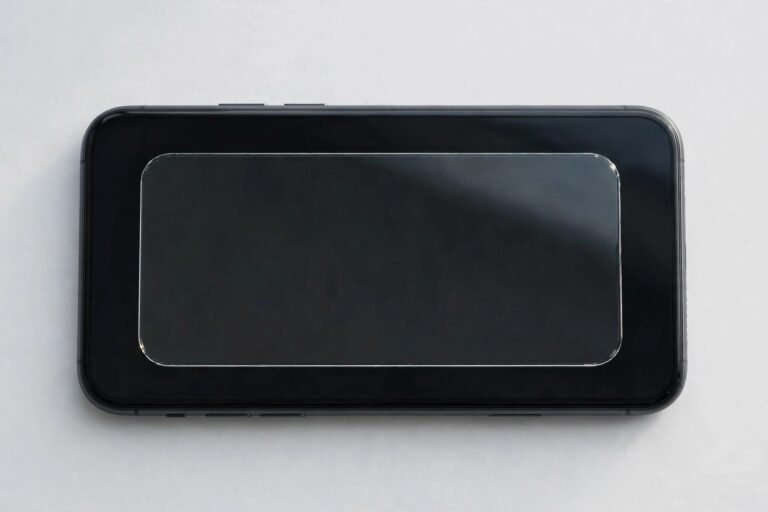
Once you are looking at genuine 14 Pro protectors, the remaining choice is the cut. Case-friendly (sometimes called case-compatible) protectors are deliberately made a fraction smaller than the display’s visible area, leaving a small border of bare glass around the edge. That gap is what allows a case’s raised lip to wrap over the phone’s edges without pressing against the protector and levering it up — the most common cause of lifting corners and halos.
Full-coverage protectors extend much closer to the edges of the front glass, often with a coloured or black border that follows the screen’s outline for a near-invisible, edge-to-edge look. They protect more of the surface and look sleeker, but they demand a slim case — or no case — because any lip that overlaps the glass will fight the protector. If you use a rugged or wallet case, case-friendly is the safer buy; if you use a minimal case or none at all, full coverage gives you the finish the 14 Pro deserves.
- If you already own the case, check its description too — many case makers state whether they suit full-coverage protectors. Matching the two descriptions saves you discovering the clash with the glass already on the phone.
A Word on the 14 Pro Max
While you are checking names, be careful with the larger sibling. The iPhone 14 Pro Max has a 6.7-inch display and its own, bigger protector — a 14 Pro (6.1-inch) protector will be obviously too small for it, and a Pro Max sheet will overhang the 14 Pro on every side. The naming is similar enough that the wrong box is easy to grab in a hurry, so a final glance at both the model name and the inch size before you peel the backing film is a habit worth building.
Frequently Asked Questions
Will an iPhone 13 Pro protector fit the iPhone 14 Pro?
Not properly. The 13 Pro uses a notch rather than the Dynamic Island, so the top cutouts do not match the 14 Pro’s camera and sensor layout. The outline is close enough to tempt people, but the fit around the top of the screen will be wrong.
Does the protector need a cutout for the Dynamic Island?
Protectors made for the 14 Pro handle the island in one of two ways: a precise pill-shaped cutout, or glass that covers the area with a small opening only for the camera lens. Both are legitimate designs from reputable makers. What matters is that the design was made for the 14 Pro’s layout, not adapted from a notch model.
My protector’s edges will not stick down — is it the wrong size?
Possibly, but check your case first. A full-coverage protector paired with a case whose lip overlaps the glass is the most frequent cause of lifting edges. If the case is slim and the edges still lift — particularly around the top — you may indeed have a protector cut for the wrong model.
For the iPhone 14 Pro, the right size is not “6.1 inch” — it is “made for the iPhone 14 Pro”. Match the model name, choose the cut that suits your case, and the Dynamic Island will sit exactly where it should.