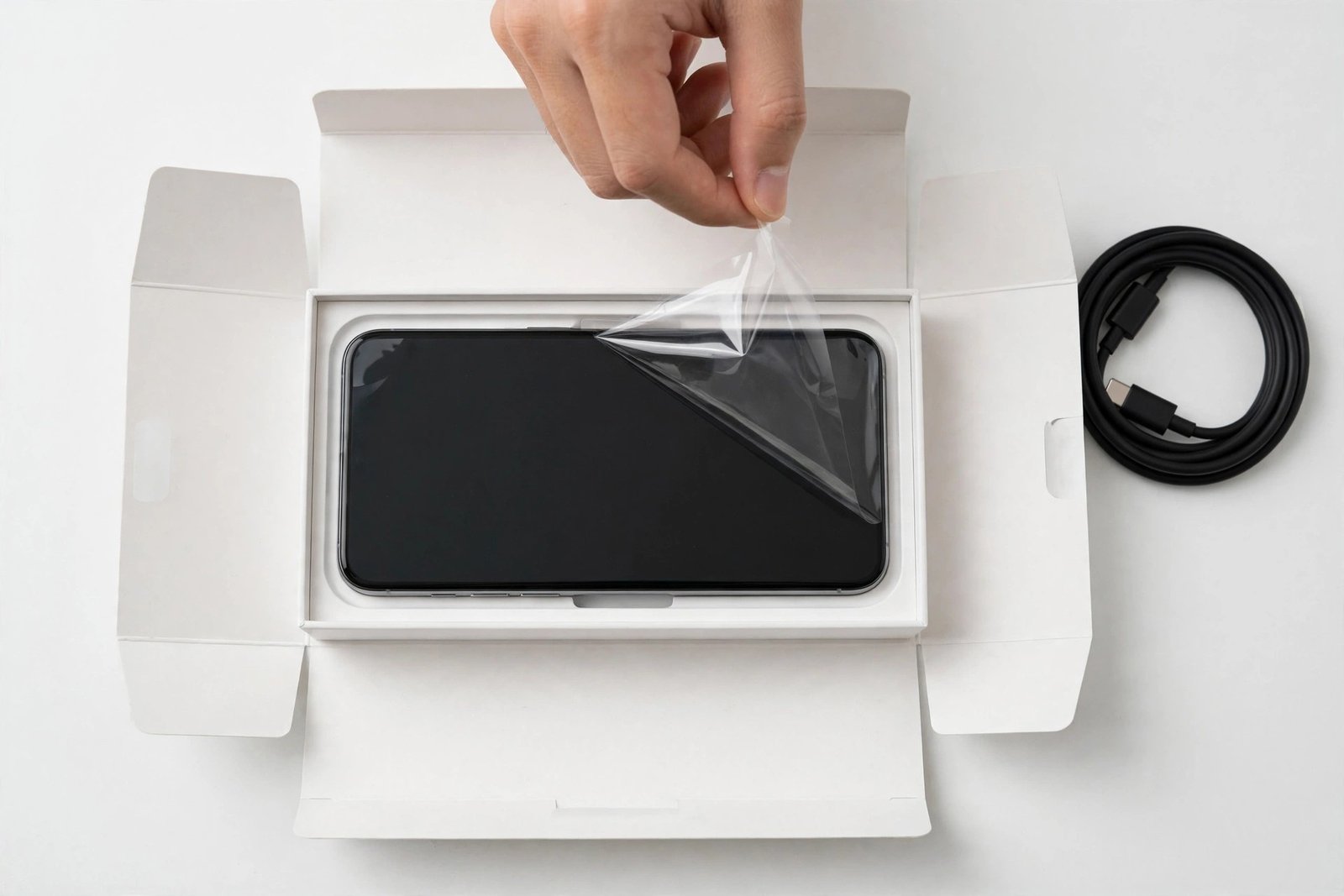
Unbox a brand-new iPhone and you will find a film covering the front of it — which leads many people to assume Apple has already fitted a screen protector at the factory. It has not. That film is packaging, designed to keep the glass pristine inside the box and meant to be peeled off before you start using the phone. No iPhone, at any price, ships with a real screen protector fitted.
This guide explains what actually comes in the box, why the transit film should not be mistaken for protection, and what your options are if you want proper protection from day one — plus how the picture differs on the Android side, where a factory-fitted film is sometimes genuinely included.
Key Takeaways
- No iPhone comes with a screen protector fitted. The film on a new iPhone is removable transit packaging, not protection.
- In the box you get the phone, a cable, and paperwork — no protector and no case.
- Apple sells protectors separately, in store and online; many are made by Belkin, and some Apple Stores will fit one for you when you buy it there.
- Leaving the transit film on makes a poor protector: it is loose, lifts at the edges, and dulls touch and clarity.
- Some Android brands do pre-apply a basic film at the factory, but this varies by brand, model, and region — iPhones never do.
What Actually Comes in the iPhone Box
A new iPhone box contains the phone itself, a USB-C charge cable, and a small packet of paperwork with a SIM ejector tool (on models that take a physical SIM). That is the full list. There is no screen protector, fitted or loose, and no case. The only thing covering the display is the film the phone wears for its journey from the factory — on recent models, a paper-like cover sheet and protective film that you peel away during setup.
This is worth knowing because the film looks deceptively purposeful: it covers the whole front and clings smoothly enough to pass for a protector at a glance. Some buyers leave it on for weeks, believing they are protected. In reality it has no adhesive bond around the display area in the way a real protector does, no hardness rating, and no design intent beyond surviving the supply chain.
Why the Transit Film Is Not a Screen Protector
A genuine screen protector is engineered to stay on for months: it bonds across the whole screen, resists scratches from keys and grit, and in the case of tempered glass, absorbs impact energy by cracking in place of your display. Transit film does none of this. It is a thin, soft plastic layer that scuffs almost immediately, lifts and bubbles at the edges, and can trap dust against the glass — the opposite of protection, since grit rubbed against a screen under loose film can cause the very scratches you were hoping to avoid.
It also degrades the experience of a new phone. Touch response through a loose film can feel imprecise, the display looks slightly hazy, and on recent iPhones the film is not shaped for long-term use around the front camera and sensors. Apple’s own setup flow expects you to remove it. Peel it off, enjoy the screen as intended, and fit a real protector afterwards if you want one.
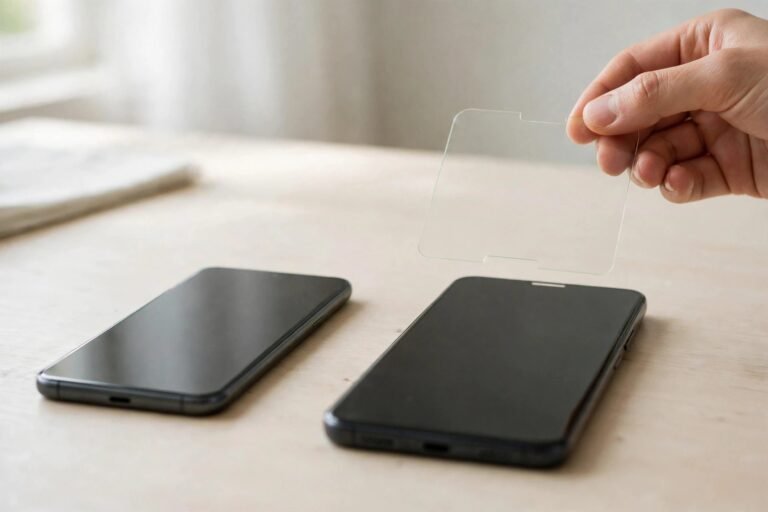
- The safest moment to fit a real protector is straight out of the box, before the screen meets the world. Factory-fresh glass is perfectly clean, so peel the transit film off and fit your protector in the same sitting for a dust-free install.
Your Options If You Want Protection from Day One
Because nothing is fitted, protection is a separate purchase — fortunately an easy one. Apple sells screen protectors through its stores and website, and the ones on its shelves are frequently made by Belkin; in many Apple Stores, staff will fit a protector you buy there using an alignment machine, which takes the stress out of doing it yourself. Carrier stores and phone shops commonly offer the same buy-and-fit arrangement.
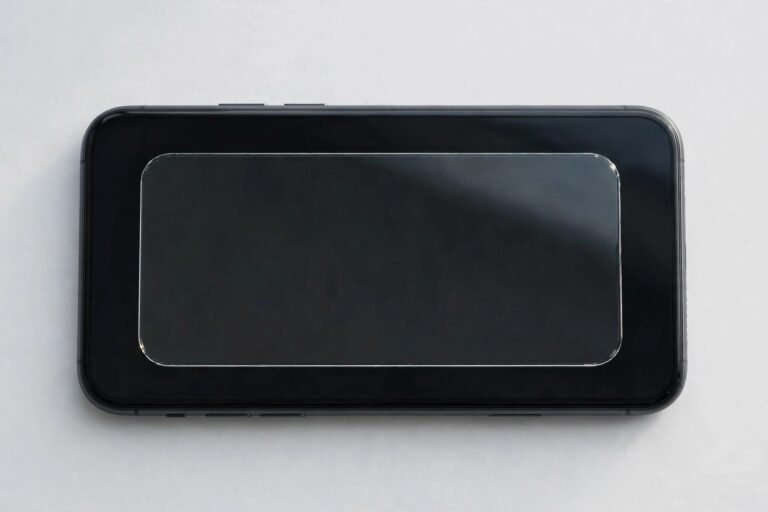
Alternatively, fitting one yourself takes about five minutes with the cleaning wipes and alignment tools included in most packs. Tempered glass is the popular choice for drop protection and a true-to-glass feel; thin film is cheaper and suits anyone who only wants scratch cover. Either way, buy for your exact iPhone model — protectors are cut to match each generation’s screen outline and camera layout.
What About Android Phones?
Here the answer is “sometimes”, which is probably why the iPhone question gets asked so often. A number of Android manufacturers — including several Chinese brands and some mid-range lines from larger makers — ship phones with a basic plastic film already applied at the factory. It is a real, fitted protector, albeit a simple one that most owners eventually replace with tempered glass. Whether a given phone includes one varies by brand, model, and even the region it is sold in.
Flagship Android phones are less consistent: some arrive with a factory film, others with bare glass, much like an iPhone. So if you are switching from an Android phone that came pre-fitted and your new iPhone feels oddly unprotected, that is why — you have not missed a step in the box. Apple has simply never included one.
- Bought your iPhone in an Apple Store? Ask at the till whether they can fit the protector for you there and then. Many stores offer machine fitting on protectors bought in store, and a perfect first install is worth more than the small price difference versus buying elsewhere.
Frequently Asked Questions
Can I just leave the factory film on as my screen protector?
You can, briefly, but it is a poor substitute. It is soft packaging plastic: it scuffs quickly, lifts at the edges, traps grit against the glass, and dulls the screen and touch response. It was designed to survive shipping, not daily life — peel it off and fit a real protector if you want protection.
Does Apple fit a screen protector for free when I buy an iPhone?
The protector itself is always a separate purchase — it is never included with the phone. Fitting is different: many Apple Stores will apply a protector you have bought in that store, sometimes with a fitting machine, as part of the service. Availability varies by store, so it is worth asking when you buy.
Does my iPhone even need a screen protector?
That is a personal judgement. Modern iPhone glass is tough against drops but can still pick up fine scratches from sand and grit in pockets and bags. Many owners fit tempered glass as cheap insurance for the screen and the phone’s resale value; others prefer the bare glass feel and accept the risk. Either way, the choice is yours to add — Apple leaves the screen bare.
An iPhone arrives beautifully protected against the journey to your door — and completely unprotected against everything after it. Peel off the packaging, and fit a real protector if you want the job done properly.