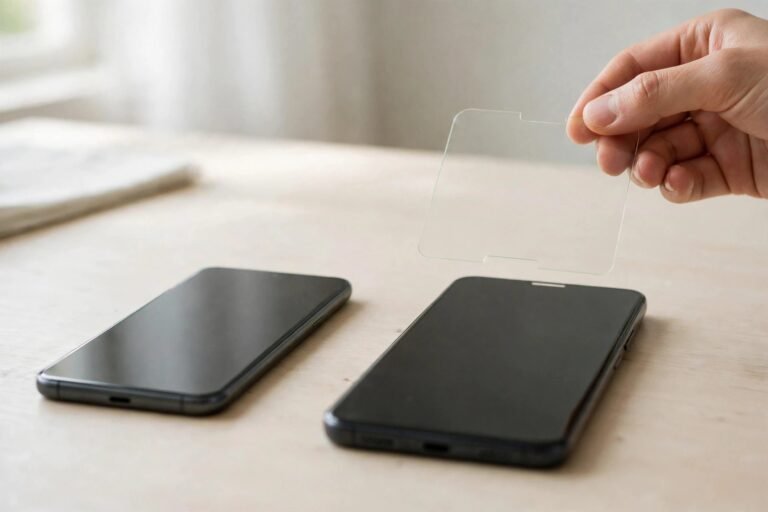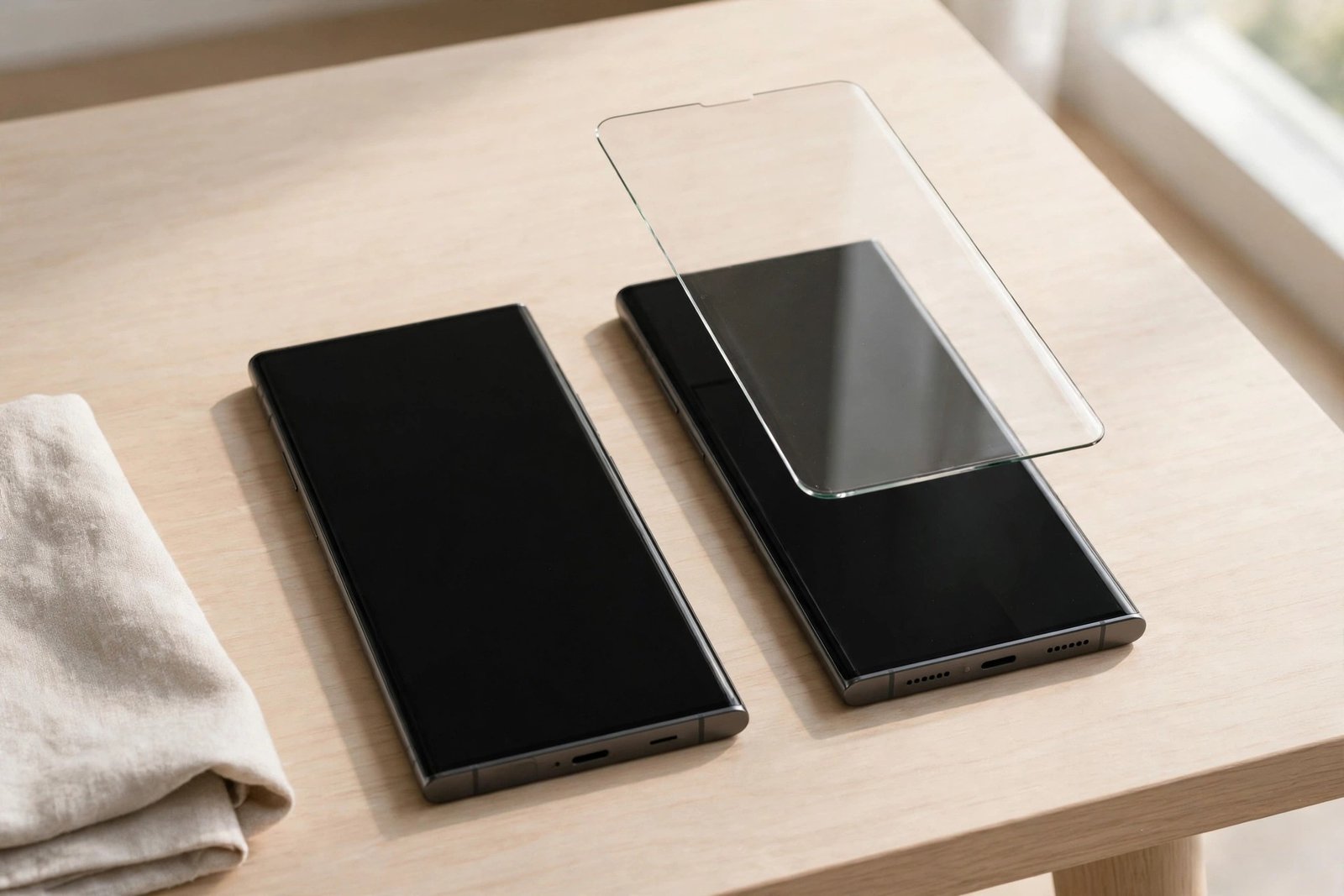
If you have upgraded from an iPhone 12 Pro Max to a 13 Pro Max — or the other way round — a spare protector in the drawer looks very tempting. The two phones look almost identical, and both carry a 6.7-inch display, so it is natural to wonder: does a 13 Pro Max screen protector fit a 12 Pro Max? The honest answer is no, not properly — and the reasons come down to small but important differences in size and in the notch.
Screen protectors are cut to tolerances of a fraction of a millimetre. A phone that is even slightly taller, wider or shaped differently can leave a protector overhanging the edge, misaligned around the speaker, or sitting proud where it should be flush. This guide walks through the real differences between the two models so you can see exactly why the fit fails, what happens if you try it anyway, and how to buy the right glass first time.
Key Takeaways
- A 13 Pro Max protector does not fit a 12 Pro Max properly — the phones differ slightly in height, width and depth.
- The iPhone 13 Pro Max measures about 160.8 × 78.1mm, while the 12 Pro Max is about 160.8 × 78.1mm in footprint but with a different frame shape — the devil is in the detail, not the headline numbers.
- The notch on the 13 Pro Max is narrower but slightly taller than the notch on the 12 Pro Max, so cut-outs and black borders do not line up.
- Forcing the wrong glass usually means edge lifting, misalignment around the speaker, or a border overlapping the display.
- Always buy a protector listed for your exact model — Pro Max protectors are not interchangeable between generations.
How the Dimensions Actually Differ
On paper the two phones are close. The iPhone 12 Pro Max stands about 160.8mm tall and about 78.1mm wide. The iPhone 13 Pro Max is also about 160.8mm tall and about 78.1mm wide, but it is noticeably thicker — about 7.65mm against about 7.4mm — and its stainless steel frame and camera plateau are shaped differently. That might sound as though a flat sheet of glass should still swap across, and indeed the overall footprint is near-identical, which is exactly why so many people assume the protectors interchange.
The problem is that a protector does not just have to match the outline of the phone. It has to match the flat area of the front glass, the position of the earpiece speaker slot, and the shape of the notch housing Face ID. Apple redesigned the front of the 13 Pro Max to shrink the notch: it is about 20 percent narrower than the 12 Pro Max notch, but it also sits slightly taller, eating a little further into the display. The earpiece speaker moved up to the very edge of the frame as part of that redesign. A protector cut for one notch geometry simply cannot align correctly with the other.
What Happens If You Try It Anyway
Plenty of people have tried, and the result is usually one of three failures. First, misalignment: the speaker cut-out or the printed border of a 13 Pro Max protector lands in the wrong place on a 12 Pro Max screen, so the notch outline looks off-centre and the border can creep over the visible display area. Second, edge problems: because the frame profile and the curve of the front glass differ subtly, the glass may not sit flat, leaving a halo of non-adhesion around the edges that attracts dust.
Third, case conflicts: a protector that is a fraction off in size is more likely to be pushed up by a case lip, and the first time you snap a case on, a corner lifts. None of this damages the phone, but the protector will not do the job you bought it for — the edges are where most impacts land, and an edge that never sealed is an edge that will not protect. As a short-term stopgap, a film protector can be trimmed and will roughly cover the screen, but tempered glass cannot be cut to size at all and should not be forced.
- If you are not sure which model a spare protector was made for, lay it over the screen without peeling the backing and check the notch and speaker alignment against the phone — a mismatch is obvious before any adhesive touches the glass.
Which Protectors Do Fit Each Phone
For the iPhone 12 Pro Max, buy glass listed specifically for the 12 Pro Max. For the 13 Pro Max, buy glass listed specifically for the 13 Pro Max. Listings that claim to fit “12 Pro Max / 13 Pro Max” in a single product are usually cut to a compromise — one of the two phones gets a sloppy fit, and it is often not clear which. Reputable makers sell the two as separate products precisely because the notch and sensor layout differ, so treat a combined listing as a warning sign rather than a convenience.
One more point of confusion: the standard iPhone 12 and 13 (non-Pro) protectors are a different size again, and the 14 Pro Max moved to Dynamic Island, making its protectors different once more. Within Apple’s range, every Pro Max generation has its own protector. The same caution applies when buying privacy or matte variants, since those rely even more heavily on precise borders and cut-outs to work as intended.
- Check your exact model before ordering: go to Settings > General > About and read the model name — “Pro Max” alone is not enough to pick the right protector.
Frequently Asked Questions
Will a 13 Pro Max protector physically go on a 12 Pro Max?
It will stick, because the overall footprint is very similar, but it will not align properly around the notch and speaker, and the edges may not seal. It is usable only as a rough temporary cover, not as a correct fit.
Does the reverse work — a 12 Pro Max protector on a 13 Pro Max?
No. The mismatch runs both ways. The wider notch cut-out of a 12 Pro Max protector does not match the narrower, taller notch of the 13 Pro Max, so alignment and borders are wrong on that phone too.
Can I trim a tempered glass protector to fit?
No. Tempered glass cannot be cut or filed down — it will shatter. Flexible film can be trimmed with scissors as a stopgap, but the cut-outs will still be in the wrong places, so a model-specific protector is always the better answer.
Nearly fitting is not fitting: the 13 Pro Max and 12 Pro Max differ where it matters — at the notch and the edges — so give each phone the protector that was cut for it.