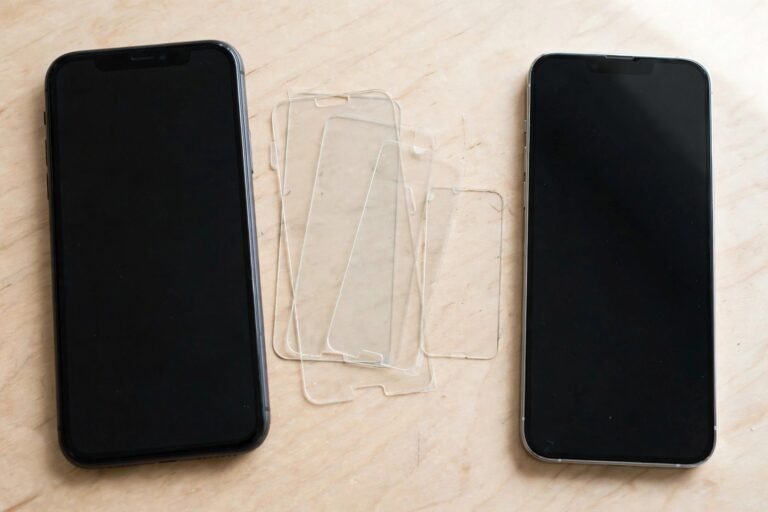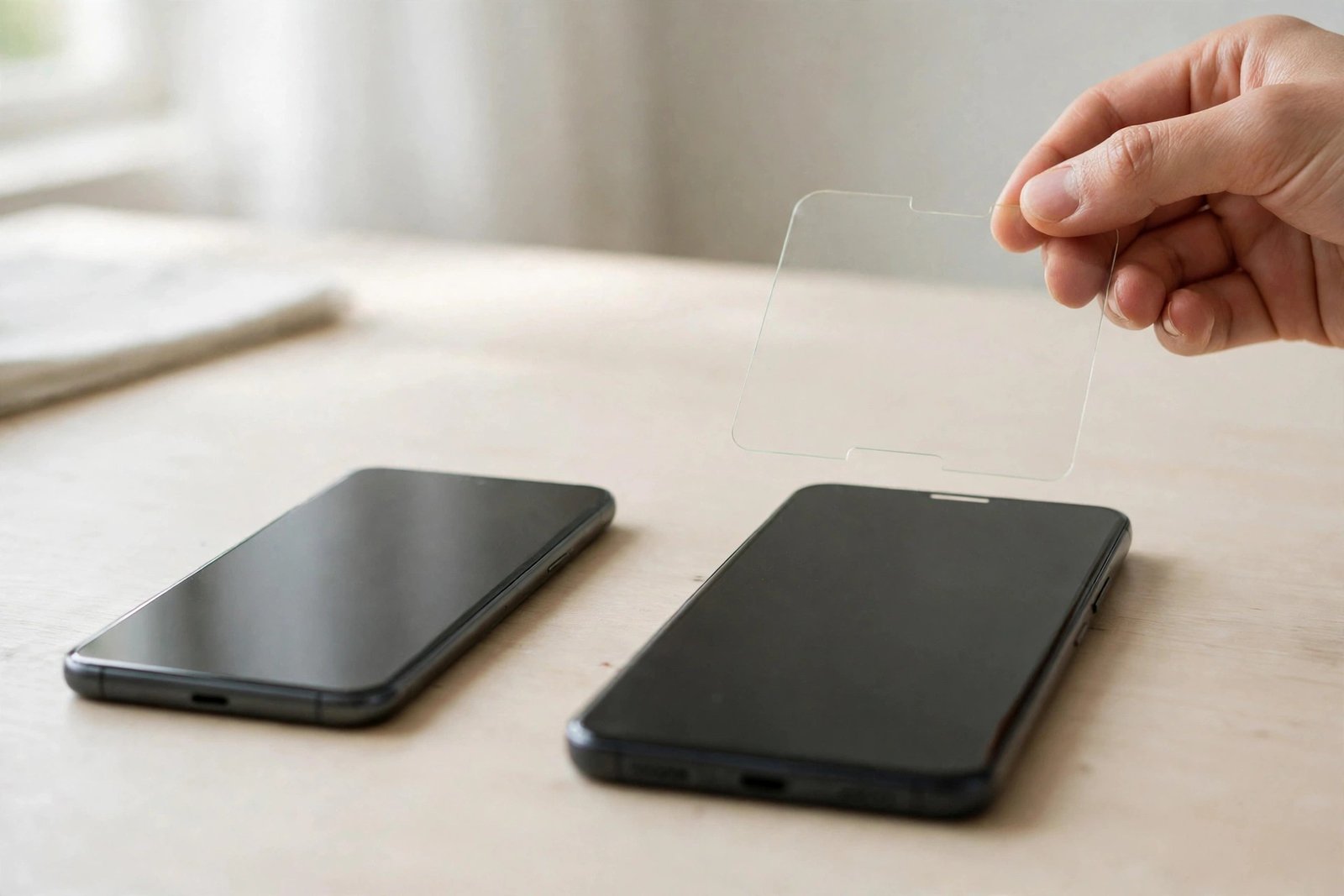
Both phones have a 6.1-inch display, both are iPhones, and the protectors look almost identical in the packet — so it is a fair question: will an iPhone 13 screen protector fit an iPhone 11? The short answer is no. Despite the matching screen size, the two phones have different body dimensions, and a protector cut for the iPhone 13 is simply too small to cover the iPhone 11 properly.
That does not mean a 13 protector is useless paperweight material if you have one spare — but fitting it to an 11 leaves exposed edges, misaligned cutouts and a protector that is far more likely to lift and trap dirt. This guide explains exactly where the mismatch lies, what happens if you fit one anyway, and which protectors genuinely do fit the iPhone 11.
Key Takeaways
- The iPhone 13 measures about 146.7 × 71.5 mm; the iPhone 11 is larger at about 150.9 × 75.7 mm.
- Both phones have a 6.1-inch display, but the 11’s body and bezels are bigger, so a 13 protector under-covers the screen.
- The notch is smaller on the iPhone 13, so the cutout area will not line up correctly with the 11’s wider notch and sensors.
- The iPhone 11 shares its body with the iPhone XR — protectors made for the XR are the correct fit for the 11.
- A too-small protector leaves a visible unprotected rim where dust collects and edges lift.
- Always buy a protector listed for your exact model; “6.1-inch iPhone” on the packaging is not specific enough.
Why the Dimensions Don’t Match
Screen size is only part of the story. The iPhone 11 uses an LCD display with noticeably thicker bezels, housed in a rounded aluminium body measuring roughly 150.9 mm tall and 75.7 mm wide. The iPhone 13 switched to a slimmer OLED panel and a flatter, more compact frame at about 146.7 × 71.5 mm. That is a difference of over 4 mm in both directions — small in the hand, but enormous for a piece of glass cut to tolerances of a fraction of a millimetre.
A screen protector is not sized just to the glowing part of the display. It is cut to the shape of the front face of that specific phone, including the bezel area and the precise position of the speaker slot and sensor window. Shrink the phone, and every one of those reference points moves. So even though both screens measure 6.1 inches diagonally, the glass that covers them is a different shape.
What Happens If You Fit One Anyway
If you centre an iPhone 13 protector on an iPhone 11, you get a border of uncovered screen roughly 2 mm wide on every side. That rim is exactly where drops and pocket grit do their damage, and the exposed edge of the protector gives dust and lint a place to work underneath, so the corners tend to lift within weeks. The adhesive edge also sits on the curved part of the 11’s front glass rather than the flat area it was designed for, which encourages the familiar white-edged “halo” effect.
The notch is the other problem. Apple shrank the notch on the iPhone 13 by about 20 percent, moving the earpiece speaker up into the frame. Many 13 protectors have a cutout or a shaped border matched to that smaller notch. On the iPhone 11, that cutout can overlap the edge of the wider notch area and sit awkwardly against the speaker and front camera region — it will not block Face ID outright on most designs, but it looks wrong and can collect grime along the mismatch.
- Before you open the packaging, hold the protector over your phone’s screen without peeling anything. If there is a visible gap between the protector’s edge and the edge of the front glass, it is the wrong size — return it unopened rather than fitting a compromise.
Which Protectors Actually Fit the iPhone 11
The iPhone 11 shares its body, screen shape and notch layout with the iPhone XR, released the year before. Protectors listed for the iPhone XR, the iPhone 11, or “XR/11” are the correct cut and will align with the speaker, notch and edges as intended. This is a genuinely interchangeable pairing, unlike most cross-model swaps.
By contrast, protectors for the iPhone 12, 13 and 14 all belong to the newer, smaller body family and none of them fit the 11 properly — even though the 12 and 13 also have 6.1-inch screens. When shopping, search by the phone’s model name rather than screen size, and be wary of listings that bundle several unrelated models into one “universal 6.1-inch” product.
- Not sure which iPhone you have? Go to Settings > General > About and check the model name before ordering. Guessing between an 11 and a 12 is the single most common reason people end up with a protector that does not fit.
Frequently Asked Questions
Does the reverse work — an iPhone 11 protector on an iPhone 13?
No. The mismatch is just as bad in the other direction: an iPhone 11 protector is too large for the 13, overhanging the edges of the smaller phone so it cannot sit flat or seal properly, and a case will usually push it straight off. Each phone needs its own size.
The phones have the same 6.1-inch screen — why isn’t that enough?
Because a protector covers the whole front face, not just the display. The iPhone 11’s LCD design needs thicker bezels and a larger body, so its front face is roughly 4 mm taller and wider than the 13’s. Diagonal screen size tells you nothing about the shape of the glass that surrounds it.
I already fitted a 13 protector to my 11. Should I remove it?
It is better than a bare screen in an emergency, but treat it as a stopgap. The exposed rim and lifting edges mean it is not doing the full job, and dirt working underneath can scratch the glass it is meant to protect. Replace it with an 11/XR protector when you can.
Same screen size, different phone. Match the protector to the model name on the box — your iPhone 11 wants XR/11 glass, and the iPhone 13’s protector should stay with the iPhone 13.