Your phone screen is cracked — a spiderweb across the glass, or a single defiant fracture line — and a hopeful thought surfaces: what if I just cover it with a screen protector? A fresh sheet of glass over the damage, smoothing everything out, making the crack invisible and the phone usable again. It is an appealing idea, and accessory sellers do nothing to discourage it. But hope and physics are different things, and this is one case where you need the physics.
A screen protector over a cracked display can help cosmetically and practically — up to a point. This guide explains exactly what covering a crack achieves, where the illusion breaks down, and when a protector is a sensible stopgap versus when the screen itself needs professional repair.
Key Takeaways
- A screen protector can cosmetically reduce the visibility of hairline cracks and make a cracked screen safer to touch.
- It cannot hide structural damage: deep cracks, displaced glass, dead pixels, and touch dead zones remain visible and functional problems.
- Covering a crack does not stop it spreading — the fracture in the display glass continues to propagate underneath.
- A protector over a cracked screen is a reasonable short-term stopgap while you arrange a proper repair, not a permanent fix.
- If the crack affects touch response or the display image, no protector will restore function — repair or replace the screen.
What a Protector Actually Does Over a Crack
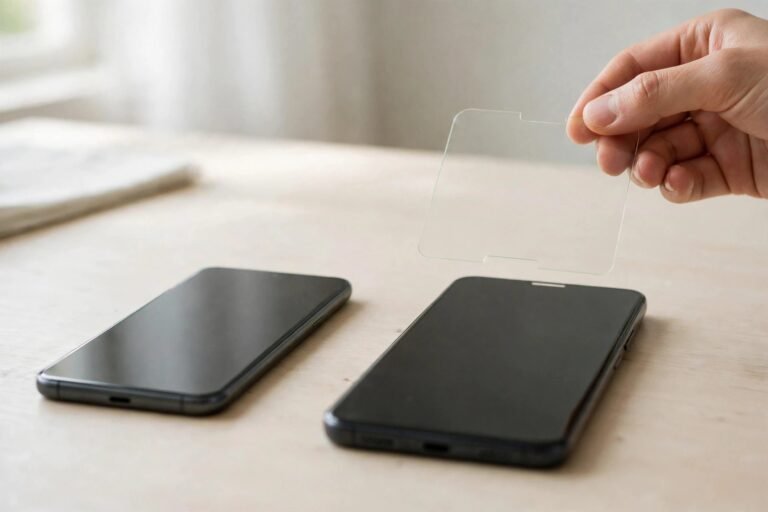
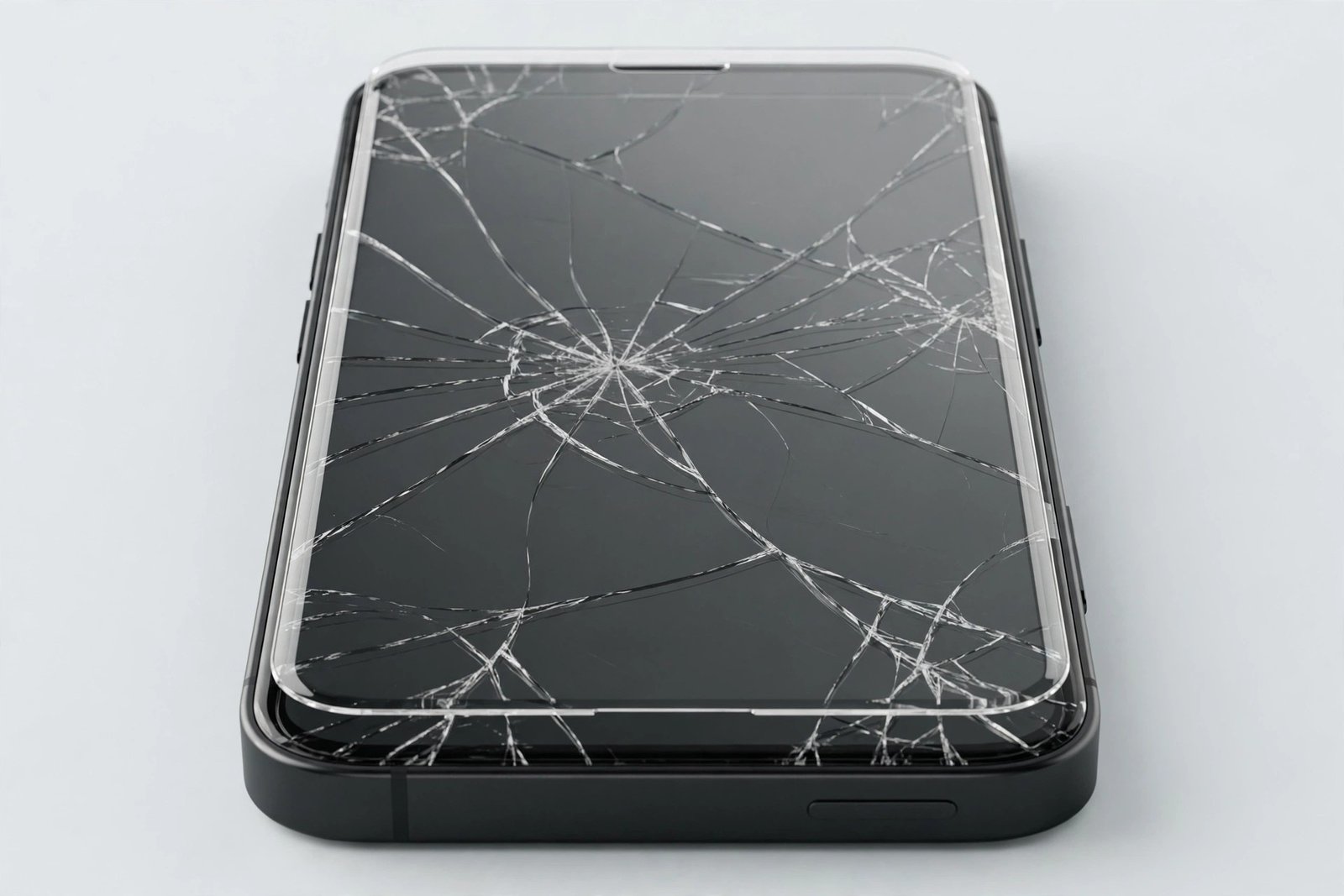
Let us give the idea its due, because it is not entirely wishful thinking. A tempered glass protector laid over a hairline surface crack does three genuinely useful things. First, it smooths the surface: your finger glides over flat glass instead of catching on the fracture ridge, which makes the phone dramatically more pleasant — and safer — to use. Second, it contains loose material: the adhesive holds small fragments and glass dust in place, so the crack does not shed splinters into your fingertip. Third, it optically softens fine cracks: the additional glass layer and its adhesive fill the visual gap slightly, making hairline fractures less noticeable, especially with the display on.
For a phone with a single clean hairline crack and an otherwise perfect display, a protector can genuinely buy you weeks or months of comfortable use. Many people have done exactly this while saving for a repair or waiting out the last months before an upgrade. As a stopgap, it is legitimate and effective.
- Before fitting the protector, cover the cracked screen with clear packing tape and press gently — this picks up any loose glass dust sitting in the fracture. Peel the tape off, then fit the protector on the cleaned surface for the best bond.
Where the Illusion Breaks Down
Now the limits, and they are significant. A screen protector is a flat sheet of uniform glass; a cracked display is not flat. Where the fracture has displaced the glass — a raised shard, a sunken section, a crack wide enough to feel as a groove — the protector cannot follow the contour. It bridges over the unevenness, leaving air gaps along the crack line. These gaps show as bright lines or bubbles that no amount of pressing will remove, and they actually draw the eye to the damage rather than hiding it.
Worse, the protector’s adhesive bonds poorly to fractured glass. The crack interrupts the smooth surface the adhesive needs, so the protector lifts along the fracture, traps dust there, and peels far sooner than it would on an intact display. You may find yourself replacing the stopgap protector itself within weeks as its edges give up around the damage zone.
What a Protector Can Never Fix
Some crack consequences are beyond any cover-up. Dead pixels, discoloured blotches, and bright lines in the display image come from damage to the OLED or LCD panel beneath the glass — a protector sits above all of that and changes nothing underneath. Touch dead zones, where the digitiser layer is fractured, likewise persist: the protector conducts your finger’s touch just fine, but there is no working sensor beneath to receive it. If your crack came with any of these symptoms, the screen needs repair, full stop.
There is also a safety dimension that a protector only partly addresses. A deeply cracked display can continue shedding microscopic glass fragments at the fracture edges, and while a protector contains most of this, a severe shatter with missing chunks leaves the panel exposed. If you can see into the phone through the crack, or the display shows damage beyond the glass, stop using it as a daily driver and get it repaired — no accessory makes that safe.
- Test the touch response across the whole crack before deciding: open a drawing app and scribble over every part of the damaged area. Any gap in the line is a digitiser dead zone — and proof that a protector is cosmetic-only for your crack.
The Crack Keeps Spreading Underneath
Here is the uncomfortable truth the stopgap cannot change: the fracture in your display glass is still propagating. Every flex of the phone, every temperature swing, every press on the screen extends the crack microscopically. The protector on top does nothing to arrest this — it is not structural reinforcement, just a cosmetic lid. A hairline crack covered today can become a structural failure in weeks, and when the display finally gives way, the protector goes with it.
This is why the protector-over-crack strategy has a time limit. It is a bridge to a repair, not an alternative to one. Use the comfortable weeks it buys you to get a repair quote, check your warranty or insurance, or plan the upgrade — not to pretend the problem is solved. The crack is patient; it will outlast your optimism.
Frequently Asked Questions
Will a screen protector make my cracked screen look new?
For fine hairline cracks, it helps noticeably — the crack becomes much less visible with the display on. For deep, wide, or displaced cracks, it does not: air gaps along the fracture remain visible and can actually highlight the damage.
Is it safe to use a phone with a cracked screen under a protector?
For hairline cracks with no missing glass and normal touch response, yes — the protector makes it safer by containing fragments. If glass is missing, the display image is damaged, or touch is impaired, get a proper repair instead.
Can the protector adhesive damage the cracked screen further?
Normal fitting will not worsen the crack, but removal can: peeling a protector off a cracked display risks lifting loose glass fragments with it. When the time comes, tape over the protector first and peel very slowly — or let the repair shop handle removal.
A protector over a crack is a bandage, not a cure — a good bandage that buys comfort and time, but the wound underneath still needs a doctor. Use the time wisely.