A liquid screen protector sounds almost too good to be true: no glass to align, no bubbles, no edges to lift — just wipe it on and your screen is protected. Products in this category are real, and they do something genuine, but the gap between what the marketing implies and what the coating actually does catches many buyers out. Knowing what you are applying matters.
In short, a liquid screen protector is a nano-coating, not a physical sheet of anything. It can improve resistance to fine scratches and fingerprints, but it is not a substitute for tempered glass when it comes to drops. This guide explains how it works, what it can and cannot do, how long it lasts, and who it genuinely suits.
Key Takeaways
- A liquid protector is a wipe-on nano-coating, typically based on silicon dioxide, not a sheet of glass or film.
- It adds scratch resistance only — it offers no meaningful protection against drops or cracked screens.
- The coating is invisible and adds no thickness, so cases always fit and touch feels completely unchanged.
- It wears away gradually with use and typically needs reapplying after several months to around a year.
- It works on curved screens where glass struggles, and one bottle or wipe can often treat several devices.
- If drop protection is your priority, tempered glass remains the safer choice.
What It Is and How It Works
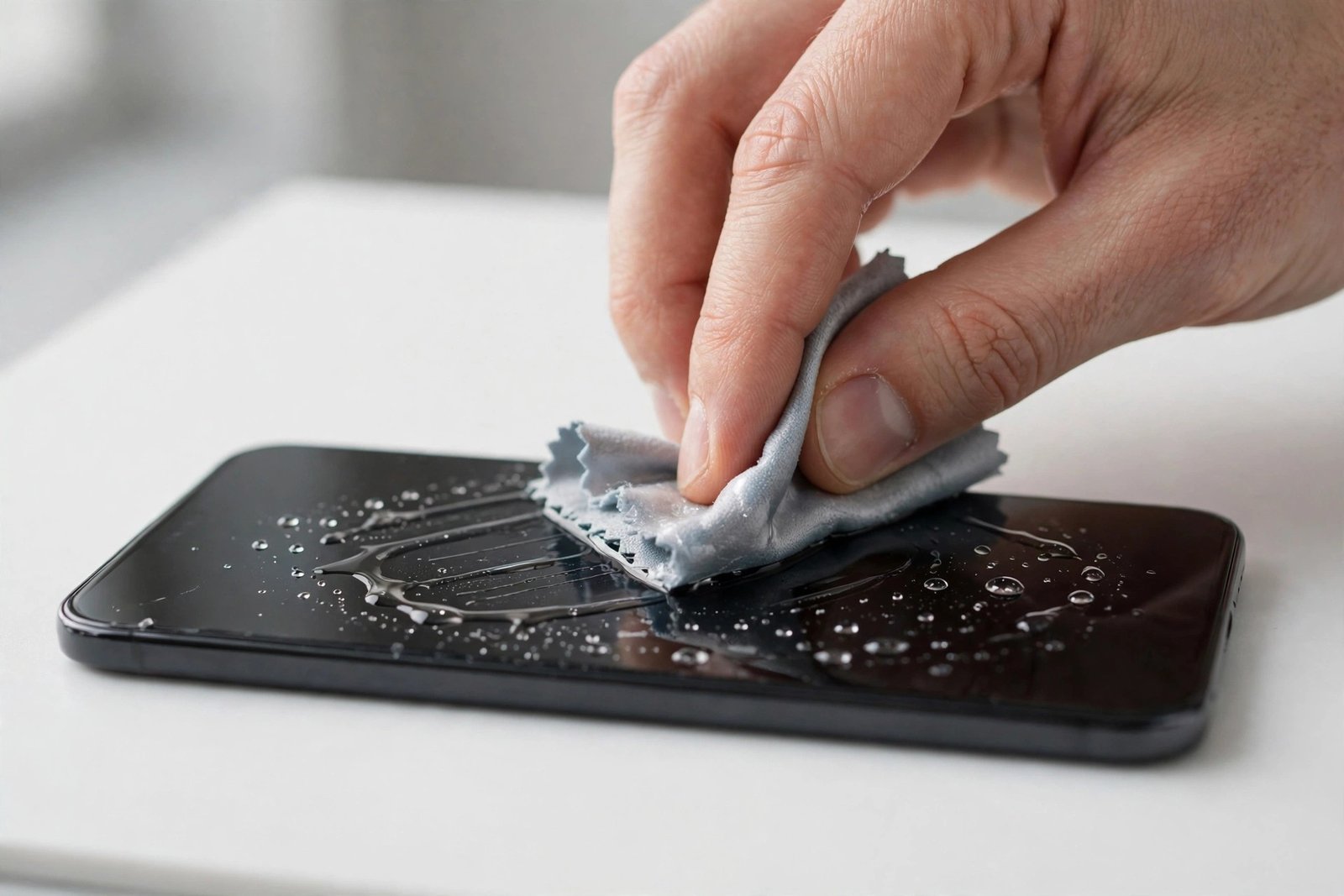
Liquid protectors are usually supplied as a small vial, a pre-soaked wipe, or a spray. The active ingredient in most is silicon dioxide — the same basic compound as glass and sand — suspended in a liquid carrier. You clean the screen thoroughly, apply the liquid evenly, allow it to cure for the time stated in the instructions, and then buff off the residue. What remains is an extremely thin bonded layer, far thinner than any film.
That layer works by filling in the microscopic pores and imperfections in the surface of your screen glass and hardening as it cures. A smoother, harder-feeling surface resists the fine scratches caused by grit, keys, and everyday contact, and it tends to repel water and fingerprints a little better than bare glass. Because the coating follows the exact shape of the screen, it covers curved edges completely, with no halo effect, no lifting corners, and nothing to align.
- You cannot see or feel whether the coating is present, so note the application date in your phone’s calendar. That simple record tells you when a top-up is due, instead of guessing months later.
What It Cannot Do: The Impact Problem
This is the limitation that matters most, and the one advertising often glosses over. A coating measured in nanometres cannot absorb or spread the energy of a drop. When a phone lands on a corner or strikes something hard, the force passes straight through the coating into the screen glass, exactly as it would with no protector at all. Tempered glass protects partly by being a sacrificial layer that cracks in place of your screen; a liquid coating has no material to sacrifice.
Be equally cautious of hardness claims. Some products advertise very high pencil-hardness ratings, but those tests measure resistance to being scratched by pencils of increasing hardness on a coated surface — they do not mean your screen has become shatterproof, and they are not directly comparable with the claims made for glass protectors. Treat dramatic before-and-after demonstrations, such as keys scraped across a screen, as evidence about light scratches only, never about drops.
How Long It Lasts and How to Reapply
Unlike glass, a liquid coating does not fail in one obvious moment; it wears away gradually, fastest where your thumbs swipe most. Manufacturers commonly suggest protection lasts somewhere in the region of several months to about a year, but real-world life depends on use, cleaning products, and how often the phone is in pockets with abrasive material. There is no reliable home test for how much coating remains, which is a genuine practical drawback.
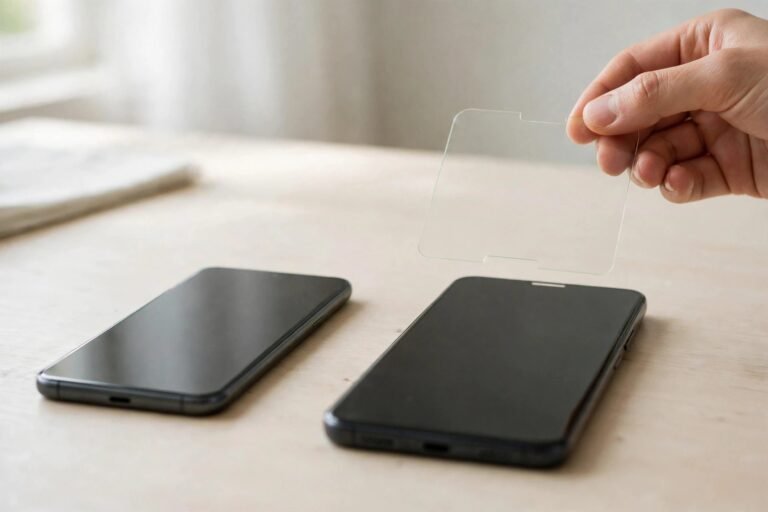
Reapplication follows the same process as the first application: clean the screen thoroughly, apply a fresh coat, allow the full curing time, and buff. Some kits include enough liquid for multiple applications or multiple devices, including tablets and watch faces; check the stated coverage before assuming. Also note that the coating cannot be peeled off like film — it simply wears away, although polishing or aggressive cleaning may remove it sooner. If you later fit tempered glass, clean the screen carefully first so the adhesive bonds evenly.
- Apply the coating in the evening and leave the phone unused for the full curing period stated in the instructions, ideally overnight. Handling the phone too soon is the most common reason a fresh application underperforms.
Who Should Choose a Liquid Protector
A liquid protector suits people whose main worry is fine scratching rather than dropping: careful users who keep a phone in a case with a raised lip, dislike the look and feel of glass edges, or own a device with a strongly curved screen where glass protectors fit poorly. It is also handy for covering several gadgets — phone, watch, tablet, camera screen — from one kit, and for people who find aligning glass stressful, since application is genuinely hard to get wrong.
It is a poor choice as your only protection if you are drop-prone, work outdoors or on building sites, hand your phone to small children, or would struggle to pay for a screen repair. Those users need physical, sacrificial protection, and many combine approaches: a good case plus tempered glass, accepting the small fitting effort for a large gain in impact protection. Prices for liquid kits vary considerably and offers change frequently, so judge value by stated coverage and reapplication needs rather than headline price alone.
Frequently Asked Questions
Can I use a liquid protector together with tempered glass?
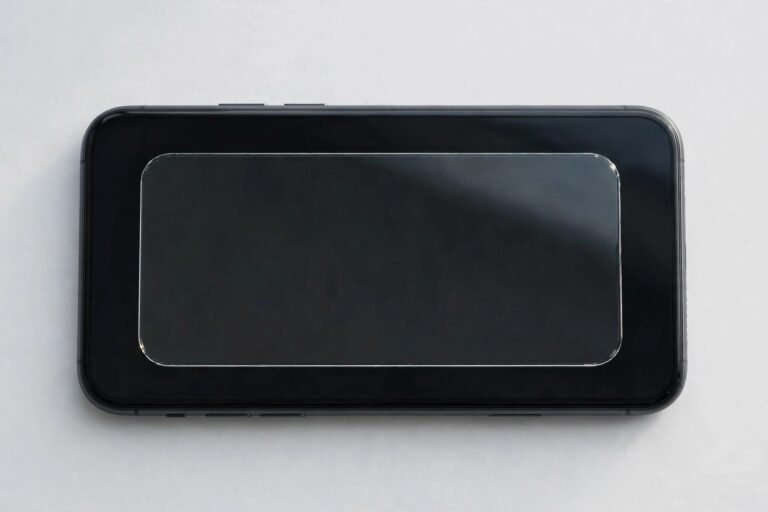
You can apply the coating to the phone screen before fitting glass, and some people coat the outside of the glass protector itself, but there is little benefit. The glass already provides scratch and impact protection, and a coated screen can occasionally affect how evenly the glass adhesive bonds. If you use glass, the liquid layer underneath is largely redundant.
Will it fix or hide scratches that are already there?
It may make very fine surface marks slightly less visible by filling microscopic imperfections, but it will not repair real scratches or cracks, and deeper marks will remain clearly visible. Do not buy it as a repair product. If your screen is already damaged, a fitted glass protector is a better way to cover rough edges while you decide on a repair.
Is a liquid protector safe for fingerprint sensors and coatings?
Because the layer is so thin, under-display fingerprint sensors and touch sensitivity are normally unaffected, and many people re-register fingerprints afterwards as a precaution. Follow the product instructions about the factory oleophobic coating and avoid applying the liquid to anything other than glass surfaces unless the maker explicitly says otherwise.
A liquid screen protector is an honest product with a modest job: invisible, easy scratch resistance that slowly wears away. Buy it for that job and it performs well — but never mistake it for drop protection.