You can — and it is not a one-way trip into regret. A screen protector is held on by a releasable adhesive layer, not glue in any permanent sense, so taking one off is a normal, reversible part of owning a phone. People remove protectors to replace a cracked one, to inspect the screen beneath, to sell the phone, or simply because they prefer the feel of bare glass for a while.
This guide explains what actually happens when a protector comes off: how it releases, what it can leave behind on the screen, whether the same pane can ever go back on, and the gentle technique that gets any protector off without drama.
Key Takeaways
- Screen protectors are designed to be removed — the adhesive releases cleanly and will not pull the screen coating off with it.
- Lift a corner with a fingernail, tape, or a plastic card and peel slowly at a low angle; never lever with metal.
- What it leaves behind is usually just fingerprint oil and a faint adhesive trace that a microfibre cloth removes in seconds.
- The same glass pane rarely goes back on well — its adhesive picks up dust and loses grip the moment it is exposed.
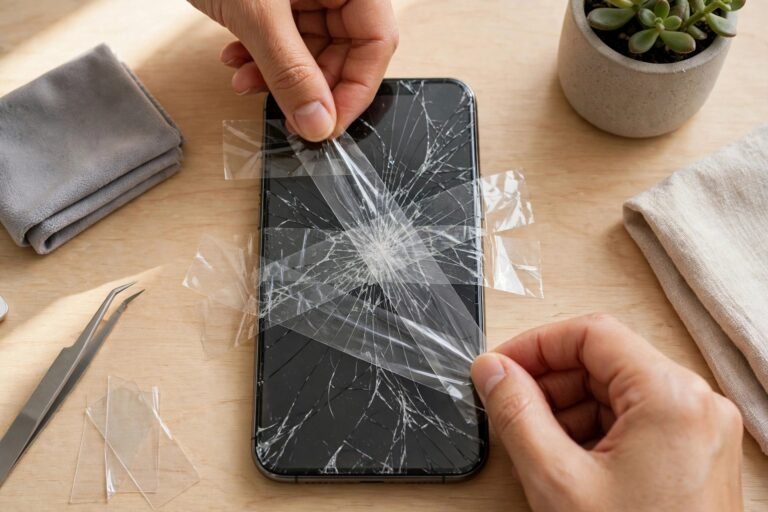
- Cracked protectors come off safest when covered with tape first, so the shards travel with the pane instead of scattering.
- Gentle warmth from the screen itself or your hands loosens stubborn adhesive without any chemicals.
Why It Comes Off Cleanly
It helps to know what you are undoing. Tempered glass protectors use a silicone-based adhesive layer across their whole underside — the same kind of static-like grip that lets the pane spread itself flat during installation. It bonds firmly enough to survive pockets, bags and two years of swiping, yet it is formulated to release as one sheet when peeled from a corner. PET and TPU film protectors use an even lighter adhesive or electrostatic cling.
Because the bond is physical rather than chemical, removal does not disturb what lies beneath. The screen’s own factory coating — the oleophobic layer that makes glass feel slick — stays exactly where it was. A protector that has been on for a long time may need a slower peel, but age makes the adhesive more stubborn, not more permanent.
How to Take One Off, Gently
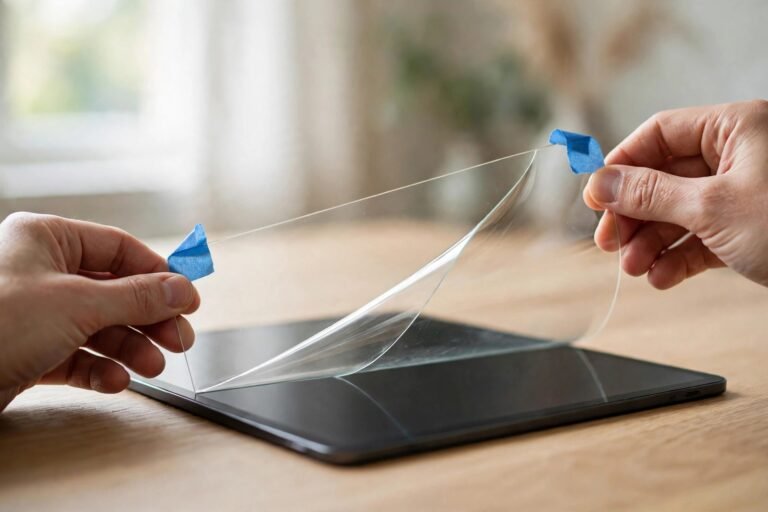
Take the case off first. Find the corner that looks loosest — there is usually one where the edge has very slightly lifted — and work a clean fingernail under it. If your nails will not do it, press a strip of sticky tape onto the corner and pull upward, or slide the corner of a plastic loyalty card into the gap. Once the corner is up, peel slowly and steadily, keeping the protector low and close to parallel with the screen. Tempered glass should come away as one unbroken sheet; if it resists, pause, let your hand’s warmth soften that section, and continue.
Cracked glass gets one extra step before all of this: cover the damaged area with clear tape or packing tape, pressed down firmly. The tape binds the shards to the pane so the whole protector lifts away as a unit instead of snapping and dropping sharp fragments onto the screen and table. Film protectors need nothing special — grip a corner and peel in one smooth motion.
- If a corner simply will not start, run the phone for a few minutes with a game or video — the gentle heat from the display softens the adhesive noticeably.
- Peel over a clean, light-coloured surface. If a tiny shard does escape, you will see it immediately instead of finding it later with a fingertip.
What It Leaves Behind
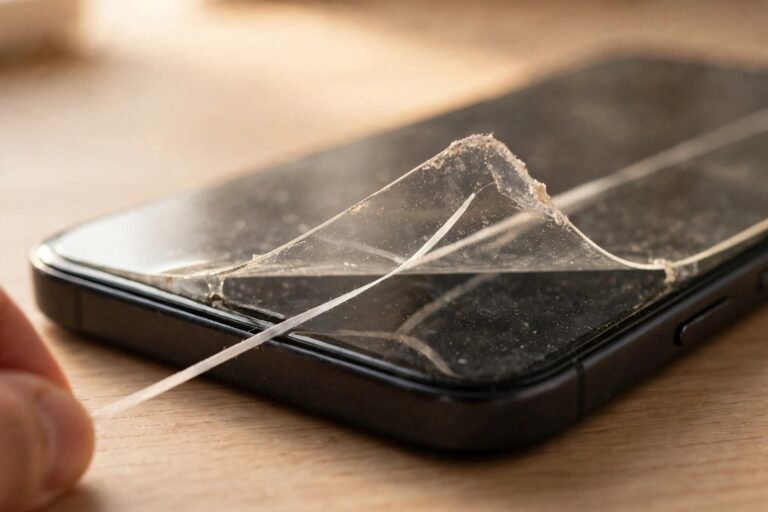
Usually: very little. Expect a faint map of your fingerprints and skin oils that were trapped around the edges, and occasionally a ghost outline where the adhesive sat — a barely visible rectangle that shows up at certain angles. Both are surface residue, not damage. A dry microfibre cloth shifts most of it; anything stubborn yields to a cloth very lightly dampened with water, buffed dry straight after.
Older or very cheap protectors can leave a slightly gummier trace, particularly along the edges where heat from the phone has baked the adhesive over a year or more. This still comes off with patient circular buffing — resist the urge to reach for solvents, nail varnish remover, or anything abrasive, all of which can attack the screen’s own coating. What removal does not leave is a damaged screen: if you uncover scratches or a crack underneath, they were there before, hidden by the protector — which is sometimes exactly why you took it off to look.
Can the Same Protector Go Back On?
In principle, occasionally. In practice, rarely well. The moment a protector leaves the screen, its adhesive face is exposed to the air — and to every speck of dust in it. Even a few seconds of exposure loads the sticky layer with particles that will show as bubbles and specks if the pane goes back on. The adhesive also loses some of its grip with each lift, so a reapplied protector tends to lift at the corners within days.
The exceptions are narrow: if you lifted one corner for a few seconds to dab away a dust speck during installation, the pane usually settles back fine. A protector that has been fully removed, set down, and carried across a room is best treated as finished. Film protectors fare slightly better than glass for careful reapplication, but the honest advice is the same — once it is off, plan on a fresh one.
- Removing a protector to inspect the screen? Do the inspection with the replacement already bought. A bare screen has a talent for meeting keys and gravel at exactly the wrong moment.
- If you remove a protector and the screen beneath is perfect, photograph it — useful proof of condition if you are about to list the phone for sale.
Frequently Asked Questions
Will taking a protector off void anything or damage the display?
No. Removal is a normal user action the protector was designed for, and it does not affect the phone’s warranty or the display beneath it. Damage only becomes possible if you pry with metal tools or rip a cracked pane off without taping it first.
The protector broke into pieces as I peeled it. Is that normal?
It can happen with glass that was already cracked, very old, or peeled too fast at a steep angle. It is untidy rather than dangerous if you taped it first. Sweep the fragments up with a damp cloth or the sticky side of tape, check the screen carefully under a lamp, and carry on.
How long can I leave my phone without a protector after removing one?
As long as you like — it is your screen and your risk tolerance. Bare glass is tougher than it used to be, but it is unprotected against keys, grit and drops from the moment the protector comes off. If the removal was meant to be temporary, treat a pocket or bag as hostile territory until the new one is on.
Taking a screen protector off is meant to be easy — the adhesive lets go because it was designed to. Peel slowly, tape anything cracked, and the screen underneath will be exactly as you left it.