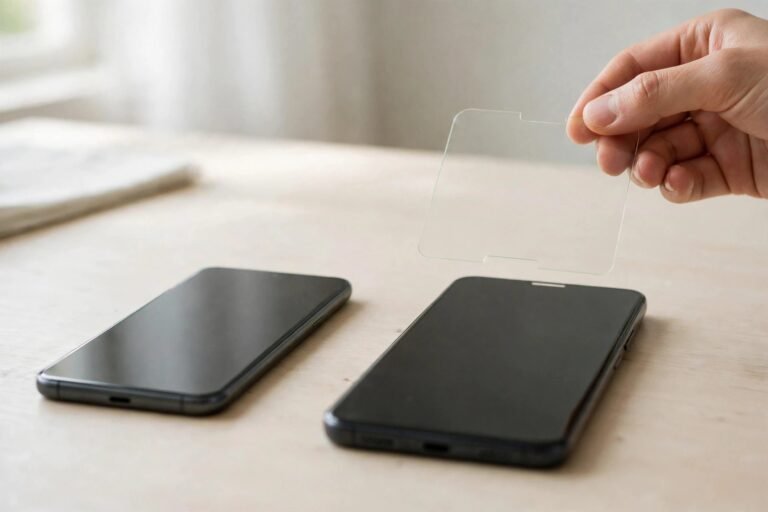
The short answer is yes, for most people — and the iPhone 15’s much-advertised Ceramic Shield is precisely why the question confuses people. Ceramic Shield makes the iPhone 15’s glass significantly tougher against drops, so it is reasonable to ask whether a protector is still necessary.
The honest answer needs one distinction: drop resistance and scratch resistance are different things. Ceramic Shield addresses the first far more than the second. This guide explains what Ceramic Shield actually does on the iPhone 15, what it does not do, and why a thin sheet of glass remains one of the cheapest forms of insurance you can buy for an expensive phone.
Key Takeaways
- Ceramic Shield on the iPhone 15 improves drop and shatter resistance — it is not scratch-proof.
- The iPhone 15’s screen can still be scratched by sand, grit, keys, and everyday pocket debris.
- A screen replacement costs many times more than a protector; the maths strongly favours protection.
- Scratches also reduce resale and trade-in value, even when they do not affect how the phone works.
- Modern protectors are thin enough that touch, Face ID, and the Dynamic Island all work normally through them.
What Ceramic Shield Does — and Doesn’t Do
Ceramic Shield, which Apple introduced with the iPhone 12 and uses across the iPhone 15 range, is glass infused with nano-ceramic crystals. Those crystals make the material harder to crack: in drop testing, Ceramic Shield screens survive falls that would shatter older glass. It is a genuine, impressive piece of materials engineering.
But hardness against cracking is not hardness against scratching — in fact, there is often a trade-off, because glass formulated to flex and absorb impact rather than shatter can be somewhat softer at the surface. Independent scratch testing of Ceramic Shield generations consistently shows visible scratches appearing at similar levels to conventional phone glass. Sand is the classic culprit: quartz grit, found in pockets, handbags, beaches, and building dust, is harder than the screen’s surface and will mark it. A screen protector does not need to be tougher than Ceramic Shield overall — it just needs to be the layer that takes the scratch instead.
The Cost Argument Is Not Close
Consider the two bills. A tempered-glass protector is an inexpensive, replaceable consumable — usually sold in multi-packs, so a spare is already in your drawer when the first one cracks. An out-of-warranty screen replacement for an iPhone 15, by contrast, is one of the most expensive routine repairs in phones, typically running into the hundreds in any currency, more for the Pro Max.
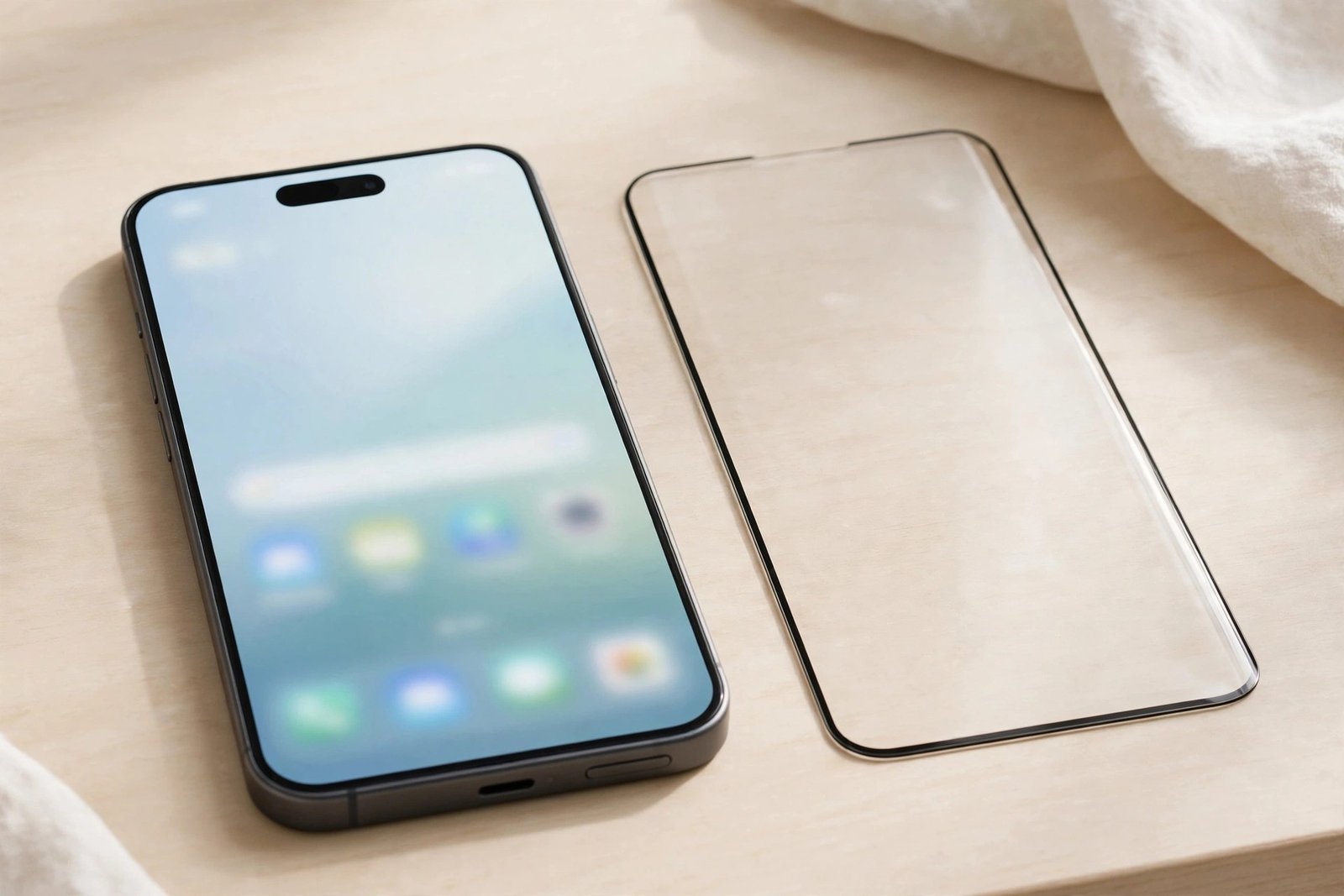
That asymmetry is the whole argument. The protector’s job is to be the sacrificial layer: it absorbs the scratch, the chip, and a meaningful share of drop energy, and when it is damaged, you peel it off and fit another. Even if a protector only ever saves your screen once, it has paid for itself many times over. The same logic applies to resale: a phone with a flawless screen commands a noticeably better price and grade than one with visible scratches, so the protector protects the phone’s value as well as its display.
- Fit the protector on day one, before the phone goes in a pocket. Most screen scratches happen in the first weeks of ownership, when the phone is new, carried everywhere, and not yet in its long-term case.
- If you bought your iPhone 15 in a shop, ask whether they will fit the protector for you — staff do it daily and it takes them two minutes.
Will a Protector Spoil the iPhone 15 Experience?
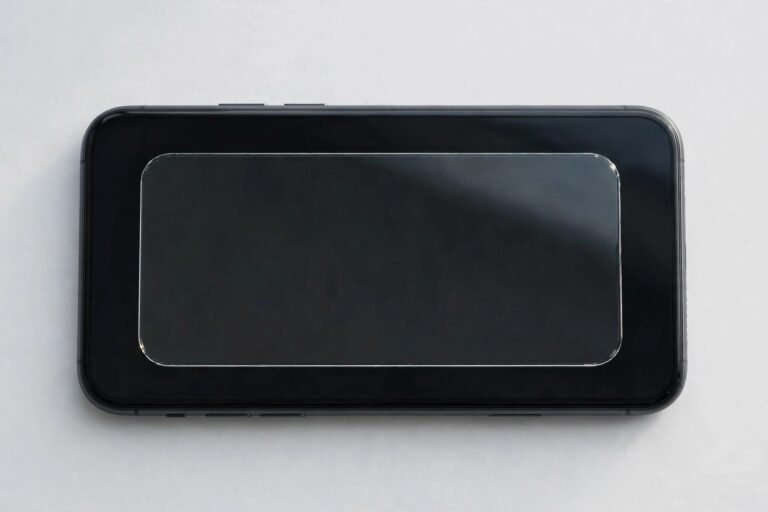
This was a fair worry a decade ago; it is barely one now. Modern tempered glass is around a third of a millimetre thick, optically clear, and coated to feel like the screen itself. Touch sensitivity is unaffected in normal use, and the iPhone 15’s Dynamic Island and front camera sit behind precise cut-outs or beneath the glass without any loss of function — Face ID included. If you use an under-screen feature heavily, fit the protector and re-check; in practice, problems almost always trace back to a badly aligned or wrong-model protector, not to protectors in general.
The legitimate exceptions are about preference, not function. If you dislike any added layer on principle, use your phone only with a case with a raised lip, and accept the risk, that is a coherent choice — some people treat a phone as a tool to be used, not preserved. Film protectors are also an option if you want scratch protection with the thinnest possible feel, though they offer far less impact protection than glass.
- Buy the protector made for the iPhone 15 specifically — the standard 15 and the 15 Pro share a 6.1-inch size, but button and frame differences mean listings are model-specific; check the listing names your exact model, and choose a case-friendly cut if you use a case.
Frequently Asked Questions
Does the iPhone 15 come with a screen protector fitted?
No. The iPhone 15 ships with a protective shipping film for transport, which is meant to be peeled off — it is not a screen protector and offers no real-world protection. If you want a protector, you fit one yourself or have it fitted.
Will a screen protector affect Face ID or the Dynamic Island?
A correctly fitted, model-specific protector will not. The TrueDepth camera system works through the glass or through its cut-out, and the Dynamic Island is a display feature that functions normally under a protector. If Face ID becomes unreliable after fitting, the protector is misaligned or covers a sensor — refit or replace it.
Is a case enough protection without a screen protector?
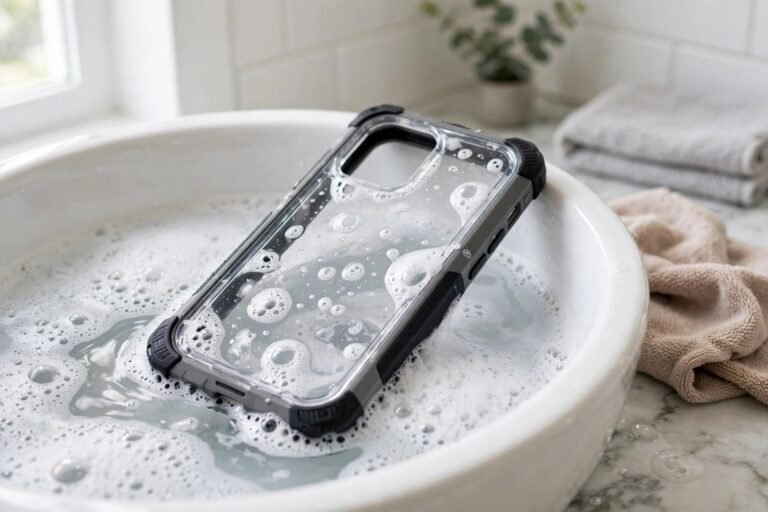
A case protects the back, corners, and frame, and a raised lip helps in face-down drops — but it leaves the screen itself exposed to scratches, grit, and direct impacts from objects landing on the display. Case and protector do different jobs; most people who care about their screen use both.
Ceramic Shield makes your iPhone 15 harder to break — but only a screen protector makes it harder to scratch, and it costs a fraction of the repair it prevents.