Ask a room of phone owners whether you need a screen protector and you will get a shouting match. One side treats it as madness to skip one; the other points out they have carried a bare phone for years without a scratch. The truth is that both can be right — because the answer is not really about protectors. It is about how you treat your phone, and what a broken screen would cost you in money, hassle and regret.
So instead of a verdict, here is a framework. Find the description below that sounds most like you, and take the answer that fits your life — finishing with a simple rule of thumb.
Key Takeaways
- There is no universal answer — the right choice depends on your habits, your phone and your attitude to repair bills.
- If you drop your phone regularly, work outdoors, or share it with children, a protector is straightforwardly worth it.
- If you are genuinely careful, use a good case, and accept a small risk, going without is a defensible choice, not carelessness.
- Screen resale value is decided largely by screen condition — protectors pay for themselves at trade-in time.
- Insurance and repair cover change the sums less than people think — excess charges and hassle usually still outweigh a protector’s modest cost. Check your own policy terms.
- The rule of thumb: if a screen repair would genuinely sting, fit the protector.
If You’re Drop-Prone, Outdoorsy or Just Unlucky
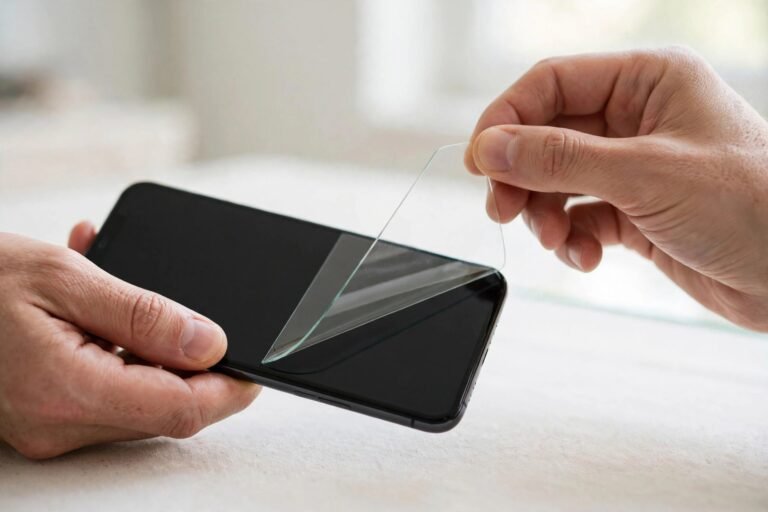
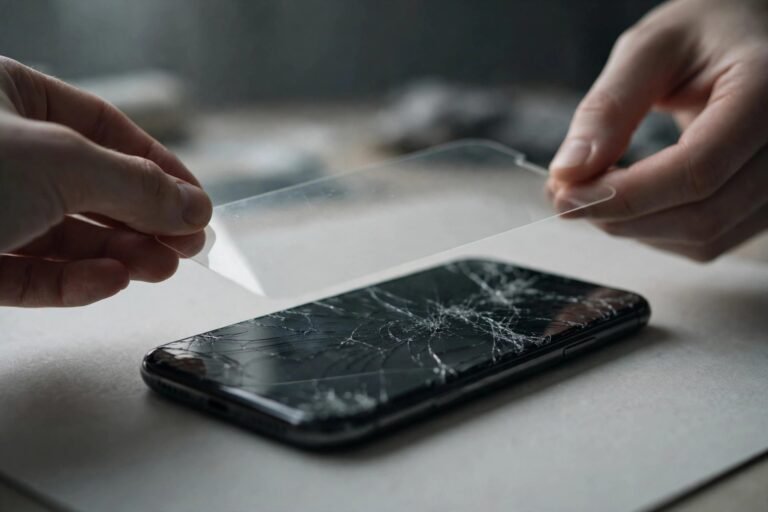
Your answer is yes, and it is not close. If your phone regularly slides off car seats, gets knocked off tables, or lives in the same pocket as your keys, the question is not whether the screen will meet something hard — it is when. The arithmetic is lopsided: protectors are inexpensive and replaceable in minutes, while a screen repair on a modern phone is neither. A protector will not save every drop, but across a year of clumsy moments it converts several repair bills into cheap replacements. Fit tempered glass, add a case with a raised lip for the corners, and stop thinking about it.
If You’re Genuinely Careful
Your answer might honestly be no — with conditions. Some people never drop phones: the device has its own pocket, goes face-up on desks, and comes out only over soft ground. Modern screen glass is also far more scratch-resistant than it was a generation ago, and a case with a raised edge still guards the most common accident. If that is truly you, skipping the protector buys you the nicest version of your screen — perfect clarity, perfect touch feel — at a small, understood risk. The honest test is your history, not your intentions: if your last two phones ended their lives unmarked, you have earned the choice. If they ended with “just one crack”, you are in the previous section and in denial.
- Judge yourself by your last phone’s screen, not by how careful you plan to be with this one. Your track record is the most reliable drop-prediction data you will ever get — and it is free.
If Children Use Your Phone
Yes — fit one, and keep a spare. A phone handed to a child leaves the world of careful adult handling entirely: it gets dropped at toddler height onto hard floors, slid across tables, and occasionally used as a percussion instrument. Children are also impressively unbothered by grit, crumbs and sticky surfaces. Tempered glass plus a sturdy case is the difference between a cracked protector swapped in the kitchen and a repair appointment. This is the one user type where the debate really is over before it starts.
If You Resell or Trade In Your Phones
Yes, and think of it as money rather than protection. When a phone is sold or traded in, its value is graded heavily on the screen — an immaculate display sits in the top band, while scratches and chips knock it down, and a cracked screen can slash the offer dramatically. A protector worn from the first day means that on selling day you peel it off to reveal a screen in effectively new condition. Even a couple of protectors across the phone’s life cost a small fraction of the value they preserve. If you buy outright and sell on, the protector is close to a financial no-brainer.
If You Have Insurance or Repair Cover
Maybe — but read your own terms before deciding, because the cover rarely makes protection pointless. Policies typically involve an excess or deductible per claim, which alone can exceed the cost of several protectors, plus time without your phone during repair. Manufacturers’ care plans vary in exactly the same ways, and terms change, so check the current wording of whatever you hold. Plenty of insured owners still fit a protector for the simplest of reasons: avoiding the claim altogether is cheaper and far less hassle than making one. Cover is a safety net, not an argument for walking the tightrope without one.
- Whatever you decide about glass, a case with a raised lip is the least debatable purchase in phone care — it protects the corners and edges that no screen protector covers, and it costs you nothing in screen feel or clarity.
The Rule of Thumb
Imagine the screen cracked tomorrow. If your honest reaction is “annoying, but fine” — you can absorb the repair cost and you do not care that much — then you do not need a protector, and you will enjoy the bare screen more. If your reaction is a sinking feeling — the cost would sting, the phone is essential every hour of the day, or it is being kept pristine for resale — then you need one. The protector is not really about the screen. It is about whether the accident is a shrug or a bad week. Choose accordingly, and whichever you pick, pick it on day one: a protector fitted after the first scratch is a souvenir, not a strategy.
Frequently Asked Questions
Aren’t modern phone screens strong enough on their own now?
They are stronger and more scratch-resistant than older glass, and that genuinely has narrowed the gap — a careful owner can reasonably go without. But stronger is not unbreakable: drops onto corners and hard, rough surfaces still crack modern screens every day, and keys and grit still mark them. Better glass lowers the risk; it does not remove it, which is why the decision still comes down to your habits.
If I skip the protector, is a case alone enough?
A case with a raised lip covers more than people realise — it handles face-down flat drops and corner impacts, the two most common accidents. What it cannot do is stop scratches from pocket grit or a direct blow to the exposed centre of the screen. For a careful user, a good case alone is a reasonable middle path; for a drop-prone one, it is half a solution.
Does a protector affect how the phone feels or works?
A well-fitted tempered glass protector feels very close to the bare screen — glass on glass, with a similar coating when new — and modern protectors are designed to work with cases and in-display fingerprint sensors. Film protectors feel slightly less slick under the thumb. For most people the difference fades from notice within a day, which is worth weighing against the cost of deciding wrong.
You do not need a screen protector because the internet says so — you need one if a cracked screen would be a bad week rather than a shrug. Decide by your habits and your history, and decide on day one.