It is the question every screen protector quietly promises to answer yes to — and the honest answer is “often, but never guaranteed.” A tempered glass protector genuinely does prevent screen cracks in a great many everyday drops. It also cannot save every phone from every fall, and anyone who tells you otherwise is selling something.
Understanding the difference matters, because it changes how you protect your phone. This guide explains how a protector actually does its job, the variables that decide whether a given drop ends in a cracked protector or a cracked screen, and where glass, film and cases each earn their place.
Key Takeaways
- A tempered glass protector prevents cracks mainly by being sacrificial — it absorbs and spreads impact energy, and breaks in place of the screen.
- No protector guarantees survival. Drop height, the surface, and the landing angle matter as much as the protector itself.
- Corner and edge impacts are the killers — energy concentrates there, and a flat sheet of glass can only do so much about it.
- Film protectors guard against scratches, not meaningful impact; tempered glass is the layer that helps with drops.
- A case with a raised lip handles the impacts a protector cannot — it protects the edges and corners the glass never covers.
- A cracked protector has usually done its job — replace it promptly, because a spent protector protects far less the second time.
How a Protector Actually Protects
A tempered glass protector works in two ways. First, it is a sacrificial layer: when the phone lands face down, the impact energy that would have gone into the screen is spent cracking the protector instead. Glass that shatters has absorbed energy doing so — energy that is no longer available to damage the screen beneath. Second, the protector spreads a point impact over a wider area, softening the concentrated blow from a stone, a tile edge or a piece of gravel.
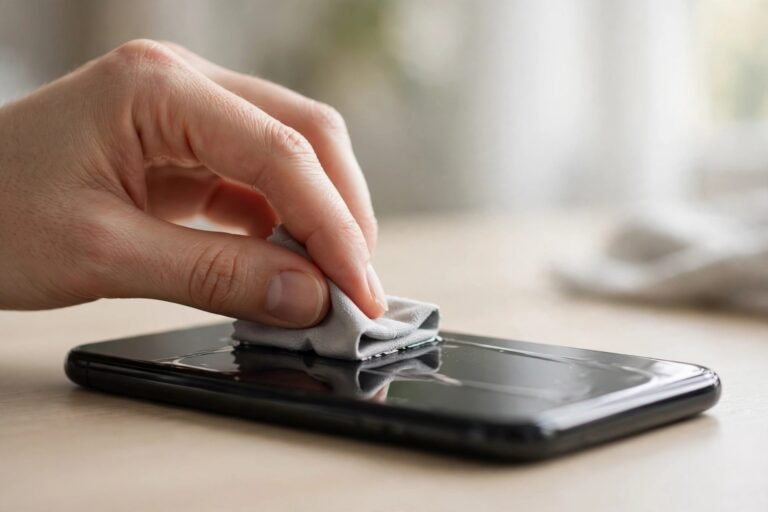
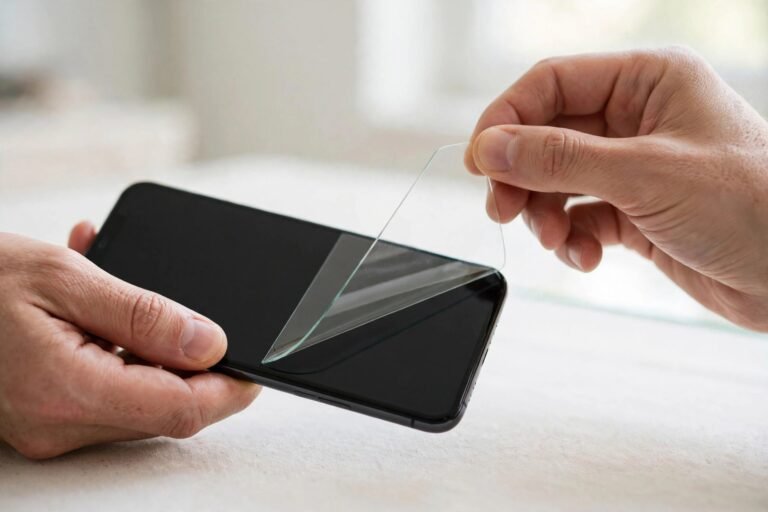
There is a quieter benefit too. Glass screens rarely crack from impact alone — they crack from impact landing on a surface already weakened by tiny scratches and micro-flaws, which become the starting points for fractures. By taking the scratches itself, a protector keeps the screen’s surface pristine and stronger for longer. This is also why the protector must be bonded properly: a poorly fitted protector with air gaps cushions far less effectively.
The Variables That Decide the Outcome
Whether a drop cracks anything at all is mostly decided by physics, not branding. Height is the obvious one — a slip off a sofa and a fumble from head height onto pavement are different events entirely. The surface matters just as much: carpet and wood forgive; concrete, tiles and tarmac do not, because they do not give, and rough surfaces add point impacts.
The biggest variable is the landing angle. A perfectly flat, face-down landing is the protector’s best case — the energy spreads across the whole sheet. A corner-first landing is the worst: all the energy concentrates into one small point, the phone’s frame flexes, and the screen can crack from the edge inward, sometimes underneath an intact protector. Edge impacts on curved screens are similarly awkward, because protectors are often slightly smaller than the display for case compatibility, leaving the most vulnerable part of the glass exposed. This is the main reason “the protector survived but the screen didn’t” stories happen.
- Think of protection as a system, not a sheet: the protector handles face-down impacts and scratches, the case handles corners and edges. Most real-world screen cracks involve the edges — which is exactly the half of the problem a protector alone cannot solve.
Glass, Film and Cases: Who Does What
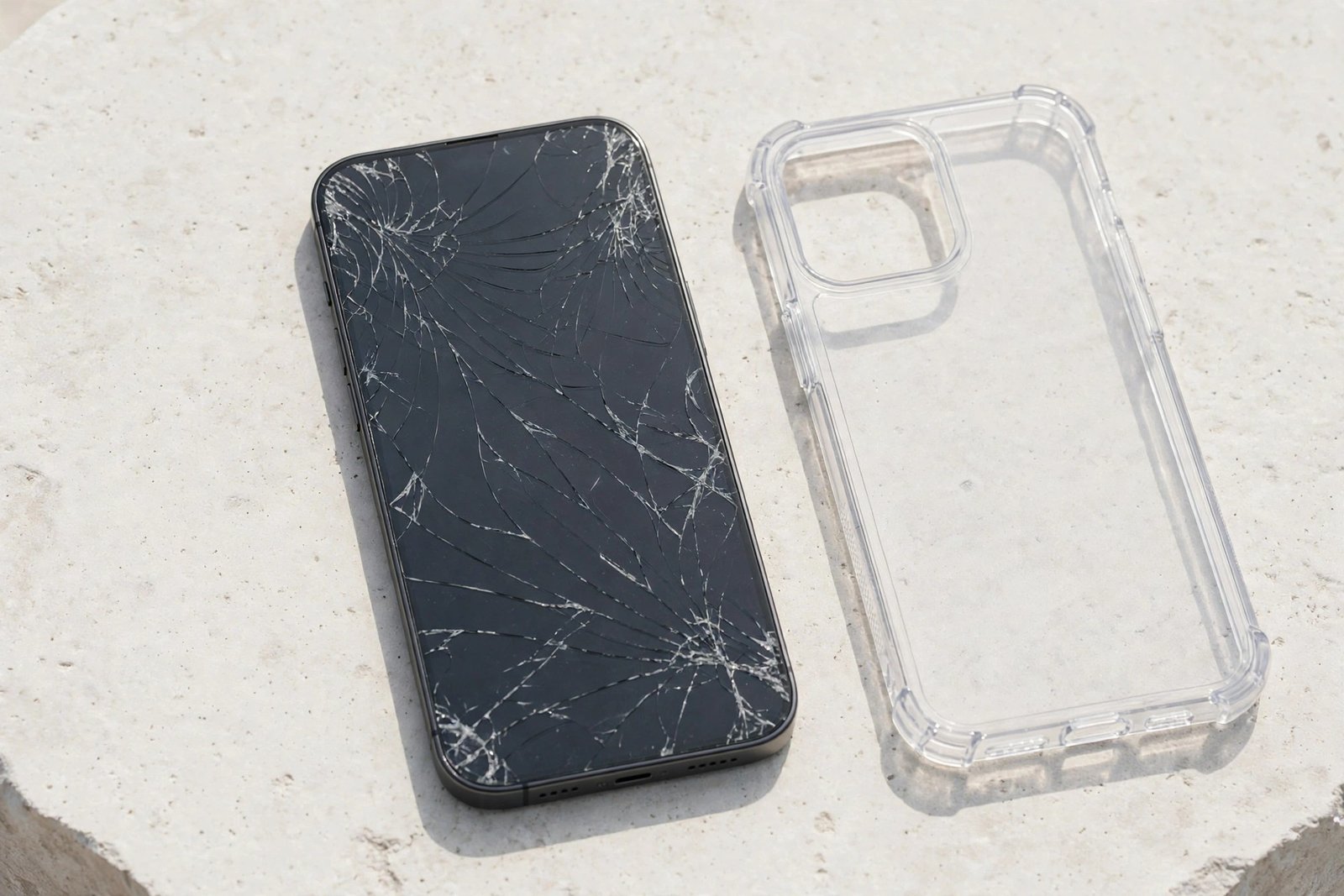
Film protectors are scratch insurance only. A thin plastic layer does a fine job of keeping keys and grit off the screen, but it has almost no ability to absorb a drop’s energy — a screen that would crack under film generally still cracks. Tempered glass is the impact layer: rigid, sacrificial, and genuinely effective in flat and moderate drops. And the case is the corner specialist: a raised lip keeps the screen off flat surfaces entirely in a face-down drop, and padded corners absorb the edge impacts that defeat protectors. Used together, glass and a decent case cover almost every realistic drop scenario between them — neither is as complete alone.
When a Protector Can’t Save You
It helps to know the limits plainly. A protector is unlikely to save a screen dropped from height onto a corner of concrete, landing on the protruding edge of a step or kerb, or crushed — in a closing car door, say, or under something heavy. It also cannot help a screen that is already cracked: an existing fracture compromises the glass structure, and further impacts spread it whether or not a protector is fitted on top. Finally, a protector that has already cracked once has spent its sacrificial value; leaving it on because it “still looks mostly fine” means the next drop meets a weakened layer and, underneath it, a screen one impact closer to trouble.
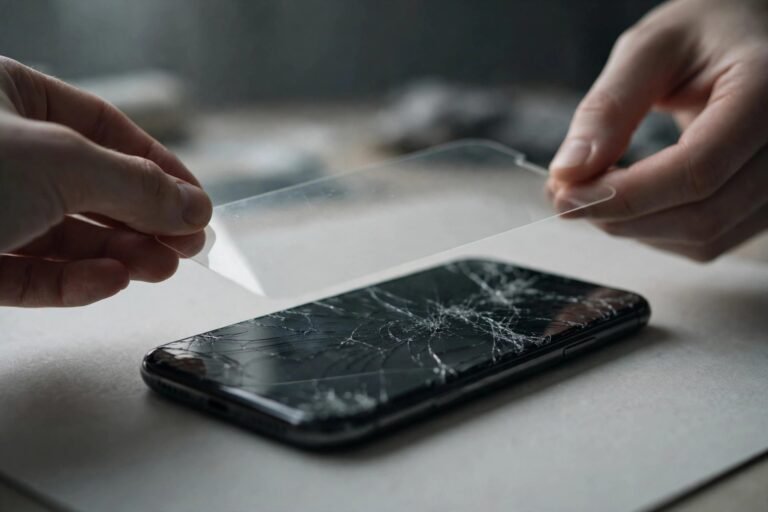
- After any drop hard enough to crack the protector, check the screen underneath before ordering a replacement. Peel the damaged protector off carefully and inspect in good light — knowing the screen survived tells you the system worked, and fitting fresh glass immediately restores full protection.
Frequently Asked Questions
If my protector cracked in a drop, does that mean it saved my screen?
Very probably, yes. The protector cracked because it absorbed and spread energy that would otherwise have gone into the screen. It is not absolute proof — the drop might have been survivable anyway — but a shattered protector over an intact screen is the system working exactly as designed. Remove it, check the screen carefully, and replace it.
Does a more expensive protector prevent cracks better?
Not in any simple, guaranteed way. Thickness, adhesive quality and how completely the glass covers your specific screen all play a part, and price is a rough guide to those at best. Fit matters enormously: a moderately priced protector that covers the screen properly and is bonded without gaps will usually outperform a premium one fitted badly. Be wary of dramatic marketing claims — no protector of any price can promise your screen will not crack.
Should I replace a cracked protector straight away?
Yes. A cracked protector has already absorbed the impact it was there for, and its ability to protect against the next one is much reduced. Its sharp edges can also be unpleasant and occasionally unsafe to use, and cracks let dust and moisture work underneath. Replacement is quick and inexpensive compared with the alternative.
A screen protector prevents cracks the honest way — by breaking first, spreading the blow, and keeping the real screen flawless. Pair it with a case for the corners, and you have covered everything except genuinely bad luck.