

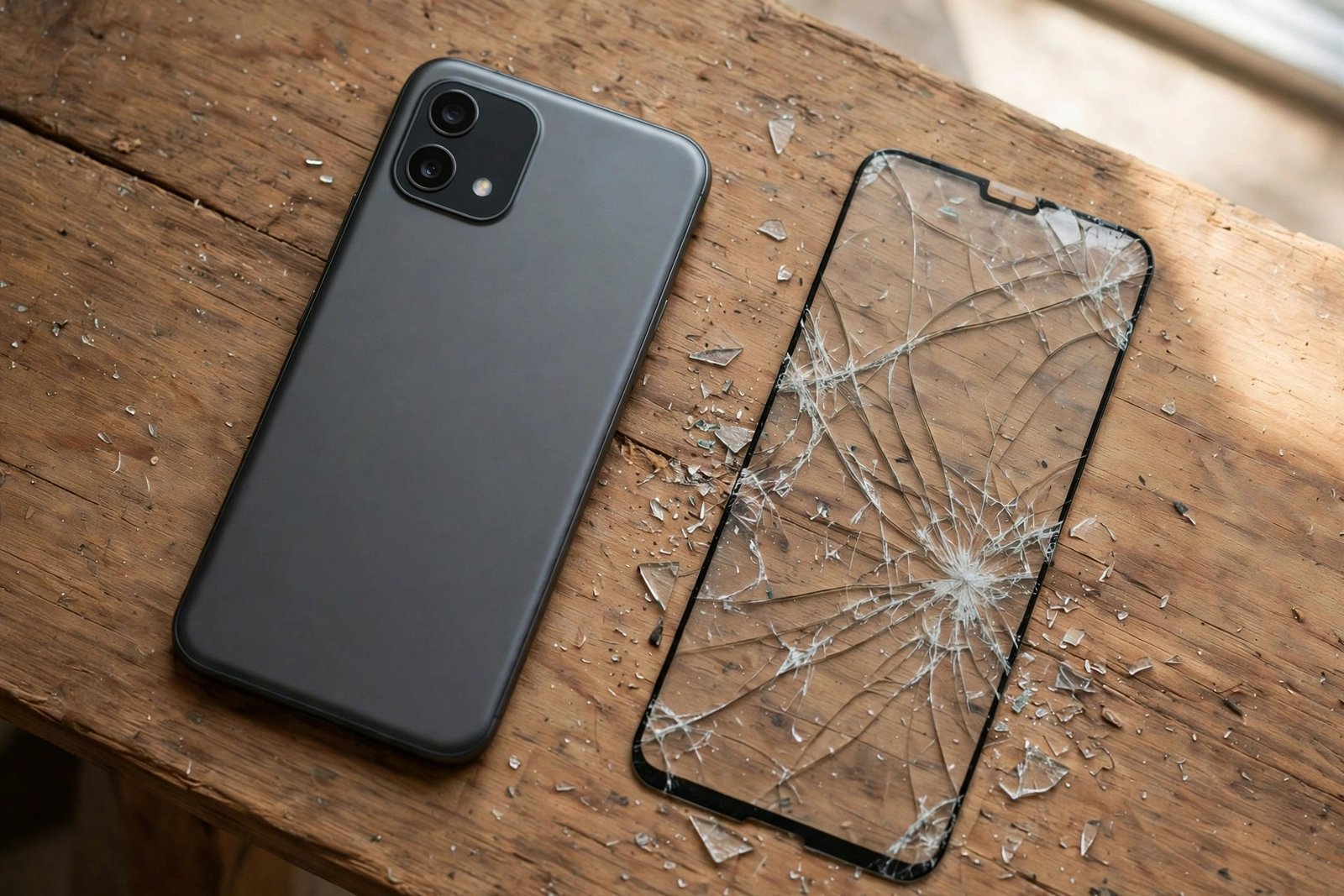
Here is the verdict first: most people should use one. A screen protector costs a small fraction of a screen repair, takes five minutes to fit, and quietly absorbs the scratches and cracks that would otherwise land on the glass you cannot easily replace. If you are careful, lucky, and upgrade every year, you might never miss it — but for everyone else, the maths is not close.
Still, “most people” is not “all people”, and the honest answer depends on how you actually live with your phone. This guide gives you a quick, direct way to decide: look at your drop history, your job and habits, and what your phone is worth. Two minutes of honesty here beats months of either anxiety or false confidence.
Key Takeaways
- Default answer: yes. A protector is cheap insurance against the single most expensive common phone repair.
- Dropped your phone more than twice in the past year? You need one — your history is the best predictor.
- Outdoor, trade, or active jobs raise the risk sharply — grit, tools, and hard floors are screen killers.
- The newer and pricier your phone, the stronger the case for protecting it — repair bills rise with the handset.
- Keys and coins rarely scratch modern glass, but sand and grit do — pockets and bags are not as safe as they feel.
- Going without is a legitimate choice only if you accept the repair bill or replacement risk with your eyes open.
The Three Questions That Decide It
Question one: how often do you drop your phone? Be honest. If your phone hits the floor every few weeks — in the car park, off the sofa arm, out of a gym locker — a protector is not optional equipment, it is a countdown timer you keep resetting. Tempered glass is designed to take the hit sacrificially: it cracks so your screen does not. People who almost never drop their phones are the only group for whom drop protection is genuinely a minor concern, and even they are one slippery moment away from a bad day.
Question two: where does your phone spend its life? A desk worker whose phone moves between a stand, a pocket, and a bedside table faces modest risk. A builder, warehouse worker, delivery driver, gardener, or keen beach-goer faces a different world: concrete, gravel, metal tools, and sand. Sand deserves special mention — it contains minerals harder than phone glass, and a single grain dragged across a screen in a pocket or bag can leave a permanent scratch. If your environment is gritty, a protector is close to essential.
Question three: what would a broken screen actually cost you? On a recent flagship, a genuine screen replacement can run to a significant share of the phone’s value, and it usually means time without the device as well. On an older phone near replacement, the same crack might be an acceptable reason to upgrade early. The higher the repair bill relative to what you are willing to pay without wincing, the clearer the decision becomes.
- Score yourself quickly: frequent drops (2 points), rough environment (2 points), phone under two years old or expensive to repair (1 point). Three or more? Fit a protector today.
- Children and pets count as environmental hazards — if either regularly handles or knocks your phone, add a point.
But Is Modern Phone Glass Not Tough Enough Already?
Modern chemically strengthened glass is genuinely impressive — far tougher than the screens of a decade ago. It resists the classic pocket hazards well: keys, coins, and light knocks rarely mark it. Manufacturers demonstrate this convincingly, and it is reasonable to be impressed.
What the demonstrations do not change is physics. Glass toughness involves a trade-off: making glass harder to shatter can leave it more prone to scratching, and vice versa. Everyday grit, concrete edges, and tiled floors still win regularly, which is why cracked and scratched screens remain one of the most common phone repairs despite years of glass improvements. A protector does not exist because the glass is bad — it exists because the glass is expensive and permanently attached, while the protector is neither.
When Skipping One Is a Reasonable Choice
Some people genuinely prefer the feel of bare glass, dislike any added thickness, and accept the risk calmly. If you upgrade annually, carry insurance or a care plan you are happy to use, keep the phone in a protective case with a raised lip, and almost never drop it, going without a protector is a defensible, eyes-open decision rather than carelessness.
Just make the decision deliberately. The worst outcome is the middle ground: no protector, no cover plan, and a vague hope — followed by genuine shock at a repair quote. If you skip the protector, at least keep the case, keep the phone out of gritty pockets, and know roughly what a screen replacement for your model costs so the risk you are carrying is a number, not a surprise.
- Undecided? Fit a protector for the first month with a new phone — the period when drops are most likely while handling habits adjust — then reassess.
- A protector also preserves resale value: a flawless screen is one of the first things buyers and trade-in checks look for.
Frequently Asked Questions
Does a screen protector affect how the phone feels or looks?
A well-fitted tempered glass protector is barely noticeable in daily use — it feels like glass because it is glass. Very cheap protectors can look cloudy or feel draggy, and film protectors feel softer under the thumb. For most people, any difference fades from awareness within a day or two.
Is a case alone enough protection?
A case with a raised lip does a lot: it guards corners and keeps the screen off flat surfaces. What it cannot do is stop grit, a stone on the ground, or a direct knock to the face of the screen. Case and protector protect against different failures, which is why the combination is the standard recommendation.
What if I have insurance or a manufacturer’s care plan?
Cover changes the calculation but rarely removes it entirely — claims usually involve an excess fee, a repair appointment, and time without your phone. Many covered owners still use a protector simply to avoid the hassle. If your excess is low and repairs are quick and local, the case for a protector is weaker but not gone.
You do not need to be clumsy to need a screen protector — you just need one unlucky drop on the wrong surface. Judge your own risk honestly, and let a few pounds of glass carry it for you.


