Every new iPhone arrives with marketing about tougher glass, and every year owners ask the same fair question: if the glass is so strong now, is a screen protector still necessary? The honest answer is it depends on what you actually need protection from — because modern iPhone glass is very good at one thing and surprisingly ordinary at another.
This guide gives you the straight version: what the strengthened glass on recent iPhones genuinely does well, what still damages it, and how to decide based on your habits, your job, and how long you plan to keep the phone — not on fear or habit.
Key Takeaways
- Modern iPhone glass is engineered mainly for drop survival, not scratch resistance.
- Sand and grit are the real enemy — quartz particles are harder than the glass and scratch it easily.
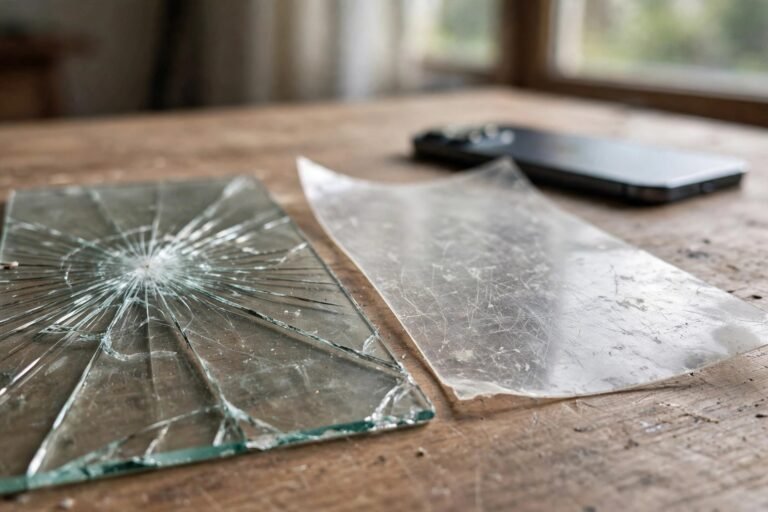
- A protector is a sacrificial layer: it takes the scratches and chips so the actual screen doesn’t.
- A scratched screen lowers resale and trade-in value far more than a protector costs.
- Careful users with a good case who upgrade often can reasonably skip one.
- Anyone who works outdoors, visits beaches, or keeps a phone for years should fit one.
What Modern iPhone Glass Actually Does Well
Recent iPhones use a strengthened glass front — Apple calls its version Ceramic Shield — made by embedding ceramic crystals into the glass. The engineering goal is toughness: surviving knocks, bumps, and drops onto hard floors without cracking. By that measure it works. Modern iPhones survive falls that would have shattered older models, and drop performance has genuinely improved generation after generation.
Here is the part the adverts leave out: toughness and hardness are different properties. Toughness is about not cracking on impact. Hardness is about resisting scratches. Making glass tougher does not automatically make it harder, and in some cases the two pull against each other. So while your iPhone is better than ever at surviving a fall onto concrete, it scratches at roughly the same level as smartphone glass has for years — around the same point on the hardness scale where everyday materials begin to leave marks.
The Real Enemy: Sand, Grit, and Pockets
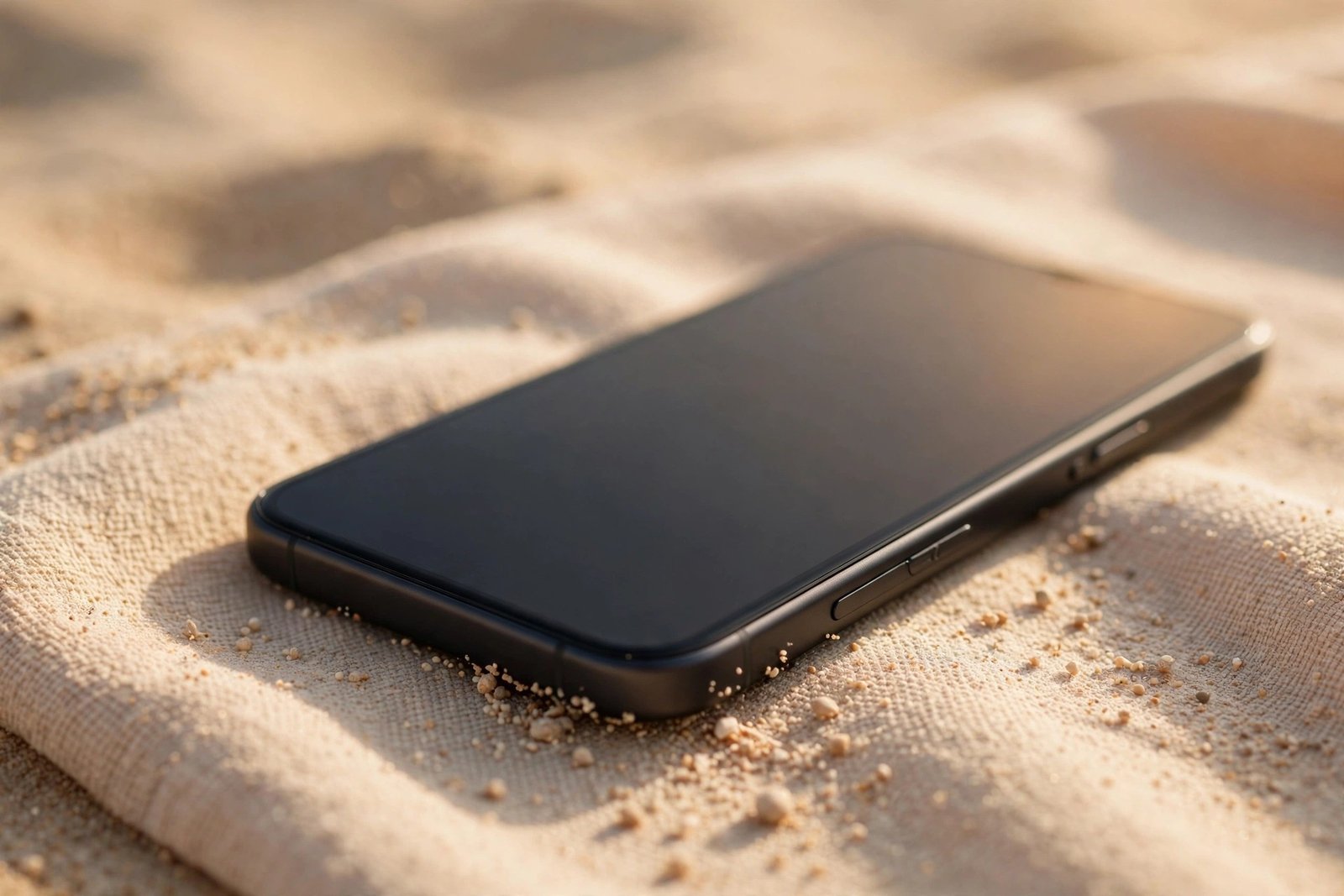
Ask owners of unprotected phones where their scratches came from and few will say a dramatic drop. The usual culprits are mundane: sand at the beach, grit in a pocket or bag, dusty work sites, and sliding the phone face-down across a gritty surface. Sand is mostly quartz, and quartz is harder than smartphone glass — every grain dragged across the screen acts like a tiny cutting tool.
These scratches are rarely deep, but they accumulate. After a year of pockets, benches, and car consoles, an unprotected screen often carries a web of fine micro-scratches that catch the light and make the display look tired long before the phone itself is old. Keys and coins, despite their reputation, are usually softer than the glass and less of a threat than people assume. It is the invisible grit that does the slow damage.
- After a beach day, rinse or blow sand off the phone before wiping it — wiping first grinds the grains straight across the glass.
- Give your phone a dedicated pocket with nothing else in it. It is the single cheapest scratch-prevention habit there is.
The Cost Equation and Resale Value
Think of a protector as insurance with a very lopsided payout. A pane of tempered glass is a small, replaceable consumable. An out-of-warranty screen replacement, by contrast, is one of the most expensive repairs on the phone — typically many times the cost of a protector, and that is before you count the inconvenience of being without the device. A protector cannot guarantee your screen survives every drop, but it meaningfully improves the odds and absorbs the everyday wear completely.
Resale tells the same story. Buyers and trade-in schemes grade screens harshly: a flawless display keeps a phone in the top value band, while visible scratching knocks it down a grade and takes a noticeable slice off what you get back. If you plan to sell or trade in the phone, keeping the original glass pristine under a protector is one of the easiest ways to protect its value.
Who Can Safely Skip One — and Who Shouldn’t
Some owners can honestly go without. If you are careful by nature, keep the phone in a case with a raised lip, work at a desk, rarely visit beaches or building sites, and upgrade every year or two, the practical risk is low — and you get to enjoy the screen exactly as it was designed to feel, with nothing between your finger and the glass. Plenty of people run their phones this way for years with nothing worse than faint marks they never notice.
Others should not gamble. Fit a protector if you work outdoors or in dusty trades, spend time at the beach, hand your phone to children, keep devices for three or four years, or simply know you are hard on your things. The same goes if a scratched screen would genuinely bother you every time you looked at it — peace of mind is a legitimate reason, and it is cheap.
- Undecided? Try a protector for the first month while the phone is new and you are still learning how you handle it — you can always take it off later.
- If you skip a protector, at least keep the case. A raised lip keeps the screen off flat surfaces, which is where most grit scratches happen.
Frequently Asked Questions
Does a screen protector stop the screen cracking in a drop?
Not guaranteed — but it helps. A tempered glass protector absorbs and spreads impact energy and will often crack itself instead of the screen beneath. Corner impacts and very hard falls can still break the screen, which is why a protector works best alongside a decent case rather than instead of one.
Will my screen scratch if I only ever keep it in my pocket?
It can. Pockets collect grit and sand particles over time, and those are harder than the glass. A pocket that also holds keys, coins, or another phone raises the risk further. A dedicated, empty pocket is the safest way to carry a phone without a protector.
Does a protector affect how the screen looks or feels?
A well-fitted tempered glass protector is barely noticeable — glass on glass feels almost identical to the bare screen, and clarity is essentially unchanged. Film protectors feel slightly softer under the finger. Either way, the difference is small compared with the protection gained.
Modern iPhone glass is tougher than ever against drops, but sand doesn’t care about marketing. If your life involves grit, work sites, or keeping the phone for years, fit the protector — if not, you can skip it with a clear conscience.