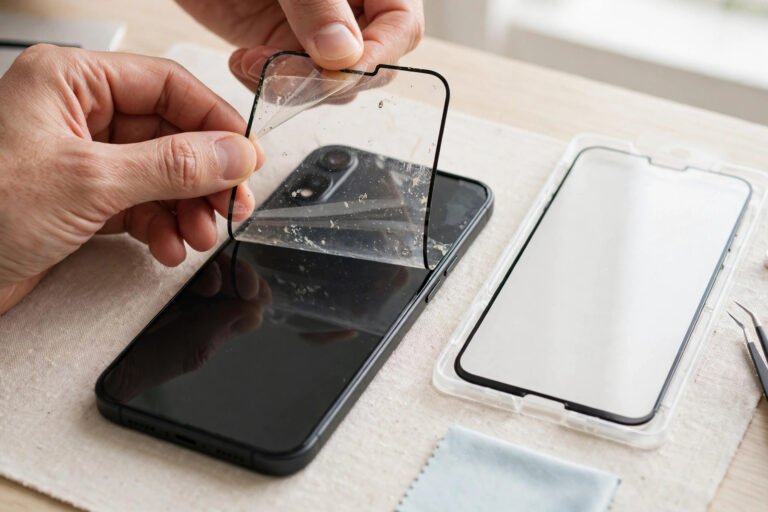
It’s the promise on every box: invisible armour for your screen. But can a sheet of glass barely thicker than a hair really stop your display cracking? The honest answer is yes — up to a point. A protector genuinely lowers your risk, but it isn’t the force field the marketing suggests.
Understanding what protectors can and can’t do comes down to a bit of physics and knowing the difference between protector types. This guide gives you the straight facts, so you know exactly how much protection you’re actually getting.
Key Takeaways
- Yes, against everyday knocks — a protector genuinely lowers the risk of cracks from minor drops, bumps, and face-down slips.
- No, not against serious drops — a hard corner impact onto concrete can overwhelm any thin protector, no matter the brand.
- Tempered glass protects best — it’s engineered to crack sacrificially, absorbing impact energy that would otherwise reach your screen.
- Film stops scratches, not cracks — PET and TPU films are too thin to absorb meaningful impact; they’re scratch guards, not crack guards.
- Pair it with a case — a protector plus a case with a raised lip is the combination that prevents the most real-world breakage.
- A cracked protector is proof it worked — it absorbed the blow so your display didn’t have to.
What a Screen Protector Actually Does
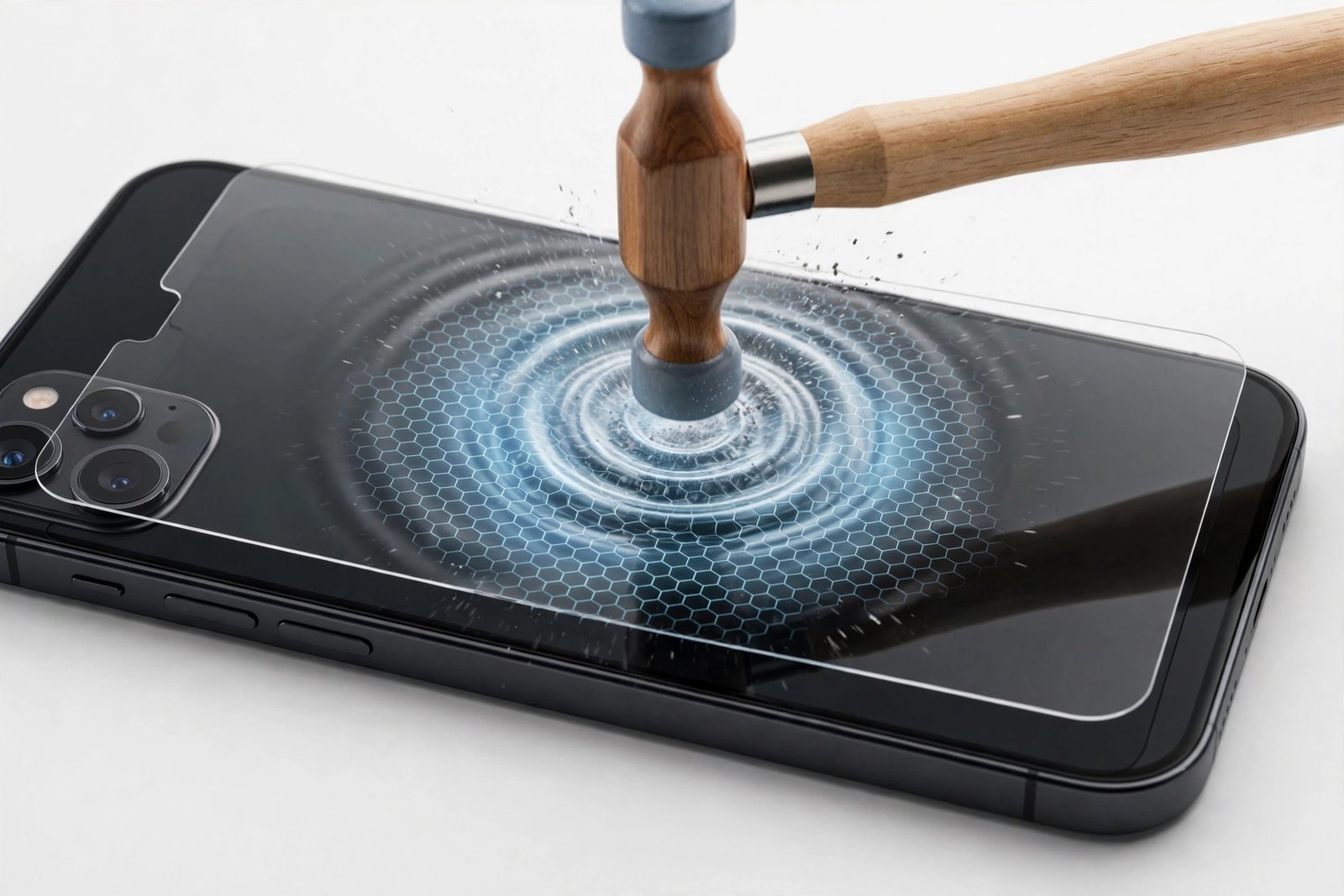
Think of a tempered glass protector as a crumple zone for your phone: a sacrificial layer whose entire job is to break first. When your phone takes a knock, the protector flexes and absorbs — and if the force is strong enough, fractures, spending the impact energy on cracking itself rather than passing it into your screen.
Protectors are also rated around 9H hardness, resisting the everyday abrasives that mark bare screens — keys, coins, and especially sand and grit, which are harder than display glass. Scratches create weak points where a later impact can start a fracture, so scratch protection is crack prevention in the long run.
Tempered Glass vs Film vs Liquid Protectors
Not all protectors are equal when it comes to preventing cracks. The material makes all the difference.
Tempered glass — the real crack protection
At roughly 0.3mm thick, tempered glass is rigid and manufactured under internal compression, which gives it real structural strength. When it takes a hit beyond its limit, it shatters in a controlled way that dissipates energy across the whole sheet. If crack prevention is your goal, this is the only type that meaningfully provides it.
PET and TPU film — scratch guards only
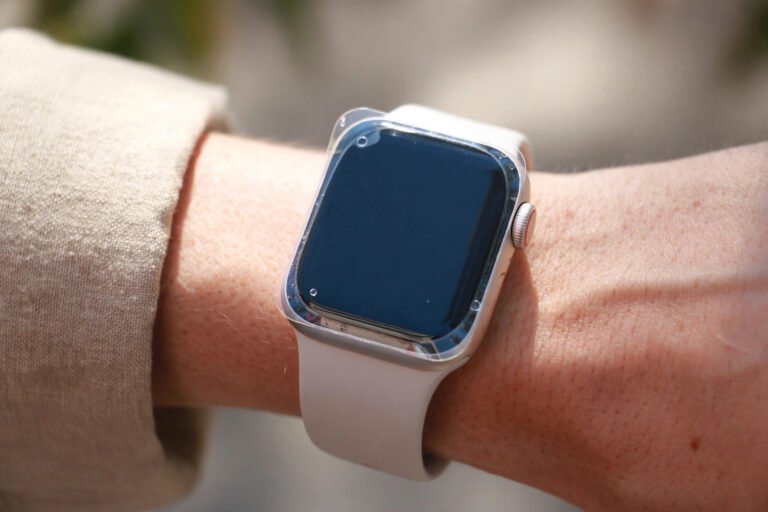
Plastic films are flexible and only a fraction of a millimetre thick. They’re excellent at stopping scratches and scuffs, and they hold shattered glass together if the screen does break — but they cannot absorb enough impact energy to prevent a crack. If someone tells you their film “saved” their screen, the screen most likely would have survived anyway.
Liquid and nano coatings — mostly marketing
These wipe-on coatings add a microscopic layer that may improve scratch resistance slightly and can make the screen feel smoother. But a layer measured in nanometres offers no meaningful impact absorption whatsoever. Don’t buy one expecting crack protection.
- If preventing cracks is your priority, choose a full-coverage tempered glass protector from a reputable brand — not film, and not a liquid coating. Check that it’s genuinely tempered glass (it should feel rigid, not bendy) and rated 9H.
- Replace a cracked protector promptly. A shattered protector has already spent its structural strength and offers far less protection against the next knock.
What Protectors Can Prevent
Protectors shine in the common, low-energy scenarios behind most phone accidents: the face-down slip off a table, the phone rattling against keys in a bag, the bump on a doorframe, sand dragged across the glass in a pocket. Here the protector takes the abrasion or absorbs the modest impact, and your screen stays pristine.
They also stop scratches from weakening the glass over time. Every deep scratch is a stress concentrator — a starting point for a future crack — so by keeping the surface flawless, a protector keeps the glass at full strength for longer.
What They Cannot Prevent
A protector cannot reliably save your screen from a hard drop onto an unforgiving surface — especially a corner impact onto concrete, tile, or asphalt. Corners concentrate force into a tiny area, and the energy of a two-metre fall simply overwhelms what 0.3mm of glass can absorb. The protector will crack, and the screen may crack with it.
Nor can they help with bending forces (sitting on your phone), impacts to unprotected edges, or a screen already weakened by an earlier crack. And no protector compensates for having no case: a bare phone landing on its corner is the single most common way screens die.
The “Sacrificial Crack” Explained
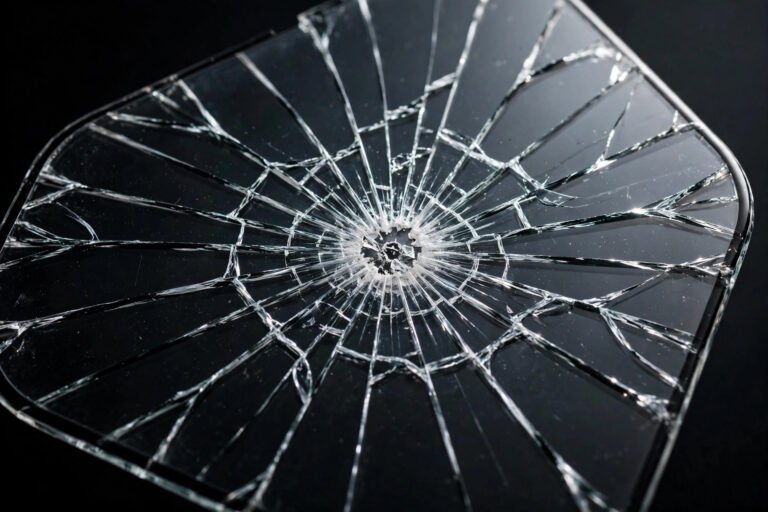
It feels wrong when your brand-new protector shatters from a modest drop — like the product failed. In reality, that’s the product succeeding. Tempered glass is manufactured so that, under excessive stress, it fractures into small, relatively blunt pieces instead of sharp shards, and in doing so it soaks up energy that would otherwise travel straight into your display.
So the ideal outcome of a bad drop is a spiderwebbed protector over a flawless screen — not luck, but the design working as intended. When yours cracks, replace it knowing it earned its keep.
How to Maximise Your Protection
The single biggest upgrade isn’t a fancier protector — it’s combining a tempered glass protector with a decent case. A case with a raised lip around the screen means face-down drops land on the case, not the glass, and it cushions the corner impacts that protectors can’t handle alone. Together, they cover each other’s weaknesses.
Beyond that, habits matter more than hardware: don’t carry your phone loose with keys and coins, avoid back pockets, and replace a cracked protector without delay. No combination makes a phone indestructible, but protector plus case plus a little care prevents the overwhelming majority of real-world screen damage.
Frequently Asked Questions
Is a thicker screen protector better at preventing cracks?
Marginally. A slightly thicker tempered glass protector (0.5mm vs 0.3mm) has a bit more material to absorb energy, but the difference is small — and going too thick can reduce touch sensitivity and cause fit issues with cases. Glass quality and proper full-coverage fit matter far more than an extra fraction of a millimetre.
Do I still need a protector if I have a good case?
Yes — they protect against different things. A case guards the edges, corners, and back, and its raised lip helps with face-down drops. But the screen surface itself is still exposed to keys, sand, and direct knocks whenever the phone is out of the case’s shadow. The two work as a team, not as substitutes.
Can a screen protector weaken my screen or make cracks worse?
No. A properly fitted protector doesn’t stress the display or make it more fragile. If your screen cracks with one on, the impact simply exceeded what the protector could absorb — it didn’t cause the damage; it just couldn’t prevent all of it.
How often should I replace my screen protector?
Replace it as soon as it’s cracked or the edges start lifting — a damaged protector protects poorly. An intact tempered glass protector, on the other hand, can last for years without needing replacement. There’s no expiry date; condition is the only thing that matters.
So: does a screen protector prevent cracks? Against everyday knocks and scratches, absolutely — that’s what tempered glass is engineered for. Against a brutal corner drop onto concrete, nothing thin can promise a save. Wear the protector, add a case, and you’ll dodge the vast majority of cracked screens.