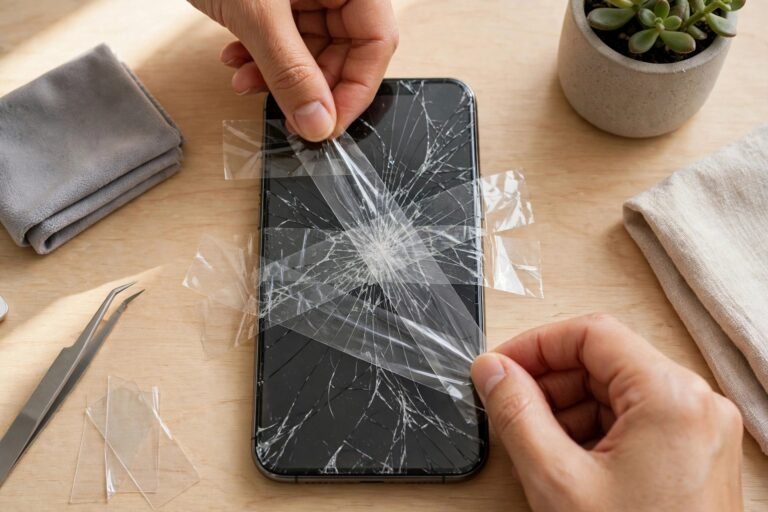
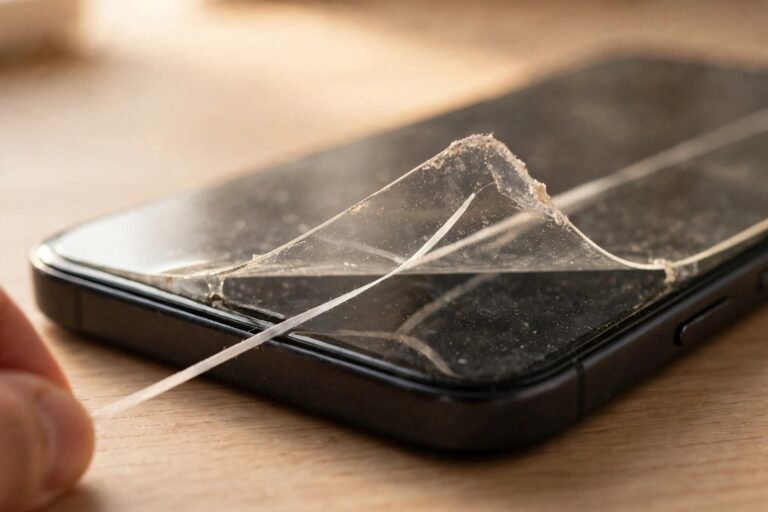
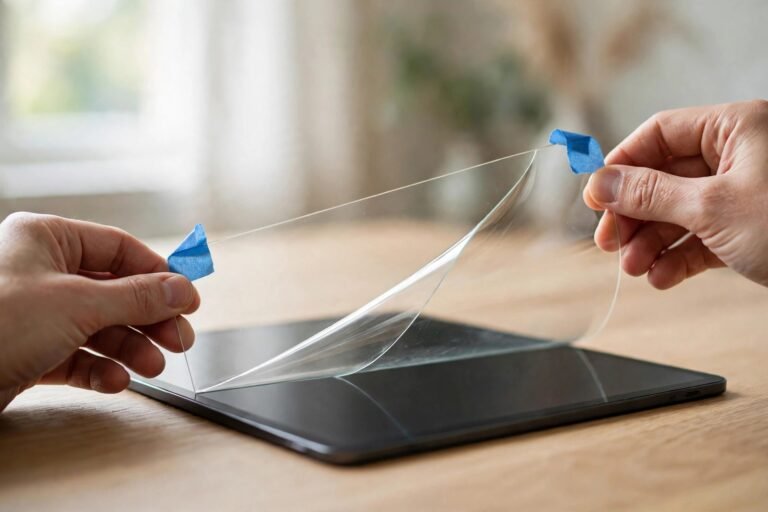
Most cleaning advice covers the shiny top of a screen protector. But sometimes the problem is on the other side — the sticky adhesive layer that faces your screen. Dust, lint, and fingerprints get trapped there during fitting, and once the protector is down, that trapped grime shows up as bubbles, specks, and cloudy patches you can’t wipe away from the outside.
The sticky side can be cleaned, but it plays by different rules. The adhesive layer is delicate: scrub it, soak it, or use the wrong cleaner and the tack that holds your protector in place is gone for good. This guide explains when cleaning the sticky side is worth attempting, which methods work, and which ones quietly ruin the protector.
Key Takeaways
- Only clean the sticky side if the protector has been lifted or refitted — adhesive sealed against the screen never needs cleaning.
- Tape-dabbing is the safest method: press clean tape onto the adhesive and peel away to lift dust and lint.
- Never use soap, alcohol sprays, or rough cloths on the adhesive — they degrade the glue layer permanently.
- Work quickly and refit promptly; every minute the sticky side faces the air, it collects more dust.
- If the adhesive is cloudy all over or no longer tacky, cleaning won’t save it — replace the protector.
When Does the Sticky Side Actually Need Cleaning?
In normal use, almost never. Once a protector is fitted, the adhesive sits sealed against the glass, protected from dust and air. The sticky side only becomes a problem in a few specific situations: you lifted the protector to remove a trapped speck and more dust landed on it, you are refitting a protector that was removed and stored badly, or a brand-new protector came out of the packet with lint already clinging to the adhesive.
Look at the sticky side under a bright light before you decide. A few isolated specks or a stray fingerprint at one corner can usually be dealt with. But if the whole surface looks hazy, grey, or frosted, the adhesive itself has broken down or picked up a film of contamination across its full area — no cleaning method restores that evenly, and your time is better spent fitting a fresh protector.
Method 1: The Tape-Dab (Safest and Most Effective)
The tape-dab uses one adhesive to rescue another. Take a strip of strong, clean packing tape or a fresh dust-removal sticker and press it lightly onto the sticky side of the protector, exactly over the speck or fibre you want to remove. Peel it away slowly. The tape’s grip is slightly stronger than the protector’s adhesive, so the contamination lifts off with the tape while the glue layer stays behind.
Work speck by speck rather than pressing tape across the whole surface — every pass slightly weakens the adhesive it touches. Use a fresh section of tape each time so you are not redepositing what you just picked up. This method handles dust, lint, hair, and most fibres, which account for the vast majority of sticky-side problems.
- Clean the sticky side in a steamy bathroom — humid air keeps fresh dust from settling on the exposed adhesive while you work.
- Hold the protector sticky side up and flat on a clean surface; never let the adhesive rest against fabric, paper, or a tabletop, which will coat it in fibres.
Method 2: A Gentle Rinse for Washable Film Protectors
Some thin PET film protectors tolerate a rinse under lukewarm running water, which floats loose dust off the adhesive without touching it. This is a last resort, not a routine: hold the protector by its edges, let the water run over the sticky side for a few seconds, then shake off the droplets and let it air-dry completely, sticky side up, in a dust-free spot. Refit it only when it is bone dry — trapped water under the protector creates bubbles that take days to work out.
Do not try this with most tempered glass protectors. Glass protectors use a different adhesive construction, and water can creep into the edges, cloud the glue, and leave the pane noticeably less tacky. If your glass protector’s sticky side is dirty beyond what tape-dabbing can fix, that is the protector telling you it is finished.
What Kills the Tack Permanently
- Soap and detergents — they leave a residue film on the adhesive that blocks it from bonding, and rinsing rarely removes all of it.
- Alcohol, solvents, and household sprays — these attack the glue chemistry itself, softening or dissolving patches of the adhesive layer.
- Wiping or scrubbing with cloths — even microfibre drags across the adhesive, smearing specks in and wearing the glue unevenly.
- Fingertips — skin oil transfers instantly to adhesive and never comes off; a single fingerprint can mean a permanent cloudy patch.
- Prolonged air exposure — a protector left sticky-side-up on a shelf for days collects a layer of household dust no method fully removes.
Refitting After Cleaning
Clean the phone’s screen fully first — wet wipe, dry buff, dust sticker — because a spotless sticky side on a dusty screen achieves nothing. Refit the protector straight away, using an alignment frame or hinge stickers if you have them, and lower it from one edge so air escapes as it settles. Press gently from the centre outward and check the corners: a protector whose adhesive survived cleaning should grip exactly as it did before. If edges lift repeatedly after refitting, the tack has gone — stop fighting it and fit a new one.
- If you must remove a protector temporarily, store it sticky side against a clean sheet of plain glass or its original backing film — this keeps the adhesive dust-free far better than any cleaning afterwards.
- Photograph the sticky side under a lamp before refitting; your phone camera spots specks your eyes miss, and it’s your last chance before the protector goes back down.
Frequently Asked Questions
Can I use soapy water to clean the sticky side?
No. Soap leaves an invisible residue on the adhesive that interferes with bonding, so the protector often ends up gripping worse after a soapy wash than it did with the dust on it. Plain water rinsing (film protectors only) or tape-dabbing are the only wet and dry methods worth using.
My protector’s sticky side has a fingerprint on it. Can that be removed?
Usually not. Skin oil soaks into the adhesive layer rather than sitting on top of it, so tape-dabbing lifts surface dust but not an oil print. A fingerprint at the very edge may be hidden by your case; one in the middle of the screen means a replacement protector.
How sticky should the adhesive feel after cleaning?
Touch tells you little — even weak adhesive feels tacky to a fingertip. The real test is the refit: a healthy protector pulls itself flat against the screen and holds its corners down. If it floats, lifts, or slides about, the adhesive is spent regardless of how it felt.
The sticky side forgives dust, but not chemistry: tape-dab the specks, keep your fingers off, and never let soap or solvents anywhere near the glue.