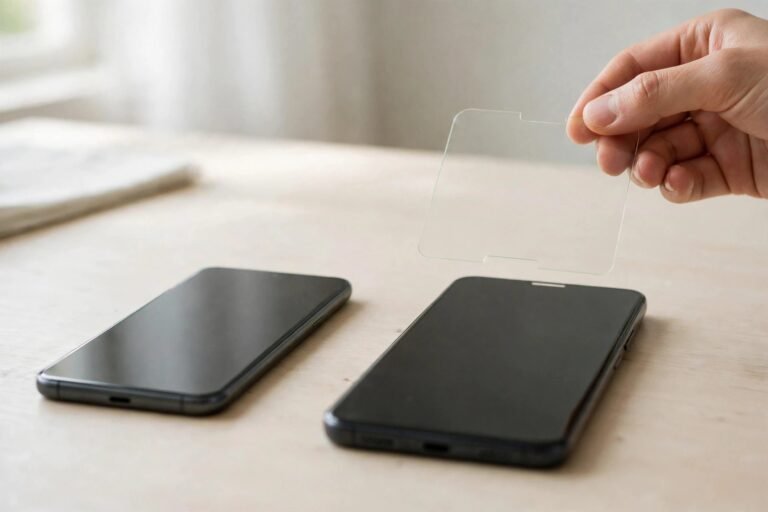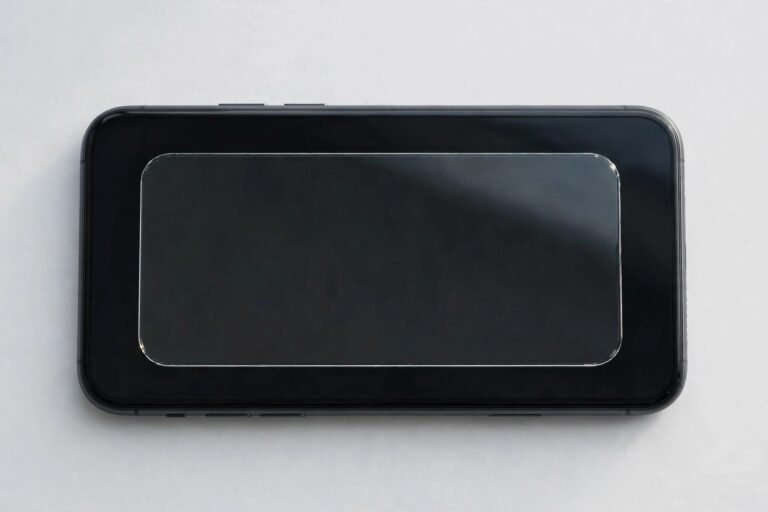
It is the cruellest moment in screen protector fitting: the glass settles beautifully, the adhesive spreads without a single bubble — and then you see it. One hair, trapped dead-centre under the glass, sealed in like a fossil in amber. Your perfect install has a permanent exhibit underneath it.
The good news is that a trapped hair is one of the most fixable fitting mistakes there is, provided you act while the adhesive is fresh and you work cleanly. This guide covers the tape-lift rescue, the sticky-tape dabbing technique that actually removes the hair, and the honest point at which you should take the protector off entirely and start again.
Key Takeaways
- A trapped hair will not work its own way out — the bubble around it never seals, so it needs manual removal.
- The fix is to lift the nearest corner with tape, just far enough to reach the hair — never peel the whole protector off if you can avoid it.
- Dab the hair away with a dust-removal sticker or sticky tape, not your fingers — fingers add oils and more debris.
- Work quickly and in clean air: every second the adhesive is exposed, more dust lands on it.
- If the hair is one of many specks, or the protector has been on for days, remove it fully and refit a fresh one instead.
Why a Hair Is Worth Fixing
A hair under the glass is more than a cosmetic annoyance. Because a hair has thickness, it holds the protector microscopically off the display along its whole length, creating a thin channel of unbonded adhesive that shows as a bright outline around the hair and can slowly gather dust at its ends. Unlike a pure air bubble, it will never cure or spread away — the obstruction is physical and permanent until removed.
It is also, fortunately, a shallow problem. The hair sits in the adhesive layer at the surface, not embedded in anything, which means a targeted lift-and-dab removes it completely in a couple of minutes. The same technique handles the whole family of trapped debris: dust specks, tiny fibres from cleaning cloths, and the occasional eyelash.
The Tape-Lift Rescue, Step by Step
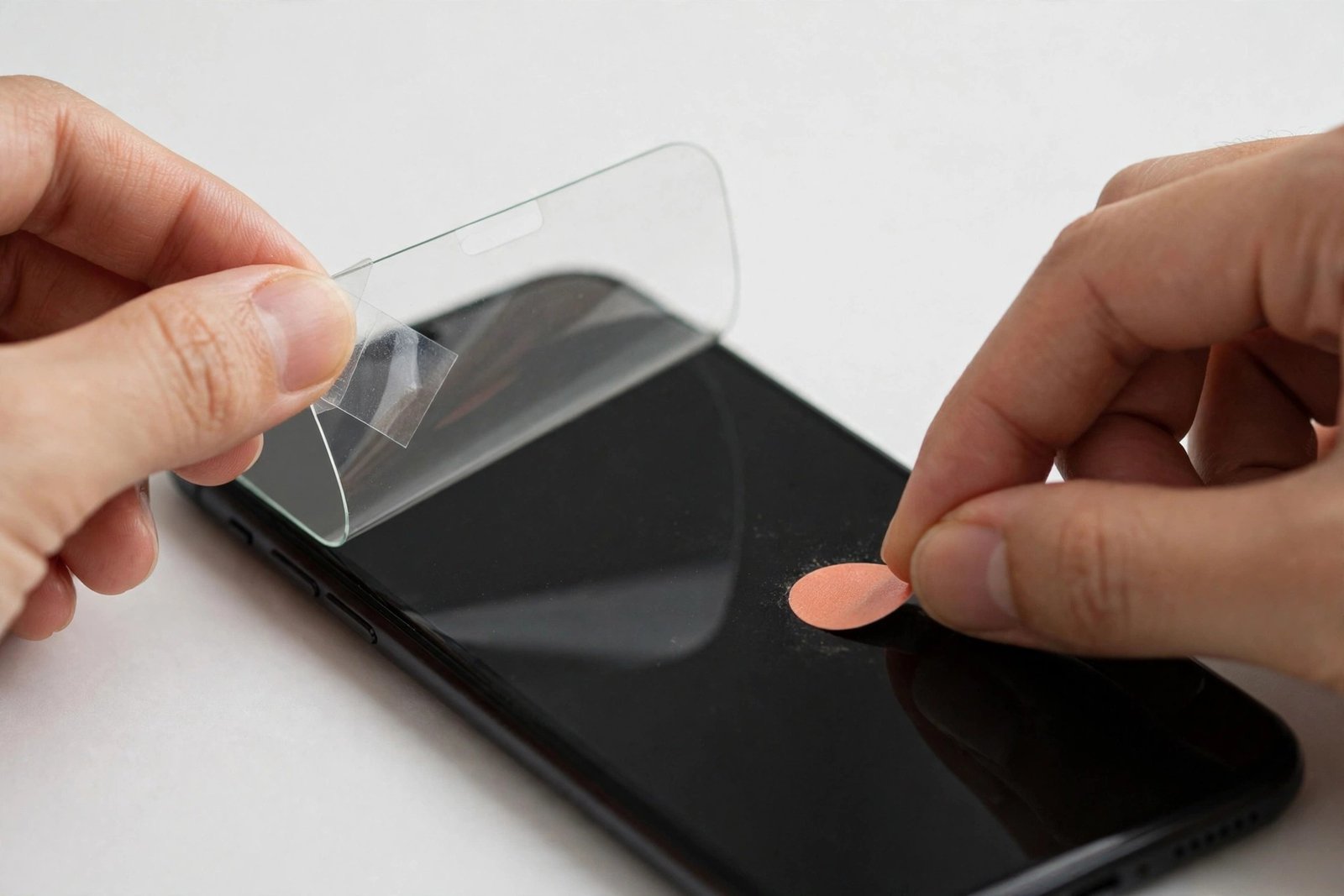
First, identify which corner of the protector is closest to the hair — you want the shortest possible lift. Stick a piece of strong tape (the dust-removal sticker from the kit, or ordinary sticky tape) firmly onto that corner of the protector’s top surface, leaving a tab to pull. Then lift slowly and steadily, peeling the corner back only until the trapped hair is exposed. Lift no further than you must: every extra centimetre of raised glass is exposed adhesive collecting airborne dust.
While holding the corner up with one hand, take a second piece of tape or a dust-removal sticker in the other and dab directly onto the hair — either on the screen or on the adhesive side of the glass, wherever it is sitting. The hair will transfer to the tape. Check the spot against the light, dab once more for any fragments, then lower the glass back down slowly and press from the lifted corner outward to re-spread the adhesive.
- If the hair is on the adhesive side of the glass rather than the screen, dab it there — and never wipe the adhesive with a cloth, which leaves fibres that are worse than the hair was.
The Hinge Method: For Protectors Mid-Install
If you spot the hair during fitting — before the protector has fully settled — the hinge method saves you. Many kits include hinge stickers that tape one long edge of the protector to the phone like a door hinge. With the hinge in place, you can swing the glass up, dab the hair away, and swing it back down into exactly the same alignment, rather than re-aligning from scratch with exposed adhesive.
No hinge stickers in the box? Improvise with two strips of ordinary tape along one long edge, applied while the protector is still perfectly positioned. It takes thirty seconds to set up and converts a fiddly rescue into a controlled one — worth doing pre-emptively on any install you care about, before you peel the backing at all.
When to Give Up and Refit
The lift-and-dab has limits. Remove the protector completely and start with a fresh one if: the trapped hair is one of several specks (a sign your cleaning or environment failed, and more debris is likely hiding), the protector has been fitted for more than a day or two (the adhesive has cured and will not re-spread cleanly), or your rescue attempts have left the adhesive visibly dusty or fingerprinted. A re-lifted protector that goes back down over contaminated adhesive looks worse than the original hair ever did.
Most glass protectors come in multi-packs precisely because rescues and refits are part of the process. Using the second sheet is not a failure; it is the system working as designed. Clean the screen thoroughly, work in steamy, still air, and the fresh protector will reward you.
- Run the shower hot for a few minutes before a refit. Steamy air pulls dust and loose hairs down out of the air — it is the single biggest improvement you can make to a fitting environment, and it prevents the sequel.
Frequently Asked Questions
Will the bubble around a trapped hair disappear on its own?
No. Pure air bubbles can cure away as the adhesive flows, but a hair physically props the glass up, so the channel around it never seals. It stays until you remove the hair itself.
Can I slide the hair out from the edge without lifting?
Almost never. The adhesive grips along the hair’s full length, and poking at the edge with tools risks scratching the display or chipping the protector’s edge. The tape-lift takes two minutes and works; shortcuts mostly create second problems.
How soon after fitting can I do the tape-lift rescue?
Sooner is better — within the first hours, while the adhesive is still workable, the lift and re-spread are cleanest. It can still work a day later, but after several days the adhesive has cured enough that a fresh protector is usually the better answer.
One hair, two pieces of tape, two unhurried minutes. The fossil comes out, the glass goes back down, and nobody ever knows it was there.