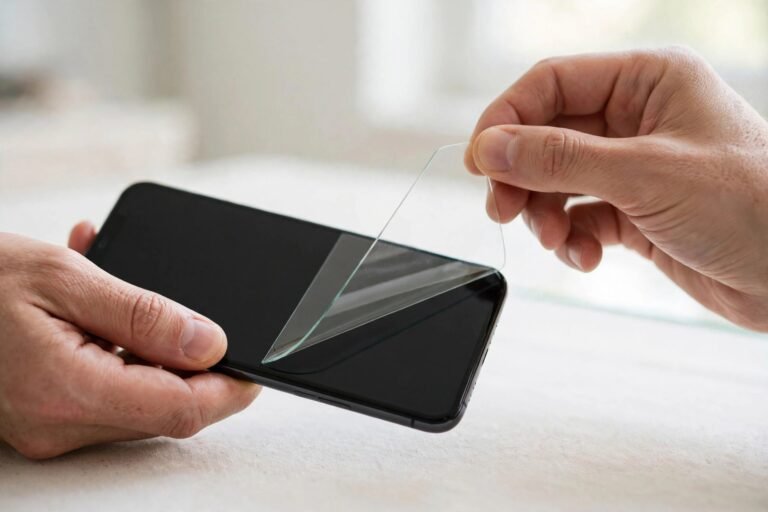
A screen protector is one of those accessories you fit once and then forget about — until one day you notice the screen looks oddly dull, your finger no longer glides across it, or a web of hairline scratches catches the light. Unlike the phone itself, a protector is a consumable: it is designed to wear out so your display does not. The question is not whether to replace it, but when the trade-off tips in favour of a fresh one.
There is no single expiry date stamped on the box, because how long a protector lasts depends on the material, how you use your phone, and what you consider acceptable. This guide explains the realistic lifespan of each protector type, the signs that yours is past its best, and a simple schedule for knowing when to swap — so you replace it at the right time, not too early and not too late.
Key Takeaways
- Tempered glass protectors typically last 1–2 years of normal use before the coating wears and micro-scratches accumulate.
- Film protectors (PET/TPU) last 6–12 months — their softer surfaces scratch and haze faster than glass.
- Replace immediately if the protector is cracked, chipped, or lifting at the edges — a damaged protector protects nothing.
- The most common reason to replace is not damage but worn oleophobic coating: the screen feels draggy and shows fingerprints constantly.
- Heavy users, outdoor workers, and parents of small children should plan on replacing roughly twice as often.
Typical Lifespans by Protector Type
Not all protectors age at the same rate, because the materials are fundamentally different. A tempered glass protector is the longest-lived common type: the glass itself is hard and stable, so the structure holds up well. What degrades is the surface — the oleophobic coating that repels fingerprints and keeps the glass feeling slick wears away with thumb friction, cleaning, and pocket abrasion. For an average user, that takes roughly 12 to 24 months. After that, the glass still protects against drops, but it looks and feels tired: smudgy, draggy, and visibly scratched under bright light.
PET film protectors are at the other end of the scale. The plastic surface is softer, so it accumulates visible micro-scratches within weeks and develops a hazy, worn look over months. Most film users replace every 6 to 12 months, sometimes sooner if the film starts peeling at a corner. TPU and hydrogel films sit in between — their self-healing property keeps light scratches fading for a while, but the material still dulls and the edges still lift, giving a practical life of around 9 to 15 months.
The Signs It Is Time to Replace
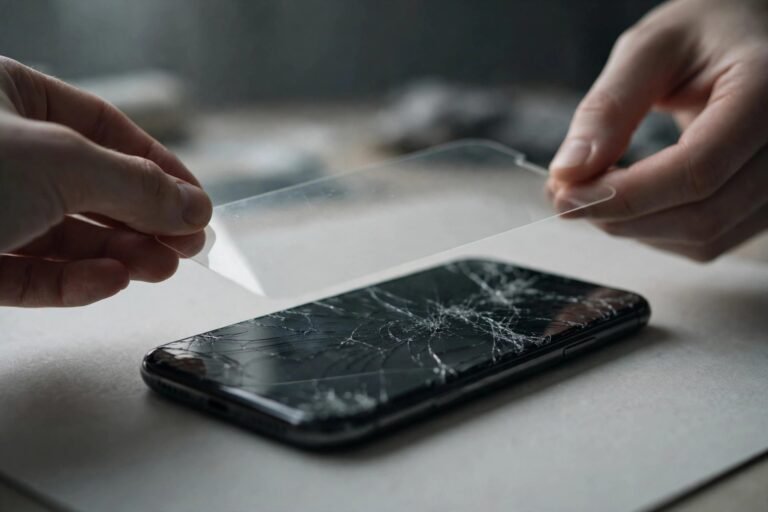
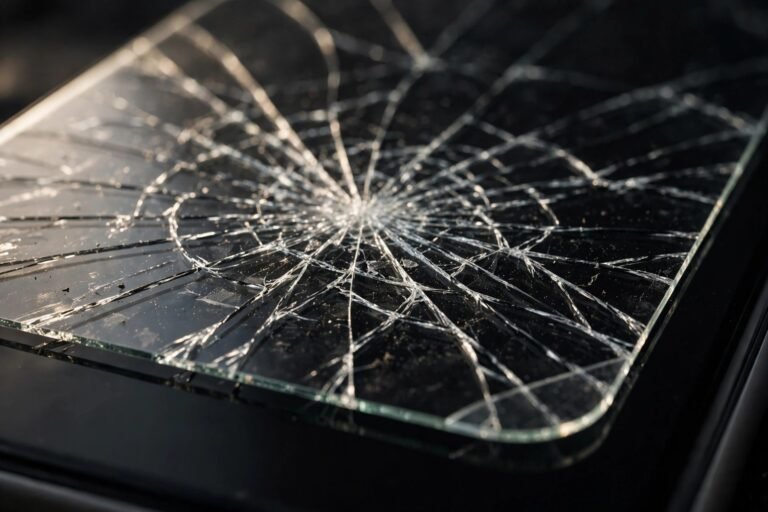
Damage is the obvious trigger. A cracked tempered glass protector has spent its sacrificial capacity — the whole point of the glass was to break so your display did not, and a second impact now lands on an already-compromised layer. Replace it promptly, the same day if you can. Chips at the edges are nearly as urgent: they create stress points where the next knock will propagate a crack, and the sharp edge can catch on pockets and lift further.
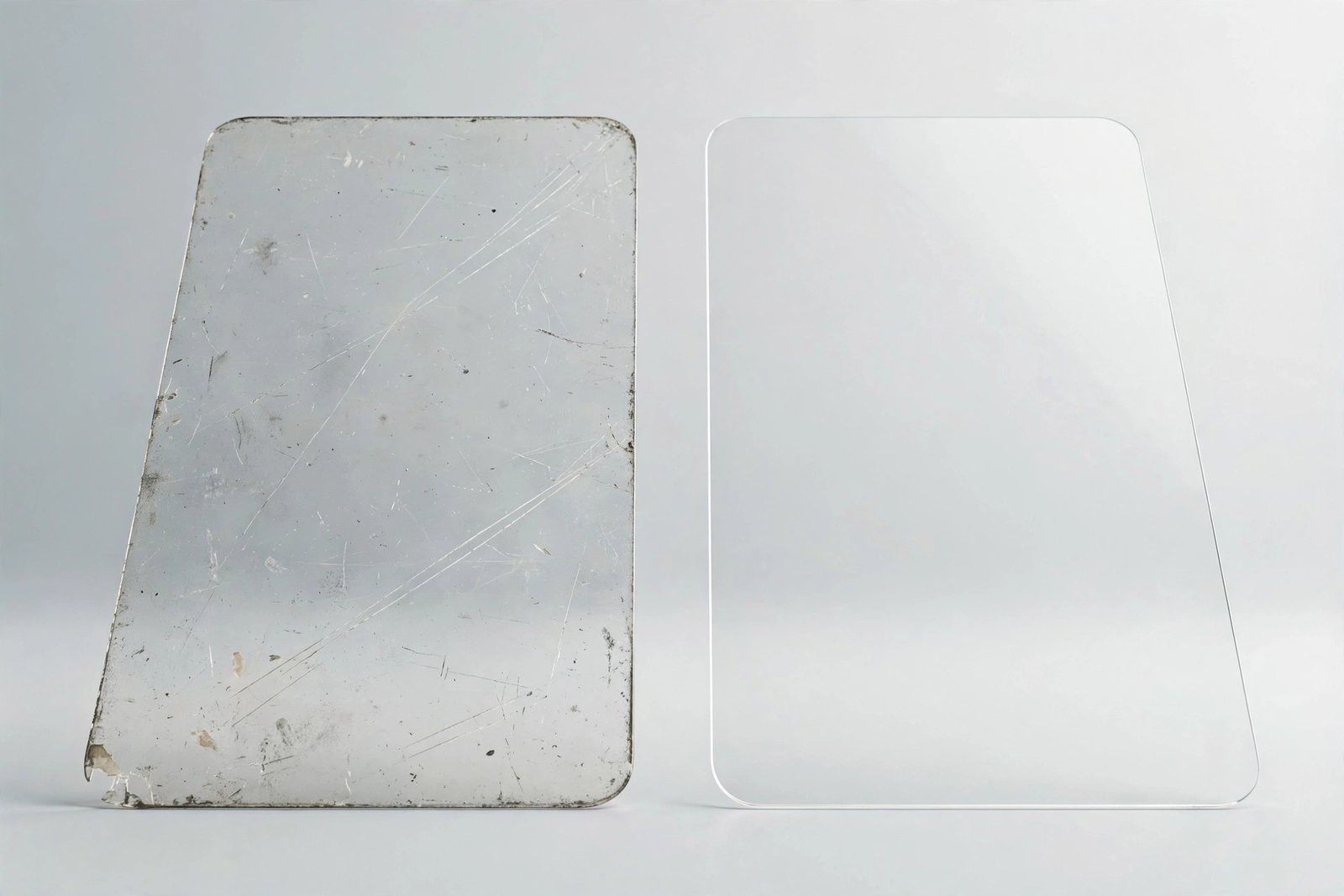
The subtler signs are about the surface. If your finger drags instead of glides, if fingerprints appear within minutes of wiping, or if the screen looks visibly scratched when the display is off and angled toward a light, the coating is gone and the glass is carrying a map of micro-scratches. The protector is still absorbing drops, but it is degrading your daily experience — and a scratched protector can actually make the display harder to read in sunlight, which is the opposite of its job.
What Speeds Up (or Slows Down) Wear
Your habits matter more than the brand. Outdoor workers and anyone who keeps a phone in a pocket with keys, coins, or tools will scratch a protector far faster than someone whose phone lives on a desk. Parents of small children know the particular cruelty of tiny fingernails and dropped toys. Frequent cleaning with rough cloths or alcohol-based sprays strips the oleophobic coating faster than gentle microfibre wiping. On the other hand, a phone that spends most of its life in a case, on a desk, with the screen facing up, can keep a glass protector looking fresh well past the two-year mark.
Environment plays a role too. Sand and grit — the beach, the building site, the dusty commute — are the great accelerant of protector wear, because quartz particles are harder than the glass coating. If your daily life involves grit, budget for more frequent replacement, or consider it the cost of keeping the actual display pristine.
- Do the tilt test once a month: turn the screen off, hold it under a bright light, and tilt it slowly. A healthy protector looks uniformly clear; a worn one shows a spiderweb of fine scratches and dull patches. When the web is obvious, order a replacement.
A Sensible Replacement Schedule
For most people, a simple rule works: replace tempered glass every 12–18 months as routine maintenance, even if it looks fine — the coating is likely fading by then even when the glass looks intact. Replace film protectors every 6–9 months. And replace any protector immediately after a crack, a chip, or persistent edge lifting, regardless of age. Treat a cracked protector the way you would a spent airbag: it did its job once, and it cannot do it again.
One practical habit makes this painless: buy multi-packs. A two- or three-pack of quality tempered glass costs little more than a single, and having the spare sitting in a drawer removes all friction — when the tilt test fails or a crack appears, you replace it that evening instead of living with it for weeks while you get around to ordering.
- Time replacements to moments you would clean anyway — for example, when you deep-clean the phone before a holiday or a phone trade-in valuation. A fresh protector also noticeably improves resale photos, since buyers judge screen condition from exactly the kind of angled-light view where wear shows.
Frequently Asked Questions
Can I just keep a scratched protector until it cracks?
You can, but you are trading daily experience for pennies saved. A heavily scratched protector still absorbs drops, yet it makes the display harder to read, shows every fingerprint, and feels unpleasant. Since replacements are cheap, most people are happier swapping at the “looks tired” stage rather than waiting for structural failure.
Does an old protector protect worse against drops?
Slightly. Micro-scratches create tiny stress points where cracks start more easily, so a very worn protector may fracture from a smaller impact than a fresh one. The bigger issue is a cracked protector: once fractured, its sacrificial capacity is spent and the next drop is essentially unprotected.
Should I replace the protector when I get a new phone case?
Not automatically — but it is a good moment to check. A new case, especially a tighter one, can lift the edges of an older protector that was previously fine. If the edges start peeling after the case change, either the protector is too wide for the case or it is time for a fresh, case-friendly one.
Think of your screen protector like running shoes: it wears out doing its job, and replacing it on schedule keeps the protection — and the daily feel — at its best. The tilt test takes ten seconds; the replacement takes five minutes.