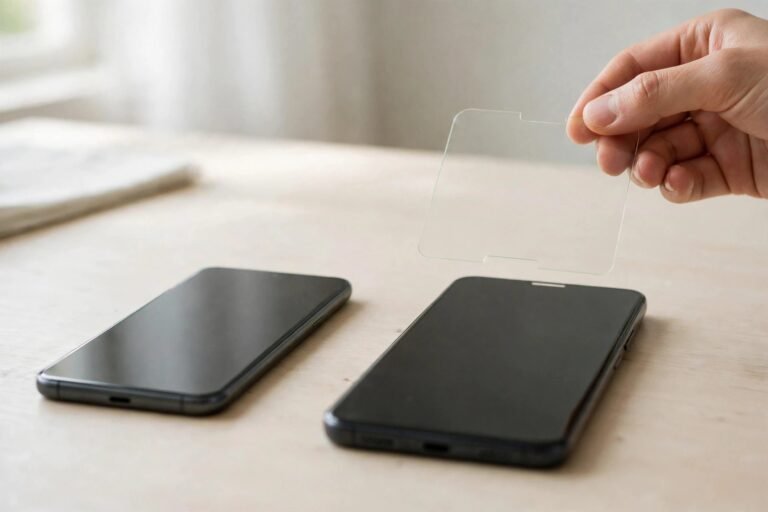
You have just finished a wet install, or pulled your phone out of a bag after a spill, and there it is: a pocket of water trapped under the screen protector, shimmering every time you tilt the phone. Your first instinct is to start heating, poking, or peeling at it. Resist. Water under a protector is usually a patience problem, not a disaster — most of it will leave on its own if you let it.
This guide explains where the water actually is, how to encourage it out safely — drying time, working moisture to the edge with a squeegee — what the rice and silica gel claims really deliver, when a refit is the honest answer, and the one thing you must never do: apply heat.
Key Takeaways
- Water trapped after a wet install is expected — the slip solution is designed to dry out, usually within 24–48 hours.
- Push large pockets toward the nearest edge with a cloth-wrapped squeegee; small water patches are not worth chasing.
- Never apply heat — no hairdryers, radiators, or hot water. Heat can damage the adhesive, warp a film, and harm the display.
- Rice does almost nothing; silica gel packets help marginally by drying the air around the phone, not by pulling water through the protector.
- Patches that stay milky, gritty, or rainbow-tinted after 48 hours mean contamination, not water — the proper fix is a refit.
- Water that got under the protector from a spill or rain on a self-adhesive glass protector usually means the seal failed; drying it out is possible, but the edge adhesion may never fully return.
First, Work Out Where the Water Came From
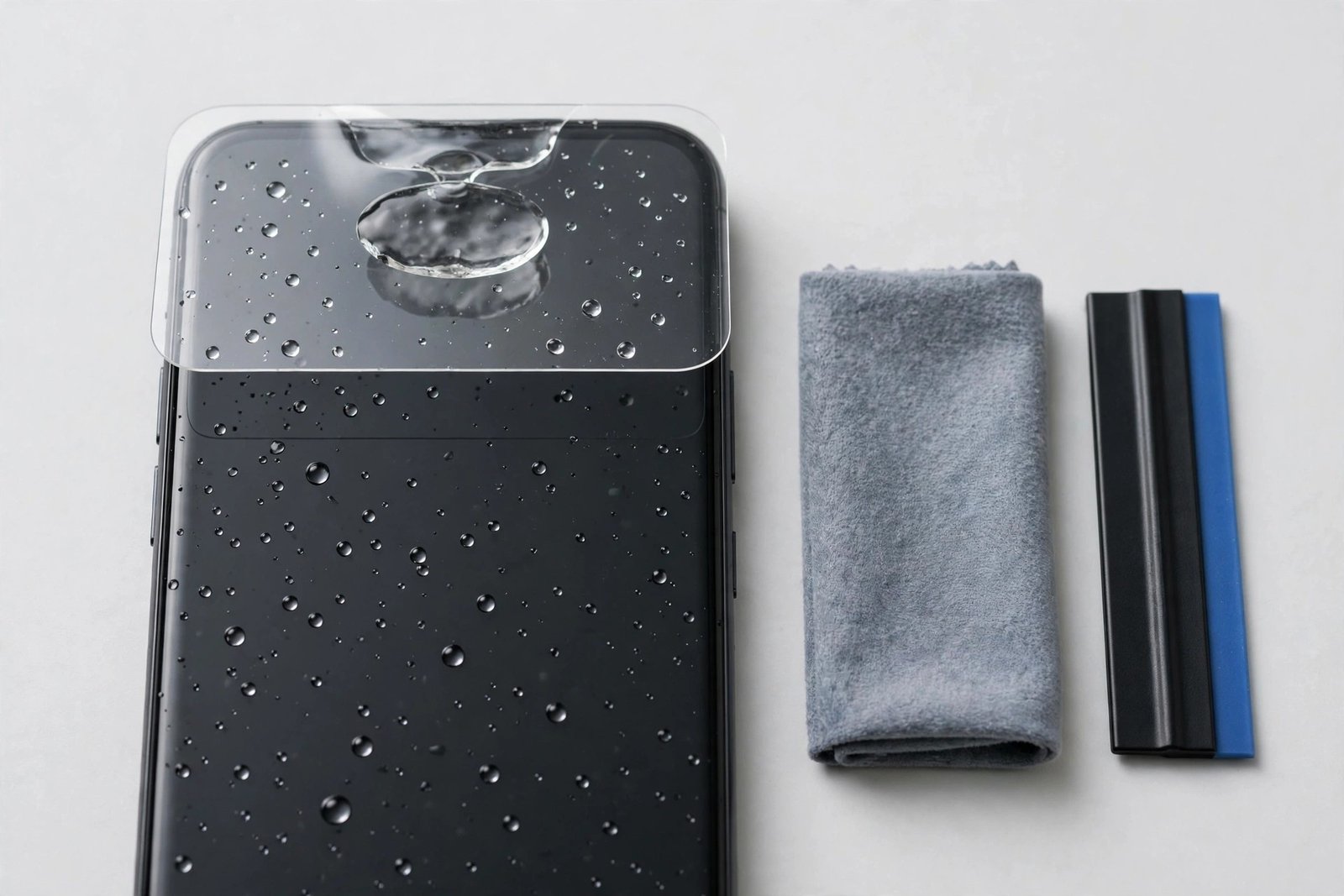
The right response depends on the source, because there are two quite different situations. In a wet install — common with film protectors fitted using a spray-on slip solution — the liquid under the protector is supposed to be there. The solution lets you slide the film into perfect alignment, and the moisture then escapes through the film and evaporates over the following day or two. Cloudiness, small pockets, and a slightly soft image early on are all normal parts of that process.
The second situation is accidental: water entering from the edges after a spill, heavy rain, or fitting in a steamy room. Tempered glass and self-adhesive films seal around their perimeter, so liquid underneath means it has crept past the edge seal. This water will dry — eventually — but the adventure usually weakens the edge bond on its way through, and any minerals or dirt it carried in will remain behind.
The Drying Window: Give It 24–48 Hours
For a wet install, the best tool is the clock. Leave the phone somewhere dry, at room temperature, screen facing up, and let evaporation do the work. Most installations look noticeably better by the next morning and fully clear within two days. Check progress at intervals rather than constantly handling the phone — every press on a wet film can push moisture into new pockets or unseat an edge.
Resist the urge to “help” with heat. A hairdryer or radiator can overheat the adhesive, create bubbles that were not there before, warp a PET film, and in the worst case stress the phone’s display and battery. Evaporation at room temperature achieves exactly the same result safely; it just asks for a day of patience in exchange.
- Take a photo of the wet patch when you first notice it and compare the next day. Drying looks gradual and your eyes adjust to it — a side-by-side photo proves whether the patch is genuinely shrinking or genuinely stuck.
Squeegee the Big Pockets to the Edge
Large, defined pockets of water respond well to gentle mechanical help. Wrap a squeegee or bank card in a microfibre cloth and stroke slowly from the pocket toward the nearest edge, keeping steady, moderate pressure. You are shepherding the liquid, not scrubbing it — and with a wet install, this is exactly the technique the fitting instructions describe. Work one pocket at a time, and blot the moisture that emerges at the edge with the corner of the cloth.
Stop when the pocket turns into a faint, uniform mist rather than an obvious blob of water: the remaining trace moisture will evaporate on its own, and continued pressure risks sliding the protector out of alignment or lifting a corner. Never dig at the edge of the protector with a fingernail to “let the water out” — breaking the seal invites dust in, which is a far worse problem than the water ever was.
Rice, Silica Gel, and Other Folk Remedies
The bag-of-rice remedy is one of the most persistent myths in phone care. Rice is a mediocre desiccant and it cannot extract moisture trapped under a sealed layer in any case — the water’s only escape route is slowly through the protector’s edges and the film itself, and the surrounding air’s dryness only marginally affects the speed. You are as likely to finish with rice dust in the charging port as with a drier screen.
Silica gel packets are genuinely a better desiccant than rice, and sealing the phone in a container with several packets creates properly dry air around it. That can nudge evaporation along — but modestly. Neither method addresses the underlying question: whether the patch is pure water (will dry) or contaminated moisture (will not). If a patch looks cloudy, rainbow-sheened, or gritty after two full days, it contains minerals or an oil film, and no amount of desiccant will restore clarity.
- If you do use silica gel, put the phone and packets in a sealed zip bag overnight. Loose packets in an open bowl dry the room’s air, not the phone’s microclimate — the container is what makes the remedy work at all.
When to Refit Instead
Accept the refit when any of these apply: the patch is unchanged after 48 hours; it looks milky or rainbow-tinted rather than clear; the protector’s edge has lifted and collected dust; or the phone feels spongy over the pocket on a wet-install film, suggesting a large volume of solution never escaped. A fresh protector fitted carefully costs little and ends the saga in ten minutes.
When refitting, note the lesson for next time: less slip solution than feels necessary for wet installs, a thorough squeegee pass immediately after alignment, and — for self-adhesive protectors — avoid fitting right after a steamy shower unless you are deliberately using the humidity for dust control and dry the screen completely first.
Frequently Asked Questions
Will water under the protector damage my phone screen?
Plain water under an intact protector is a cosmetic issue, not a safety one — it sits above the display, outside the phone. The real concern is the water’s path in: if it reached the protector, check the charging port and buttons are dried too.
Can I use a hairdryer on the lowest setting?
No. Even gentle heat applied unevenly can soften adhesive, expand trapped air into bubbles, and stress the display layers. Room-temperature drying achieves the same result — it simply takes longer.
Why is there a rainbow pattern in the wet patch?
Thin-film interference: light reflecting off two very close surfaces splits into colours, the same effect as oil on water. A rainbow sheen usually signals a contaminated patch — minerals, oil, or leftover cleaning solution — rather than pure water, and it rarely dries clear.
Water under a protector rewards patience and punishes shortcuts: squeegee the big pockets, give it two days of dry air, skip the heat and the rice — and refit without regret if it has not cleared.