You lifted your screen protector to refit it — or it popped off in your pocket — and now it won’t stay down. The edges float, bubbles creep in, and pressing them flat buys you about ten minutes. Before you bin it, know this: in many cases the adhesive isn’t dead at all. It’s just dirty, and a washed or taped protector can grip like new again.
The sticky layer on a screen protector fails for two very different reasons: contamination (dust, lint, skin oil) and degradation (heat, age, repeated washing). The first is fixable in five minutes. The second isn’t fixable at all — and this guide will help you tell which one you’re dealing with, plus the revival methods that actually work for glass and film protectors.
Key Takeaways
- Most “dead” adhesive is just dust and lint contamination — cleaning the sticky side restores the grip.
- The tape method is the safest first fix: press sticky tape over the adhesive side and peel away the debris.
- Washing works too — lukewarm water, a drop of mild soap, and air-drying only. Never wipe the sticky side with a cloth.
- Heat-aged or repeatedly washed adhesive that feels smooth and dry is genuinely finished — replacement is the only fix.
- Film protectors revive more reliably than glass, whose adhesive layer is thinner and less forgiving of refits.
- Work fast and handle the protector by its edges — every minute exposed is more airborne dust landing on the adhesive.
First, Diagnose: Dirty Adhesive or Dead Adhesive?
Hold the protector sticky-side up under a bright light. If the surface looks cloudy, speckled, or fuzzy with lint, that’s contamination — the adhesive is still there, just coated in debris that stops it touching the screen. If the surface looks perfectly clean but feels smooth and dry rather than tacky when you touch a corner with a clean fingertip, the adhesive itself has degraded and no amount of cleaning will bring it back.
Heat is the usual killer. Protectors left on a sunny dashboard, stored near radiators, or fitted and removed many times gradually lose their tack as the adhesive layer dries and hardens. Repeated washing accelerates it too — each wash strips a little of the bonding layer along with the dirt. A protector that’s been washed three or four times and still won’t hold has told you everything you need to know.
Method 1: The Tape Method (Try This First)
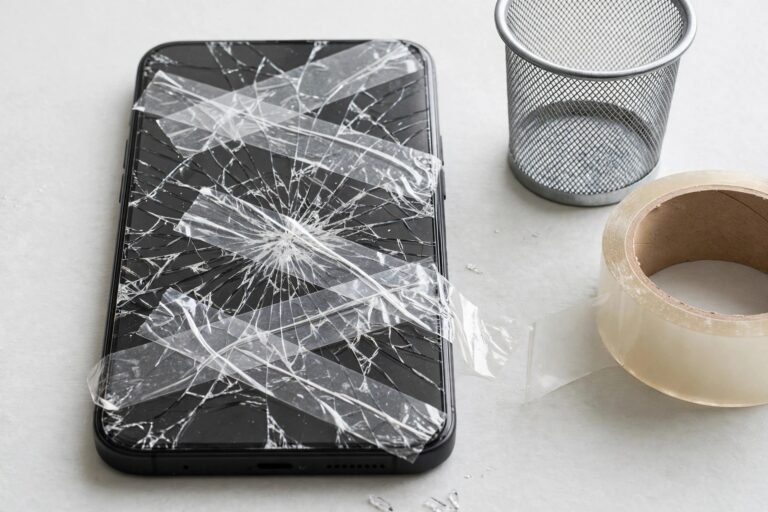
For dust and lint, tape is faster and safer than water. Lay the protector sticky-side up, press a strip of wide sticky tape firmly across the adhesive surface, smooth it down, and peel it off slowly. The tape lifts away dust, hairs and lint without wetting or stressing the adhesive layer. Work across the whole surface in overlapping strips until it looks clear under the light.
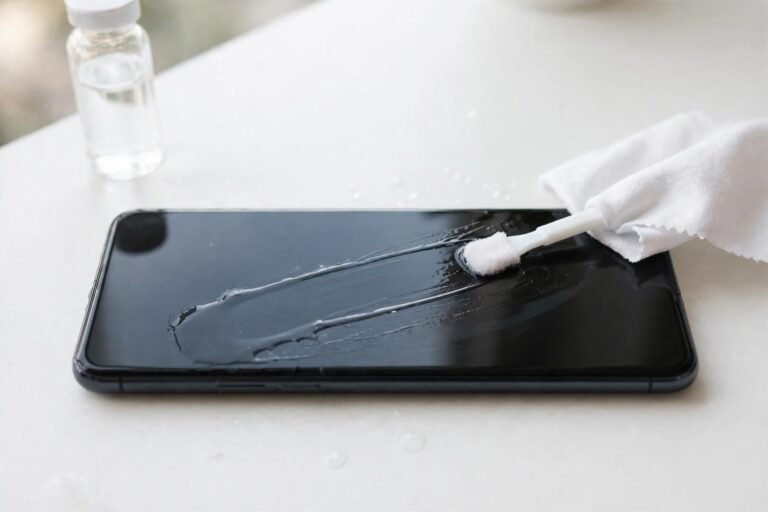
Then refit immediately. Clean the phone screen first with a microfibre cloth and a dust-removal sticker if you have one, align the protector, and let it settle from the centre outward. The less time between cleaning the adhesive and refitting, the fewer new specks land on it.
- The steamy-bathroom trick from a fresh install works here too — fitting in humid air means far less airborne dust lands on your freshly cleaned adhesive.
- Inspect the sticky side at an angle under a lamp before refitting; specks you can’t see face-on glitter clearly at an angle.
Method 2: Washing the Sticky Side
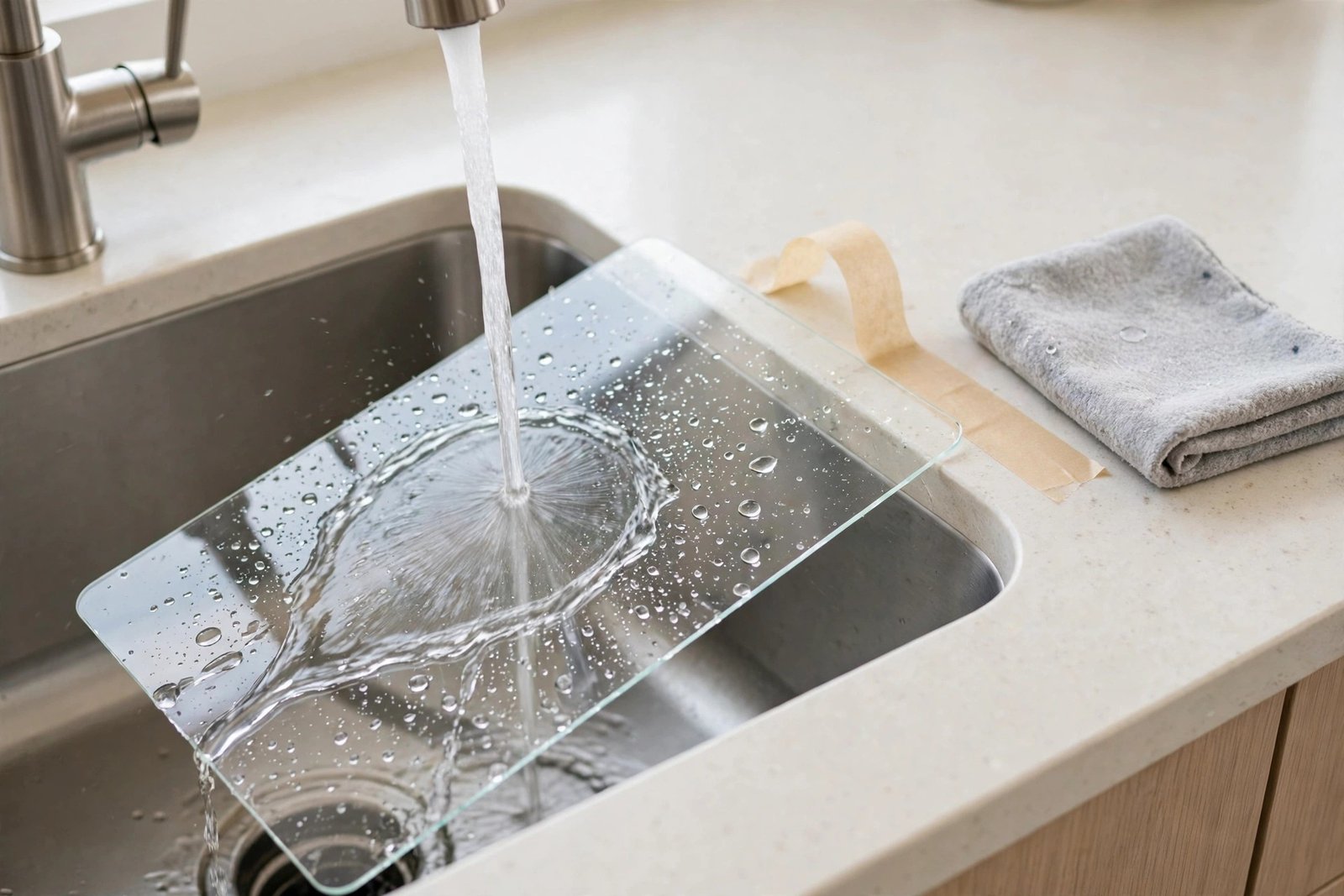
If the adhesive is greasy or tape alone isn’t shifting the grime, wash it. Run lukewarm water over the sticky side with a single drop of mild washing-up liquid, and use only your clean fingertips to gently work the surface — no cloths, sponges, or brushes, which leave fibres behind and can score the adhesive. Rinse until the water runs clean and the stickiness returns under your fingers; you can usually feel the tack come back as the oil washes away.
Drying is where most people ruin it. Never wipe the sticky side dry. Shake off the excess water and let the protector air-dry sticky-side up in the cleanest spot you can find, or hold it and let the drops run off. A cloth will instantly re-coat it in lint. Once the water has evaporated, refit straight away — and note that each wash slightly thins the adhesive, so treat washing as an occasional rescue, not a routine.
Glass vs Film: Who Revives Better?
Film protectors are the better candidates for revival. Their adhesive tends to be a uniform silicone-style layer that tolerates washing well, and because film is flexible, minor losses of tack matter less — the material drapes onto the screen and holds. Many film protectors can be washed and refitted several times before giving up.
Tempered glass is less forgiving. Its adhesive layer is thin, the rigid sheet can’t drape to compensate for weak spots, and any unevenness shows up as stubborn edge bubbles. A single careful wash or tape-clean often rescues a glass protector that came off cleanly; a glass protector that’s been bent, repeatedly removed, or heat-aged rarely sits flat again. If the edges still float after one honest revival attempt, replace it — that’s what the spares in multi-packs are for.
- If only one corner won’t stick, the local fix is a tiny tape-clean of just that corner rather than washing the whole sheet again.
- Never use solvents, alcohol wipes, or adhesive sprays on the sticky side — they attack the bonding layer and guarantee a worse fit.
Frequently Asked Questions
Can I use glue or spray adhesive to re-stick a protector?
No — never add foreign adhesives. Glue can damage your screen’s oleophobic coating, seep into speaker and button gaps, and makes future removal risky. A protector that can’t grip with its own cleaned adhesive is finished; a replacement costs very little and risks nothing.
Why does my protector stick in the middle but lift at the edges?
Edges collect the most dust and skin oil, and on curved screens they’re also under the most tension. Clean the edges specifically with tape, make sure your case isn’t pushing the edge up, and give it an hour pressed flat — a heavy book on a cloth over the phone works. If it still lifts after a thorough clean, the edge adhesive has degraded.
How many times can I wash a screen protector?
There’s no fixed number, but each wash removes a little adhesive along with the dirt. Film protectors often survive several careful washes; tempered glass usually tolerates one or two before the fit suffers. When a washed protector comes out clean but still won’t grip, the layer is spent — that’s your answer.
A protector that won’t stick usually isn’t dead — it’s dirty. Clean the adhesive, refit it in still air, and you’ll often get a second life out of it. And when it’s truly spent, it has still done its job cheaply and well.