You fitted a fresh screen protector last month, and there it is again — a crack creeping across the corner. Once is bad luck. Twice starts to feel like a pattern, and three times usually means something about your phone, your case, or the protectors you’re buying is quietly working against you.
Screen protectors are designed to crack — that’s how they absorb impact and save your actual screen. But when protectors keep cracking without a memorable drop to explain it, there’s nearly always an underlying cause. This guide walks through the five most common ones, so you can fix the cause instead of feeding your phone a steady diet of replacement glass.
Key Takeaways
- Edge-first impacts are the number one crack starter — glass is weakest at its edges and corners.
- A tight case lip can press on the protector’s corners around the clock, turning tiny knocks into cracks.
- Ultra-thin, low-quality glass cracks far more easily and often arrives with microscopic edge flaws.
- Grit trapped under the protector or in your pocket creates pressure points that flex and fracture the glass.
- A protector fitted slightly off-centre sits under constant stress and cracks sooner at the overhanging edge.
- Look at where your cracks start — the pattern tells you which cause to fix first.
Cause 1: Edge-First Impacts
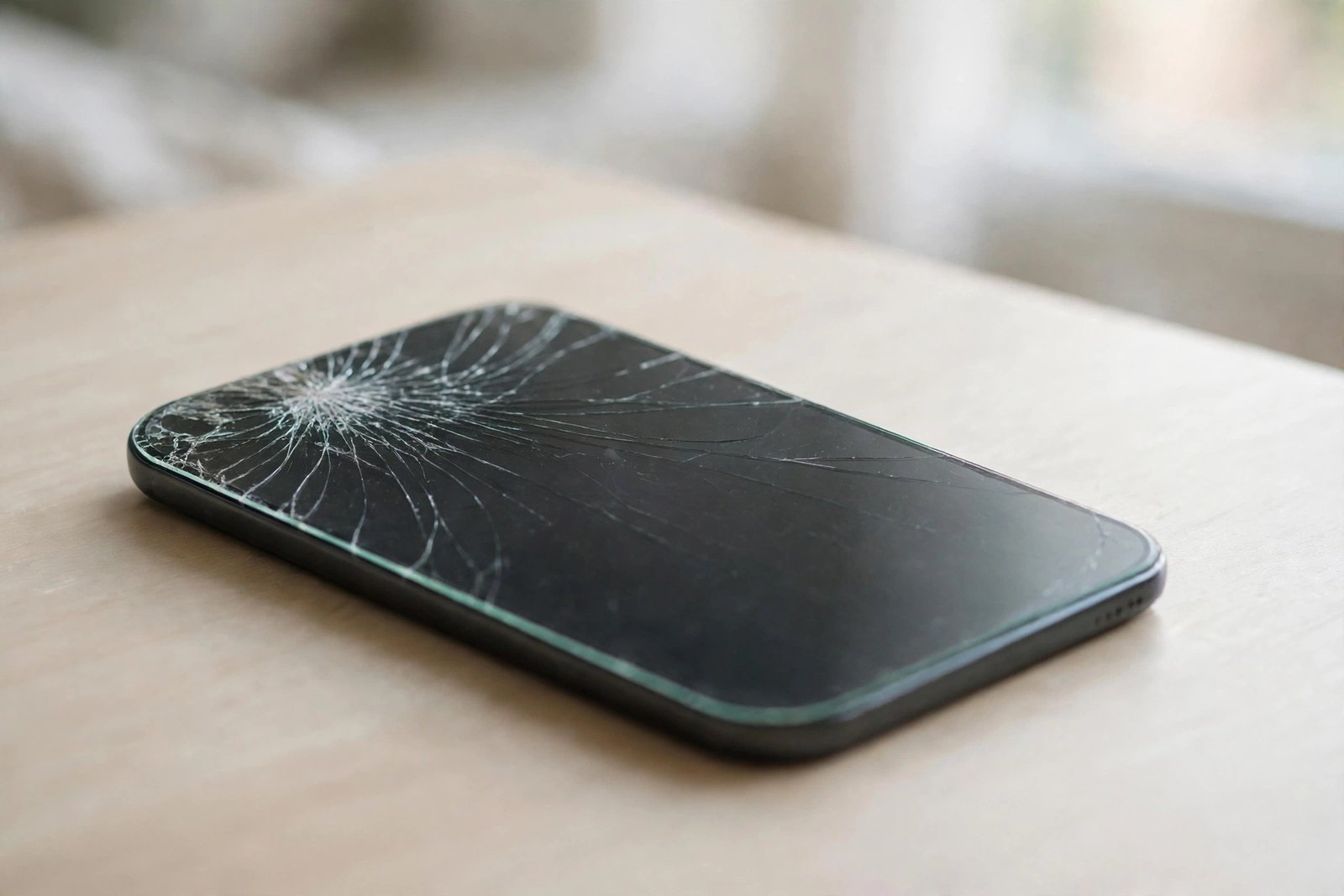
Tempered glass is impressively strong when force lands flat on its face, but its edges are a different story. The perimeter of the sheet is where the glass is thinnest in structural terms, and a knock that catches a corner — against a table edge, a door frame, the metal frame of a car seat, or the corner of another phone in the same bag — concentrates all its energy into one tiny point. That’s why so many cracks radiate out from a corner or edge rather than starting in the middle.
These knocks are easy to miss. You might not register clipping your phone on a counter as it slides into your pocket, but your protector does. If your cracks consistently start at one corner, that corner is meeting something hard in your daily routine — a bag clasp, a key fob, a seatbelt buckle. Changing where the phone rides, or using a case with raised corner bumpers that take the first touch, breaks the pattern.
Cause 2: Your Case Is Squeezing the Glass
A case is supposed to protect the protector, but a tight-fitting case with a high, stiff lip can do the opposite. If the lip presses inward on the edges of the glass — or worse, slightly overlaps it — the protector lives under constant sideways pressure. Add an ordinary knock and the pre-stressed corner gives way. This is a very common reason for cracks that appear along one specific edge or both bottom corners.
The tell-tale sign is cracking that begins after you change cases, or cracks that always start along the edge where the case grips hardest. The fix is to pair like with like: choose a case-friendly protector (cut fractionally smaller so the case lip clears it) or a case known to leave room for glass. Protector and case should never be fighting for the same millimetre.
- Before fitting a new protector, lay it on the screen and check the gap to your case’s lip on all four sides — you want a visible hairline of clearance everywhere, not contact.
- If a crack starts at the same corner every time, photograph it before removing the old protector; comparing photos makes the pattern obvious.
Cause 3: Thin, Low-Quality Glass
Not all tempered glass is tempered equally. Very cheap protectors are often thinner, unevenly hardened, and finished with rough edges that harbour microscopic chips from the factory. Each tiny flaw is a stress concentrator waiting for an excuse. A protector that cracks when the phone slides off a sofa onto carpet is telling you the glass itself was the weak link.
You don’t need the most expensive option on the shelf, but a mid-range protector from a maker who specifies thickness and hardness, with polished or rounded edges, will outlast bargain glass several times over. Ironically, buying cheap and replacing monthly usually costs more than buying decent glass twice a year.
Cause 4: Grit, Pressure Points and Fitting Stress
A single grain of sand trapped between the protector and the screen creates a pressure point: every time the phone is pressed — in a tight pocket, under a heavy bag, face-down on a desk — the glass flexes around that grain until it fatigues and cracks, often in a star pattern centred on the speck. The same thing happens externally when a phone rides loose in a pocket or bag with keys and coins pressing the glass against grit.
Fitting stress is the quieter cousin. A protector applied slightly crooked, or pressed down hard at one edge to force it flat over a curved screen, is installed already under tension. It may look fine for weeks, then crack on an unremarkable day. Careful, centred alignment and letting the adhesive settle on its own — rather than forcing edges down — gives the glass a neutral, unstressed start.
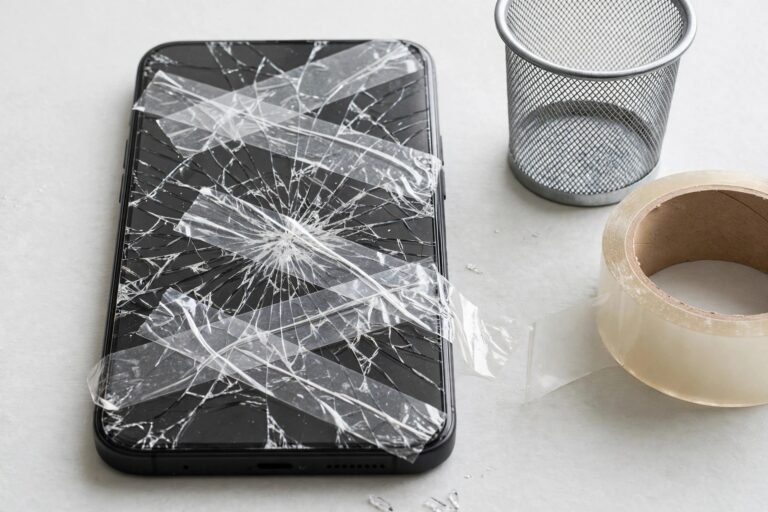
- A star-shaped crack with a tiny dot at its centre almost always means something hard was trapped underneath — strip, clean meticulously, and refit.
- Keep a dedicated pocket for your phone. Screens that share space with keys, coins and grit simply live harder lives.
Frequently Asked Questions
Is it normal for a screen protector to crack?
Yes — cracking is how a tempered glass protector does its job, sacrificing itself to absorb impact that might otherwise damage your screen. What’s not normal is cracking every few weeks without any drops. That pattern points to case pressure, trapped grit, poor-quality glass, or a stressed fit, all of which are fixable.
Can a case really crack a screen protector?
It can. A stiff case lip that presses on the glass edges keeps the protector under constant load, so a minor knock that should have been harmless finishes the job. If cracks began appearing after a case change, or always start along one edge, the pairing is the prime suspect — switch to a case-friendly protector cut slightly smaller.
Should I keep using a protector with a small crack?
A small crack means that protector has spent its strength in that area and will offer much less protection against the next impact there. It can also spread, and cracked edges can feel sharp. It’s fine for a few days while a replacement arrives, but treat it as used up rather than mostly fine.
A protector that cracks once has done its job. A protector that keeps cracking is sending you a message — find the pressure, the grit, or the poor fit behind it, and the next one will last.