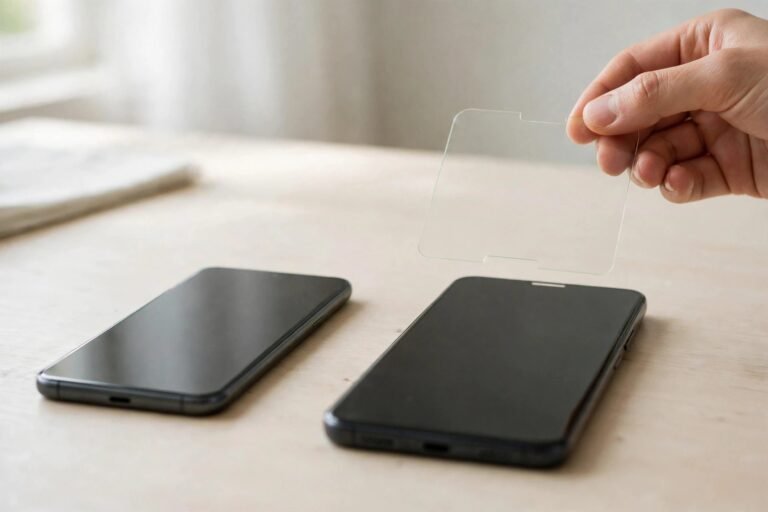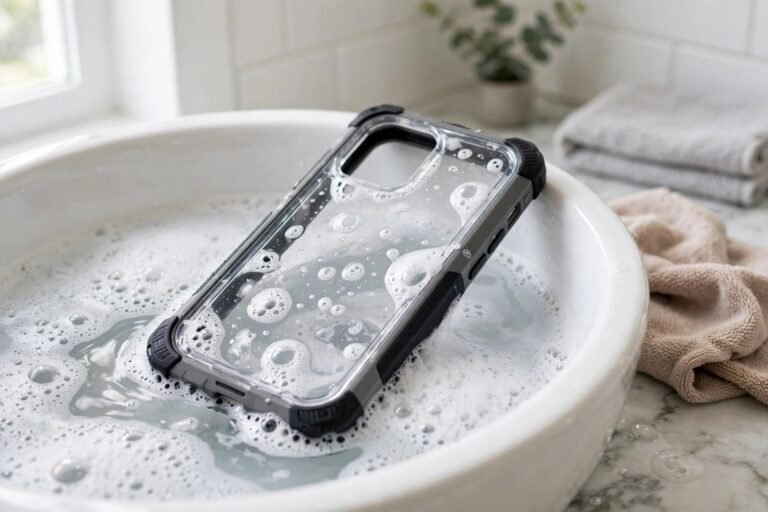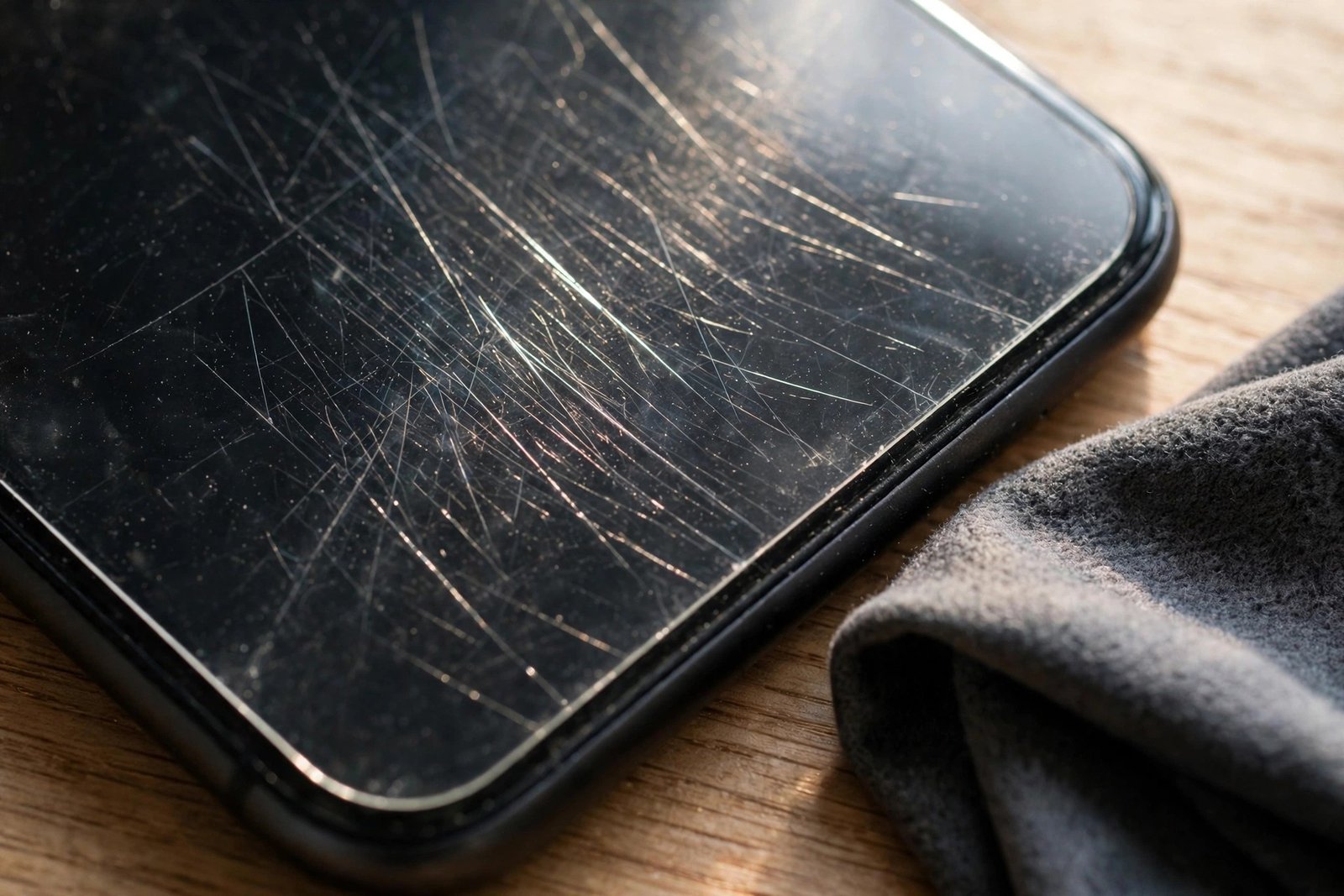
Your screen protector has picked up a scratch — maybe a key in your pocket, maybe a grain of sand on a desk — and now you want to know whether you can polish it away and carry on as if it never happened. It is a fair question, and the internet is full of confident answers involving toothpaste, baking soda, and various miracle pastes.
Here is the honest version: a real scratch in a glass protector cannot be polished out safely, and most of the popular remedies either do nothing or make matters worse. This guide explains why, what the myths get wrong, the narrow cases where a mark can be improved, and why “removing” a scratch usually means replacing the protector — which is, after all, the job it was designed to do.
Key Takeaways
- A scratch is a groove cut into the material — removing it means grinding the whole surface down to the bottom of that groove.
- Toothpaste does not remove scratches from glass. At best it cleans the surface; at worst it dulls and hazes the area around the mark.
- Film protectors and glass protectors respond very differently — the self-healing top layer on some films can genuinely soften light marks; glass cannot.
- Buffing a protector strips its oleophobic coating, so the polished patch attracts fingerprints and smears more than before.
- Some “scratches” are actually transferred material sitting on top of the surface — those can be cleaned off, and are worth checking for first.
- For a genuine scratch, replacement is the real fix — protectors are cheap and sacrificial by design.
Why a Scratch Cannot Simply Be Polished Away
A scratch is not a stain. It is a physical channel gouged into the surface, with material displaced or removed. To make it disappear by polishing, you would have to abrade the entire surrounding surface down to the depth of the groove — on a protector that is only a fraction of a millimetre thick. On tempered glass, that is not a realistic home repair: glass is hard, household abrasives are either too weak to touch it or too coarse to leave a clear finish, and the effort required would wreck the surface long before the groove vanished.
There is a second problem. Protectors are not bare glass. They carry an oleophobic coating — the invisible layer that makes your fingertip glide and lets smudges wipe off easily. Any polishing aggressive enough to affect the surface destroys that coating first, leaving a patch that feels rougher, shows fingerprints instantly, and looks different from the rest of the screen in bright light. You trade a thin scratch line for a cloudy, grabby rectangle.
The Toothpaste Myth, Addressed Honestly
Toothpaste is the most repeated remedy, so let us be precise about it. Toothpaste is a very mild abrasive designed for tooth enamel, and on plastic watch faces or old CD cases it could sometimes soften the appearance of the finest marks. On a tempered glass screen protector, it cannot level the glass at all. What it can do is clean grime out of the groove — which occasionally makes a dirty scratch look slightly less obvious — and, if you rub hard or use a whitening formula, haze the coating around it. Baking soda paste, vehicle scratch removers, and metal polishes follow the same pattern: ineffective on the scratch, unkind to the coating, and occasionally harmful to the screen beneath if they seep under a lifted edge.
- Before trying anything, run a fingernail gently across the mark. If your nail catches in a groove, it is a true scratch and no paste will help. If the surface feels smooth, the mark is probably transferred material — metal or paint rubbed onto the glass — and a thorough clean with a microfibre cloth and a little isopropyl alcohol may lift it completely.
Film Protectors Are a Different Story
Plastic film protectors — particularly TPU films with a self-healing top layer — genuinely can improve light scratches. The material is soft and slightly elastic, and gentle warmth (from the phone itself, or warm air from your hands) allows the surface to relax and partially close over very fine marks. This is real, but it only applies to hairline scuffs in the film’s surface, not to anything you can feel with a nail, and it does not work in reverse: the same softness that lets film heal also means deeper damage is permanent. Glass, being rigid and hard, has no equivalent trick.
Living With It, Hiding It, and Knowing When to Replace
If the scratch is light and the protector is otherwise sound, living with it is a legitimate choice — most scratches are only visible with the screen off or at a steep angle. Some people reduce the visibility of a fine scratch on glass by thoroughly cleaning it and applying a liquid nano coating, which can optically soften very shallow marks, though it fills and fixes nothing. But be clear-eyed about the limits: a scratch you can feel, a scratch that catches light constantly, or any scratch accompanied by cracking or chipped edges means the protector’s protective value is spent.
- Check the box your protector came in before you buy a replacement — most glass protectors are sold as two- or three-packs, and there is a good chance a fresh one is already sitting in a drawer at home.
Frequently Asked Questions
Can toothpaste really remove scratches from a screen protector?
No — not from glass. Toothpaste cannot abrade tempered glass evenly enough to level a scratch, and rubbing it in mainly removes dirt from the groove and risks dulling the oleophobic coating around it. The scratch will still be there when you wipe the paste away.
Will a scratched protector still protect my screen?
A light surface scratch does not seriously weaken a protector. But a deep scratch, a chip, or any crack means the glass has already absorbed damage and its structural integrity is compromised — it is far less likely to do its sacrificial job in the next drop, so replace it.
What about professional scratch-removal compounds?
Cerium oxide and similar glass-polishing compounds exist, but they are meant for substantial glass surfaces with machine polishing, not a wafer-thin phone protector. The time, mess, and risk of an uneven, hazy finish vastly outweigh the cost of a new protector, which is typically a few pounds or dollars.
A scratched protector is not a failed product — it is evidence the protector did its job and took damage meant for your screen. Skip the toothpaste, keep the spare from the multipack ready, and treat replacement as the remedy it was always meant to be.