Everything about removing a screen protector is smaller on an Apple Watch — the screen, the protector, and your margin for error. The curved edges that make the watch comfortable to wear also grip a film protector in ways flat phone glass never does, and a fumble that a phone would shrug off can send a bare watch case skidding across the table.
This guide covers removal from the watch itself: taking the strap off first, setting up a soft workspace, peeling a curved-edge film, lifting a rigid glass cover, and clearing the adhesive residue from a display small enough that every last smear shows.
Key Takeaways
- Remove the strap first so the watch lies flat and cannot slide or flex mid-peel.
- Work on a folded towel or soft cloth, never on a bare hard table.
- Warm the watch in your hands first — adhesive releases more easily when warm, and a small screen sheds heat quickly.
- Film protectors wrap the curved edges — start at a corner and peel across the curve, not against it.
- Use a fingernail or a small offcut of plastic card; full-size tools are clumsy at this scale.
- Clean residue with a barely damp microfibre cloth — the compact display shows every streak.
Set Up: Strap Off, Soft Surface Down
Press the band release buttons on the back of the case and slide both strap pieces off. This is the step people skip, and it matters more than any other: a strapped watch rocks on its band, twists away from your fingers, and can launch itself off the table mid-peel. Strapless, the case body sits flat and still on the surface, and both of your hands are free for the fiddly work.
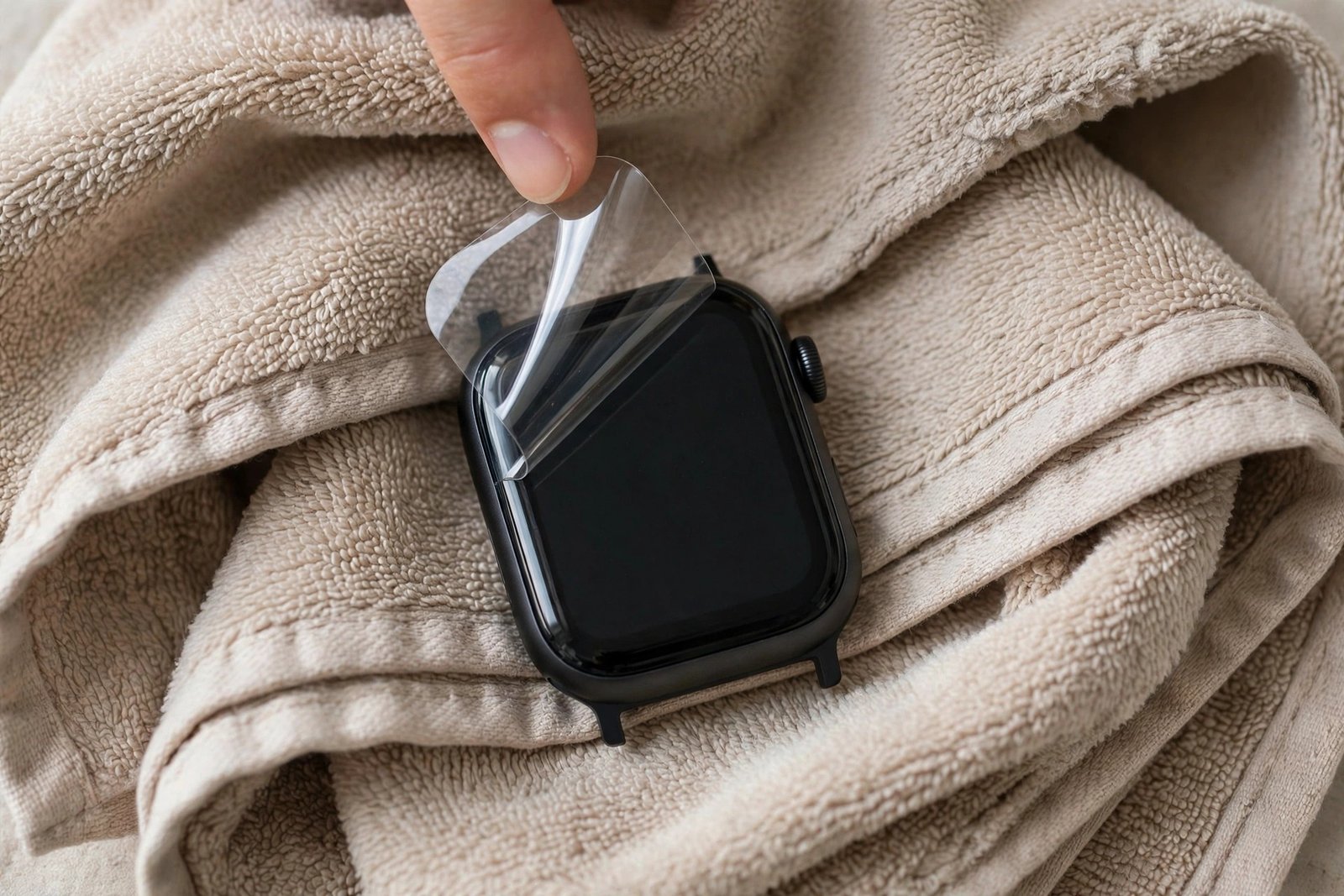
Lay a folded towel or thick microfibre cloth on the table and set the watch face-up in the middle of it. The soft surface grips the case, cushions it if your hold slips, and catches the watch if it does drop — a two-centimetre fall onto cloth is nothing, while the same fall onto a hard floor can crack the very screen you are working on. Before you start, cup the watch in your palms for a minute; its small mass warms quickly, and warm adhesive lets go far more willingly than cold.
- Do the whole removal over the towel, close to the table — never hold the watch up in the air while peeling.
- Switch the watch off while you work — lifted edges and residue are easier to spot on a dark screen, and you will not trigger taps and swipes as you handle it.
Peeling a Curved-Edge Film Protector
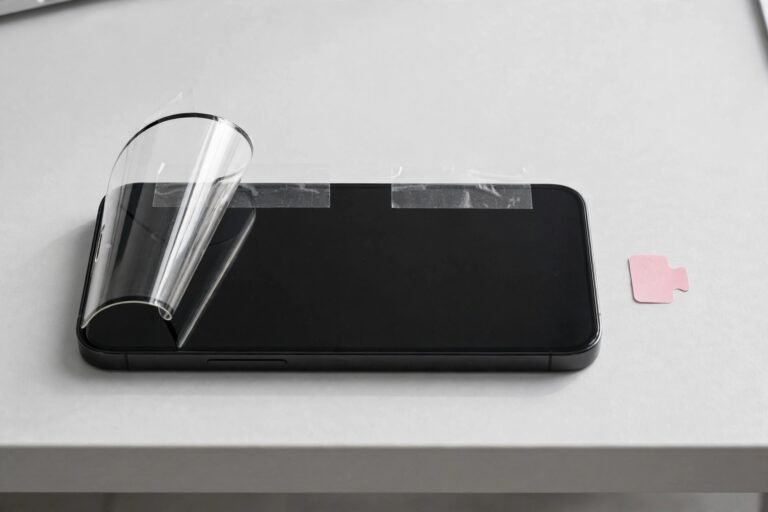
Most watch protectors are flexible film that wraps over the curved sides of the display, and that wrap is exactly what you are peeling against. Start at one corner: ease a fingernail under the film’s edge and lift until you can pinch it. Then peel diagonally across the face, so the film unwraps from the curve progressively, a little at a time, instead of fighting the whole curved edge at once.
Film stretches as you pull, so keep the tension low and steady — a hard yank stretches the film until it snaps back or tears, leaving a ragged section still bonded to the curve. If a stretch along the edge resists, stop pulling and slide a fingernail gently along beneath the edge line to break the seal in small stages, then resume the peel. Patience scales down with the screen: movements that would be trivial on a phone are the whole job here.
Lifting a Rigid Glass or Snap-On Cover
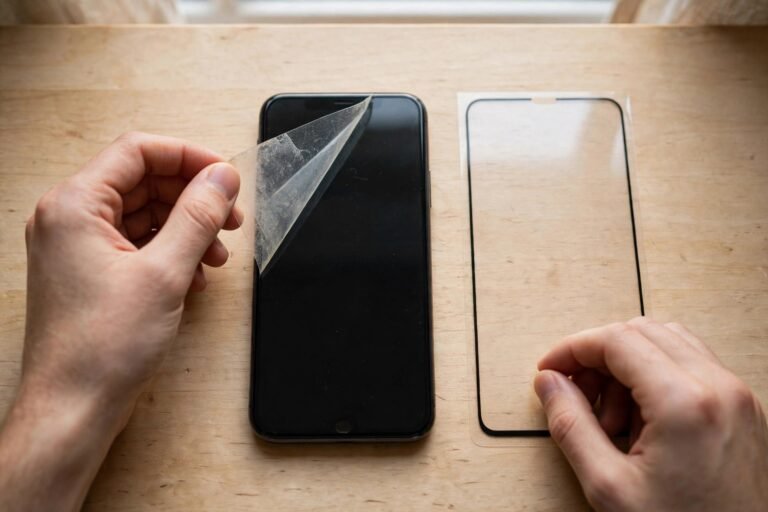
Some watch protectors are rigid instead: a small glass pane bonded around its rim, or a hard cover that clips over the case. Bonded glass starts the same way as film — a fingernail worked into the rim seam at a corner, a few millimetres of lift, then a slow, low peel. A snap-on cover releases with gentle pressure at the case edge, often at a small release notch; ease it off rather than twisting it.
With either type, resist the urge to use anything metal as a lever. The watch case — aluminium especially — scratches and gouges easily, and a mark at the edge of the case is permanent. Your fingernail, or the corner of a fingernail-sized offcut of plastic card, gives you all the leverage a screen this small needs.
- A short length of dental floss worked under a lifted corner travels neatly around the curved rim of a watch, where a card simply cannot follow.
- Keep the old film until the new one is fitted — laid adhesive-side up on the towel, it makes a handy guide for checking the replacement’s size and shape.
Clearing Residue from a Small Screen
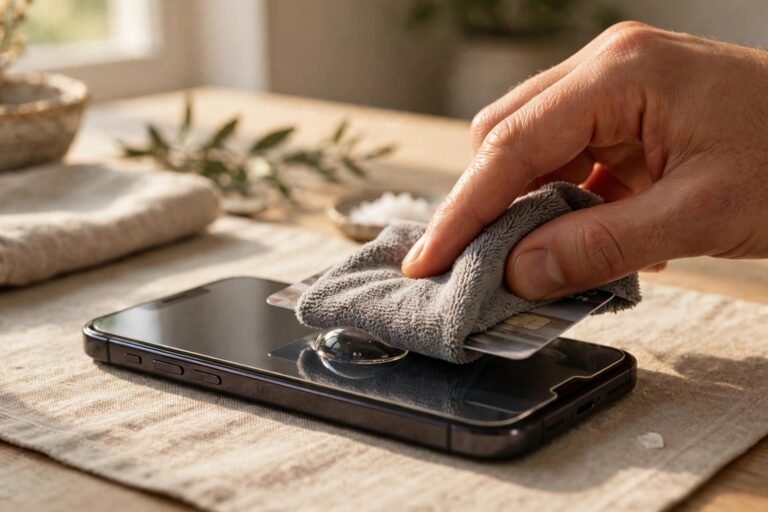
On a display this compact, a thumbprint-sized smear of old adhesive can cover a quarter of the visible area, so the clean-up deserves real care. Roll the worst of the residue off with a clean fingertip, then buff the screen with a microfibre cloth barely dampened with water. Work the corner of the cloth into the seam where the glass meets the case and around the speaker slots — residue loves to pack into those edges.
Finally, hold the watch at an angle under a lamp. The screen should look uniformly glossy; any dull or matte patch is leftover adhesive that will show through the next protector as a permanent cloudy spot. Keep buffing until the whole face matches. Only then fit the replacement — on a curved, watch-sized screen, cleanliness is the difference between an invisible fit and a week of staring at a smudge.
Frequently Asked Questions
Will removing the protector affect the watch’s water resistance?
No. Water resistance lives in the watch’s own seals and gaskets, deep inside the case — the protector is only a surface layer stuck to the glass. That said, do not soak the watch to loosen the adhesive; warm hands soften it perfectly well without putting the seals to any test.
The protector is only lifting at one corner. Do I have to remove it fully?
On a watch, usually yes. A lifted corner on a curved screen lets moisture and grit creep underneath every time you wash your hands or get caught in the rain, and the loose area spreads quickly at this scale. Full removal, a proper clean, and a fresh film is a ten-minute job and ends the problem properly.
Can I fit the new protector straight away?
Yes, as soon as the screen is clean and completely dry. Small curved displays are less forgiving of dust than phone screens, so fitting the new film in a steamy bathroom helps. Give the fresh protector an hour or so to settle before you slide the watch under a tight cuff or sleeve.
Strap off, towel down, warm hands, slow peel. Five patient minutes at watch scale, and the old protector is off, the little screen is spotless, and the next one goes on without a fight.