Tempered glass comes off beautifully when it comes off whole — one stiff, satisfying pane lifting away in a single piece. The same removal done carelessly ends with the pane snapping halfway, leaving you a second, fiddlier job and a scatter of sharp fragments. The difference is almost entirely technique: tempered glass is strong under pressure but unforgiving of bending, and every step below is about keeping the pane flat while its adhesive lets go.
This guide focuses on removing an intact tempered glass protector in one piece: choosing the right corner to start, the low, flat peel that keeps the glass whole, the tape fallback for the moment a crack appears mid-peel, and how to dispose of the old pane safely once it is off.
Key Takeaways
- Tempered glass survives removal if you keep it flat — bending is what snaps it.
- Start at the corner furthest from any existing chips or cracks.
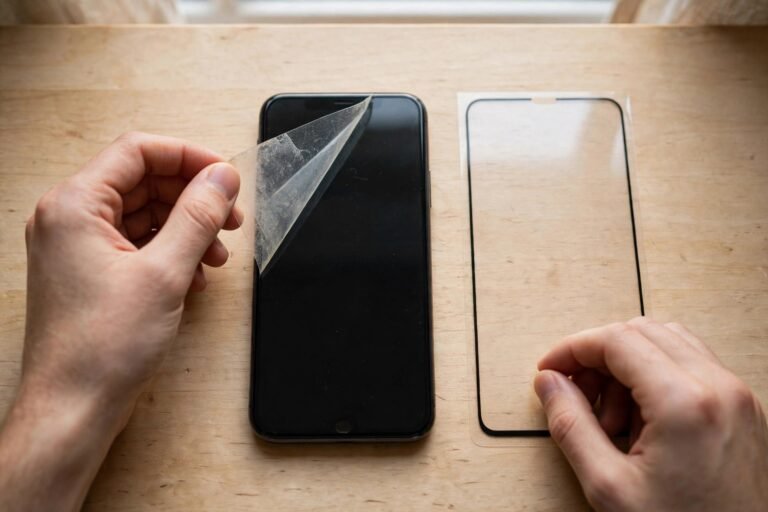
- Peel low and slow, folding the pane back over itself, supporting it as it releases.
- If a crack appears mid-peel, stop and tape the surface before continuing.
- Warmth loosens aged adhesive and makes the whole pane release more evenly.
- Bin the old pane wrapped or taped so its edges cannot cut anyone.
Choose the Right Corner
Not all corners are equal. Inspect the pane first: corners near an existing chip, crack, or lifting edge are weak points where the glass is already stressed, and starting there invites the pane to split along the damage the moment you apply leverage. The corner furthest from any damage — often a top corner, since bottom corners collect pocket wear — is the one that will flex least and hold together best.
Warm the phone in your hands for a couple of minutes, then work a fingernail flat into the chosen corner’s seam, sliding it sideways along the edge rather than digging down. You need only a few millimetres of lift. If the corner will not start, the thin edge of a plastic card at a shallow angle will — glass edges are harder than plastic, so the card yields before the pane does.
The Low, Flat Peel
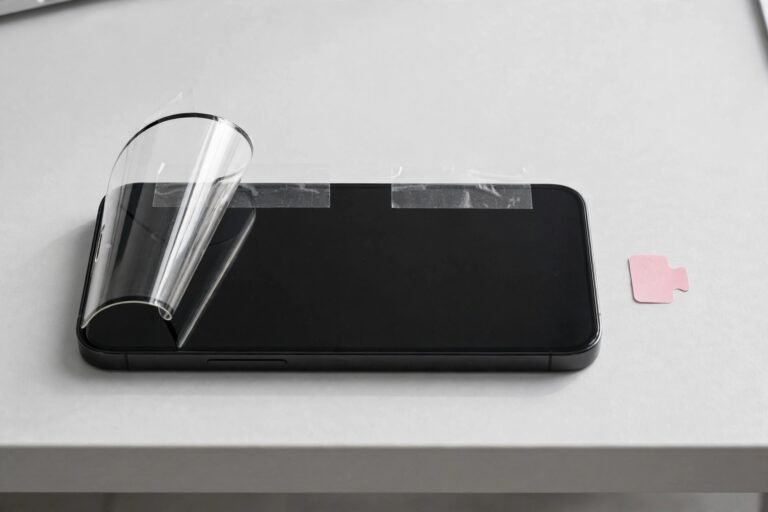
Here is the core technique. Grip the lifted corner and peel back over the pane itself, keeping the glass as flat as possible — imagine folding a page back over a book rather than lifting a lid. The angle matters because tempered glass tolerates almost no flex: pull the corner upwards at a steep angle and the pane bows until it reaches its limit and snaps across the middle.
Support the glass with your free hand just behind the peel line as it advances, so the released section is never dangling and bending under its own weight. Keep the pace slow enough to hear the adhesive releasing in a soft, steady crackle. If resistance builds suddenly, pause, hold your position, and warm that spot with your palm — then continue. A one-piece removal takes under a minute, but it is a deliberate minute.
- Peel towards the longest undamaged run of the pane — a peel that travels diagonally across the glass stresses it less than one that heads straight for a chipped edge.
- Lay a sheet of paper under the phone before you start; if the worst happens, every fragment is already contained.
If It Cracks Mid-Peel: The Tape Fallback
Sometimes, despite good technique, a hairline crack runs across the pane halfway through — usually from a chip you could not see. The moment you spot or hear it, stop peeling. Press the pane gently back down flat, then cover the whole surface with overlapping strips of wide packing tape, pressing the tape firmly into the crack lines with your thumb.
The tape turns many fragments back into one manageable sheet: it binds the pieces together, gives your fingers something safe to hold, and keeps shards from springing free as the glass flexes. Restart the peel even more slowly, supporting the taped pane throughout. Any fragment that still stays behind afterwards lifts away with a fresh piece of tape pressed hard onto it — no blades, no picking.
Disposing of the Old Pane Safely
A removed pane of tempered glass is a thin sheet of sharp edges, and it stays sharp in the bin. If it came off whole, run a strip of tape around its edges or slide it into the packaging the new protector came in. If it cracked, fold it inside a sheet of paper or card, tape the parcel shut, and then bin it — a small courtesy that protects whoever empties the rubbish.
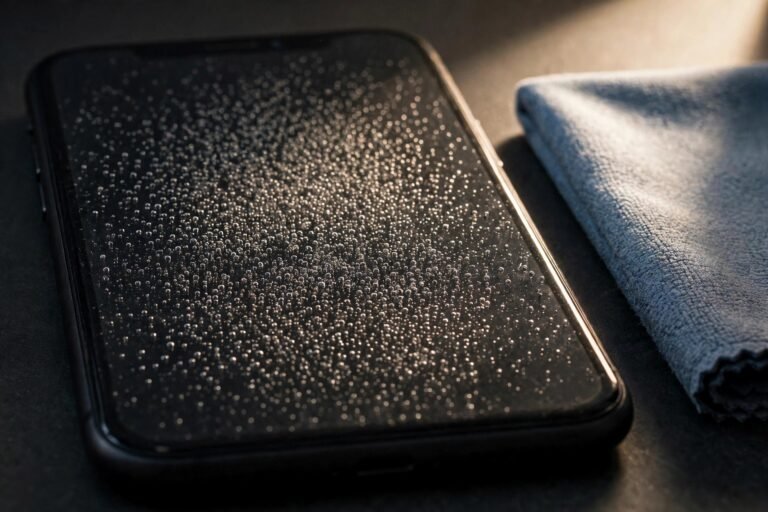
Finish by dragging a microfibre cloth slowly across the bare screen: the cloth snags on any micro-splinter your eyes missed, announcing leftovers before the new protector goes on. Then wash your hands to clear any glass dust, clean the screen properly, and fit the replacement while the glass is pristine.
- Keep the tape on a cracked pane when you bin it — the tape that held it together for removal keeps it together in the rubbish too.
- Shake your work-surface paper over the bin at the end, so any escaped sliver ends up there rather than on the desk.
Frequently Asked Questions
Why did my pane snap when I barely pulled it?
Because tempered glass fails by bending, not by pulling force. A steep peel angle bows the pane, and glass that is engineered to resist scratches and impacts has very little flex to give — especially if an invisible chip had already weakened it. A low, flat, slow peel spreads the same force without bowing the pane, which is why technique matters more than strength here.
The glass came off in pieces. Is my screen scratched?
Almost certainly not. Protector fragments sit on top of the screen and only scratch it if they are dragged across it under pressure — which is why the tape method lifts pieces straight up instead. Wipe the screen, drag a cloth across it to check for splinters, and inspect under a lamp: in the great majority of cases the display underneath is completely unmarked.
Can I reseat the same glass if it came off cleanly?
It is tempting when the pane survives perfectly, but the adhesive does not survive with it. Once peeled, the bonding layer is contaminated with microscopic dust and oils and partially stretched, so a reseated pane goes back on with bubbles, weak edges, and a fraction of its original hold. A pane that came off whole has done its job elegantly — retire it and fit a fresh one.
Flat, slow, and supported: treat tempered glass with the respect its stiffness demands, and it leaves the phone the way it arrived — in one clean piece.