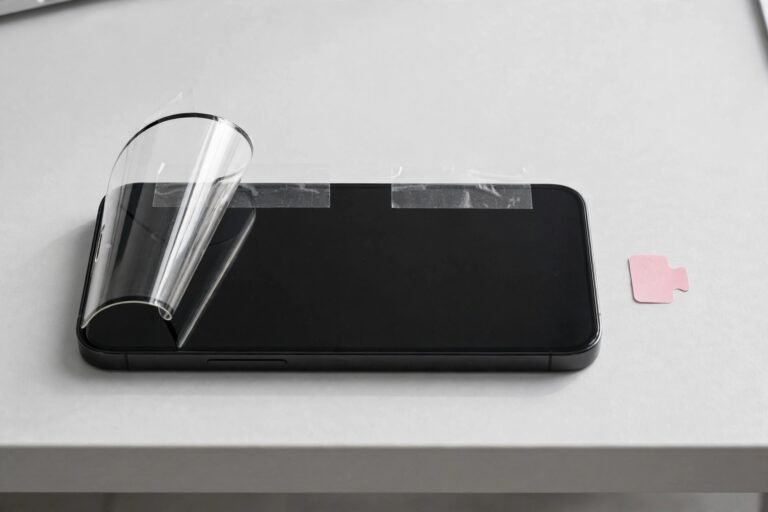
Every other protector on this site comes off with a peel. A liquid screen protector does not — because there is nothing to peel. What you applied was a nano-coating: a layer of silicon dioxide only a few microns thick that bonds directly to the glass at a molecular level. There is no edge, no corner, and no seam to get a fingernail under, which leaves owners asking a fair question when they want it gone: how do you remove something you cannot even see?
The honest answer is that you mostly do not remove it — you wear it away, polish it down, or simply build over it. This guide explains how the coating fades naturally and over what timescale, how buffing and alcohol wipes speed the process up where it matters, and why, in most cases, fitting your next protector straight over the top is perfectly fine.
Key Takeaways
- A liquid protector is a bonded nano-coating, not a sheet — it cannot be peeled, lifted, or hooked off.
- It wears away naturally over roughly 6–12 months, fastest where your fingers touch most.
- Buffing with a microfibre cloth and isopropyl alcohol wipes thins the coating faster in specific areas.
- There is no household solvent that strips it instantly — anything strong enough would threaten the glass coatings too.
- You can usually fit a glass protector or a fresh liquid layer straight over the top once the old coating is worn or cleaned.
Why There Is Nothing to Peel
A sheet protector is a physical object glued to your screen; a liquid protector is a chemical one. The fluid fills the microscopic pores and valleys in the glass surface, then cures into a hardened layer that is, for practical purposes, part of the glass itself. At a few microns thick — a human hair is around seventy — it has no structure a tool could grip.
That is also why the usual removal instincts are useless here. There is no adhesive to warm, no edge to floss under, and no amount of picking at a corner will achieve anything except wear on your fingernail. Removal thinking has to change completely: instead of separating two objects, you are gradually eroding one very thin layer until it is effectively gone.
How It Wears Away Naturally
Left alone, a liquid coating has a working life of roughly six to twelve months, and it does not wear evenly. The areas under constant friction go first: the thumb-swipe zone, the patch where your finger unlocks the phone, the strip that rubs against a case lip or a pocket seam every time the phone goes away. Edges and rarely touched corners keep their coating longest.
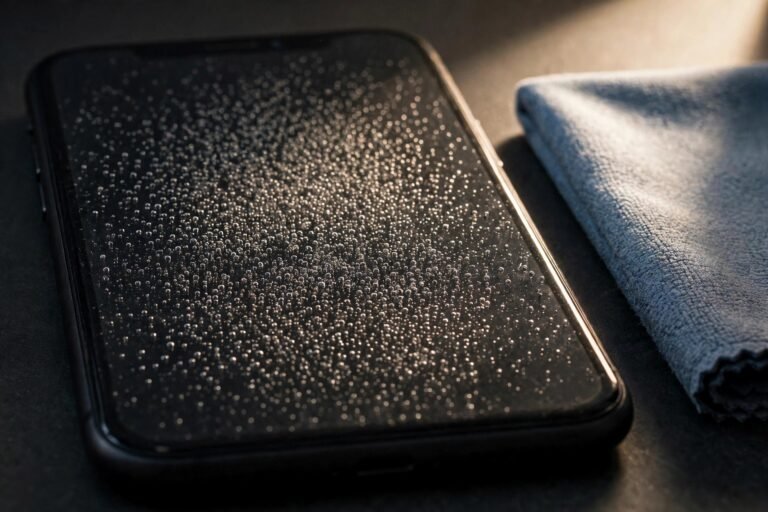
You can feel the difference before you can see it. A freshly coated screen feels noticeably slick, almost slippery, and water beads tightly on it. As the coating thins in the high-touch zones, those areas start to feel like ordinary glass again and hold fingerprints more readily — that patchy change in feel is your most reliable map of what is left.
- The water-bead test tells you where coating remains: mist the screen lightly and watch where droplets bead tightly (coating present) versus spread flat (coating gone).
- Case lips and pocket seams wear the coating fastest — check the edges first if you are judging whether it has faded overall.
Speeding It Up: Buffing, Polishing and Alcohol
If you want a specific area gone sooner — before fitting a glass protector that needs bare glass to bond to, for example — friction is your tool. Buff the area firmly with a clean microfibre cloth in small circles for several minutes at a time, over a few sessions. Each session removes a little more of the layer. It is slow, unglamorous, and entirely effective where you apply it.
Wiping the screen down with isopropyl alcohol (the wet wipes sold for screens are ideal) between buffing sessions helps too: alcohol degrades the coating’s surface and lifts the loosened material away. What you should not do is reach for anything stronger. Acetone, abrasive polishes, and scouring pads might shift the coating faster, but they can also strip the screen’s own oleophobic layer and dull the glass — a permanent price for a temporary impatience.
Applying Something New Over the Top
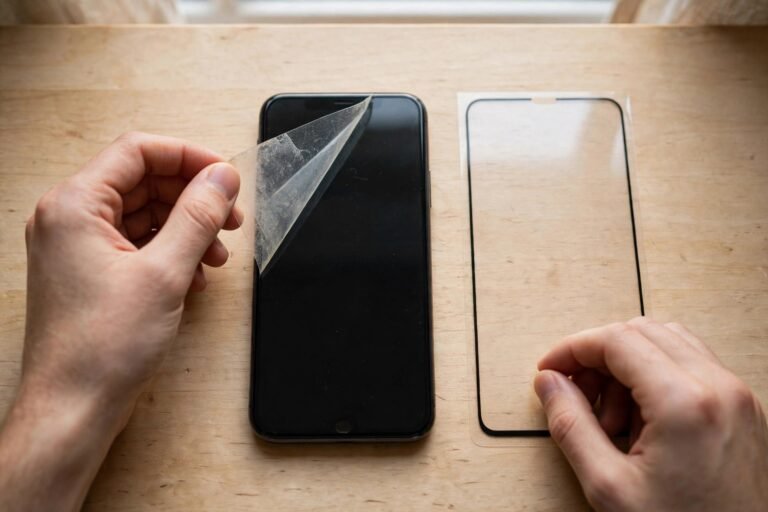
Here is the part that surprises most people: complete removal is usually unnecessary. A fresh liquid coating can be applied straight over a worn one after a thorough alcohol clean — the new layer bonds to the glass and to whatever remains of the old. Tempered glass is only slightly fussier: its adhesive needs a clean, dry surface, and a half-worn coating that is still slick in patches can cause uneven bonding and edge lift.
So if a glass protector is next, spend a few days buffing and alcohol-wiping the screen until it feels uniformly like bare glass — no slick patches — before fitting it. If you are simply renewing the liquid protection, clean well and reapply. Either way, the old coating becomes a non-issue long before it has vanished entirely.
- Before fitting glass over an old liquid layer, run the fingertip test: drag a clean fingertip across the screen — any patch that still feels extra-slick needs more buffing.
- Renewing the liquid coating instead? A thorough alcohol clean first matters more than how much old coating remains underneath.
Frequently Asked Questions
How do I know the liquid protector is completely gone?
Honestly, you cannot prove it to the last molecule — and you do not need to. The practical test is feel and behaviour: when the whole screen feels uniformly like ordinary glass, holds fingerprints the way uncoated glass does, and water no longer beads anywhere on it, the coating is functionally gone and anything you fit will behave as if it were never there.
Will buffing and alcohol damage my screen?
A microfibre cloth and screen-safe alcohol wipes will not harm the glass itself. The one caveat is the screen’s own factory oleophobic coating, which also wears with friction and alcohol over time — but it wears with everyday use anyway, and any new protector you fit replaces its function entirely. Avoid abrasives and strong solvents, which are where real damage begins.
How long would it take to remove it completely by buffing alone?
For the high-touch centre of the screen, a few minutes of firm buffing a day usually has it feeling like bare glass within a week or so. The edges and corners, which see almost no natural wear, can take considerably longer — which is precisely why most people clean thoroughly and fit the next protector over them rather than chasing a perfectly stripped screen.
You cannot peel a liquid protector, but you are never stuck with it either: wear, buffing, and time erase it — and a clean screen lets you build straight over what remains.