Liquid screen protectors make an irresistible pitch: wipe on an invisible coating, and your screen becomes harder, slicker, and more scratch-resistant — no glass, no bubbles, no edges to lift, nothing to see at all. Set against a sheet of tempered glass that you can crack, misalign, and visibly feel under your thumb, the liquid sounds like the future. Marketing phrases like “liquid armour” and “9H hardness in a bottle” do the rest.
This guide gives the honest comparison the adverts skip. Liquid nano coatings do one real thing and do it reasonably well — but protection has more than one dimension, and on the dimension that matters most, tempered glass wins by a distance. Here is what each product actually does, where each one fails, and how to choose with your eyes open.
Key Takeaways
- Liquid protectors are nano coatings that bond to the glass and add modest scratch resistance only — they absorb no impact.
- Tempered glass is a sacrificial layer: it cracks so your screen does not, absorbing real drop energy.
- A liquid coating cannot be inspected, peeled off, or replaced — you can never see whether it is still there.
- Liquid wins on invisibility and compatibility: no edges, no touch or fingerprint-sensor interference, fits any screen shape.
- Verdict: for protection, tempered glass is better; liquid is a supplement for people who refuse any visible layer.
What a Liquid Screen Protector Actually Is
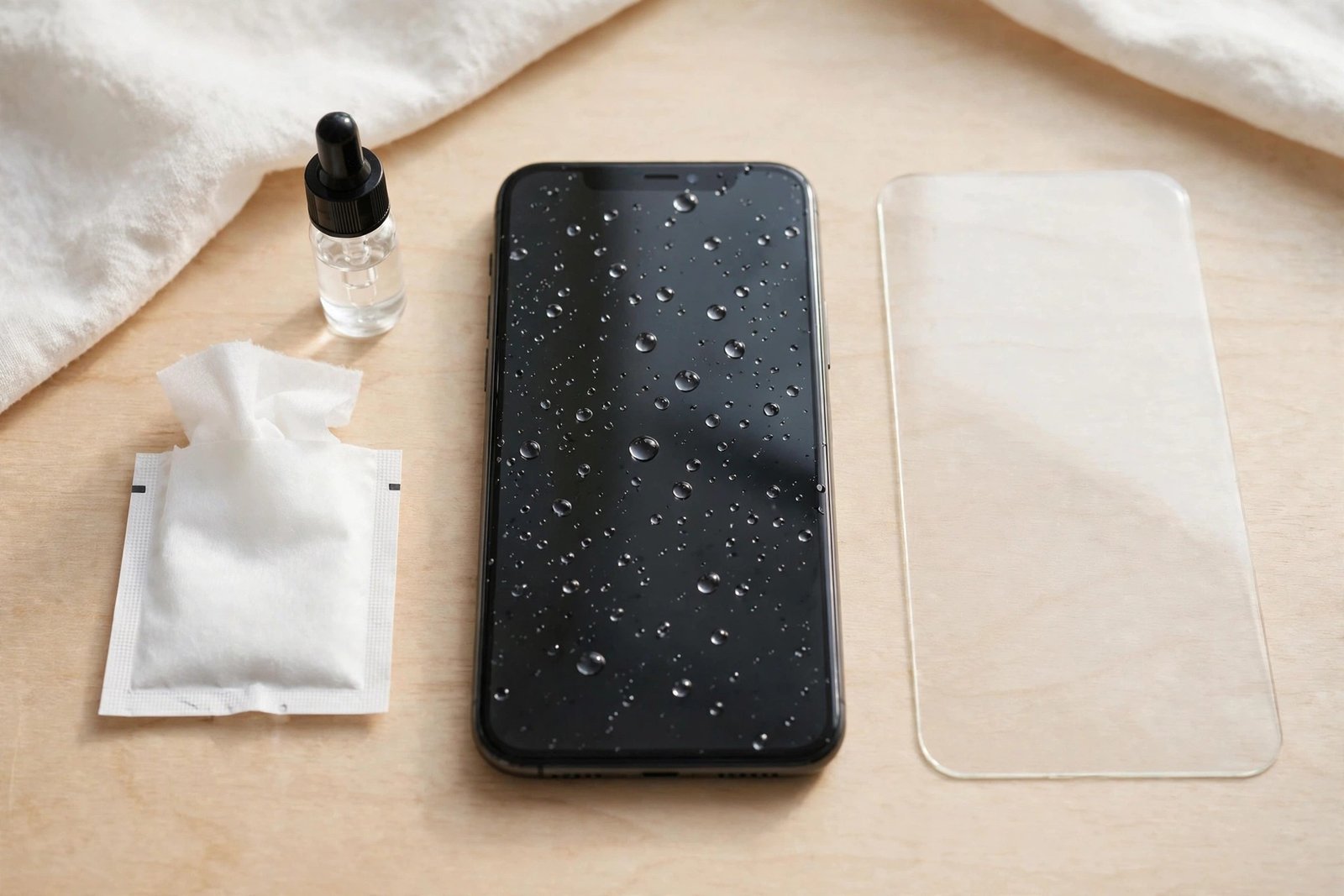
A liquid screen protector is a silicon-dioxide nano coating applied from a wipe or small bottle. Spread over clean glass and left to cure, it bonds at a molecular level and fills the microscopic pores and imperfections in the surface. The result is a layer measured in nanometres — thousands of times thinner than a sheet of tempered glass — that leaves the surface slightly harder and noticeably more hydrophobic, so water beads and fingerprints wipe away more easily.
That pore-filling is the genuine benefit: a smoother, more uniform surface picks up fine scratches less readily than untreated glass, and the oleophobic top feel is restored on older screens whose factory coating has worn away. Applied to a new screen, think of it as reinforcing the surface against the micro-abrasion of daily life — pocket grit, sliding on tables, the slow haze of a thousand small contacts.
The Limit That Matters: No Impact Protection
Here is where honesty is required. Screens break from impact — drops onto hard floors, knocks against corners — and impact protection requires material that can absorb and distribute energy. A coating a few nanometres thick cannot do this in any physically meaningful way. It adds no cushioning, no sacrificial layer, nothing between your display and the pavement except the display itself.
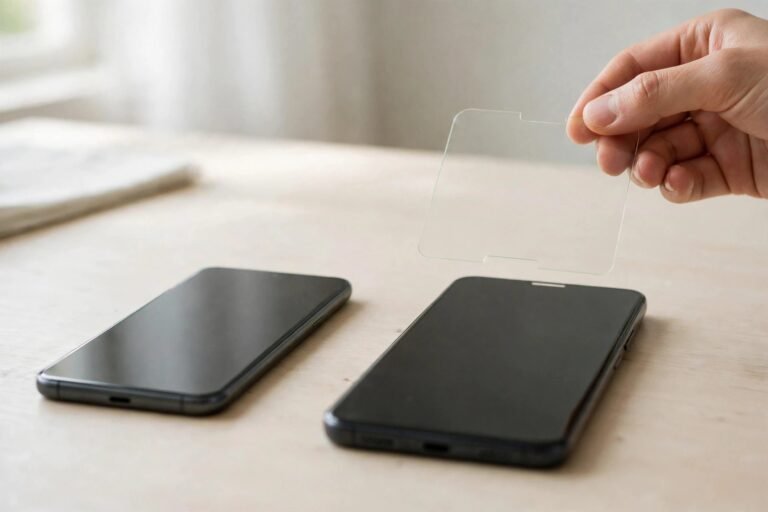
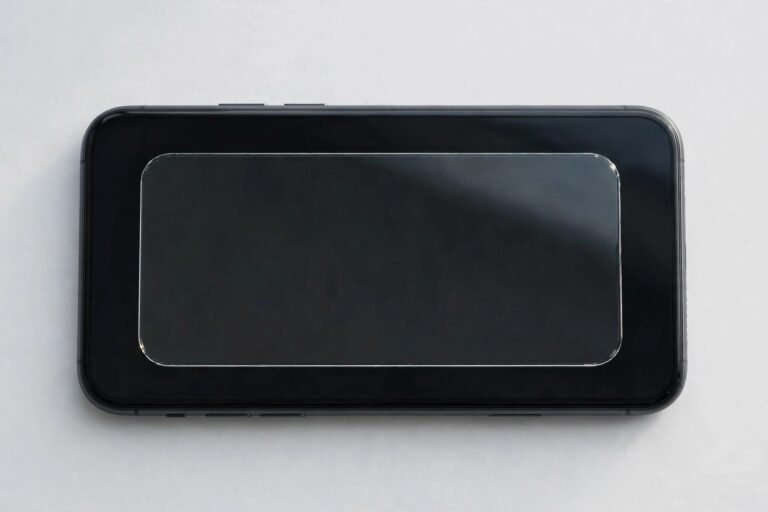
Tempered glass protectors work on the opposite principle: they are designed to fail. When a phone lands badly, the protector’s glass fractures and in doing so consumes energy that would otherwise go into the screen beneath. That is why a shattered protector over an intact display is such a common sight — the product did its one job. No liquid product, however it is marketed, can replicate physics: if drop protection is what you are buying, there is only one product on this page that provides it.
- Be sceptical of “9H” claims on liquids. The 9H pencil-hardness scale describes resistance to scratching by pencils of graded hardness — a surface scratch test, not drop protection. A coating can honestly score well on it while offering nothing at all against a fall onto concrete.
You Cannot See It, Remove It, or Check It
The invisibility that makes liquid protectors attractive is also their strangest drawback. A tempered glass protector announces its condition honestly: it is either intact, or cracked and obviously due for replacement. A nano coating gives you no such feedback. It wears away gradually — through friction, cleaning, and time — and there is no way to inspect what remains. Manufacturers suggest reapplying every year or so, but that is a guess dressed as a schedule; your coating may be largely gone months earlier without any visible sign.
The same applies in reverse: you cannot remove it. If you dislike the feel, applied it unevenly, or need warranty service on the display, there is no peeling it off — it wears away on its own timetable or not at all. And because it adds nothing visible, it also cannot be verified at resale or by a repair technician. You are trusting a layer you cannot see, measure, or remove.
Where Liquid Genuinely Wins
Fairness demands the other side. Liquid coatings have no edges — nothing to lift, no halo, no case conflicts, no alignment to get wrong. They work on curved and folding screens where glass protectors struggle, and they add zero thickness, so under-display fingerprint sensors and stylus feel are completely unaffected. For smartwatch faces and oddly shaped devices that glass protectors barely exist for, a coating may be the only option available at all.
There is also a legitimate use as a supplement: a coating under a glass protector restores slickness to an ageing screen, and some users coat a new phone on day one as a base layer of scratch defence beneath a case. Judged as an extra rather than a replacement, liquid products have a sensible place — the problem is only ever the claim that they substitute for glass.
- The honest test before buying: ask “what breaks phones — scratches or drops?” If your history is scuffed-but-intact screens, a coating addresses your actual risk. If you have ever cracked a screen, only a sacrificial layer stands between the next drop and a repair bill.
Frequently Asked Questions
Can a liquid protector stop my screen cracking in a drop?
No. A nano coating is far too thin to absorb or spread impact energy. It improves resistance to fine surface scratches, but a drop that would crack an unprotected screen will crack a liquid-coated one in essentially the same circumstances. Only a physical sacrificial layer — tempered glass — offers meaningful drop protection.
How long does a liquid screen protector last?
Manufacturers typically claim around a year, but wear depends heavily on use and cleaning habits, and there is no way to inspect the remaining coating. Treat any liquid protector as gradually diminishing from the day it is applied, and reapply on the maker’s schedule if you rely on it — while remembering its limits either way.
Can I use a liquid protector and tempered glass together?
Yes — apply the coating first, let it cure fully, then fit the glass over it. The combination gives you the coating’s surface benefits beneath a real sacrificial layer. It is a reasonable belt-and-braces approach, though the glass is doing nearly all of the protective work.
Liquid protectors polish the surface; tempered glass stands in front of it. Know which job you need done, and the “better” product chooses itself.