The Apple Watch is strapped to your wrist — the most exposed piece of tech you own. It brushes against door frames, scrapes across gym equipment, and takes knocks your phone never would. So does it need a screen protector? Honestly: it depends on your model and your lifestyle.
Not all Apple Watches share the same display. Aluminium models use Ion-X glass that scratches easily, while pricier models use sapphire crystal that resists scratches but can still shatter. Here’s who genuinely benefits from protection, who can skip it, and which option suits you.
Key Takeaways
- Aluminium models use Ion-X glass — tougher against shattering, but more prone to everyday scratches than sapphire.
- Sapphire models (steel and Ultra) are highly scratch-resistant, yet can still crack or chip on hard impacts — sapphire is neither scratch-proof nor shatterproof.
- Manual workers, gym-goers, and parents benefit most from a protector; desk workers with sapphire can usually skip it.
- Tempered glass absorbs the hardest knocks; TPU films are nearly invisible but only guard against light scratches; bumper cases protect edges at the cost of looks.
- A quality protector doesn’t affect touch sensitivity, and fitting one does not void your Apple warranty.
The Two Display Types: Ion-X Glass vs Sapphire Crystal
Every Apple Watch display is either Ion-X glass or sapphire crystal. Aluminium models — the most popular and affordable — use Ion-X: toughened to resist shattering, like an iPhone’s display, but it scratches just as easily. Fine marks from keys, sand, or rough surfaces show up readily.
Stainless steel models and the Ultra use sapphire crystal instead — one of the hardest materials on Earth, so keys, coins, and grit can’t scratch it. But hardness is not toughness: sapphire is brittle, and a sharp blow can crack or chip it. And since sapphire sits in a pricier watch, a shattered display costs far more to replace.
The two display types fail in opposite ways: Ion-X scratches easily but shatters rarely; sapphire rarely scratches but shatters more readily. Knowing which failure mode threatens your watch decides whether you need protection.
Real-World Scratch Risks: How Scratches Actually Happen
The classic scratch story: you walk through a door frame, reach across a rough countertop, or brush the watch against brick or concrete. Sand is the silent killer — even a little grit from a beach or hike acts like sandpaper on Ion-X glass. Keys and coins rarely touch the watch in a pocket, but they threaten it the moment you rest your wrist on a table edge.
Gym equipment is another major culprit. Barbell knurling, dumbbell handles, and weight-machine frames all chew up displays, especially during presses and curls where the wrist flexes against the bar. The Ultra’s sapphire display handles these far better, but aluminium models suffer quickly.
Then there’s the accidental impact: a car door, a shopping trolley handle, a low ceiling beam. These hard, concentrated strikes are what crack sapphire. For Ion-X owners, the same knock usually leaves a scratch or a dented case instead.
- Sand and grit are the biggest everyday threat to Ion-X glass. If your life involves beaches, hikes, dusty workshops, or playgrounds, a protector is cheap insurance however careful you are.
- For sapphire models, a protector’s job is impact absorption, not scratch prevention — choose tempered glass thick enough to take the hit.
Who Genuinely Benefits vs Who Can Skip It
A protector is worth it if you do manual work — construction, plumbing, electrical, or warehouse jobs put your wrist against metal, concrete, and rough materials all day. The same goes for gym-goers and outdoor athletes, especially with an aluminium model. Parents of young children should consider one too: toddlers grab wrists with surprising force, and playgrounds are full of sand.
Who can skip it? Desk workers with a sapphire model — if your watch’s biggest daily hazard is a keyboard and a coffee mug, sapphire will stay pristine for years. Careful aluminium owners who work indoors can also go bare, accepting that fine micro-scratches will appear over time.
Protection Options Compared: Tempered Glass, TPU Film, and Bumper Cases
Tempered glass protectors are the most popular choice and the best all-rounder. A thin sheet of hardened glass bonds to the display, absorbs hard knocks, and cracks sacrificially instead of your screen. Modern ones are optically clear and barely add any thickness. The only real downside: the edges can be slightly visible in certain light.
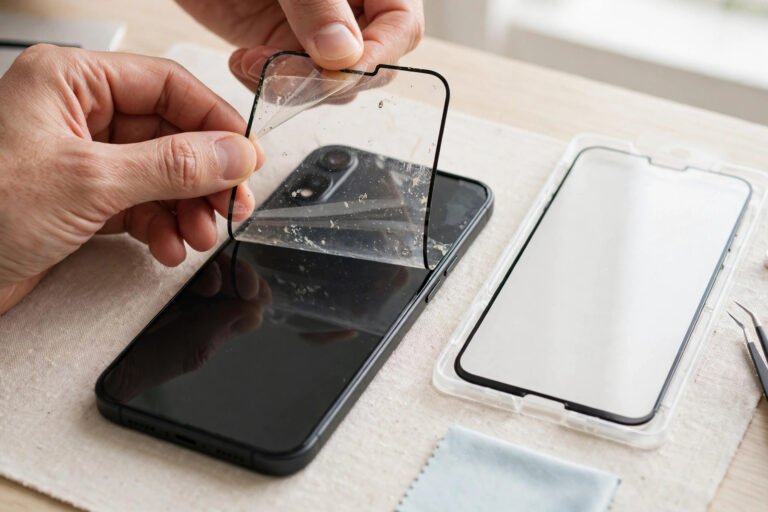
TPU films are the minimalist option — essentially invisible once applied, self-healing for micro-scratches, and cheap to replace. But film only guards against light scratches, not impacts. Think of it as scratch insurance for careful wearers, not impact protection for rough ones. Application can also be fiddly on the watch’s small, curved display.
Bumper cases take a different approach: they wrap the watch case in a raised lip that stands proud of the screen, so flat impacts hit the bumper first. They offer the best edge and corner protection — the most common failure points in drops. The trade-off is aesthetics: a bumper noticeably changes the watch’s slim profile.
- For maximum protection, pair a tempered glass protector with a bumper case. The glass guards the display face while the bumper absorbs edge impacts.
- Match the size to your exact watch — 41mm, 45mm, or Ultra 49mm. A millimetre off and the protector won’t sit properly on the curved edges.
Effect on Touch Sensitivity, the Digital Crown, and Appearance
The most common worry — that a protector makes the screen feel sluggish — is largely unfounded. Quality tempered glass is thin enough that taps and swipes register normally; most wearers can’t tell it’s there. Problems only arise with cheap, overly thick glass or poor adhesive that traps air, so buy from a reputable maker.
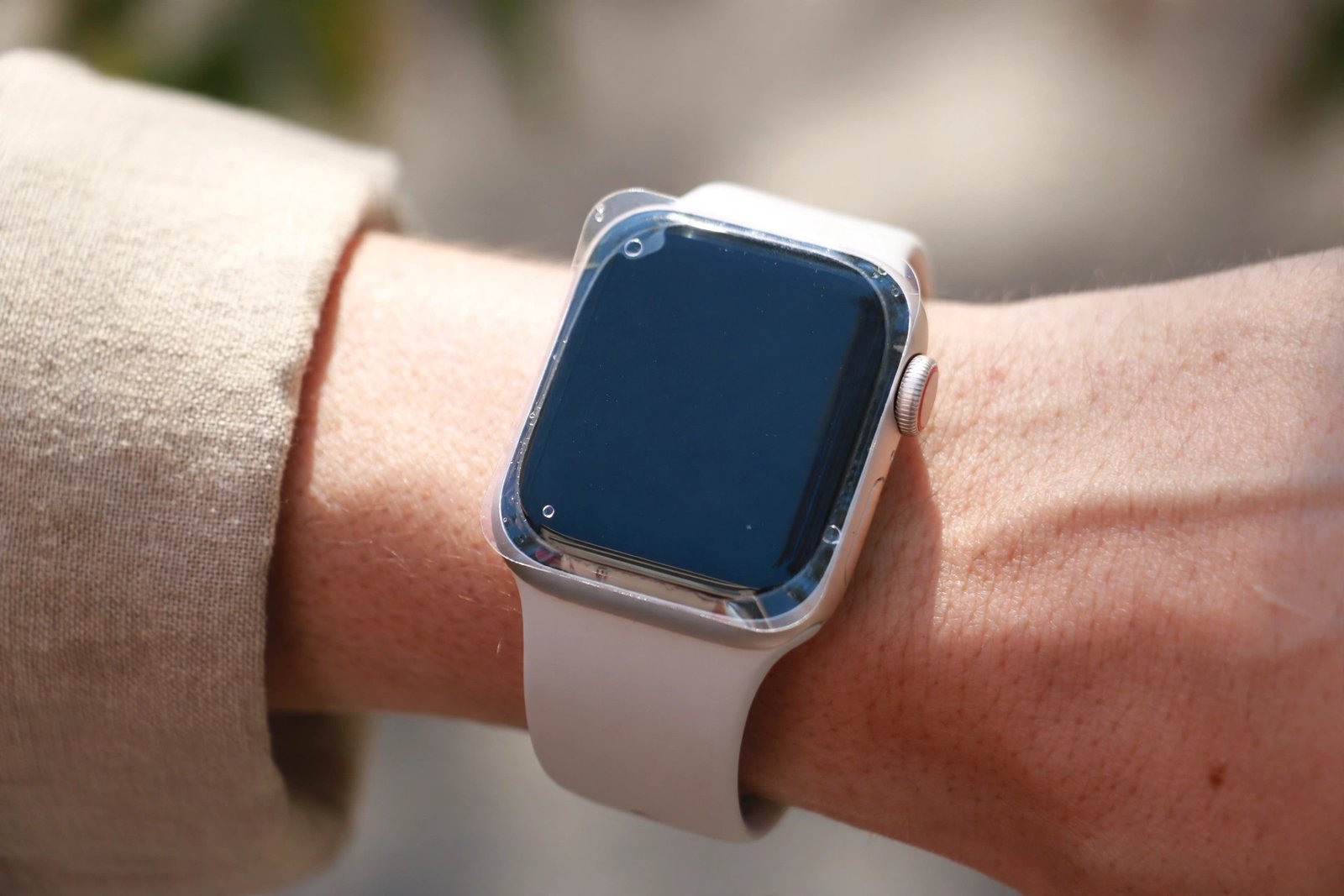
The Digital Crown and side button are unaffected, since protectors cover only the display — the side controls are untouched. Gestures, scrolling, and the always-on display all behave identically. Visually, a well-fitted protector is nearly invisible straight-on; you might notice a faint edge line in bright light.
Frequently Asked Questions
Does a screen protector affect touch sensitivity?
With a quality protector, no — there’s no perceptible difference. Tempered glass for the Apple Watch is thin enough for touch sensors to work normally, and TPU film is thinner still. Reduced sensitivity usually means a poorly fitting protector — replacing it with a better one solves the problem.
Does fitting a screen protector void the Apple warranty?
No. Fitting a protector is non-invasive and does not void Apple’s warranty or AppleCare+ cover. The only caveat: Apple may remove and discard the protector during a warranty repair without replacing it — treat it as a consumable.
Is the sapphire display really scratch-proof?
Not quite — highly scratch-resistant is not scratch-proof. Sapphire shrugs off keys, coins, and sand, which cause most everyday scratches. But harder materials like diamond jewellery can mark it, and it can crack from hard impacts because sapphire is brittle. Sapphire owners rarely need scratch protection, but impact protection remains worth considering.
Which protection option is the least noticeable?
TPU film, by a clear margin. Applied smoothly, it’s essentially invisible with no added thickness or edge line. Tempered glass is a close second — nearly invisible head-on, with only a faint edge in certain light. Bumper cases are the most visible option, since they add a raised lip around the watch.
An Apple Watch doesn’t strictly need a screen protector — but for aluminium models, active lifestyles, and rough workplaces, it’s one of the cheapest insurance policies in tech. Match the protection to your display type and routine, and you’ll never think about it again.