Short answer: yes — for most people, tempered glass is genuinely good. It is harder and smoother than any plastic film, the easiest type to fit without bubbles, and it has saved countless displays by cracking in their place. It is not magic armour, though, and not the right choice for everyone.
Here is what glass does well, where it falls short, how it compares with film, and what to look for.
Key Takeaways
- Harder than any film — shrugs off keys, coins, and pocket grit that leave PET and TPU films scratched.
- Closest to the bare-screen feel — smooth glide and an oleophobic coating that keeps fingerprints at bay.
- Protects by cracking sacrificially — absorbs impact by breaking itself, often sparing the display.
- Easiest type to install — the rigid sheet drops flat with far fewer bubbles than flexible film.
- Not without trade-offs — added thickness, poor fit on strongly curved edges, and possible trouble with ultrasonic fingerprint sensors.
- Film wins in two cases — edge-to-edge coverage on curved screens, and the cheapest, thinnest option.
Where Tempered Glass Genuinely Wins
The biggest win is scratch resistance. Rated around 9H on the pencil hardness scale, tempered glass shrugs off keys, coins, and zips — treatment that leaves PET film covered in hairline scratches within weeks. One caveat: 9H is pencil hardness, not the Mohs mineral scale, so quartz sand can still mark it. Ordinary pocket items genuinely cannot.
Then there is the feel. Quality glass carries an oleophobic coating like your phone’s own display, so your finger glides and prints wipe away easily. PET feels thin and plasticky; TPU slightly soft and tacky. If how your screen feels matters, glass is the only protector that comes close to the original.
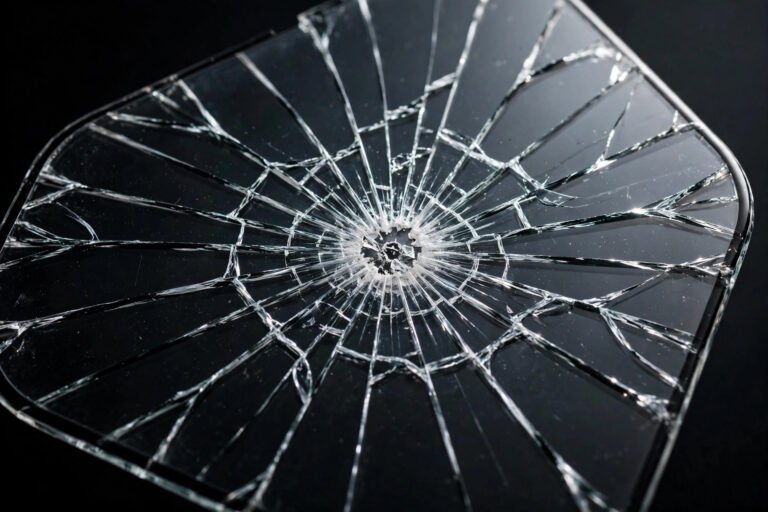
Finally, glass absorbs impacts by design. Tempering puts the surface under compression, so when it takes a hard knock, that tension releases as cracks — dissipating the energy that would otherwise reach your display. A spiderwebbed protector over an intact screen is not a failure; it is the product doing exactly its job.
The Honest Limitations
First, thickness. Most protectors measure around 0.3mm, and you can feel the step at the screen’s edge. With tight cases, one that is not case-friendly can get levered up at the corners — so pick a slightly narrower cut.
Second, curved edges. A flat sheet cannot conform to a strongly curved or waterfall display, so it either floats above the curve — collecting dust and halo reflections — or stops short of the edge. Cheap edge-only adhesive makes it worse — glue around the border alone leaves the centre hollow and touch response suffers.
Third, under-display fingerprint sensors. Optical sensors, common in mid-range phones, work fine through glass. Ultrasonic sensors, used in some flagships, are fussier — the extra layer can scatter their sound waves, making recognition slower or less reliable. Re-registering fingerprints after fitting usually helps. Glass also costs more than film.
Tempered Glass vs PET/TPU Film — a Fair Comparison
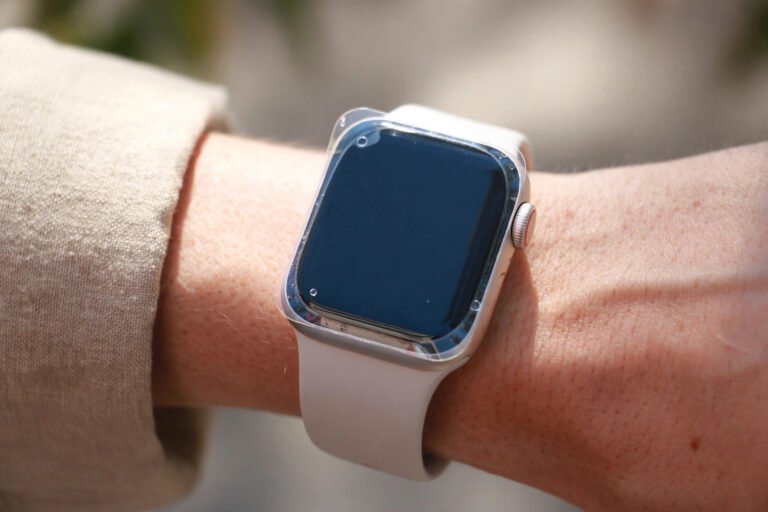
Film has two genuine advantages. It conforms: a flexible sheet follows curved edges for edge-to-edge coverage rigid glass cannot match. And it is cheap and barely noticeable once fitted — TPU even self-heals light scuffs over a day or two. If your screen curves and scratches are your main worry, film is arguably the smarter buy.
But film’s limits are real. Neither PET nor TPU offers meaningful impact protection — they are scratch guards, not shock absorbers. PET scratches easily and looks tired fast; TPU resists scuffs better but feels softer under the finger, and both are fiddlier to fit dust-free. Over a year of hard use, film gets replaced several times where one sheet of glass survives.
Against drops, tempered glass wins clearly — it is the only common protector type that dissipates impact energy. Against scratches on a flat screen, glass wins too. Film only takes the lead on curved displays and on price. Match the material to your screen shape and your risks, not to marketing.
Who Should Buy Tempered Glass — and Who Shouldn’t
Buy glass if your screen is flat or only gently curved, if you drop your phone with any regularity, or if you want the display to feel like itself. It is also the better pick for children, shared phones, and dusty or gritty workplaces — one protector can absorb a drop that would otherwise mean a repair bill.
Think twice with a strongly curved display, where full-coverage film fits far better — or if you depend on an ultrasonic fingerprint sensor and cannot tolerate slower recognition. And if any added thickness at the screen’s edge bothers you, ultra-thin film may suit you better. None are deal-breakers; they are simply the cases where film earns its place.
What to Look for in a Quality Protector
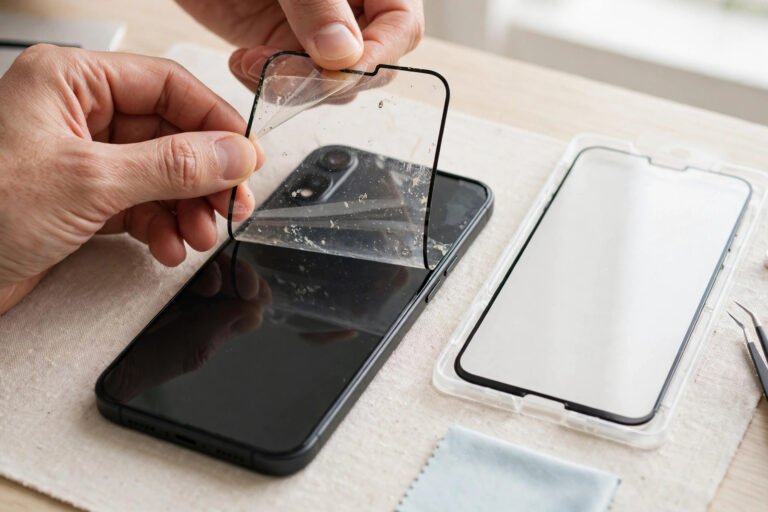
Buy for your exact model — last year’s cut will not align with this year’s cutouts. Then look for an alignment tray in the box. The rigid sheet is the easiest type to fit, but only if it lands straight, and a tray makes a crooked install nearly impossible. That one accessory separates a five-minute success from a twenty-minute bubble fight.
Next, check the adhesive design. Full-adhesive glass bonds across the whole screen, keeping touch response uniform and edges sealed. Edge-only adhesive — glue just around the border — leaves the centre floating, causing the hollow feel and rainbow shimmer some users report. Listings rarely say which type they use, so read reviews: a visible dot-matrix pattern usually signals edge-only glue.
Finally, treat hardness claims with healthy scepticism. Genuine tempered glass is hard, and “9H” refers to the pencil test — but the label is widely printed on glass never tested. What matters more is tempering quality and a proper oleophobic coating: prints should wipe away easily and edges feel polished, not sharp.
- The centre-press test: after fitting, press the middle of the glass. If it flexes or shows a faint rainbow shimmer, only the border is glued — switch to a full-adhesive design.
- Look for slightly rounded, polished edges. Sharp-cut edges feel worse and chip more easily.
Frequently Asked Questions
Is the 9H hardness claim actually real?
Partly. The 9H refers to the pencil hardness scale, where 9H is the hardest pencil lead — a genuine measure of scratch resistance against everyday items. It is not a Mohs mineral rating, so it does not mean sapphire-hard. Keys and coins will not scratch it; quartz sand can. The claim is real, but narrower than marketing implies.
Will tempered glass affect my under-display fingerprint sensor?
Usually not with optical sensors, which read through glass fine. Ultrasonic sensors are the exception — the extra layer can scatter their sound waves, slowing or confusing recognition. If yours misbehaves, delete and re-register your fingerprints with the protector fitted, and check for a touch-sensitivity setting. Full-adhesive glass also gives the sensor a cleaner signal than edge-only designs.
Tempered glass or film — which protects better against drops?
Tempered glass, by a wide margin. It is the only common protector type that absorbs impact energy, cracking sacrificially to spare the display. Film — PET or TPU — is a scratch guard with almost no shock absorption. If drops are your main worry, glass is the answer; film’s advantages are fit on curved screens, thinness, and price.
A tempered glass protector will not make your phone indestructible, but it remains the simplest way to cut the odds of a cracked display. Match the material to your screen shape, fit it once with care, and it will quietly take the hits so your screen does not have to.