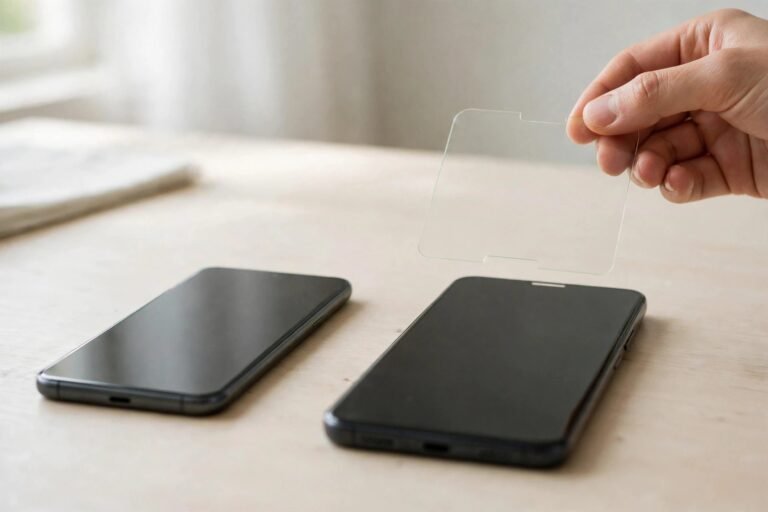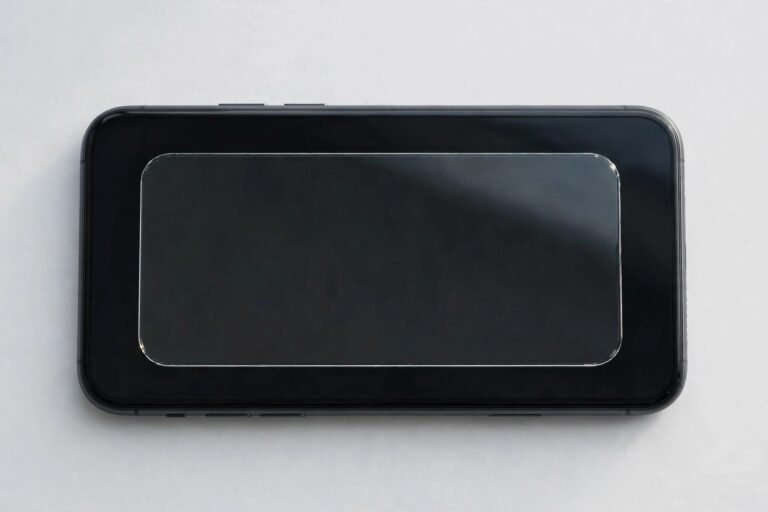
A screen protector looks like a simple sheet of glass or plastic — but the physics of how it protects your display is more interesting than it appears. It does two different jobs at once: shrugging off the daily scratches that would slowly ruin your screen, and sacrificing itself in a drop so your expensive display survives. Understanding how each mechanism works helps you choose the right type and set realistic expectations.
This guide explains the materials, the adhesive, and the impact physics behind screen protectors — what they can actually do, what they cannot, and why a thin sheet of glass is so much tougher than it looks.
Key Takeaways
- Screen protectors work through two mechanisms: a hard surface that resists scratching, and sacrificial fracture that absorbs drop energy.
- Tempered glass is chemically or thermally strengthened so its surface is in compression — it takes far more force to start a crack.
- The silicone adhesive layer bonds the protector to the display, spreading impact force across a wider area instead of one point.
- Hardness ratings (like “9H”) measure scratch resistance, not shatter resistance — do not confuse the two.
- No protector makes a phone drop-proof; it buys your display a much better chance, especially against face-down impacts on hard surfaces.
Scratch Protection: Hardness Wins
Your phone’s display glass is already tough, but everyday objects still mark it: sand and grit in pockets (quartz is harder than display glass), keys, and general grit. A screen protector puts a replaceable hard layer between those objects and your display. Tempered glass protectors rate around 9H on the pencil-hardness scale — hard enough that keys, coins, and fingernails cannot scratch them, though diamond-dust particles and sand still can.
This is the protector’s quiet, everyday job, and it is the one it does best. Most displays that look pristine after two years owe it to the protector taking thousands of micro-scratches that would otherwise be in the actual screen — scratches that tank resale value and catch the light annoyingly.
Drop Protection: The Sacrificial Layer
Drops are the dramatic job. When your phone hits the floor face-down, the impact energy concentrates at the contact point. A tempered glass protector works by cracking instead of your display: the energy that would have fractured your screen goes into fracturing the cheap replaceable layer. This is deliberate engineering, not a flaw — the protector is designed to fail first.
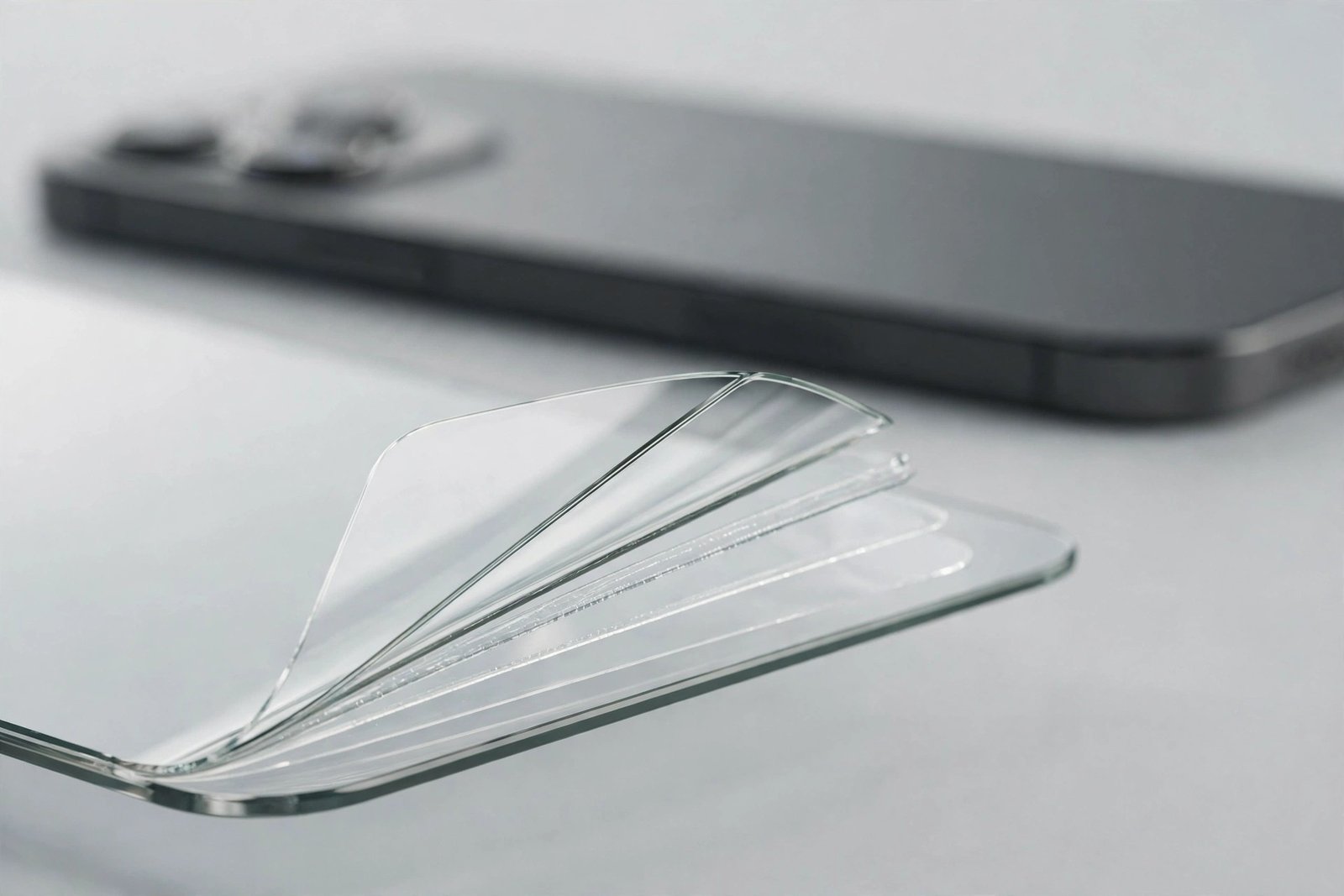
Tempering is what makes this work. The glass is strengthened so its outer surface sits in compression — squeezed inward — which means a crack needs far more energy to start than in ordinary glass. When the impact finally exceeds that threshold, the stored energy releases and the protector shatters into relatively blunt fragments, having absorbed a large share of the blow.
- A cracked protector did its job — replace it promptly. A fractured protector has used up its sacrificial capacity; the next drop hits with no protection at all.
The Adhesive: More Than Just Glue
Between the protector and your display sits a thin silicone adhesive layer. Its job is not just to hold the protector on — it is part of the protection system. By bonding the full surface, it spreads impact force across a wider area of the display rather than letting it concentrate at one point, and it keeps shattered protector fragments in place instead of scattering.
This is also why a poorly fitted protector with air gaps protects worse: where the adhesive is not in contact, force does not spread, and the protector can flex and crack from minor knocks. Full, bubble-free adhesion is not cosmetic — it is structural.
What the Ratings Actually Mean
The “9H” you see on every listing refers to the pencil hardness test: the protector resists scratching by a 9H pencil. It tells you about scratch resistance and nothing about drop survival — a 9H protector can still shatter from a waist-high drop onto tile, because shattering is about impact energy, not surface hardness. Treat 9H as a baseline expectation for any decent glass protector, not a quality ranking.
Thickness matters more than marketing suggests. Most tempered glass protectors are 0.3mm to 0.5mm: thinner glass feels more like the bare screen and interferes less with fingerprint sensors, while thicker glass absorbs slightly more energy. For most users the difference is marginal — fit quality and full adhesion matter far more than an extra tenth of a millimetre.
What Protectors Cannot Do
Honesty matters here. A screen protector cannot save a phone from every drop — a corner impact that bends the frame can crack the display regardless of what is on it, because the force bypasses the protector entirely. It cannot protect the back, the cameras, or the frame. And film-type protectors (PET, TPU, hydrogel) offer scratch protection but very little impact absorption compared to glass — they are too thin and flexible to sacrifice meaningfully.
- Think of protection in layers: the protector guards the display surface, a case guards the corners and back. Neither replaces the other — the combination is what survives real-world drops.
Frequently Asked Questions
Does a screen protector really prevent cracked screens?
It significantly improves your odds, especially for face-down drops onto hard surfaces — the most common screen-killer. It does not make the phone indestructible; corner impacts and extreme drops can still crack the display.
What does 9H hardness actually mean?
It means the surface resists scratching by a 9H pencil in the standard hardness test — roughly, keys and coins will not mark it. It says nothing about surviving drops, which is a separate property.
Why did my screen protector crack but my screen is fine?
That is the design working exactly as intended. The protector absorbed the impact energy by fracturing, sparing your display. Replace the protector now — its protective capacity is spent.
A screen protector is a bodyguard that takes the hit so your display does not have to. Hard enough to shrug off daily scratches, engineered to shatter gracefully in a drop — and cheap enough to replace when it does.