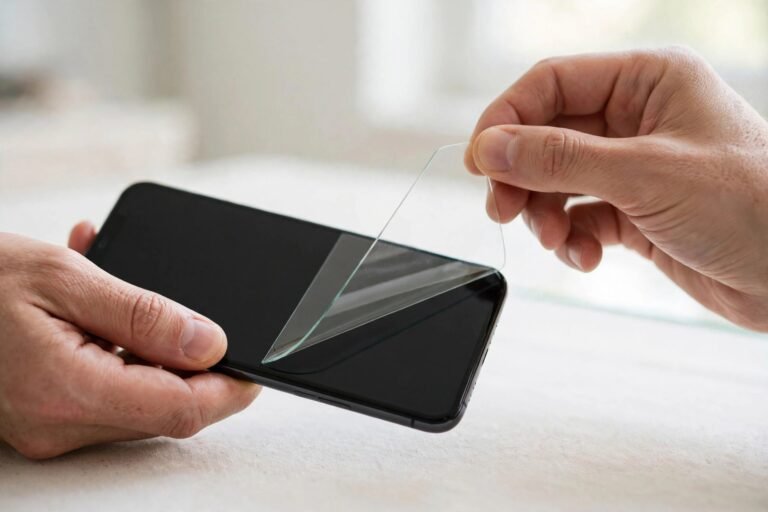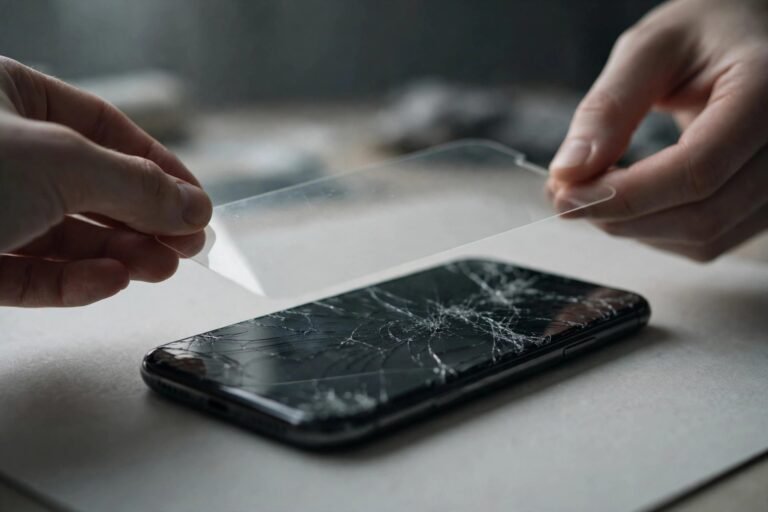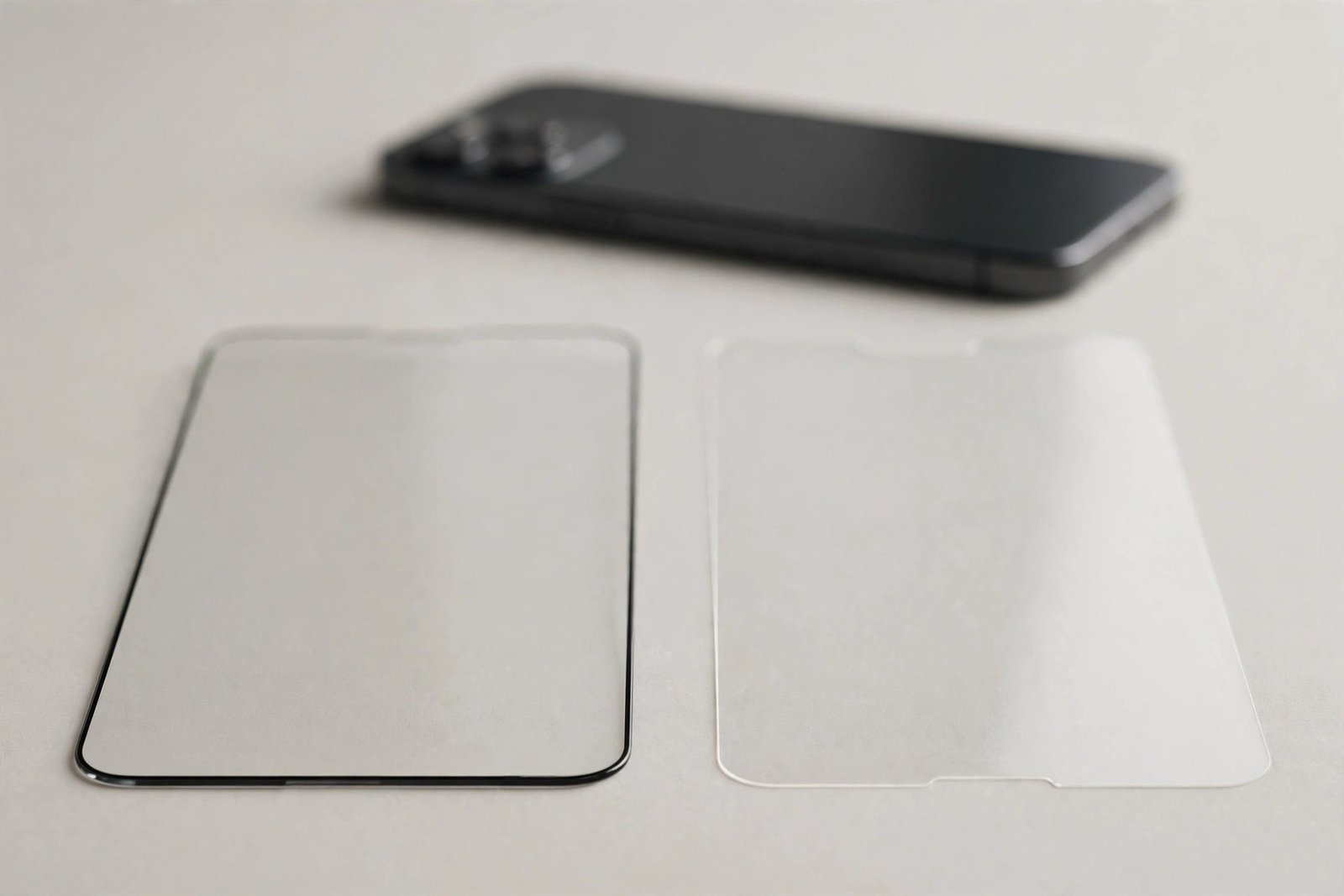
It is a reasonable question, because the answer is “sometimes.” The screen protectors most people buy today are indeed made of real glass — but not all of them are. Walk the accessory aisle and you will find glass, plastic film, flexible polymers, and hybrid materials all sold under the same “screen protector” name, each with very different properties.
This guide explains what each type is actually made of, how to tell them apart, and why the material matters for the protection you get. By the end, you will know exactly what is sitting on your screen — and whether it is the right material for your device.
Key Takeaways
- Tempered glass protectors are real glass — chemically strengthened and heat-treated for toughness.
- PET film protectors are thin plastic sheets: cheap, thin, and scratch-resistant but with no impact protection.
- TPU and hydrogel protectors are flexible polymers that conform to curved screens.
- You can usually tell glass from film by rigidity, thickness, weight, and the sound it makes when tapped.
- The material determines the protection: only glass provides sacrificial impact absorption.
Tempered Glass: Real Glass, Engineered
Yes — a tempered glass screen protector is genuinely made of glass. It starts as a thin sheet of aluminosilicate glass, similar to the display glass on the phone itself, then goes through tempering: a combination of chemical strengthening (an ion-exchange bath that swaps smaller sodium ions for larger potassium ions at the surface, putting the surface under compression) and controlled heat treatment. This process makes the thin sheet far tougher than ordinary glass of the same thickness.
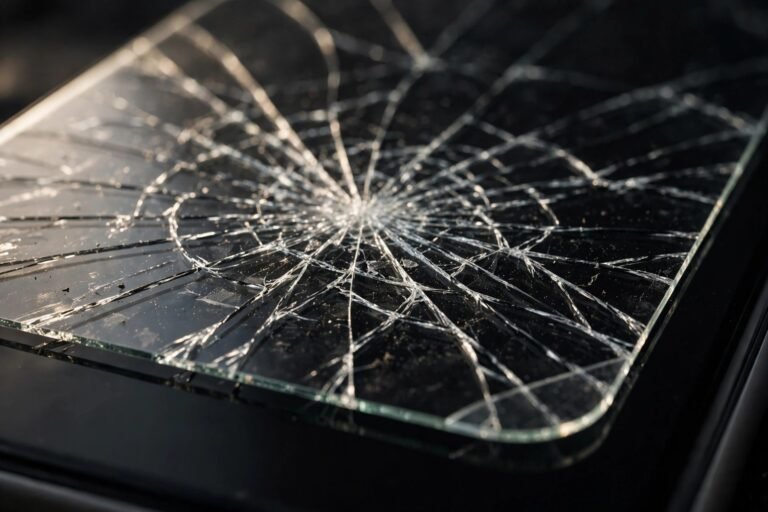
The result is a protector typically 0.3 to 0.5 millimetres thick that behaves like glass in every way that matters: it is rigid, optically clear, smooth under the finger, and — crucially — it fails like glass. On a hard impact it cracks or shatters, absorbing energy that would otherwise reach your display. That sacrificial failure is the entire point: a cracked fifty-pence sheet of glass instead of a cracked display.
PET Film: Plastic, Not Glass
PET (polyethylene terephthalate) protectors are thin plastic sheets — the same family of material as drinks bottles, though manufactured to optical clarity. They are extremely thin (often under 0.15 millimetres), flexible, and cheap to produce, which is why they are sold in multi-packs. A PET protector guards well against scratches and scuffs: keys, coins, and grit will mark the film instead of your display.
What PET cannot do is absorb impact. Being flexible, it simply transmits the force of a drop straight through to the display underneath. It also feels different — slightly softer and less slick than glass — and its surface coatings tend to wear faster. PET is honest, budget scratch protection, and nothing more.
- The tap test is the fastest identifier: flick the protector’s surface gently with a fingernail. Real tempered glass gives a crisp, high-pitched click; plastic film gives a dull thud. Rigidity is the other giveaway — glass will not bend, film will.
TPU and Hydrogel: Flexible Polymers
TPU (thermoplastic polyurethane) and hydrogel protectors occupy the middle ground. They are polymers — plastics, technically — but engineered to be soft, flexible, and slightly self-healing: fine scratches in the material gradually fade as the polymer relaxes. This flexibility is their reason for existing: they conform to curved display edges and folding screens where rigid glass physically cannot follow the shape.
Like PET, they are primarily scratch protection rather than impact protection, though their slight thickness and energy-absorbing softness give them a marginal edge over thin film against minor knocks. They feel softer and slightly tackier than glass under the finger — some users love the grip, others find it less premium. Their coatings wear faster than glass, so expect to replace them more often.
Hybrids and Specialty Materials
A few products blur the lines. So-called “flexible glass” or “hybrid glass” protectors layer a thin glass-like coating over a polymer base — aiming for a glass feel with film-like flexibility. Ceramic-film protectors use a different polymer blend marketed for toughness. Privacy and matte variants of all three base types add their optical layers (louvres, frosting) on top of the underlying material. The base material still determines the impact behaviour; the specialty is just a finish.
Marketing names in this space are unreliable — “nano glass,” “diamond glass,” and “9H glass film” are often applied to products that contain no glass at all. The “9H” figure refers to pencil hardness scale testing of a coating, not to the material being glass. If the product bends, it is not glass, whatever the name says.
Why the Material Matters
The material is not trivia — it decides what kind of protection you actually have. Only tempered glass provides sacrificial impact protection, the mechanism that saves displays in real drops. Films and polymers protect against scratches and daily abrasion, which is genuinely valuable — most display damage over a phone’s life is scratching, not shattering — but they will not save your screen from a corner drop onto concrete.
Material also affects daily feel. Glass stays slick and clear longest, resists fingerprints best, and is easiest to clean. Films and polymers can develop a slightly textured or hazy look over months of use as their surfaces micro-scratch. If you keep phones for years, glass’s longevity is part of its value; if you upgrade yearly, film’s lower cost may suit you better.
- Match the material to the device shape first, then to your priorities. Flat display? Tempered glass for the best all-round protection. Curved or folding display? TPU or hydrogel — not as a compromise, but because glass cannot fit. Scratch-only concerns on a budget? PET film does the job for pennies.
Frequently Asked Questions
Are all screen protectors made of glass?
No. Tempered glass protectors are real glass, but PET film, TPU, and hydrogel protectors are plastics and polymers. Check whether the product bends — if it does, it is not glass regardless of the marketing name.
Is tempered glass better than plastic film?
For impact protection and daily feel, yes — glass absorbs drops sacrificially and stays clearer longer. Film wins on price, thinness, and compatibility with curved screens. Neither is universally better; it depends on your device and priorities.
What does 9H mean on a screen protector?
It refers to the pencil hardness scale — a 9H pencil does not scratch the coating. It is a measure of scratch resistance, not proof the product is glass, and it says nothing about impact protection. Treat it as a rough quality indicator, not a guarantee.
So: sometimes glass, sometimes plastic — and now you know how to tell. Check the rigidity, read past the marketing names, and choose the material whose strengths match your device and your habits.