Yes — and here is the part that surprises people: a cracked screen protector is often a protector that did its job perfectly. Tempered glass protectors are designed to be sacrificial. They sit on top of your screen, take the abuse your screen would otherwise take, and when the force is too much, they break so that (with luck) the expensive glass underneath does not. Finding your protector cracked is not necessarily a failure — it is frequently evidence of a save.
This guide explains why protectors crack, how glass and film protectors behave differently when they are damaged, the difference between a hairline crack and a spiderweb, and how to judge whether a cracked protector can stay on a little longer or needs to come off today.
Key Takeaways
- Yes, screen protectors can crack — tempered glass ones are meant to. Cracking is the protector absorbing and spreading force sacrificially.
- Film protectors do not crack; they tear, stretch, dent and peel instead. Cracking is specifically a glass behaviour.
- A single hairline crack usually means the protector took a knock and kept the screen out of it — check the screen beneath before relaxing.
- Spiderweb cracking means a major impact was absorbed; the protector is spent and should be replaced promptly.
- A cracked protector still offers some scratch protection, but its impact protection is largely used up and its edges can be sharp.
- Always peel a cracked protector off slowly over tape and inspect the real screen underneath — the protector’s story is only half of it.
Why Tempered Glass Cracks on Purpose
Tempered glass is manufactured under controlled stress, which makes it strong but also means that when it fails, it fails by cracking rather than bending. Fitted to your phone, the protector becomes the first thing any impact meets. A drop onto gravel, a knock against a table edge, pressure from keys in a tight pocket — the force arrives at the protector first, and the protector spreads it across its surface. If the force exceeds what the glass can spread, the protector cracks, and that cracking itself consumes energy that would otherwise have gone into the screen beneath.
This is why a cracked protector with a pristine screen underneath is a genuinely good outcome — arguably the best outcome the product promises. The protector cost a few pounds; the screen it saved would have cost many times more. Judging a protector harshly because it cracked is like judging a crash helmet harshly because it dented.
- Edge and corner chips are the most common starting point for cracks, because that is where drops concentrate force. If your protector keeps chipping at the edges, your case’s raised lip may be too low to shield it — the pairing of case and protector matters as much as the protector itself.
Glass Cracks, Film Does Something Else
Flexible film protectors — PET or TPU — essentially cannot crack, because there is nothing rigid in them to fracture. Instead, film fails in its own ways: it can tear at a weak point, stretch and distort, take a permanent dent from a sharp impact, or gradually peel and bubble at the edges. Film is also thinner, so it was never offering the same impact absorption in the first place; its real job is scratch defence, and it keeps doing that job even when scuffed and tatty.
Hybrid and plastic “glass-feel” protectors sit in between: they may not shatter like tempered glass, but they can split or crease under sharp impacts. The practical takeaway is simple — if your protector has cracked, it is glass or glass-like, and it cracked because it was designed to be the thing that breaks.
Hairline vs Spiderweb: Reading the Damage
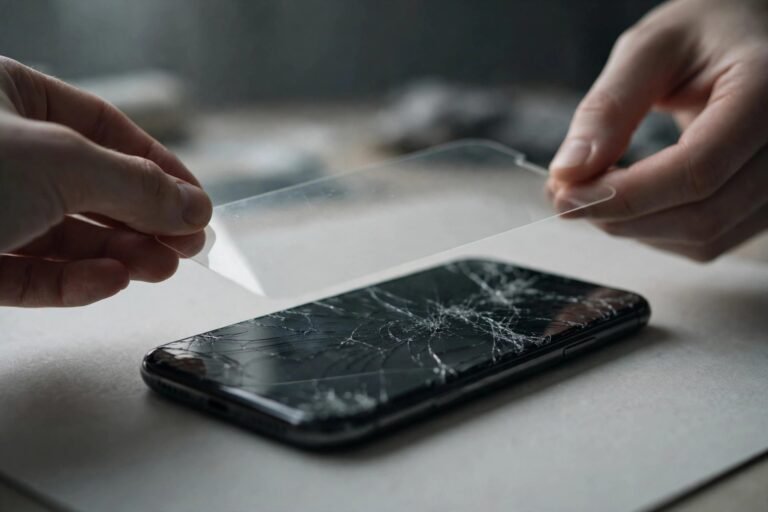
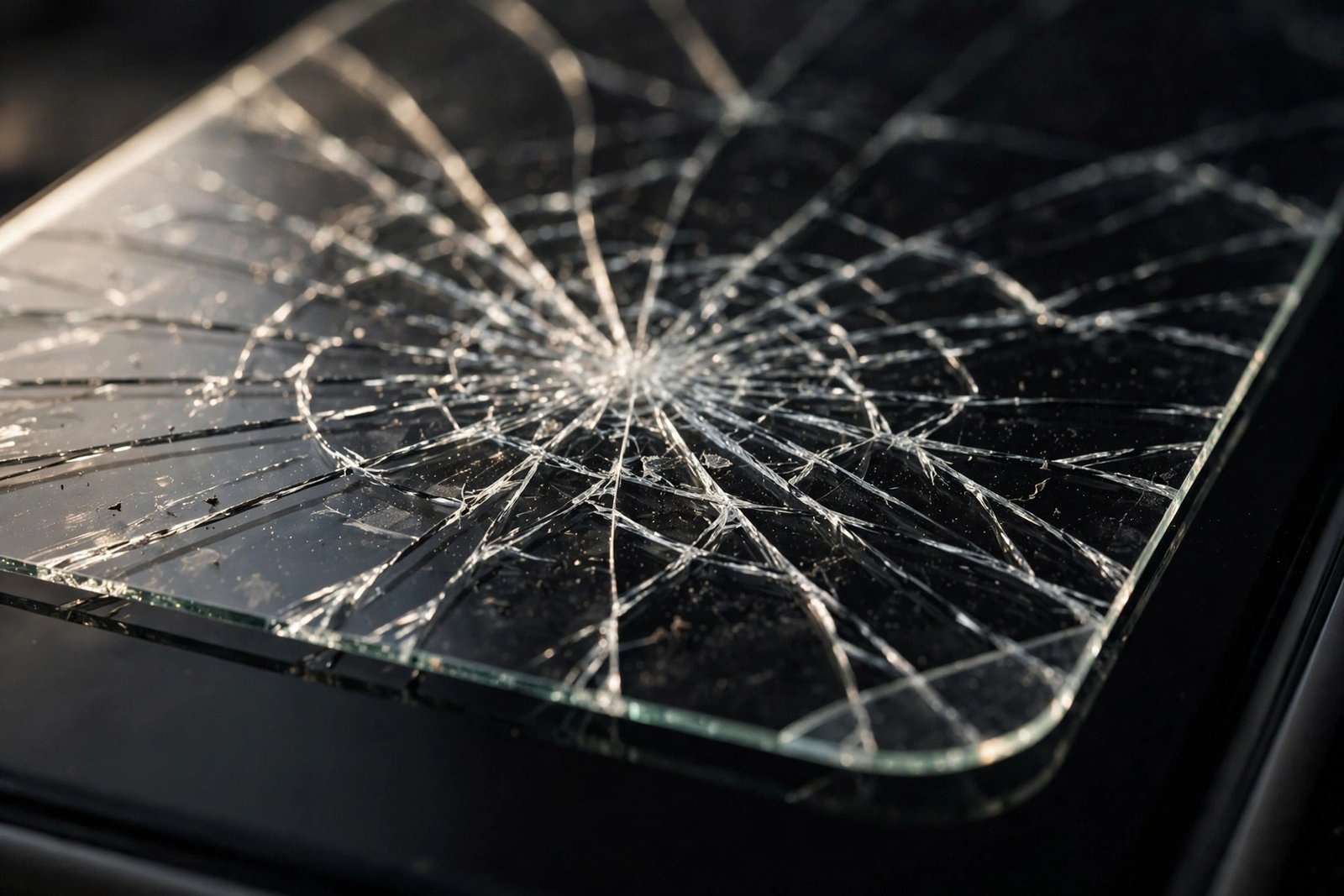
Not all cracks are equal. A hairline crack — one fine line, often running from an edge — usually records a single moderate knock. The protector is compromised but largely intact, and it commonly means the screen beneath is untouched. A spiderweb, with cracks radiating from an impact point, records something much heavier: the protector absorbed a serious hit, and while that often still saves the screen, the protector’s structure is now mostly fractures.
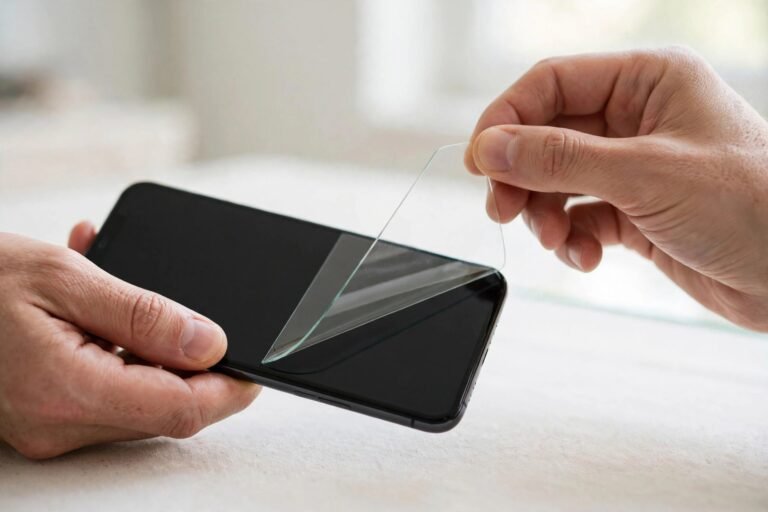
Either way, the crack pattern tells you about the protector — not about the screen. The only way to know the screen’s condition is to remove the protector and look. Do this carefully: cover the cracked protector with packing tape, lift a corner, and peel slowly so the fragments come away together. Then inspect the screen in bright light, running a fingertip very lightly over the area — if your nail catches in a line on the bare screen, that crack is in the phone, not the protector.
- Before removing a cracked protector, photograph it in place. If you later make an insurance or warranty claim about the incident, a dated photo showing the protector took the damage — and the screen’s condition once revealed — is useful evidence.
Can a Cracked Protector Stay On?
Briefly, sometimes — permanently, no. A hairline-cracked protector still covers the screen, so its scratch protection mostly survives, and if the cracks do not cross your reading area or catch your thumb, a few days of grace while a replacement arrives is reasonable. But its impact protection is largely spent: a layer that is already fractured cannot spread force the way an intact layer does, so the next drop lands on a weakened defence.
Replace it promptly — today, ideally — if the cracking is a spiderweb, if edges feel sharp or are lifting, if fragments are coming away, or if cracks cross the camera or sensors and interfere with use. Cracked glass sheds microscopic shards over time, and a protector that is crumbling is a hazard to fingers and a grit trap against the screen it was meant to defend. Most protectors are sold in multi-packs for exactly this moment: the spare in the drawer exists so a cracked one never has to linger.
Frequently Asked Questions
If my protector cracked, is my screen definitely fine?
Not definitely — usually, but not guaranteed. The protector cracking means it absorbed a good deal of the force, which is exactly what you want, but a severe impact can crack both layers. Always remove the protector and inspect the screen itself before concluding anything; look and feel for lines that remain once the protector is off.
Why did my protector crack when I didn’t drop my phone?
Drops are only one cause. Protectors also crack from pressure — a phone sat on in a back pocket, squeezed in an overstuffed bag, or pressed against hard objects — and from small edge chips that later grow into cracks with temperature changes or everyday flexing. An invisible knock days earlier can finish cracking later, which is why the damage sometimes seems to appear from nowhere.
Does a cracked protector mean it was poor quality?
No — cracking is the designed behaviour of tempered glass, and a protector that cracked while saving your screen performed well by any fair measure. Quality shows in other ways: how cleanly it fits, how long its coating resists scratches before the incident, and whether it breaks into held-together fragments rather than scattering shards. Judge it by what happened to the screen underneath.
A cracked protector is not a broken promise — it is a receipt for damage your screen never took. Read the cracks, check the glass beneath, and replace the layer that gave itself up for your phone.