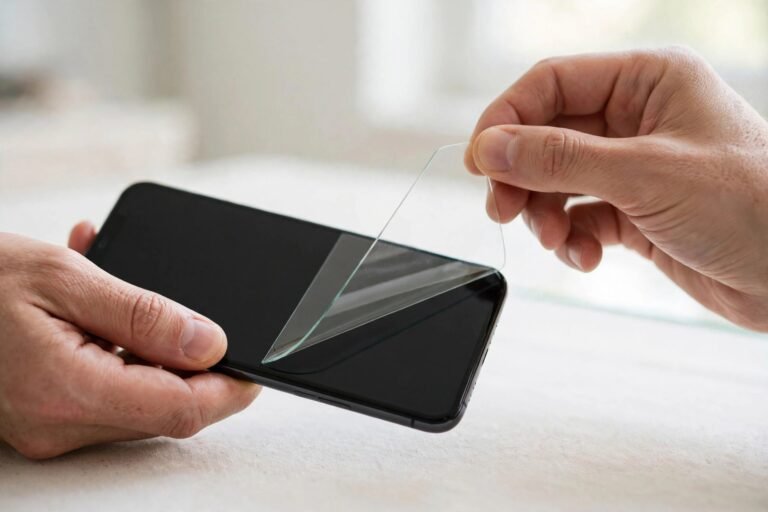
Both phones have a 6.1-inch screen, both protectors look the same shape in the packet, and you have a spare iPhone 11 protector in a drawer now that you have upgraded to an iPhone 12. Surely they are interchangeable? It is one of the most common assumptions in the screen protector world — and one of the most reliably wrong.
The short answer is no, not properly. An iPhone 11 protector can be physically placed on an iPhone 12, and in an emergency it is better than nothing — but it will not align correctly, will not sit flat, and will leave parts of the display exposed or the sensors misaligned. This guide explains exactly why two phones with the same headline screen size take different protectors, and what actually goes wrong when you fit the wrong one.
Key Takeaways
- Same 6.1-inch diagonal, different phones: the iPhone 12 body is slightly smaller and its screen area is shaped differently.
- The iPhone 11 has a rounded, curved-edge LCD; the iPhone 12 has a flat OLED with squared-off edges — protectors are shaped for each.
- The earpiece and sensor cutouts differ in position and shape, so an 11 protector can overlap the 12’s speaker and front sensors.
- Expect overhang, lifted edges, and a halo — the 11 protector is marginally too large in the wrong places and too small in others.
- An ill-fitting protector can interfere with Face ID and the proximity sensor if it covers or borders them incorrectly.
- In a pinch it beats a bare screen for a day, but buy the correct iPhone 12 protector — they are cheap and cut precisely for the phone.
Same Screen Size, Different Dimensions
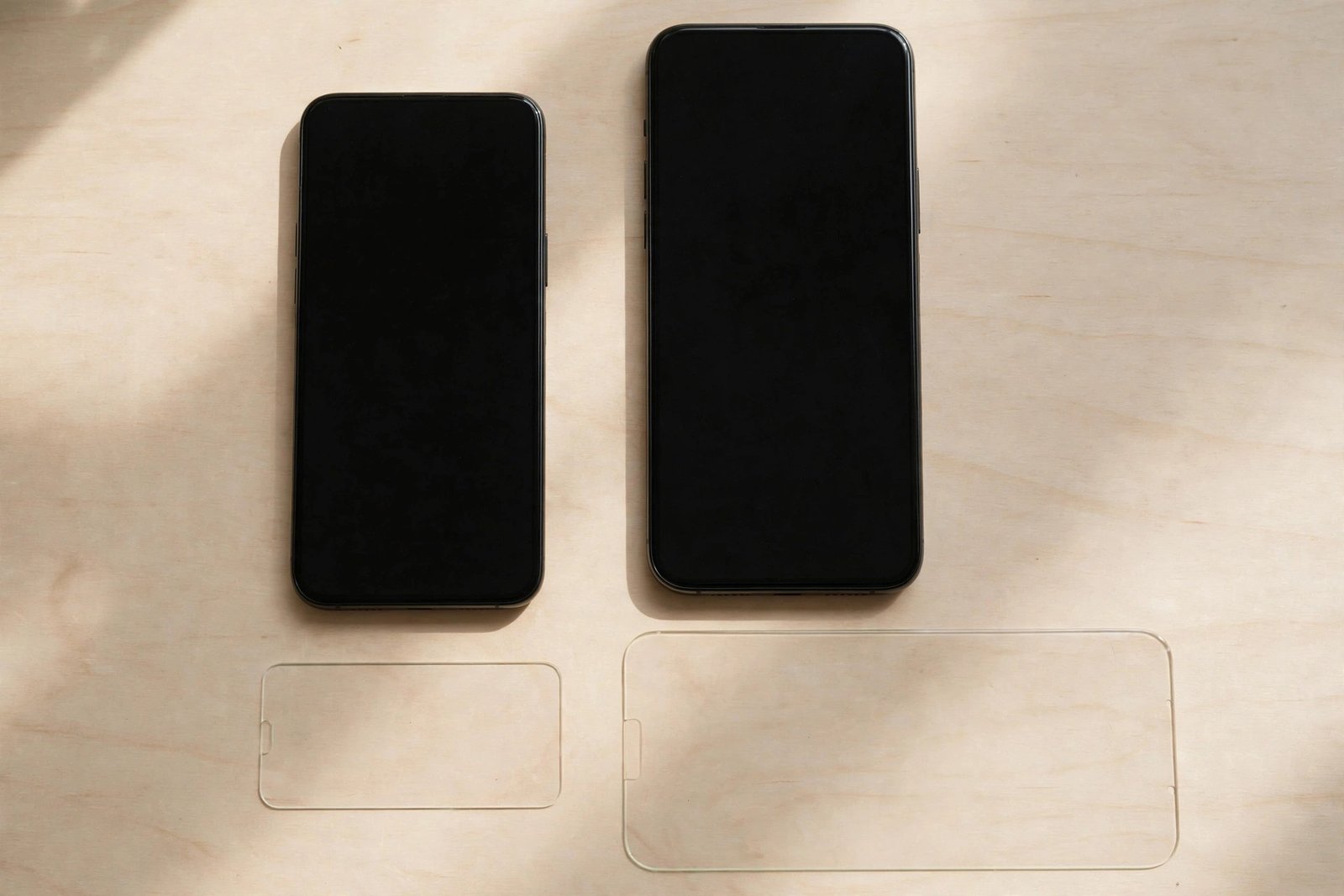
“6.1 inches” describes only the diagonal of the display — it says nothing about the width, height, corner radius, or borders around it. The iPhone 12 is a slightly smaller phone overall than the iPhone 11: a touch narrower and shorter, with noticeably slimmer bezels around the screen. Its display is also a higher-resolution OLED panel with different pixel dimensions from the iPhone 11’s LCD.
Screen protectors are not cut to the diagonal; they are cut to the exact footprint of the front glass, to fractions of a millimetre. A protector designed around the iPhone 11’s larger frame and thicker bezels is simply the wrong outline for the 12 — roughly right everywhere, precisely right nowhere. That is why the mismatch is so frustrating: it is close enough to tempt you and wrong enough to fail.
Rounded Edges vs Flat Edges
The deeper difference is the shape of the glass itself. The iPhone 11’s front glass curves down at the edges into the frame, and its protectors are made to suit — either stopping short of the curve or shaped to follow a gently contoured surface. The iPhone 12, with its flat-sided redesign, has a completely flat front that meets the frame at a sharp, squared edge.
Fit an 11-shaped protector to that flat glass and two things happen. The dimensions that assumed curved margins leave edges floating or overhanging, and the adhesive — laid out for a different outline — cannot seal evenly. The result is the classic wrong-protector look: a persistent halo around the border, corners that lift within days, and edges that catch on pockets and cases until the protector works itself loose.
- Before fitting any “spare” protector, hold it over the phone without peeling the backing and check three things: the speaker slot alignment, the corner coverage, and whether the edges sit inside the flat part of the glass. Thirty seconds of dry-checking saves a wasted protector.
The Cutout Problem: Speaker, Sensors, and Face ID
Even if the outline were close, the top cutouts are not. The earpiece speaker slot and the cluster of front sensors — camera, ambient light, proximity, and the Face ID components — sit in a notch whose details changed between generations. The iPhone 12’s notch arrangement and speaker slot are positioned and shaped differently from the iPhone 11’s.
An iPhone 11 protector on a 12 can therefore partially cover the speaker (muffling calls), overlap the proximity sensor (so the screen misbehaves during calls, staying lit against your ear or blanking oddly), or intrude on the sensor cluster enough to make Face ID less reliable. Many modern protectors are “notch-free” with a single open area at the top, which sidesteps some of this — but the outline and edge problems remain regardless of the cutout style.
So Can You Use One in an Emergency?
Yes — with realistic expectations. If the alternative is a brand-new iPhone 12 spending a weekend completely bare, an iPhone 11 protector fitted carefully will protect the centre of the screen from scratches, which is where most damage happens. Centre it as well as you can, prioritise keeping the speaker slot clear, and accept the lifted edges as temporary.
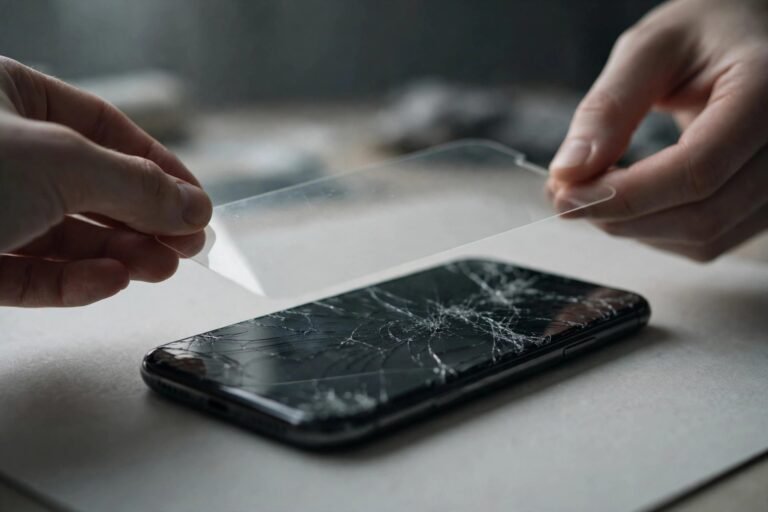
Treat it strictly as a stopgap, though. The raised, unsealed edges actively collect dust and lint, which can work underneath and scratch the very glass you are protecting, and a case fitted over the overhanging edge will usually finish the job of peeling it off. Order the correct iPhone 12 protector the same day and swap it as soon as it arrives — proper ones are inexpensive precisely because they are made in the millions, cut to the exact glass they protect.
- The reverse swap fails too: an iPhone 12 protector on an iPhone 11 leaves the 11’s curved edges uncovered and its slightly larger screen under-protected at the borders. Cross-generation protectors almost never work in either direction — Apple changes the front glass in some way nearly every generation.
Frequently Asked Questions
Are iPhone 12 and iPhone 13 protectors interchangeable instead?
Not reliably either. The iPhone 13 kept a similar body but the notch shrank and the earpiece moved to the top edge of the frame, so cutouts differ even though the phones look near-identical. As a rule, buy the protector for your exact model — near enough is not near enough at these tolerances.
What about iPhone 11 Pro or 12 Pro protectors — same thing?
No, and the Pro models add another trap: the earlier Pro phones have different screen sizes again (5.8-inch and 6.5-inch in the 11 Pro generation), so their protectors are not even diagonally equal. Every model — standard or Pro — has its own cut. The model name printed on the protector packet is the only safe guide.
My 11 protector seems to fit fine. Am I imagining the problem?
Some notch-free, case-friendly protectors are deliberately cut slightly small, and a smaller-cut 11 protector can sit acceptably on a 12 for a while. Check the corners and edges in bright light for lifting, confirm the speaker is fully clear, and test Face ID and a phone call held to your ear. If all of that passes, you have a workable temporary fit — just keep an eye on the edges over the coming days.
Screen size is a headline, not a measurement — and protectors live and die by measurements. Two phones can both say 6.1 inches and share almost nothing that matters to the glass that covers them.