The iPhone 14 Pro is one of the toughest iPhones Apple has made: a stainless steel frame, a Ceramic Shield front, and a display that shrugs off drops that would have shattered older phones. So it is a fair question — does a phone this well built still need a screen protector, or is adding one just an old habit?
The short answer is that most iPhone 14 Pro owners are still better off fitting one. Ceramic Shield is excellent at surviving drops, but drops are only half the story of how screens get damaged. This guide looks at what the 14 Pro’s glass does well, where it still falls short, and how to decide based on how you actually use your phone.
Key Takeaways
- Ceramic Shield resists cracking in drops, but the glass still scratches at around Mohs level 6 — grit and sand remain a real threat.
- Everyday micro-scratches from pockets, bags and desks are the most common screen damage — and they are permanent.
- An out-of-warranty screen replacement on a Pro model typically costs several hundred in local currency; a protector costs a fraction of that.
- The 14 Pro’s flat display makes protectors easy to fit — no curved edges for the glass to lift away from.
- If you are careful, use a raised-lip case and have damage cover, skipping a protector is a defensible choice — just make it an informed one.
What Ceramic Shield Does — and Doesn’t Do
Ceramic Shield is a glass-ceramic material, made by growing nano-ceramic crystals within the glass matrix. Apple developed it to improve drop performance, and by that measure it works: the iPhone 14 Pro’s front can survive impacts onto hard surfaces that would crack lesser glass. If your main fear is dropping the phone on pavement, the built-in protection is genuinely strong.
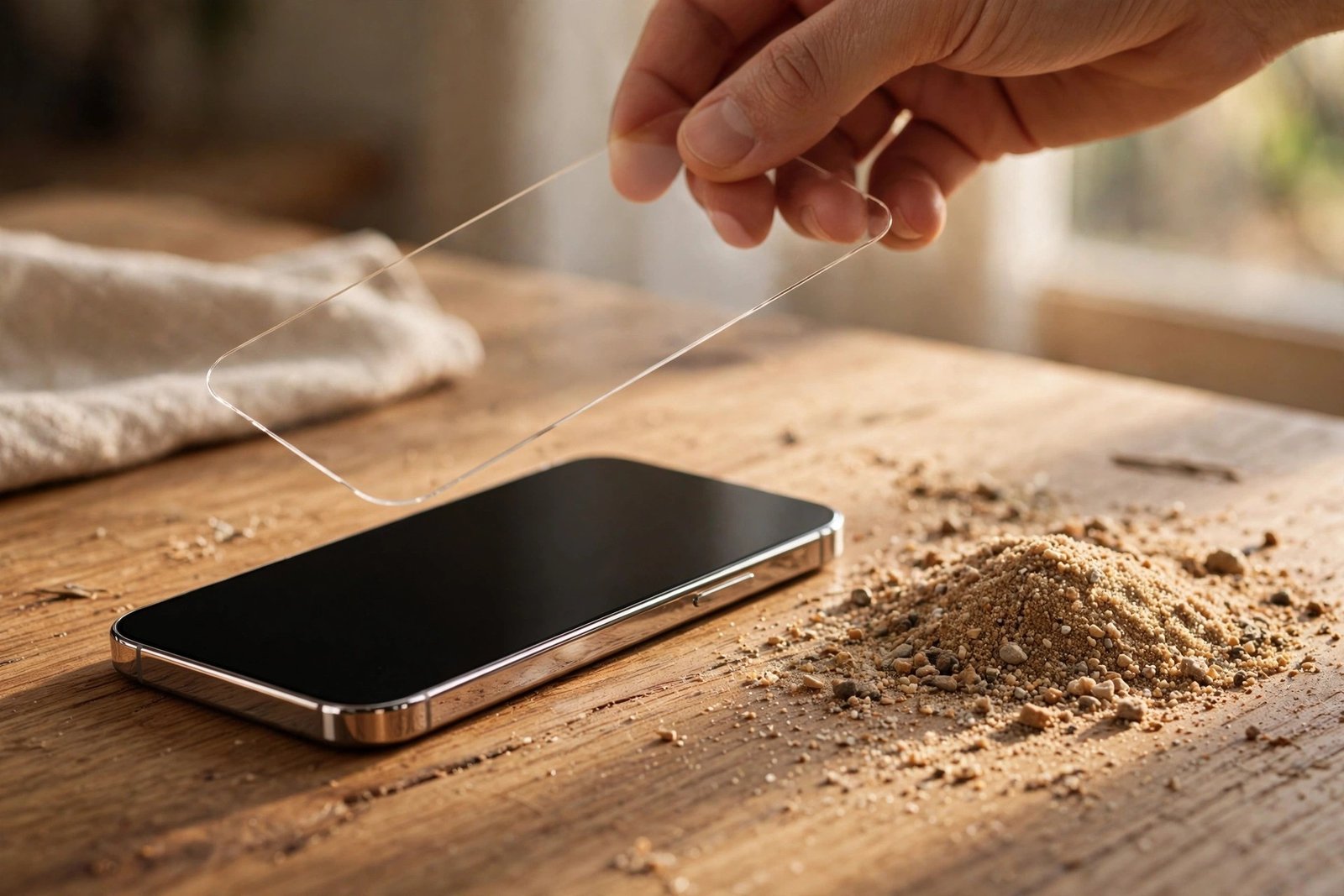
But toughness and hardness are different properties. Toughness is about absorbing impact without shattering; hardness is what resists scratching, and Ceramic Shield does not move the needle much there. Like most smartphone glass, it scratches at around level 6 on the Mohs scale, with deeper grooves from level 7 materials. That means quartz sand, grit, and many everyday abrasives are harder than your screen — and they can mark it.
The Real-World Enemy: Everyday Scratches
Ask anyone who has owned a phone for two or three years what their screen looks like, and the answer is rarely “cracked” — it is “covered in fine scratches”. These come from unremarkable places: sand in a pocket after a beach day, grit in a handbag, a zip brushing the glass, sliding the phone face-down across a desk. Each mark is faint on its own, but together they form a web that catches the light and dulls the display.
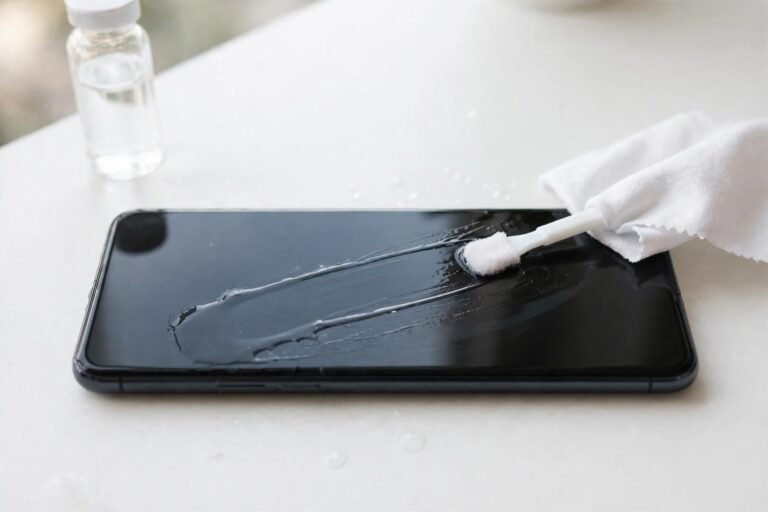
Unlike a crack, micro-scratching cannot be repaired — short of replacing the screen itself. That asymmetry is the core argument for a protector. A tempered glass protector takes those scratches on your screen’s behalf, and when it starts to look worn, you peel it off and fit a fresh one in five minutes. Your actual display underneath stays as it left the factory.
- Planning to sell or trade in your 14 Pro later? Graders look at the screen first. A phone that has lived under a protector presents a flawless display the day the protector comes off — protecting both the screen and its resale value.
The Cost Equation
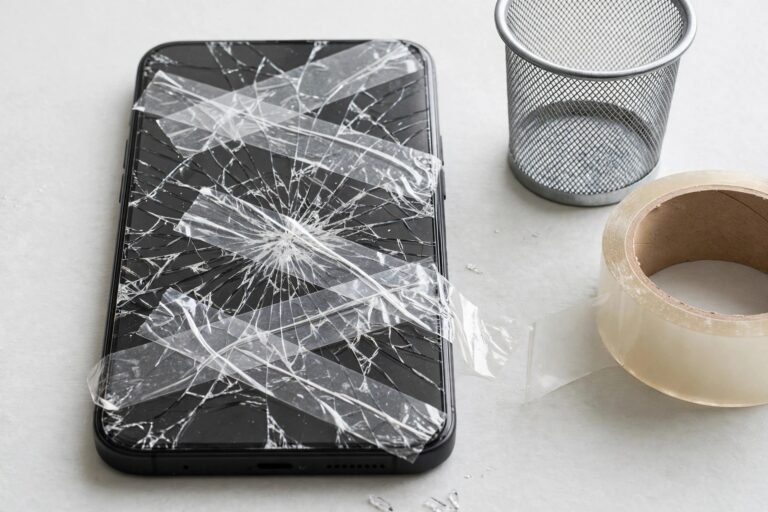
Screen repairs on Pro-model iPhones sit at the expensive end of Apple’s price list — typically a few hundred pounds or dollars out of warranty, depending on your region, plus the inconvenience of the repair itself. Even with accidental damage cover, you will usually pay an excess fee. Against that, a quality tempered glass protector costs very little, is often sold in multipacks, and takes minutes to fit at home.
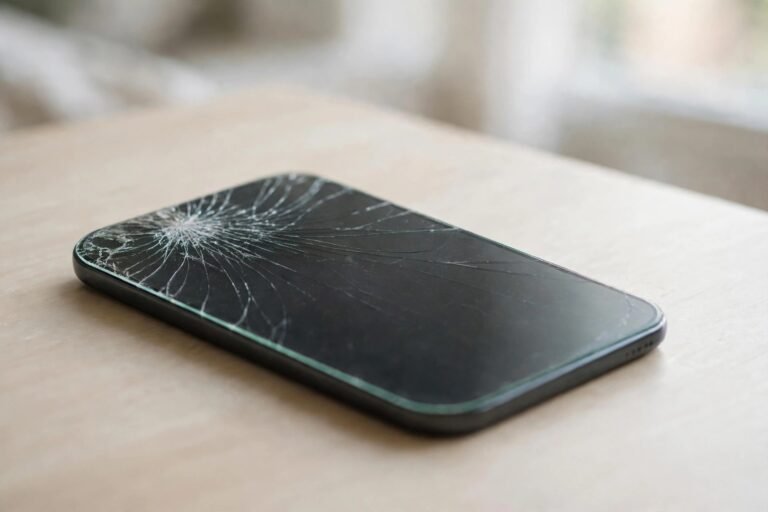
There is a second benefit people forget: a protector is also sacrificial in a drop. It is designed to crack so your screen does not, absorbing and spreading impact energy. It is not a guarantee — a bad landing can break both — but it shifts the odds in your favour for the price of a coffee or two. For most owners, that maths is hard to argue with.
Fitting One on the 14 Pro: Good News
The iPhone 14 Pro has a flat front panel, which makes it one of the easiest flagship phones to fit a protector on. There are no curved edges for the adhesive to let go of, so edge lifting and the “halo” effect that plague curved-screen phones are rarely an issue. Most protectors for the model are cut to work around the Dynamic Island, leaving the front camera and Face ID sensors clear.
If you use a case, choose a case-friendly protector, cut a fraction smaller so the case lip cannot lever the edges up. Fit the protector before the case, let the adhesive settle, and the combination covers nearly every realistic accident: the case handles corners and the back, the glass handles the face. Done once, it needs no further thought until the protector itself takes a hit.
- Choosing to go without? Then be disciplined about it: one pocket for the phone alone, nothing else in it, and never slide the phone face-down on hard surfaces. Most “mystery scratches” come from shared pockets and desks, not from drops.
Frequently Asked Questions
Does a screen protector affect the Dynamic Island or Face ID?
No, not if it is made for the iPhone 14 Pro. Protectors for this model are cut to leave the Dynamic Island’s camera and sensors unobstructed, or use glass that the sensors can see through, so Face ID and the front camera work normally. Problems only arise with protectors designed for a different model.
Will a protector spoil the 120Hz ProMotion display?
A quality tempered glass protector is optically clear and thin enough that scrolling, brightness and touch response feel unchanged. Very cheap, thick glass can slightly dull the feel of the screen, which is an argument for buying a decent protector rather than for skipping one entirely.
I have AppleCare+ — do I still need a protector?
It becomes a judgement call. Cover reduces the cost of a screen replacement, though an excess usually applies and terms vary by region. Many covered owners still fit a protector because avoiding the repair altogether — the booking, the trip, the time without the phone — is worth more than the small saving.
The iPhone 14 Pro does not need a screen protector to survive a drop — it needs one to survive your pockets. Ceramic Shield handles the falls; a few pounds of tempered glass handles everything else.