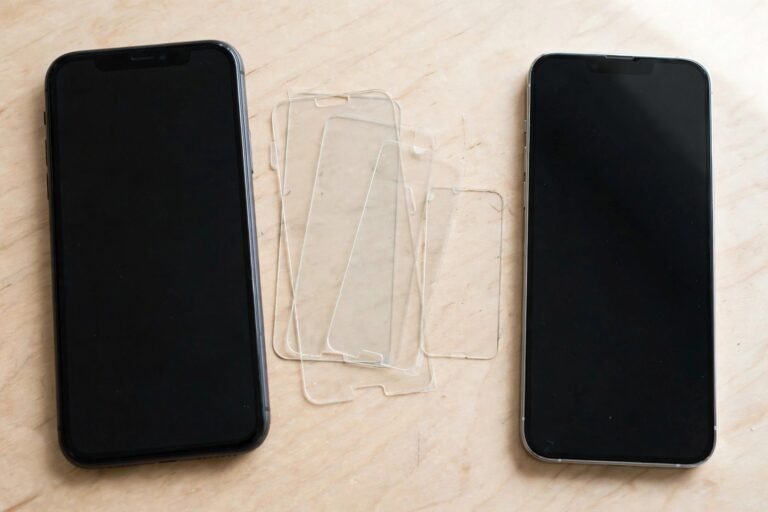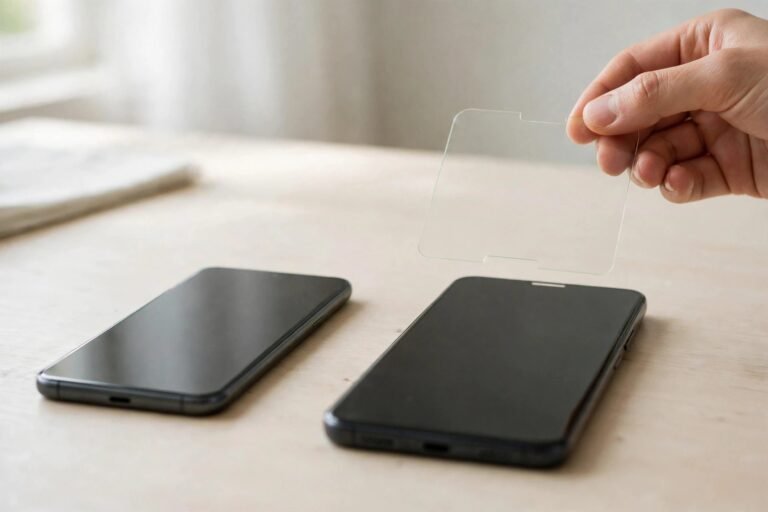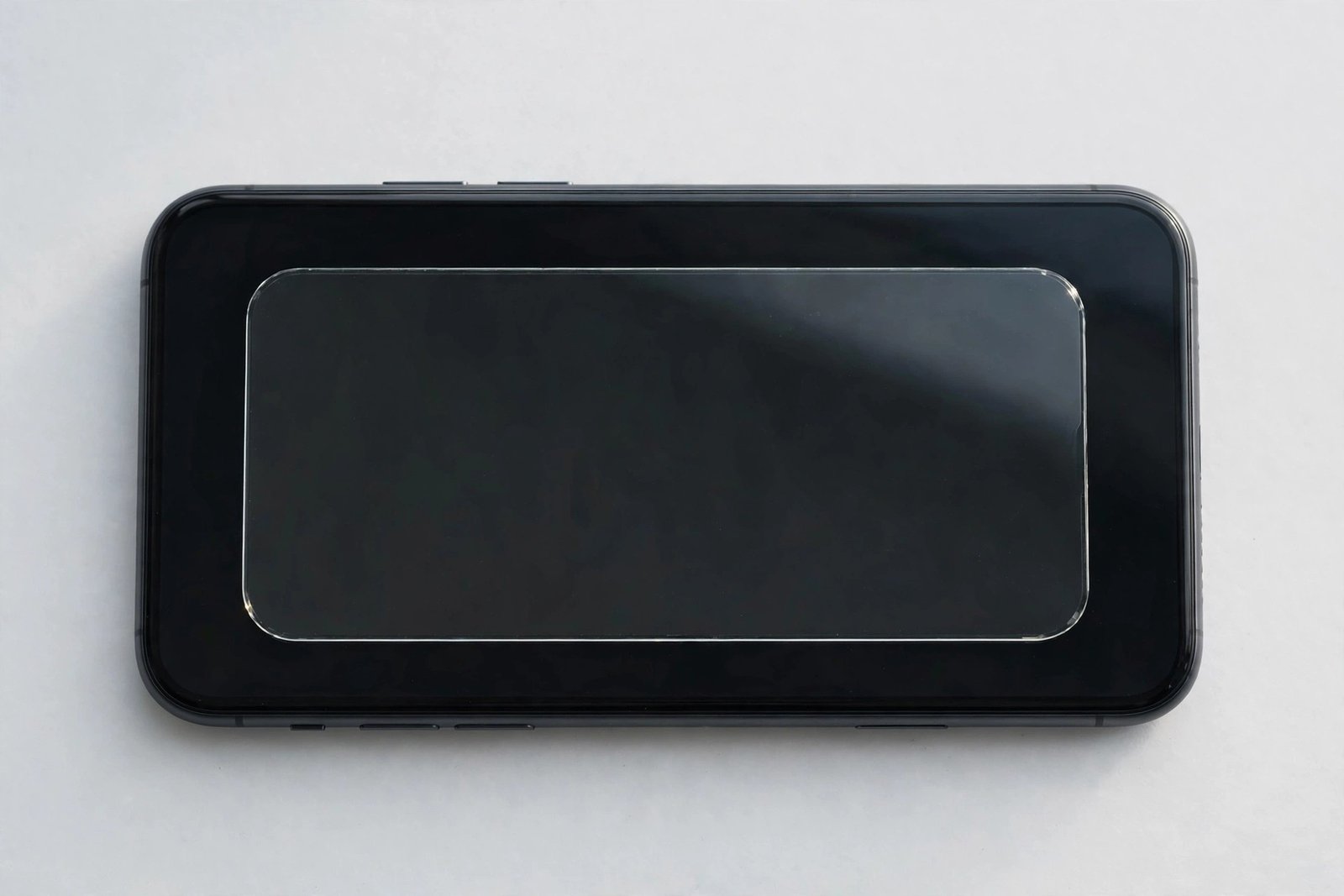
The iPhone 12 and iPhone 11 look like close relatives — same 6.1-inch screen class, similar camera layout, launched just a year apart. So will an iPhone 12 screen protector fit an iPhone 11? Unfortunately not. The iPhone 12 introduced a new, smaller body design, and its protectors are cut for that smaller front face. On an iPhone 11, a 12 protector comes up short on every side.
This is one of the most common fitting mistakes in the second-hand and spare-protector market, because “6.1-inch iPhone” sounds like it ought to be one standard size. It is not. Below we compare the actual dimensions, explain which phone families the 11 and 12 each belong to, and show you what does fit instead.
Key Takeaways
- The iPhone 12 measures about 146.7 × 71.5 mm; the iPhone 11 is bigger at about 150.9 × 75.7 mm.
- A 12 protector on an 11 under-covers the front face, leaving an unprotected rim all the way round.
- The iPhone 12 belongs to the 12/13/14 body family; the iPhone 11 belongs to the older XR/11 family.
- The 11 pairs with the iPhone XR — XR and 11 protectors are interchangeable and are the correct fit.
- Shape differs as well as size: the 12 has flat edges, while the 11’s front glass meets a rounded frame.
- Buy by model name, never by screen size alone.
The Size Difference, in Millimetres
Apple used the iPhone 12 generation to slim the whole design down. The OLED display allowed thinner bezels, and the squared-off frame brought the body in to roughly 146.7 mm tall and 71.5 mm wide. The iPhone 11, with its LCD panel and rounded aluminium sides, is about 150.9 × 75.7 mm. Hold the two phones together and the 11 is visibly the larger device, even though both displays are marketed as 6.1 inches.
A tempered glass protector is cut to match one specific front face, typically within a fraction of a millimetre, with cutouts positioned for that model’s speaker and sensors. A difference of more than 4 mm in height and width is far beyond any tolerance the glass can absorb. There is no stretching, trimming or “close enough” — tempered glass cannot be cut down after manufacture without shattering.
What Goes Wrong When You Try
Fitted centrally, an iPhone 12 protector leaves a border of bare glass around the entire iPhone 11 screen. That border is where screens chip first, and the protector’s exposed adhesive edge sits partly on the curved shoulder of the 11’s front glass, where it cannot bond properly. The usual result is lifting corners, a white “halo” outline where the edge has failed to seal, and dust creeping underneath — which can then scratch the very glass you were trying to protect.
Alignment suffers too. Both phones have a notch, but the speaker slot and the proportions of the front face are positioned for different bodies, so a 12 protector rarely sits convincingly on an 11: it looks off-centre no matter how carefully you place it, and cases often catch the short edges and pop the protector loose. In short, it sticks, but it does not fit — and a protector that does not fit is not really protecting.
- Check compatibility before peeling the backing: lay the protector over the switched-off screen and compare the outline with the front glass. If you can see a rim of glass beyond the protector on all sides, it is a size too small and should go back in the packet.
Know Your Family: XR/11 vs 12/13/14
The easiest way to avoid this trap is to learn the two families. The iPhone XR and iPhone 11 share one body: larger, rounded, LCD. Protectors swap freely between them. The iPhone 12, 13 and 14 share the newer, smaller flat-edged body — although even within that family, notch changes between generations mean you should still buy the protector listed for your exact model year.
So for an iPhone 11, the correct shopping search is “iPhone 11 screen protector” or “iPhone XR screen protector” — not “6.1-inch iPhone protector”. Sellers who bundle the 11 in with the 12, 13 and 14 in one listing are selling a compromise cut that fits none of them especially well.
- If a listing claims one protector fits the iPhone 11, 12 and 13, be sceptical. Those phones span two different body sizes, so a single piece of glass cannot be the correct shape for all three.
Frequently Asked Questions
Will an iPhone 11 protector fit an iPhone 12?
No — it is too big rather than too small. The 11’s protector overhangs the 12’s smaller front face, so it cannot sit flat against the glass, and the overhanging edges will catch, lift and invite dust underneath. The pairing fails in both directions.
Are iPhone 12 and 13 protectors the same as each other?
The bodies are the same size, but the iPhone 13’s notch is smaller and its speaker slot moved, so many brands sell them as separate products. A 12 protector will physically cover a 13, but the cutout may not align perfectly. For the iPhone 11, the question is academic — neither fits it.
What about film protectors — are they more forgiving?
Slightly, in that a flexible film can be positioned with a little more give, but it is still cut to the wrong outline: too small for the 11, with the same exposed rim and misaligned cutouts. Flexibility does not fix a 4 mm size difference. Buy the XR/11 cut in whichever material you prefer.
The iPhone 12’s protector belongs to a smaller phone. Give your iPhone 11 the XR/11 glass it was designed for, and the fit — and the protection — will be exactly right.