Few phone accessories divide opinion like the privacy screen protector. Fans swear they could never go back; detractors tried one for a week and peeled it off. Both reactions are understandable, because a privacy protector is a genuine trade: it does one thing — stops people beside you from reading your screen — exceptionally well, and pays for it with small compromises you notice every single day.
So is a privacy screen protector good? The honest answer is that it depends entirely on where you use your phone and what you do on it. If you regularly handle banking, work messages, or private conversations in crowded public spaces, it can be excellent. If you mostly use your phone at home and love sharing photos with the person next to you, it will probably annoy you. Here is the full picture so you can decide for yourself.
Key Takeaways
- Privacy protectors use micro-louvre technology — microscopic slats that narrow the viewing angle so the screen darkens or blacks out from the side.
- They genuinely work against casual shoulder-surfing on trains, in queues, and in open-plan offices.
- The main costs are reduced brightness, a slightly dimmer and sometimes softer-looking display, and awkward screen-sharing with anyone beside you.
- Most versions only block side views in one orientation (usually portrait) unless you choose a four-way model.
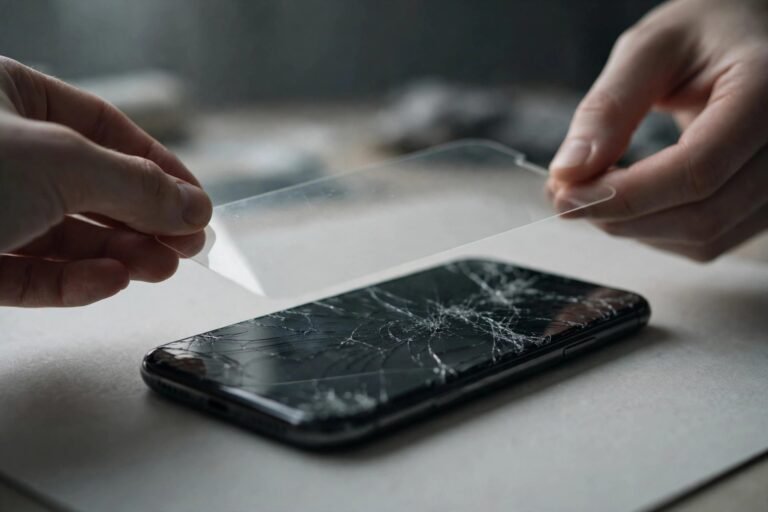
- They still function as ordinary screen protectors against scratches and minor impacts — privacy is an extra, not a replacement.
- Best for commuters and professionals; usually a poor fit for people who share their screen a lot or prioritise display quality.
How Micro-Louvre Privacy Actually Works
Inside a privacy protector is a layer of microscopic vertical slats, working much like a tiny venetian blind. Looking at the phone straight on, light passes between the slats and the screen looks normal. As the viewing angle increases, the slats block more and more of the light, so the display appears to dim, fade to black, or in some versions mirror — typically somewhere beyond roughly 25 to 30 degrees either side of centre, though the exact angle varies by product.
Two practical consequences follow. First, the effect only defeats sideways glances: someone standing directly behind you, looking over your shoulder along the same line of sight as you, can still see the screen. Second, standard two-way privacy protectors block the left and right view when the phone is held upright, but offer no privacy in landscape — relevant if you watch video or play games in public. Four-way versions exist that narrow the angle in both orientations, at the cost of an even dimmer display.
Who a Privacy Protector Genuinely Helps
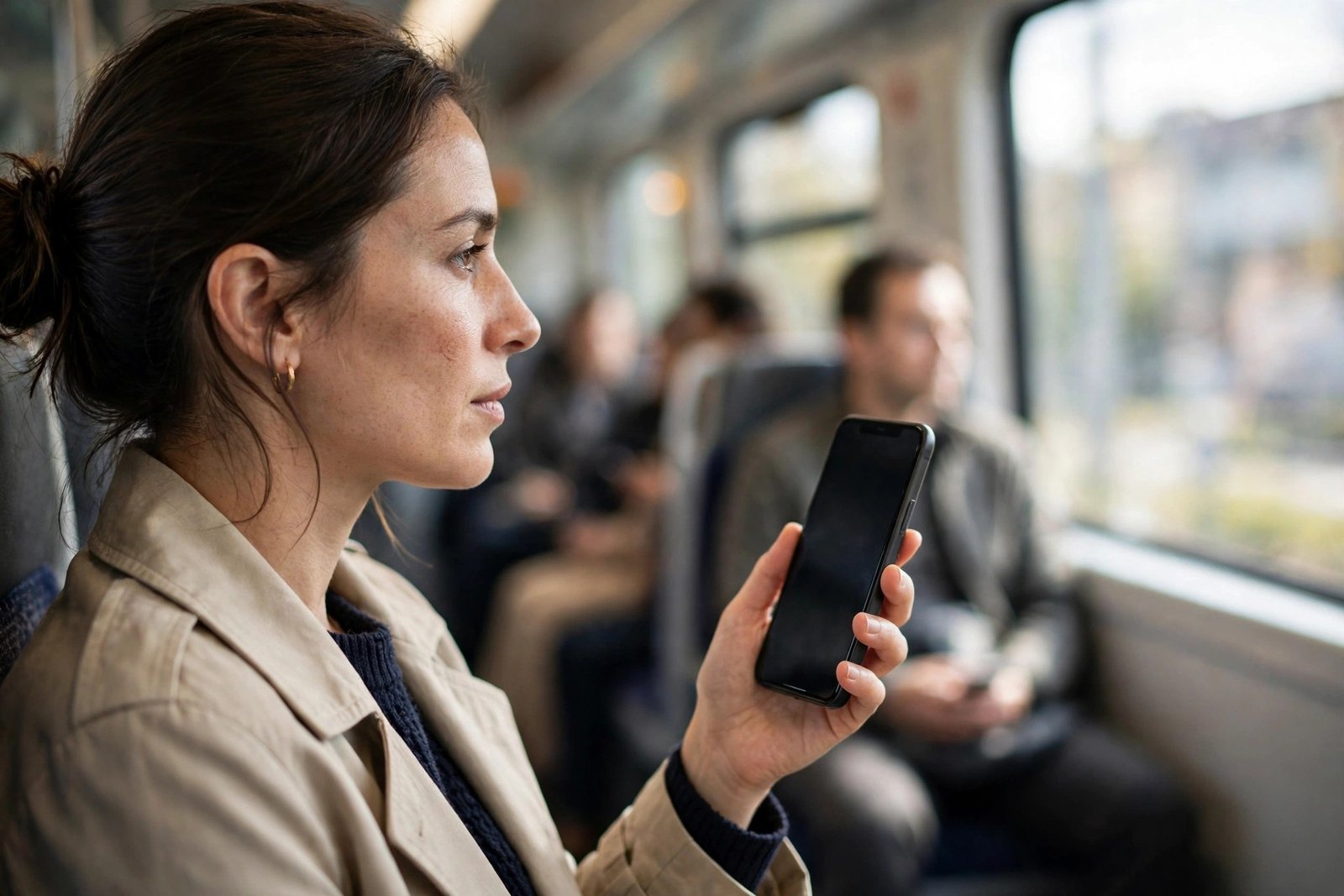
The clearest winners are commuters. On a packed train or bus, strangers sit pressed against you at exactly the sideways angle these protectors block, and phones come out for banking apps, messages, and work email. The same applies in cafés, airport queues, waiting rooms, and anywhere else you handle sensitive information within arm’s reach of strangers.
Professionals in open-plan offices are the other natural audience. If your screen shows client details, patient information, financial figures, or anything confidential, a privacy protector is a simple physical safeguard against casual observation by passers-by — not a substitute for proper data-handling practice, but a sensible extra layer. Anyone who unlocks their phone with a visible PIN or pattern in public also gains something: the person beside you cannot memorise a code they cannot see. What the protector does not do is protect against cameras, screen recording, or anyone with a direct view — it is a defence against glances, not surveillance.
- After fitting a privacy protector, raise your screen brightness a notch and re-check it outdoors. The dimming effect is much more noticeable in bright daylight, and setting expectations at home in the evening avoids a surprise on your first sunny commute.
The Trade-Offs You Will Notice Every Day
The headline cost is brightness. The louvre layer filters light even when you look straight on, so the screen appears dimmer; most people compensate by turning brightness up, which uses more battery. Outdoors in strong sunlight, where brightness is already fighting a losing battle, the difference is at its most obvious.
There is also a modest clarity cost: text and fine detail can look very slightly softer than through a clear protector, and some people notice a faint patterning at certain angles. Finally, sharing becomes clumsy. Showing a photo to a friend means handing the phone over or tilting it towards them, because from their seat the screen is black. Showing a ticket, a map, or a video to a group gets old quickly if you do it often.
The Verdict: Who Should Buy One, Who Should Skip It
A privacy protector is a good choice if you commute on crowded transport, handle money or confidential work on your phone in public or shared spaces, and mostly use your phone alone, straight-on, indoors. For that person, the trade-offs shrink to a small brightness adjustment, and the benefit is real every day.
Skip it if you frequently share your screen with family or friends, watch a lot of video in landscape, work outdoors in bright light, or simply prize the best possible display quality your phone can produce. For you, the compromises arrive daily and the benefit rarely does. And one clarification of a common misconception: a privacy protector is not inherently weaker or stronger than a clear one — if it is tempered glass, it protects against scratches and knocks about as well as any other tempered glass. Privacy is a viewing feature, not a protection upgrade.
- Undecided? Consider where you were the last five times you typed something private — a password, a bank balance, a personal message. If most of those moments happened with strangers within arm’s reach, you are the target audience. If they all happened on your sofa, you are not.
Frequently Asked Questions
Does a privacy protector stop people behind me seeing my screen?
No. The louvres narrow the side-to-side viewing angle, so they block people beside you, but someone directly behind you shares roughly your line of sight and can still see the display. For complete privacy in that situation, only angling the phone away or moving helps.
Will a privacy protector affect Face ID or fingerprint unlocking?
Usually not, provided the protector is made for your phone model with the correct cut-outs or sensor-compatible areas. Cheap, poorly fitted protectors can occasionally interfere with under-display fingerprint sensors, so choose one designed for your exact device and check the maker’s compatibility notes before buying.
Can I still share my screen when I need to?
Yes — you just have to hand the phone over or turn it fully towards the other person so they are within the straight-on viewing angle. It takes a second; it only becomes tiresome if showing people your screen is something you do many times a day.
A privacy screen protector is good at exactly one job — keeping side glances off your screen — and it charges you a little brightness and clarity for it. If your life puts strangers beside your banking app, pay the price gladly. If it doesn’t, keep the clear glass.