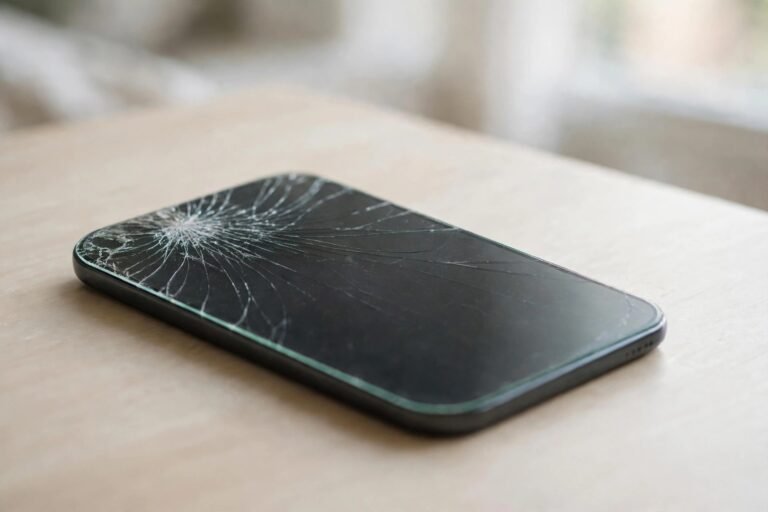
A dropped phone, a sickening crack, and a screen protector that’s now a spiderweb of fractures. Removing heavily shattered glass is the one protector job where rushing genuinely hurts — loose shards can slice a fingertip, scatter across the floor, or worse, hide the fact that the real screen underneath is damaged too.
The good news is that shattered glass comes off safely and cleanly if you slow down and use one simple trick: tape the whole surface before you lift anything. This guide takes you through the removal step by step — preparation, peeling, shard clean-up, and the all-important check of the screen underneath once the wreckage is gone.
Key Takeaways
- Cover the shattered surface with tape first — it holds the fragments together as one sheet so they lift away instead of scattering.
- Work over a bin or a tray, on a hard floor you can sweep, not over carpet or bedding.
- Start peeling from the least damaged corner and go slowly, keeping the sheet low and flat.
- Wear gloves or use a cloth if the damage is severe — edges of tempered glass shards are genuinely sharp.
- After removal, inspect the real screen under a bright light before assuming it survived.
- Wrap the removed glass and tape in paper before binning it, so shards don’t tear the bag or cut anyone handling it.
Step 1: Set Up Before You Touch the Glass
Take the phone out of its case and lay it screen-up on a clean, hard surface — a kitchen table over a tiled or wooden floor is ideal. Have ready: wide packing tape or painter’s tape, a bin positioned right beside you, a piece of stiff card or an old credit card, a microfibre cloth, and optionally thin gloves. Turn on a bright light; you’ll need it to spot stray fragments later.
Resist the urge to pick at the cracks or brush loose pieces off with your hand at this stage. Every loose fragment you disturb now is one you’ll be hunting across the floor later. Everything gets contained in the next step.
Step 2: Tape the Entire Surface
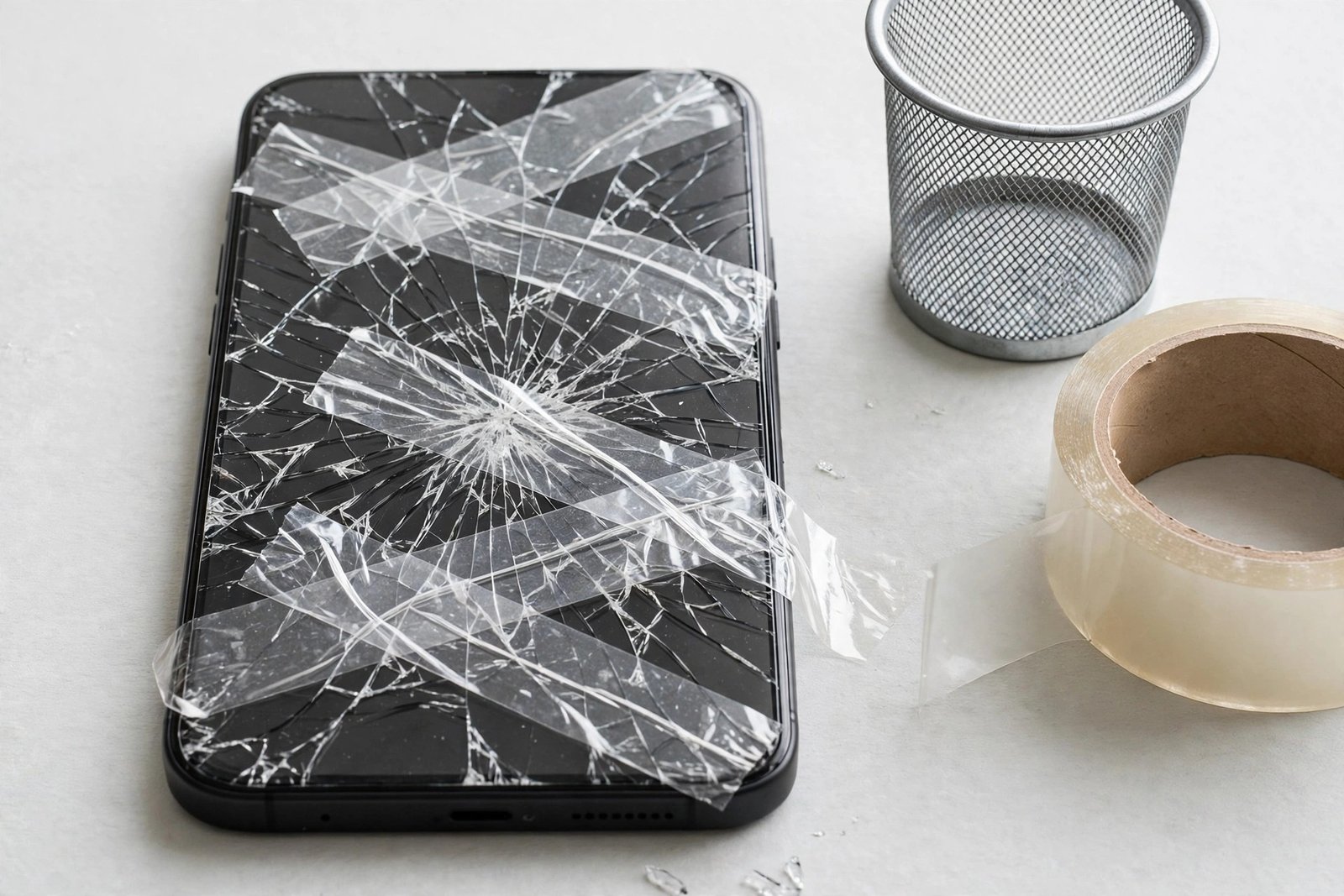
Lay strips of tape across the whole screen, overlapping each strip slightly, and press them down gently so the tape contacts every fragment. The tape acts like a splint: the shattered sheet, which is currently dozens of separate pieces held only by their own adhesive, becomes one connected layer that will flex and peel together.
Leave a small tab of tape hanging over one corner — ideally the least damaged corner, where the glass is most intact. That tab is your handle for the peel. If the protector is shattered right into every corner, choose whichever corner has the largest unbroken piece.
- Wide packing tape works best — one or two strips can cover most of the screen, and its stronger adhesive grips fragments firmly.
- Press the tape down with the flat of a card rather than your fingertips, so you never press directly on loose shards.
Step 3: Peel Slowly and Low
Slide a fingernail or the corner of your card under the taped tab to break the edge free, then pull slowly, steadily, and low — folding the sheet back over itself rather than yanking it upward. Pulling low keeps the fragments pressed against the tape and reduces the chance of the sheet snapping and flicking pieces loose. If resistance is strong in one spot, pause, work the card gently under that section, and continue.
Should a few fragments stay behind on the screen, don’t scrape at them. Press a fresh piece of tape over them, rub it down, and lift — the tape picks up stragglers far more safely than fingernails. Repeat until the screen is clear.
Step 4: Clean Up and Check the Real Screen
Fold the removed sheet tape-side in, wrap it in a sheet of paper or kitchen roll, and put it straight in the bin. Sweep or vacuum the immediate area — tiny glass splinters travel surprisingly far and are miserable in bare feet or paws. Wipe your work surface with a damp cloth to pick up anything the sweep missed.
Now the important part: check the screen underneath. Clean it with the microfibre cloth, then hold it under a bright light at an angle and look for cracks, chips, or dead spots. Run through a quick touch test by opening an app and dragging an icon around every corner of the display. A protector that shattered often means the screen survived — that’s the system working — but never assume it. If the display itself is cracked or unresponsive, that needs a repair decision before you fit anything new. If it’s pristine, clean it thoroughly and fit your replacement protector straight away, while the glass is bare and dust-free.
- Angle a torch across the bare screen after removal — hairline cracks in the real display show up as bright lines long before you’d notice them in normal use.
- If a shard does nick your skin, wash the cut and check it under bright light; fine glass splinters can be eased out with clean tweezers or a piece of tape pressed gently over the spot.
Frequently Asked Questions
Can a shattered protector damage my screen while I remove it?
Only if you’re rough. Dragging loose fragments sideways across the display can scratch it, which is exactly why the tape-first method matters — taped fragments lift vertically away instead of sliding. Peel slowly, never scrape with metal tools, and the screen underneath should come away untouched.
What if pieces of the protector won’t come off at all?
Warmth helps: rest a warm (not hot) cloth over the stubborn section for a minute or two to soften the adhesive, then try the tape-lift again, working the edge of a plastic card underneath millimetre by millimetre. Patience shifts almost anything — forcing it is what breaks fragments into smaller, sharper pieces.
How should I dispose of the broken glass?
Wrap the taped sheet in several layers of paper or an old cloth and place it in your general household waste — never loose, and never in a recycling bin meant for bottles and jars, as screen protector glass isn’t accepted there. The wrapping protects anyone handling the bag from stray sharp edges.
Shattered glass looks alarming, but with tape, patience, and a bin in reach, it comes off as one tidy sheet — and more often than not, the screen underneath is smiling back at you, unharmed.