Short answer: yes — most of them will. The majority of bubbles you see straight after fitting a screen protector are small pockets of plain air, and they disappear on their own as the adhesive finishes bonding, usually within 24 to 48 hours. But “most” is not “all”, and waiting a week for a bubble that was never going to leave wastes your one easy window to fix it. This guide gives you the honest version: which bubbles vanish, which ones never will, and how to tell the difference at a glance.
No tools, no refitting, no drama — just a clear way to read your screen on day one and know whether to relax, wait, or act.
Key Takeaways
- Most small bubbles disappear within 24–48 hours as the adhesive continues to flow and cure after fitting.
- A bubble that is shrinking day by day is on its way out — leave it alone and let it finish.
- A bubble with a speck of dust in the centre will never disappear. The dust physically props the protector up.
- Edge bubbles that spring straight back usually mean a case is lifting the protector, not a settling problem.
- Your fix-it window is the first couple of days. After the adhesive fully sets, stubborn bubbles get much harder to move.
- Normal use helps: the warmth and pressure of daily handling speed up the settling process.
Why Bubbles Disappear at All
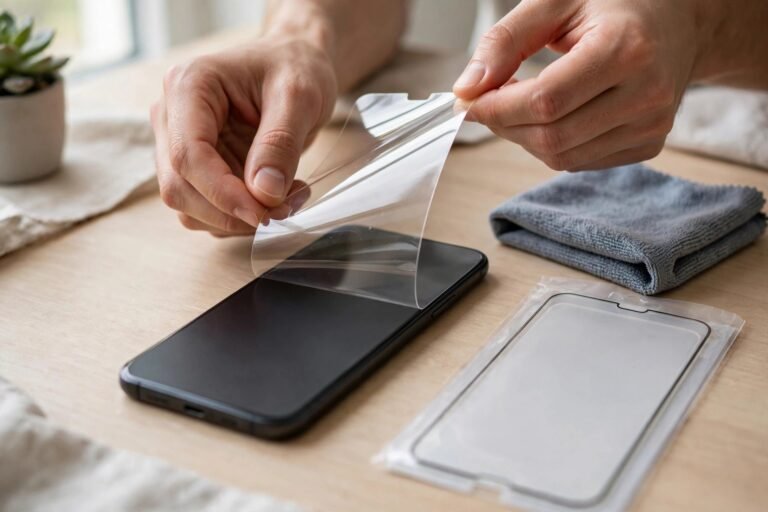
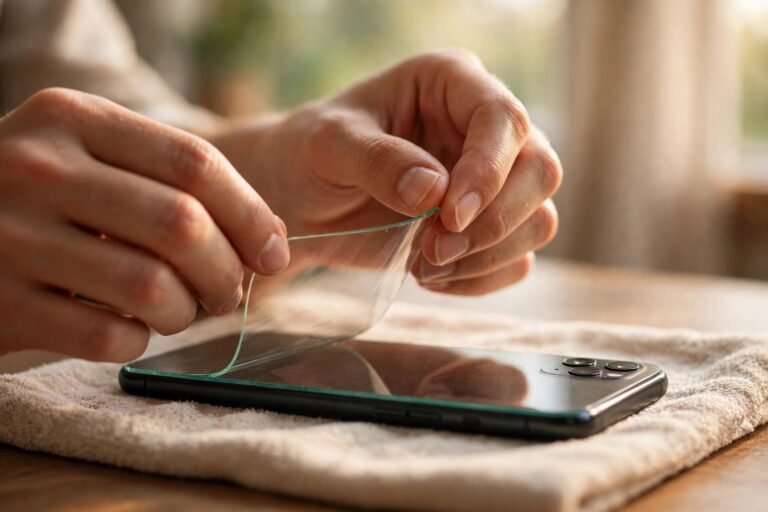
Protector adhesive doesn’t fully set the second it touches the screen. For the first day or two it remains slightly fluid at a microscopic level, slowly creeping into complete contact with the glass. As it flows, it absorbs tiny air pockets at the edges of each bubble, and the bubble shrinks from the outside in. Everyday life assists: the warmth of the phone in your pocket, the gentle pressure of your fingers as you use it, and simply time all push the process along.
This is why a protector that looked disappointing on Monday evening can look flawless on Wednesday morning without anyone touching it. Nothing magical happened — the adhesive simply finished installing itself.
The Bubbles That Will Disappear
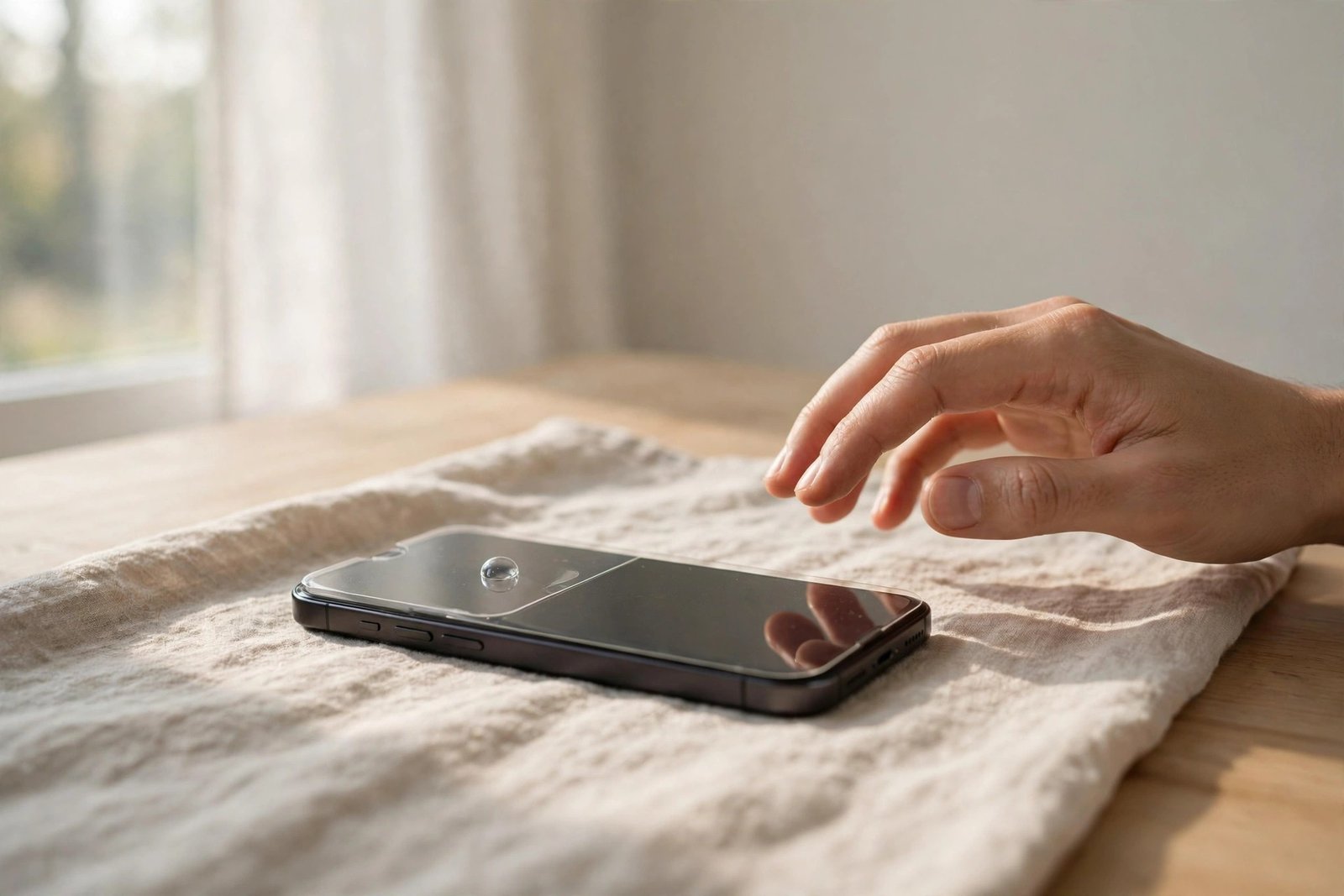
- Small, round, hazy micro-bubbles scattered after fitting — the classic settling kind. Most are gone within a day.
- Soft-edged bubbles that change shape when you press them lightly — pure air, already mobile.
- Bubbles that are visibly smaller than yesterday — the surest sign of all. A shrinking bubble is a leaving bubble.
- Cloudy patches right after fitting film protectors — film settles more slowly than glass, and a faint haze in the first hours is normal.
The Bubbles That Never Will
Three kinds of bubble will still be there, unchanged, in a month’s time. The first is the dust bubble: look closely, ideally with the screen off and a light at an angle, and you’ll see a dot, fibre, or hair at its centre, often with a faint ring around it. The speck tents the protector up, and adhesive flow can’t flatten a solid object. The second is the case-lift bubble at an edge or corner — press it out and it returns within the hour, because the case lip is holding the protector up. The third is a bubble over a chip, crack, or deep scratch in the protector or the screen itself: the surface isn’t flat, so the protector can never fully bond there.
- Take a photo of the screen right after fitting. Comparing day one and day two photos tells you instantly whether bubbles are shrinking — your eyes alone forget how big they were.
- Check bubbles with the screen off under a lamp. Dust specks that are invisible against a bright display show up clearly against black glass.
What to Do While You Wait
Mostly: use the phone normally and leave the protector alone. Don’t keep pressing at settling bubbles — every prod disturbs adhesive that’s mid-cure. Keep the phone out of its case for the first day if you can, or at least check that the case isn’t touching the protector’s edges. If, after 48 hours, a plain air bubble is still sitting there at the same size, that’s your cue to act while the adhesive is still workable: push it out slowly towards the nearest edge with a fingertip, working from behind the bubble, and hold the pressure at the edge for a few seconds to seal it out.
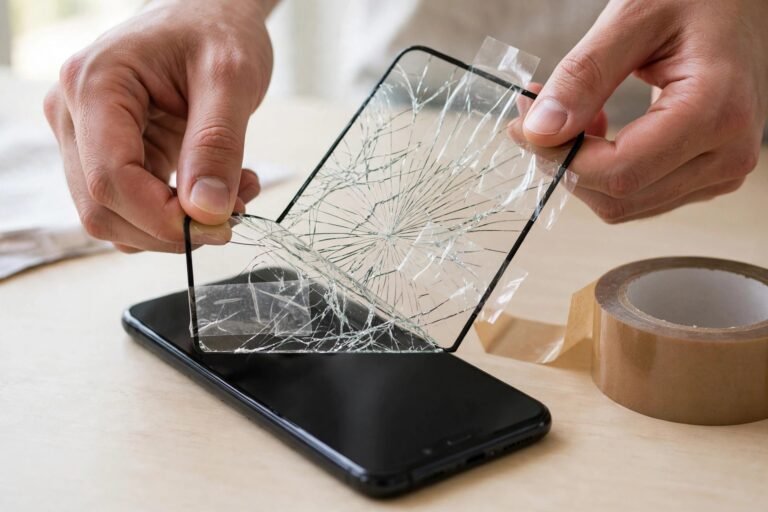
For the ones that will never settle, waiting longer only makes the fix harder. A dust bubble needs the tape-lift: tape on the nearest corner, lift just that section, dab the speck away with a dust-removal sticker, and lay it back down. A case-lift bubble needs a case-friendly protector or a different case. Deal with both in the first few days, while a lift-and-relay is still clean and easy.
- Leave the phone face-up and caseless overnight after fitting. It’s the single easiest way to give settling bubbles an undisturbed run at disappearing.
- A bubble that hasn’t changed at all in 48 hours has given you its answer — stop waiting on it and use the fix for its type.
Frequently Asked Questions
How long should I wait before worrying?
Give tempered glass a full 48 hours. Film protectors settle more slowly, so allow up to four or five days before judging them. If bubbles are shrinking during that period, the wait is working — patience is the fix.
A bubble appeared a day after a perfect install. Why?
Usually one of two things: the case went back on and its lip lifted an edge, or the temperature changed and a nearly invisible pocket of air became visible as the adhesive settled unevenly. Check the case first; if the bubble is at an edge, push it out, leave the case off for a few hours, and see whether it stays gone.
Does pressing the bubbles help them disappear faster?
For a bubble that’s already shrinking, pressing adds little and can disturb the curing adhesive — better to leave it. For a bubble that has stopped changing, a slow fingertip push towards the nearest edge is exactly right. Match the response to the bubble, not the other way round.
Fit it, photograph it, and give it two days. The bubbles that shrink were never a problem — and the ones that don’t will have told you exactly what they are and what to do about them.