The iPhone 14 arrived with a familiar promise: Ceramic Shield, tougher than ever. But what exactly improved between generations — and what quietly stayed the same? That distinction is the whole answer to whether you need a screen protector for an iPhone 14. The short version: drop survival kept getting better; scratch resistance essentially stood still. And because the iPhone 14 is a phone people are keeping for longer than ever, that unchanged scratch story matters more, not less.
This guide separates the two kinds of toughness, looks at the safety-focused life Apple designed this phone for, and explains why a longer ownership horizon changes the protection calculation.
Key Takeaways
- The iPhone 14’s Ceramic Shield matches the iPhone 13’s for scratch resistance — the hardness story did not change.
- What kept improving is structural drop survival — but a screen can still crack in an unlucky fall.
- Features like crash detection show this phone was designed for cars, bikes and active days — riskier environments for glass.
- Owners keep phones longer now, so scratches get more years to accumulate before the phone is replaced.
- A longer protection horizon tips the balance clearly: fit a protector.
What Actually Improved on the iPhone 14’s Front
Between the iPhone 13 and 14, the gains were in surviving impacts. The Ceramic Shield front, the flat aluminium or steel frame and the internal structure work together to spread the energy of a fall, and each generation of this design has become better at coming through drops onto hard ground without the display fracturing. If your mental image of screen damage is a phone bouncing off concrete, the iPhone 14 is genuinely a hardier device than its ancestors.
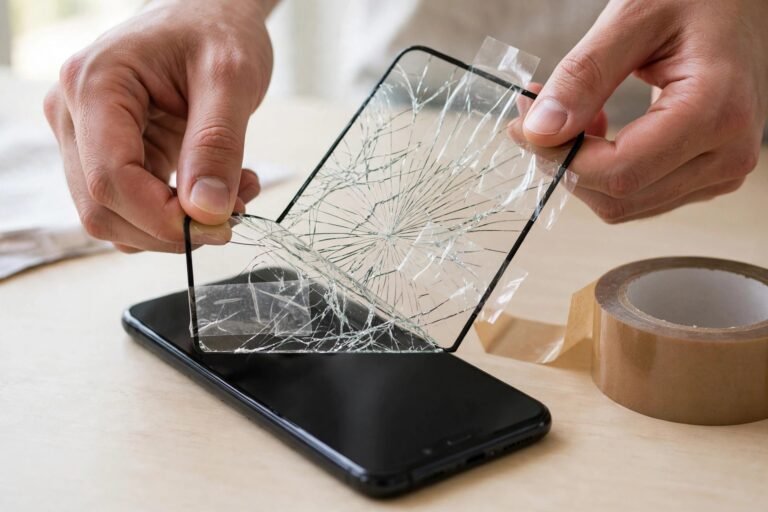
It is also worth saying plainly: improved is not invulnerable. Screens still crack — usually when a corner strikes first and the force bypasses the flat front altogether. The improvement changes the odds, not the physics.
What Didn’t Improve: Scratch Hardness
Scratching is governed by hardness, and the iPhone 14’s glass sits at essentially the same hardness as the phone before it. That means the list of things that can mark it is unchanged: chiefly quartz — sand, grit and stone dust — which is harder than the glass and present in pockets, bags, car interiors and most outdoor surfaces. Keys and coins remain mostly harmless; the beach, the building site and the bottom of a handbag remain the real threats.
This is the generation gap that matters. Marketing presents one steadily rising line of “toughness”, but scratch resistance has plateaued — so the micro-scratches that dull a screen over the years arrive on an iPhone 14 at exactly the same rate as they did on older models.
- The quick test for any “tougher glass” claim: ask tougher against what? Drops and scratches are different tests, and only one of them improved here.
- After a beach day, rinse or shake sand off the phone before wiping it — the wipe itself is what drags grains across the glass.
A Phone Built for Riskier Days
Look at what Apple headlined with this generation: crash detection that can summon help after a severe car crash, and emergency satellite messaging for places beyond mobile coverage. These are features for people driving, riding, hiking and travelling — a phone expected to live an active, outdoor, occasionally dramatic life.
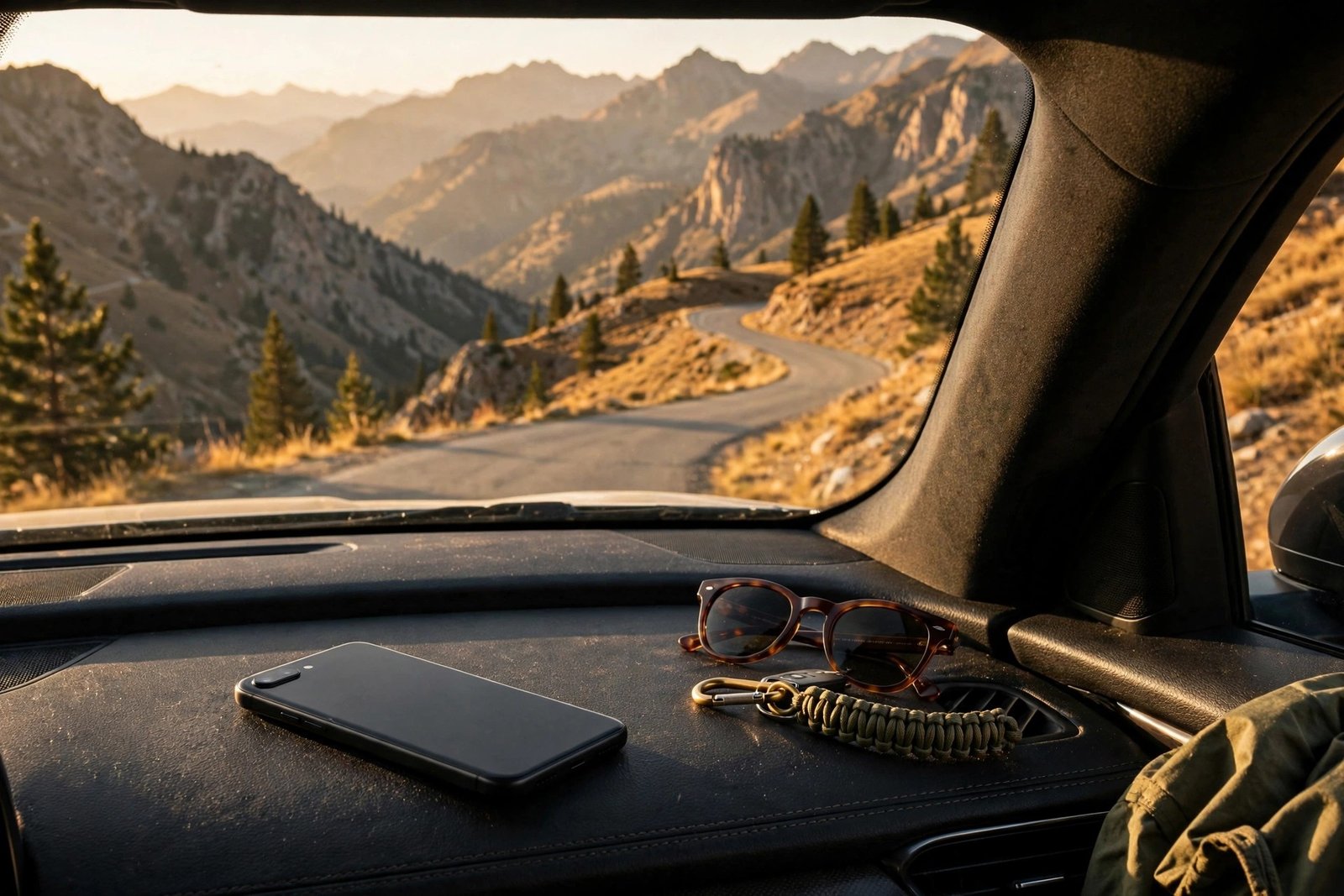
That life is precisely where screens collect their damage: gravel car parks, rocky trails, dusty dashboards, gloves and zips and haste. A phone designed to be carried into risk deserves the sacrificial layer that takes the scratches those environments hand out — the protector gets etched so the display does not.
The Longer You Keep It, the Stronger the Case
The deeper shift is ownership length. Phones of this era are fast enough, and supported with software updates for long enough, that keeping one for four or five years is now normal rather than frugal. Scratches are a time-based problem: double the years and you roughly double the accumulated fine lines, the dulled patches, the wear that eventually makes a screen look tired in sunlight.
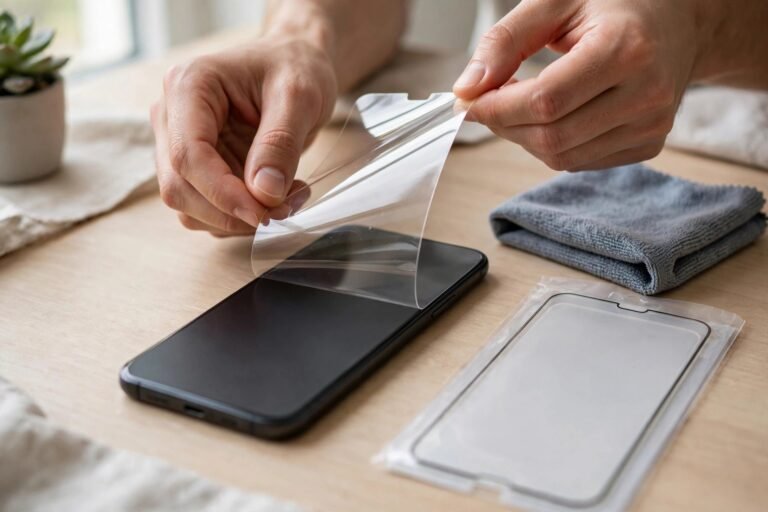
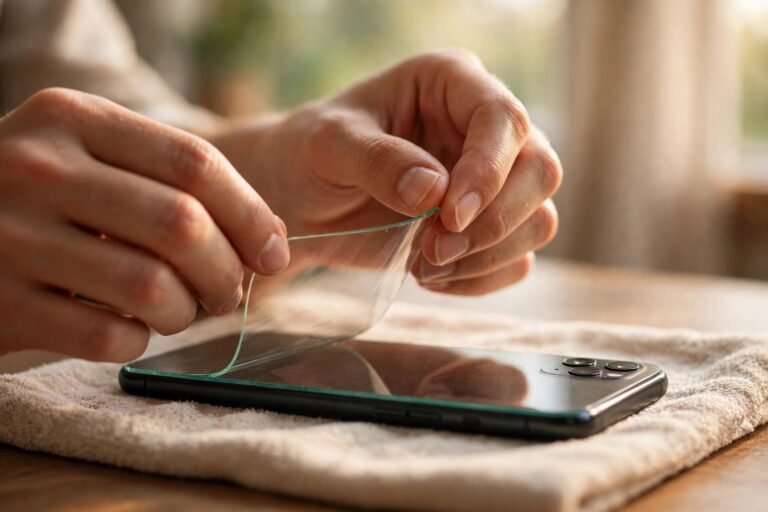
A protector converts that whole timeline into a non-issue. Each worn layer is peeled off and replaced; at any point in year four, the glass underneath can be revealed looking close to the day it was bought. For a device you will also eventually sell or hand on, that preserved condition is worth real money at the end of a long ownership.
- Planning to keep the phone for years? Start the protector on day one — protection cannot be applied retrospectively to scratches already earned.
- Note the fitting date in your calendar and inspect the protector yearly; a tired one is cheap to refresh, and the screen check underneath is reassuring.
Frequently Asked Questions
Is the iPhone 14’s glass stronger than the iPhone 13’s?
Against drops, the overall design is at least as strong and marginally improved. Against scratches, it is effectively the same glass story — the same materials, sand chief among them, will mark it just as they marked the previous model. “Stronger” without a qualifier only tells you half the truth.
My iPhone 14 survived a big drop with no damage. Doesn’t that prove I don’t need a protector?
It proves the phone is good at surviving drops — which was never the protector’s main argument. The protector exists for the slow damage: years of grit, pockets and benches engraving fine scratches that no drop test measures. Surviving the dramatic event says nothing about the gradual one.
Will a protector interfere with Face ID or the front camera?
No — protectors made for the iPhone 14 are cut to leave the TrueDepth camera system fully clear, and Face ID and selfies work exactly as before. Choose one made for this model rather than a generic size, and the cut-outs line up precisely.
The iPhone 14 got better at the damage that makes headlines and no better at the damage that accumulates in silence. If you are keeping yours for the long haul — and this is a phone built to be kept — a protector is the sensible answer.