Yes — you can remove a tempered glass screen protector at home, and with the right technique you can often lift it away in one intact piece. The difference between a clean removal and a shattered mess is rarely luck. It comes down to three things: warmth to loosen the adhesive, patience to peel slowly, and support for the pane as it comes free.
This guide focuses purely on technique. You’ll learn how to warm the glass so the bond relaxes, how to find the corner that wants to lift, how to peel without ever bending the pane, and exactly what to do if it cracks halfway through anyway.
Key Takeaways
- Warmth is your best tool — gentle heat softens the adhesive so the glass releases instead of snapping.
- Start at the loosest corner, usually the one that has already started to lift or chip.
- Peel slowly at a low angle, supporting the freed part of the pane so it never flexes.
- Never pry, twist or lever the glass — tempered panes break under bending, not under steady tension.
- If the pane cracks mid-removal, cover it with tape and continue — the job is still very doable.
- Work over a soft surface so any fragments that do escape land somewhere safe.
Why Intact Removal Is Worth the Effort
A pane that comes off in one piece takes every shard with it. There’s nothing to pick out of the speaker grille, no slivers hiding along the frame, and no risk of a fragment scratching the screen as you work. Intact removal is also simply calmer: you are guiding a sheet of glass, not managing a breakage. It isn’t always possible — a protector that is already cracked rarely survives removal whole — but for an undamaged pane you’re replacing because it’s scratched, cloudy or lifting at one edge, the techniques below give you an excellent chance.
Step 1: Warm the Protector Gently
The adhesive under tempered glass softens noticeably with warmth, and soft adhesive lets go gradually instead of resisting until the glass gives way. The simplest method needs no equipment at all: use the phone normally for ten minutes. The warmth from the screen and processor takes the chill off the bond. Alternatively, aim a hairdryer on its lowest, coolest setting at the screen for 20 to 30 seconds, keeping it moving and at least 15 centimetres away. You want the glass pleasantly warm to the touch — never hot. Excessive heat can damage the display and battery, so if you can’t comfortably rest your palm on the screen, it is too warm.
Step 2: Find and Lift a Corner
Inspect all four corners. One of them will usually be marginally looser — perhaps slightly lifted, whitened by a trapped-air edge, or chipped. That is your starting point. Slide a fingernail flat along the screen until it slips into the seam, then ease it under the corner just enough to raise the edge by a millimetre or two. If your nails won’t do it, press a length of sticky tape firmly onto the corner and pull the tape upwards: the tape grips the glass and gives you a handle. Avoid metal tools entirely. A knife or screwdriver can slip and gouge the screen you’re trying to protect, and it concentrates force in exactly the way that cracks tempered glass.
- A plastic loyalty card or guitar pick makes an ideal lifting tool — thin enough to enter the seam, soft enough never to scratch the screen beneath.
- If no corner wants to lift, rewarm that corner for a few seconds rather than forcing it. Heat, not pressure, is what persuades a stubborn bond.
Step 3: Peel Slowly, Supporting the Pane
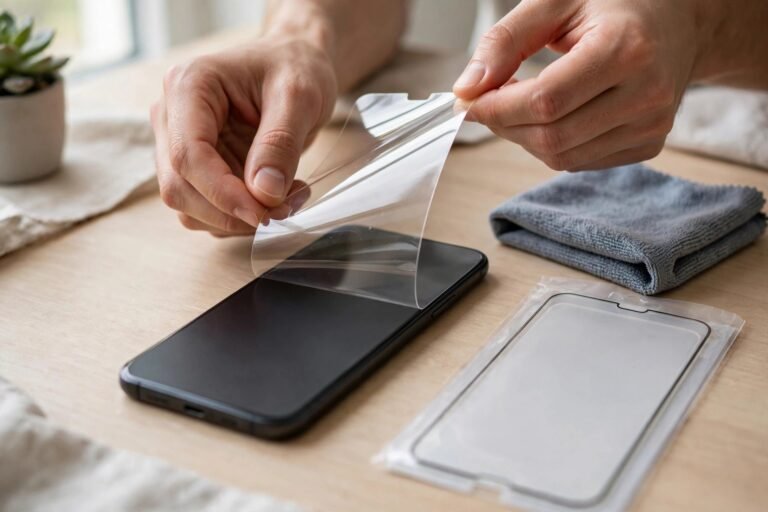
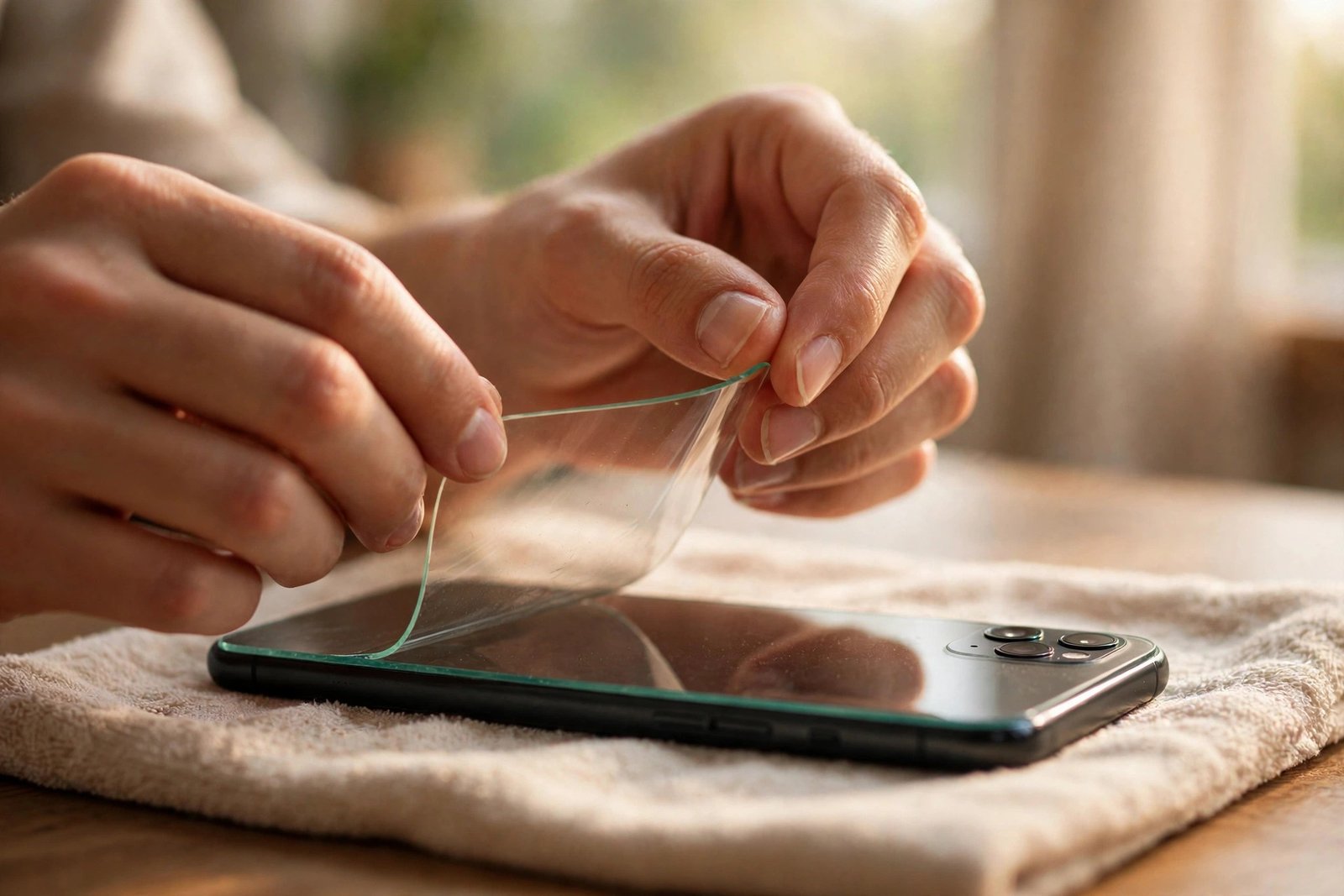
Here is the part most people rush, and rushing is what breaks glass. Pull the lifted corner back towards itself at a low angle, close to the screen, rather than lifting it straight up. High angles bend the pane; low angles slide the bond apart. Advance a few millimetres at a time. As more of the glass comes free, slide your other hand underneath the freed section and support it flat, so the loose pane never dangles, sags or twists under its own weight. Keep the whole process slow and steady — a full removal taking a minute is a success, not a delay. If resistance suddenly increases, stop pulling, add a little warmth to that area, then continue.
If the Pane Cracks Mid-Removal
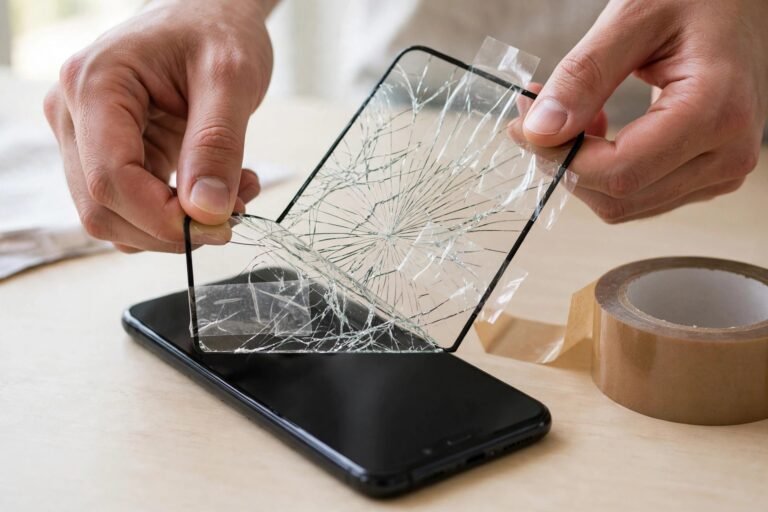
Sometimes, despite perfect technique, an invisible stress fracture from an old drop gives way and the pane cracks halfway off. Don’t panic and don’t yank. Lay strips of packing tape across the cracked area, pressing them firmly onto the glass so the fragments are held together as one sheet. Then resume the same slow, low-angle peel from where you left off — the tape turns the broken pane back into a single, manageable piece. Work over a towel or a tray so any loose slivers are contained, and once the protector is off, wipe the screen with a microfibre cloth and inspect it under a bright light for stray fragments before fitting anything new.
- Removing a heavily cracked protector? Tape the entire surface before you lift the first corner. You are then peeling one taped sheet, not a jigsaw.
- Keep a small bin within reach and drop the removed pane straight in — carried glass, intact or not, is how fragments end up in carpets.
Dealing With Adhesive Residue
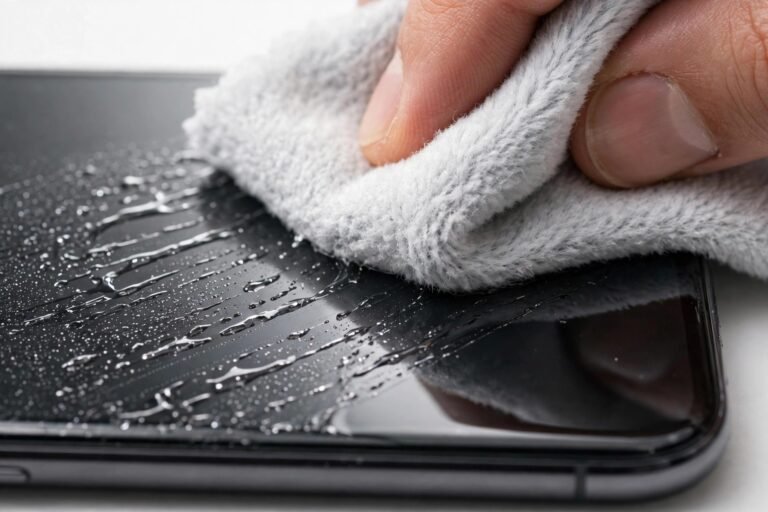
Most quality protectors leave the screen virtually clean. If you find sticky patches or a faint outline of residue, roll it off with a clean fingertip, then buff with a microfibre cloth slightly dampened with water. Stubborn spots yield to the sticky side of a piece of tape dabbed repeatedly over them. Avoid solvents and alcohol unless the protector manufacturer recommends them — the screen’s own oil-repellent coating is delicate, and harsh chemicals can strip it, leaving a patch that smears fingerprints forever.
Frequently Asked Questions
Can I reuse a tempered glass protector after removing it intact?
Realistically, no. Even a pane that lifts off whole has adhesive that has picked up dust and lost its grip, and it will never seal bubble-free again. Intact removal is about safety and cleanliness, not reuse — always fit a fresh protector.
How long should removal take?
An undamaged pane usually comes away in under five minutes, including warming time. A cracked or very firmly bonded protector can take ten. If you find yourself forcing anything, the answer is more warmth and less pressure, not more speed.
My protector won’t budge at any corner. What now?
Rewarm the whole screen, then try each corner in turn with the tape-handle method, pulling slowly and steadily rather than tugging. Protectors fitted with stronger adhesive sometimes need two or three warming cycles. The bond always releases eventually — what breaks glass is impatience, not the adhesive.
Warmth, a low angle, and a supporting hand: remove a tempered glass protector the slow way and it will usually reward you by coming off in one satisfying, shard-free piece.