A cracked screen protector has done its job — it took the hit your display was meant for. Now it has to come off, and that is where people get hurt or make things worse: a broken pane is no longer one sheet of glass, it is a sheet of loosely connected shards that flex, splinter, and shed fragments the moment you start prising at a corner. Take it off the wrong way and you can drag a sharp edge straight across the real screen underneath.
The safe method is slower but simple: tape the whole surface first, so the fragments behave as one piece again, then peel low and slow over a tray that catches anything that escapes. This guide walks through the full routine — taping, lifting, dealing with stubborn fragments, and disposing of the remains without leaving glass in your carpet or your fingertips.
Key Takeaways
- Tape the entire surface before you lift anything — wide clear tape binds the cracks together so the pane comes off in one piece.
- Work over a tray or a sheet of paper so any shard that escapes lands somewhere you can see it and contain it.
- Protect your fingers — wear thin gloves or wrap your fingertips in tape; cracked edges are sharp even when they look harmless.
- Peel low and slow, keeping the pane flat against itself. Never bend a broken protector — bending is what snaps it and scatters pieces.
- Stubborn fragments come away with warmth, a fresh piece of tape, and patience — never with metal tools or fingernail scraping.
- Wrap the remains in the tray paper and tape them shut before binning, so no one else meets a shard later.
Step 1: Set Up and Tape the Whole Surface
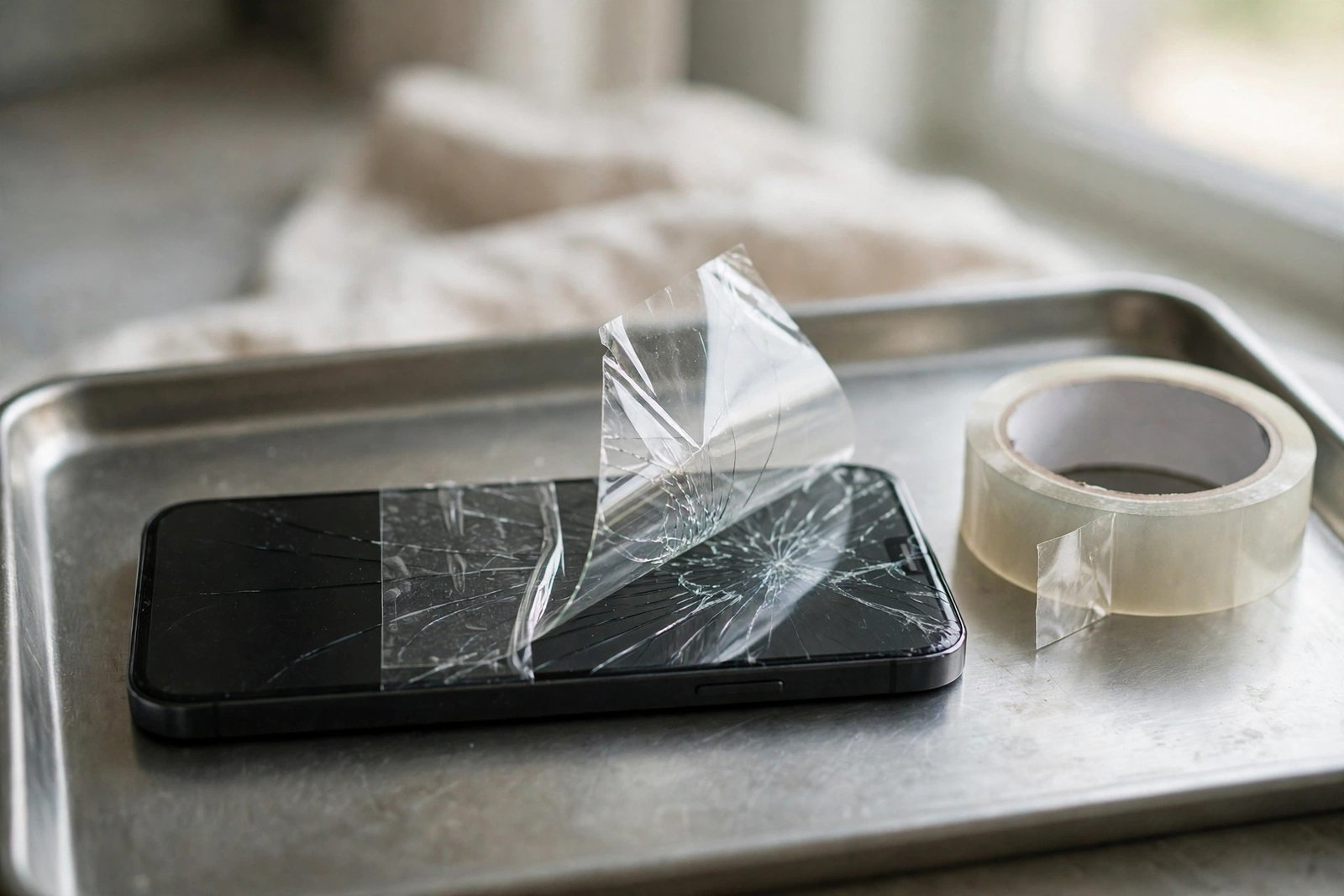
Take the case off and lay the phone on a tray, baking sheet, or a large sheet of paper on a flat table. This is your containment zone: every fragment that detaches during the removal should land on it, where it is visible, instead of on the floor or in your lap. Wash and dry your hands, and put on thin gloves if you have them — nitrile or cotton both work. No gloves? Wrap two or three layers of tape around the thumb and fingertip you will be peeling with, sticky side in.
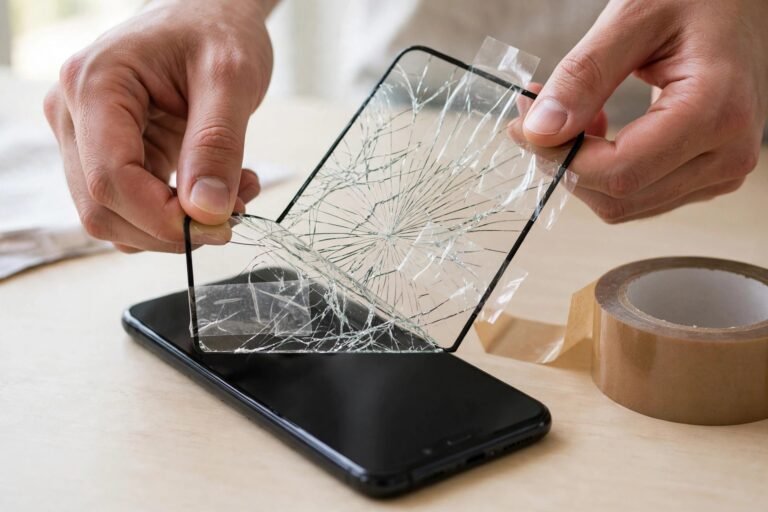
Now cover the entire protector with wide clear packing tape, overlapping the strips slightly and pressing firmly into every crack with your thumb. Run the tape a little past the edges of the glass so loose corner pieces are captured too. What you are doing is rebuilding the pane: the tape becomes a flexible skin that holds every fragment to its neighbours, so when you peel, the cracks flex with the tape instead of opening and shedding shards.
- Press the tape down with a cloth-wrapped card, working from the centre outwards — it forces tape into hairline cracks your thumbs glide over.
- Leave one tape strip hanging over the edge of the phone as a pull tab. It gives you a safe handle that is not a sharp glass corner.
Step 2: Lift a Corner and Peel Low and Slow
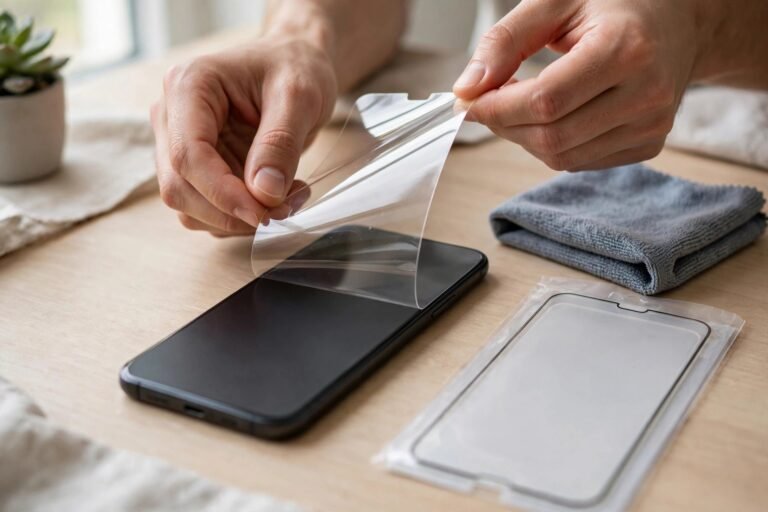
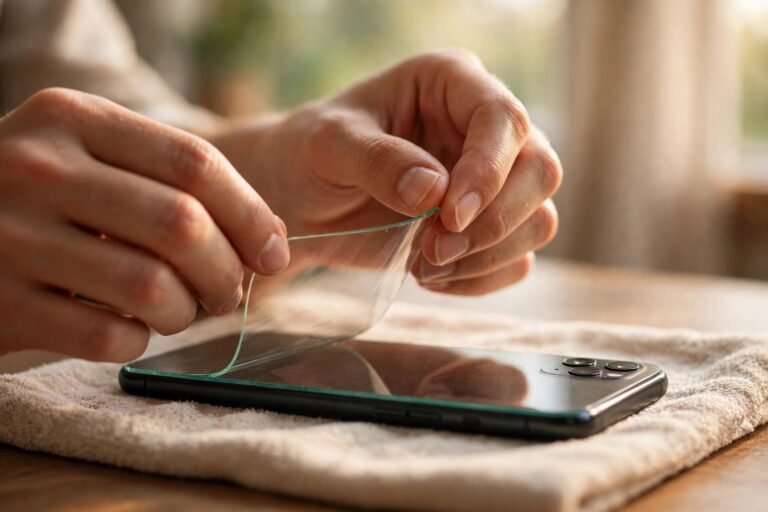
Slide a fingernail or a thin plastic card under one corner — choose the least damaged corner, where the glass is still mostly whole and the corner is least likely to crumble. Lift just enough to get a grip on the taped surface, then peel the pane back on itself at a low angle, keeping it almost parallel to the screen. The flatter the peel, the less the glass flexes, and flexing is the enemy: a broken pane that bends will snap along a crack line and leave half of itself behind.
Work slowly, a centimetre at a time. If resistance builds, stop pulling and warm the area gently — a hairdryer on its lowest setting, held well back and kept moving for twenty seconds, softens aged adhesive noticeably. Never force a stuck section: force is what turns a controlled peel into a shower of fragments. If the pane does split despite your care, simply tape over the new break, press firmly, and continue from the fresh edge.
Step 3: Dealing With Fragments That Stay Stuck
It is common for a few small pieces — usually around the worst of the original crack — to stay bonded to the screen after the main pane lifts away. Do not scrape at them with a fingernail: a shard under a nail is painful, and a slipped nail can scratch. Instead, press a fresh piece of tape firmly onto the fragment, rub it down well, and peel the tape back slowly — most small pieces come away stuck to the tape. Repeat as needed.
For a fragment that still refuses, warm it briefly and slide a plastic card flat beneath its edge, keeping the card pressed against the screen rather than levering upwards. Then check the whole screen under a bright light at an angle: fragments and grit glint against the smooth glass, which makes stragglers easy to spot. Wipe the screen with a microfibre cloth afterwards, and run the cloth — not your bare palm — over the tray to gather anything that fell.
- A damp cloth or damp kitchen paper picks up invisible micro-shards far better than a brush, which mostly redistributes them — use one for the tray and the table at the end.
- Shine a torch across the tray and floor at a low angle before you tidy up; stray fragments sparkle long before you would feel them underfoot.
Step 4: Clean Up and Dispose Safely
Fold the removed pane — still wrapped in its tape — into the paper or tray lining it landed on, then wrap the whole bundle and tape it shut before it goes in the bin. Loose broken glass in a bin bag is a hazard for whoever handles the bag next, so never drop fragments in unwrapped. Shake out and check the cloth you used, wash your hands, and inspect the bare screen once more under the light: you are looking for adhesive residue (a soft cloth and patience removes it) and, importantly, any crack in the real screen that the protector was hiding.
Frequently Asked Questions
Can removing a broken protector damage the real screen?
Only if shards are dragged across it or metal tools slip. With the surface taped, a low flat peel, and plastic tools only, the screen underneath is at very little risk — the tape holds fragments still so they lift away instead of sliding.
What if the protector is shattered into dozens of tiny pieces?
The taping method matters even more. Use two overlapping layers of wide tape, press them down thoroughly with a cloth-wrapped card, and peel very slowly. The pane usually comes away as a single mosaic sheet. Any pieces left behind lift off with fresh tape, one at a time.
Should I wear gloves, or are bare hands fine?
Thin gloves or tape-wrapped fingertips are strongly recommended. Most nicks from broken protectors happen not during the peel but afterwards, when a stray fragment clings to a cloth or hides at the edge of the tray and meets an unprotected hand.
Tape it, tray it, peel it low and slow — a broken protector comes off safely when the fragments never get the chance to behave like fragments.