It is a fair question to ask of a few pounds’ worth of glass or plastic: does a screen protector actually work, or is it a comfort blanket the accessory industry sells to nervous phone owners? The short answer is that it works — measurably, and in two distinct ways — but not in the way most adverts imply, and not against everything.
This guide explains the actual mechanics: how a protector deals with scratches, how it deals with drops, and where its protection honestly stops. Once you understand what the layer is physically doing, you can judge the bold claims on the packaging for yourself.
Key Takeaways
- Yes, protectors work — as a sacrificial layer. They do not make your screen stronger; they take the damage in its place.
- Against scratches, the protection is near-total for everyday hazards, because the scratch happens to the protector, not the phone.
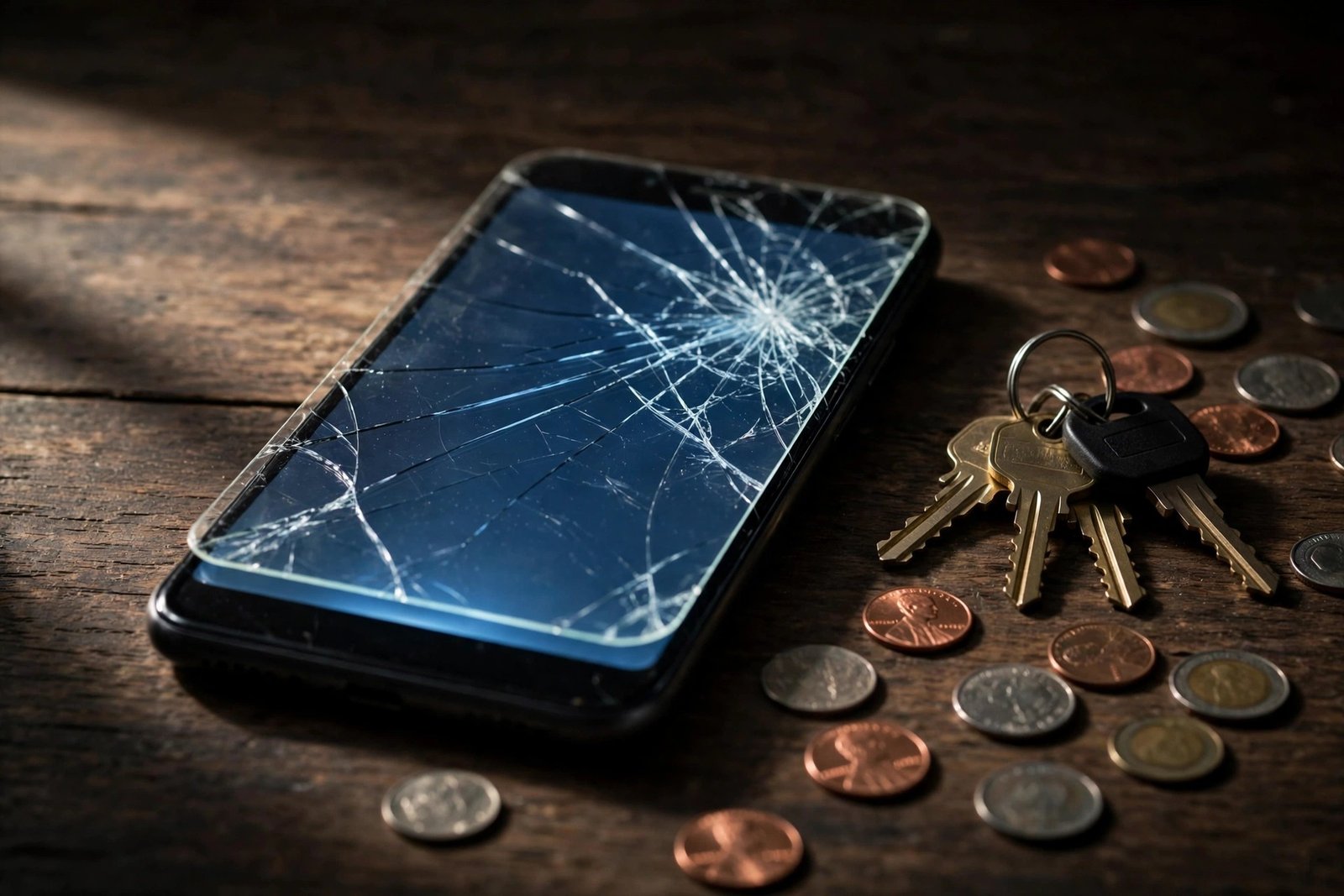
- Keys do not scratch modern glass; sand does. Quartz grit (Mohs 7) is harder than phone glass — and it is exactly what a protector intercepts.
- Against drops, a glass protector absorbs and spreads impact and may crack so your screen doesn’t — but it is a better chance, not a guarantee.
- “9H hardness” is a pencil-scale rating about scratch resistance, not a promise your screen cannot crack.
- Protection has edges — literally. Corner impacts, uncovered borders and falls onto uneven ground can still reach the real screen.
How a Protector Deals With Scratches
Scratch protection is the simple, honest part of the story. A scratch is a groove cut by something harder than the surface it slides across. Keys and coins, despite their reputation, are softer than modern phone glass and rarely mark it. The real culprits are mineral grit — above all quartz, the main ingredient of sand and most dust, which sits at 7 on the Mohs scale, harder than the glass on your phone.
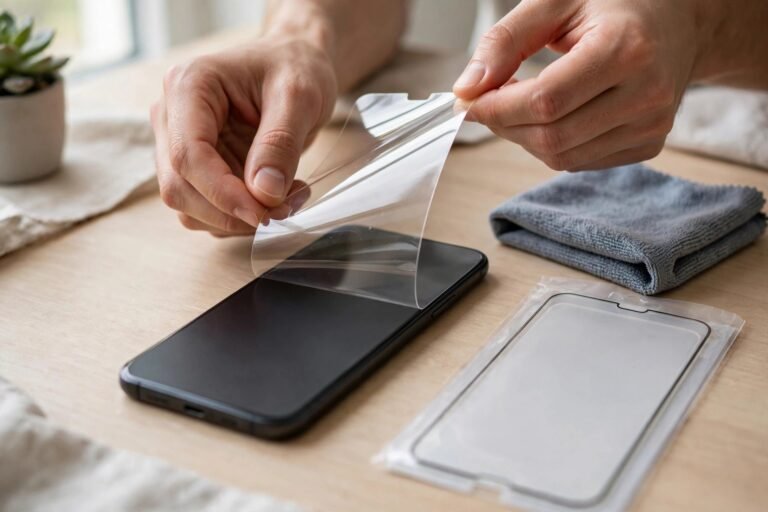
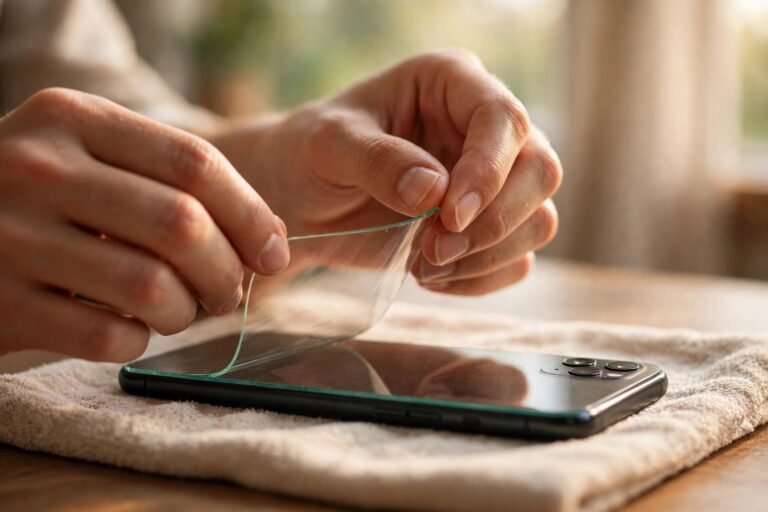
A protector defeats this not by being harder than quartz — tempered glass protectors are roughly as hard as the screen itself — but by being in the way. The grit grooves the protector’s surface instead of the phone’s. The damage is identical; it has simply happened to a replaceable layer. Peel the marked protector off after a year and the screen beneath is, in the ordinary run of things, exactly as it was on day one. Against scratches, “does it work?” has an uncomplicated answer: yes, by substitution.
- That is also why a scratched protector is not a failed protector — it is a receipt. Every mark on it is a mark that is not on your phone.
- Film protectors self-heal minor swirls and resist scratches nearly as well in daily use; glass adds the drop behaviour described below, which film cannot match.
How It Deals With Drops
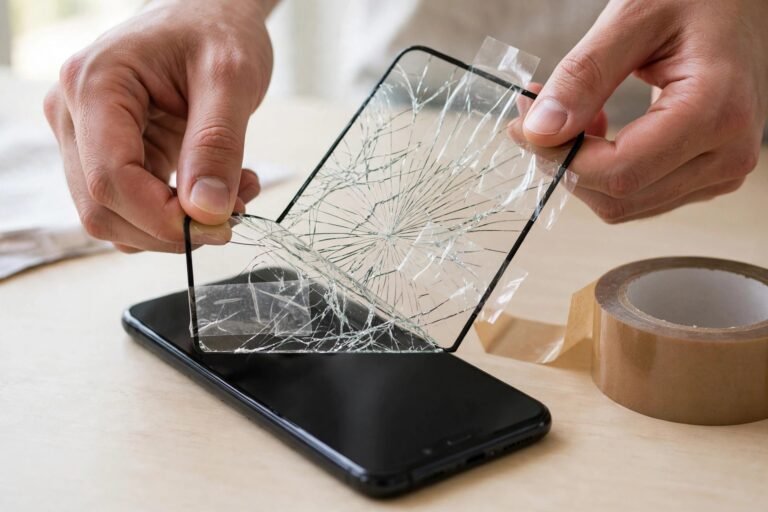
Drop protection works differently, and it is where tempered glass earns its keep. When a phone lands face-down, the impact energy arrives at one point and looks for somewhere to go. A bonded glass protector gives it two places: it spreads the force sideways across its own area, and its tempered structure is designed to fracture in a controlled web that consumes energy as it breaks. The classic result — a shattered protector peeled off an intact screen — is the mechanism working exactly as intended. The protector was spent so the screen was not.
There is a second, quieter effect. Much “screen cracking” in drops actually begins as an edge or corner chip that propagates. A protector covers the face and blunts the direct stone-to-glass contact that starts many of those failures, particularly on flat surfaces like pavements and tiles, which are the most common landing zones of all.
Where the Protection Honestly Stops
Now the limits, because they are real. A protector does not strengthen your phone’s screen — the glass underneath is exactly as breakable as it ever was, and a heavy impact, a corner-first landing, or a fall onto a pointed stone can deliver more energy than any thin layer can absorb. When that happens, both layers can crack together. The protector improves your odds, sometimes dramatically; it does not change the laws of physics.
Coverage matters too. A protector guards the flat face it covers — not the phone’s corners, frame or back, which is why it pairs with a case rather than replacing one. And be wary of miracle language: “military grade” describes a drop-test standard for cases, not a force field, and liquid nano coatings, being microscopically thin, offer scratch-behaviour benefits but no meaningful impact absorption at all. A protector works — as a sacrificial, replaceable first casualty. Expect that, and it will not disappoint you.
- After any drop where the protector cracks, replace it promptly even if the screen looks fine. A cracked protector has spent its structure — its ability to spread the next impact is largely gone.
- Check the real screen while you swap: lift the broken protector and confirm the damage stopped at the sacrificial layer before fitting the fresh one.
Frequently Asked Questions
If protectors work, why did my screen crack anyway?
Because impact is a lottery of angle, height and surface. Protectors reliably defeat flat, face-first landings and modest drops; corner-first impacts concentrate force into the phone’s frame and can exceed what any face layer can absorb. A cracked screen with a protector is bad luck, not proof the protector did nothing — it may have saved the screen in earlier drops you never thought about.
Do laboratory drop tests prove protectors work?
They support the mechanism: controlled tests consistently show protected screens surviving face-down drops that crack unprotected ones, and protectors fracturing sacrificially as designed. Real life adds corners and gravel, so treat test results as evidence of a genuine effect, not a warranty of survival.
Is a more expensive protector more effective?
Up to a point. Beyond the bargain tier, extra money mostly buys better fit, better oleophobic coating, cleaner adhesive and an alignment tray — all of which improve the experience more than the raw protection. The protective mechanism of any genuine tempered glass sheet is fundamentally the same.
A screen protector works the way a crash helmet works: it cannot repeal physics, but it is very good at being destroyed in your place. Judge it as a sacrifice, and it earns its keep.