

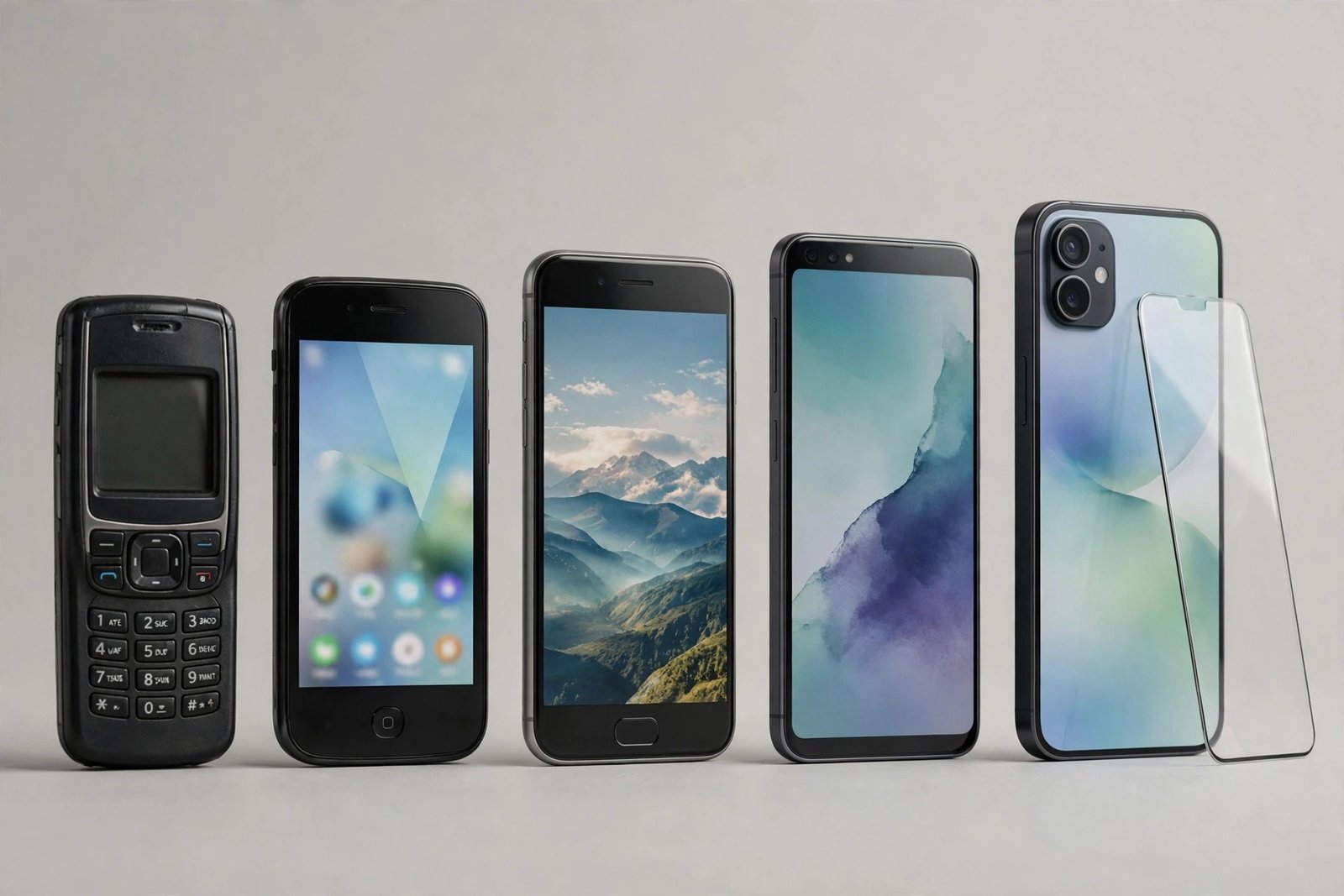
iPhone glass has come a long way. The screens that shattered if you looked at them sternly are gone, replaced by some of the most advanced glass ever fitted to a consumer device. So it is a reasonable question: does an iPhone — any iPhone — still need a screen protector at all?
To answer it properly, you need to understand what actually improved across the generations. iPhone glass became dramatically better at not cracking. It barely improved at not scratching. That distinction is the whole story, and once you see it, the protector decision becomes much clearer.
Key Takeaways
- iPhone glass has evolved through several generations, each focused mainly on surviving drops without cracking.
- Toughness and hardness are different properties — glass optimised against shattering is not automatically resistant to scratches.
- The things that scratch modern iPhones are mundane: sand, pocket grit and hard minerals, not usually keys and coins.
- Every generation of iPhone, old and new, benefits from a protector in the same way: it absorbs cosmetic damage sacrificially.
- Whether yours needs one depends on your environment and habits more than on which model you own.
A Brief History of iPhone Glass
The earliest iPhones used relatively ordinary glass, and screens cracked so routinely that repair shops built an industry around them. Through the 2010s, Apple worked with specialist glass manufacturers on chemically strengthened glass — ion-exchange processes that made the surface harder to fracture by packing it with larger ions under compression. Each generation chipped away at the problem, and features like stronger aluminium and later steel frames helped the glass survive impacts it once would not have.
The biggest leap came in 2020 with the iPhone 12 and Ceramic Shield, which embedded nano-ceramic crystals into the glass matrix. Apple described it as tougher than any smartphone glass, with drop performance several times better than the previous generation. Independent drop testing broadly backed the direction of the claim: modern iPhones routinely survive falls onto concrete that would have destroyed their ancestors.
Stronger Against Cracks, Not Against Scratches
Here is the part the launch presentations leave out. Engineering glass involves trade-offs, and the property that resists cracking — toughness, the ability to absorb impact energy without fracturing — is not the property that resists scratching, which is hardness, the ability to resist being cut by a harder material.
In standardised scratch tests using the Mohs hardness scale, today’s iPhone glass starts showing marks at roughly the same level as flagship glass from years ago, with deeper grooves one level up. In plain terms: a modern iPhone is far less likely to crack when dropped than a 2015 model, but a grain of sand dragged across its screen will mark it almost exactly as it would have then. Progress was real — it just all went into one column of the ledger.
- Keys are mostly innocent. Most key metal is softer than phone glass and rarely scratches it. The real culprit in your pocket is grit — tiny mineral particles, often quartz-based, that are harder than the glass.
- That is why a dedicated phone pocket protects your screen better than any glass technology: it removes the grit from the equation entirely.
What Still Scratches a Modern iPhone
Sand heads the list. Quartz, the main ingredient of most sand, sits high on the hardness scale — high enough to cut phone glass with ease. One beach holiday, one garden afternoon with the phone on a gritty surface, and the screen can pick up a constellation of fine lines. Construction dust, workshop debris and the abrasive dust that collects in car door pockets all contain similar particles.
The cruel detail is how quietly this damage accumulates. Individual micro-scratches are almost invisible in normal light; you see them only with the screen off, tilted under a lamp. But they accumulate irreversibly, month after month, until the screen looks tired — and every one of them would have landed on a replaceable protector instead, had one been fitted.
So, Does an iPhone Need a Protector?
Strip away the generational marketing and the answer is the same for an iPhone 8 as for the latest model: the phone does not need a protector to function, and its glass is tougher than ever at surviving drops. What a protector provides is insurance against the damage modern glass still cannot prevent — scratches, coating wear and the occasional unlucky impact that beats the odds.
If your phone lives carefully — its own pocket, a case, clean surfaces, an owner who rarely drops it — going without is defensible on any generation. If your phone shares space with grit, tools, children and hard floors, the newest glass technology has not changed your answer at all. The iPhone evolved. The world it travels through has not.
- Owners of older iPhones often skip protectors because the phone “isn’t worth much now” — but a scratched or cracked screen is the difference between a usable backup phone and e-waste. Cheap protection extends a phone’s useful life at every age.
- Whatever generation you own, fit the protector the day the phone arrives. Protection applied after the first scratches only preserves the damage.
Frequently Asked Questions
Were older iPhones really that much more fragile?
In drop terms, yes. Cracked screens were the single most common iPhone repair for years, and each glass generation since has measurably improved survival rates. What has barely changed is scratch resistance, which is why owners of older and newer iPhones alike report the same fine pocket scratches.
Does the fingerprint-resistant coating wear off over time?
Yes. The oleophobic coating that makes an iPhone screen feel slick and wipe clean gradually wears away with use, fastest where your thumb swipes most. It cannot be reapplied at home in any lasting way. A screen protector shields this coating, so the original surface stays fresh beneath it for the life of the phone.
If the glass is so strong now, why do protectors still sell in huge numbers?
Because owners have learned the distinction this article describes: strong against cracks is not the same as immune to damage. Protectors are inexpensive, easy to fit, and replaceable, while screens are none of those things. For many people, that arithmetic has not changed at all, whatever the glass is called this year.
Fifteen years of glass innovation made the iPhone brilliantly hard to crack and only marginally harder to scratch — so the humble screen protector, unchanged in purpose since the beginning, still has exactly the same job to do.


