A screen protector is a sheet of glass or film a fraction of a millimetre thick, yet it can be the difference between a cracked display and a cheap peel-and-replace. How does something so thin actually help? The answer is one elegant idea — the sacrificial layer — plus a few supporting tricks that depend on whether your protector is tempered glass, plastic film or a liquid coating.
This guide explains the physics in plain language: how tempered glass spreads and absorbs the energy of an impact, why film and coatings are really scratch tools rather than drop tools, and what “hardness” — the number plastered over every box — actually means and does not mean.
Key Takeaways
- A protector is a sacrificial layer: it is designed to take damage — and be cheaply replaced — so the screen does not.
- Tempered glass helps in drops by spreading impact force over a wider area and fracturing to absorb energy.
- Film and liquid coatings are too thin to absorb impacts — their real job is resisting scratches and scuffs.
- Hardness ratings describe scratch resistance, not drop survival. A harder surface is not automatically a tougher one.
- No protector makes a phone indestructible — corner impacts and hard, pointed surfaces can defeat any of them.
The Sacrificial Layer Principle
Think of a protector like the crumple zone of a car or the helmet on a cyclist’s head: it works by being damaged first. Your screen is expensive, structural and difficult to replace; the protector is none of those things. So the protector sits in front and intercepts everything the world throws at the phone — the grit in your pocket, the key that shares your bag, the tarmac in a fall — and absorbs the damage onto itself.
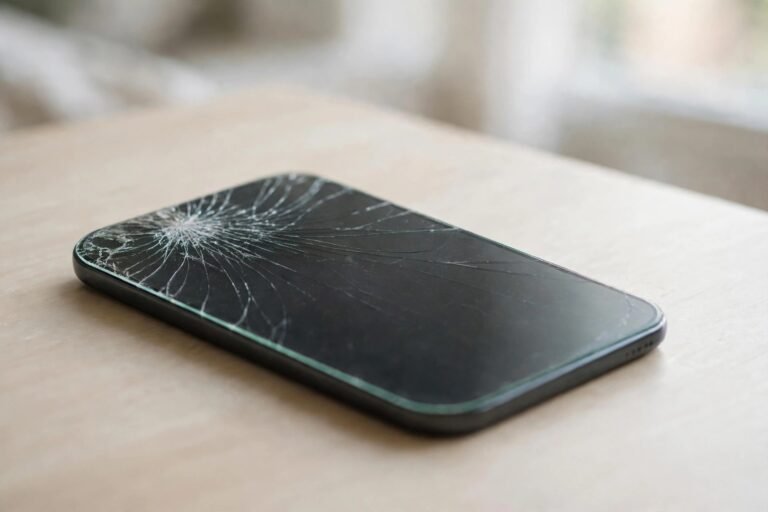
This is why a cracked protector is a success story, not a failure. It means energy and abrasion that were heading for your display were spent on a replaceable sheet instead. Peel it off, fit a fresh one, and the screen underneath is exactly as it was.
How Tempered Glass Handles an Impact
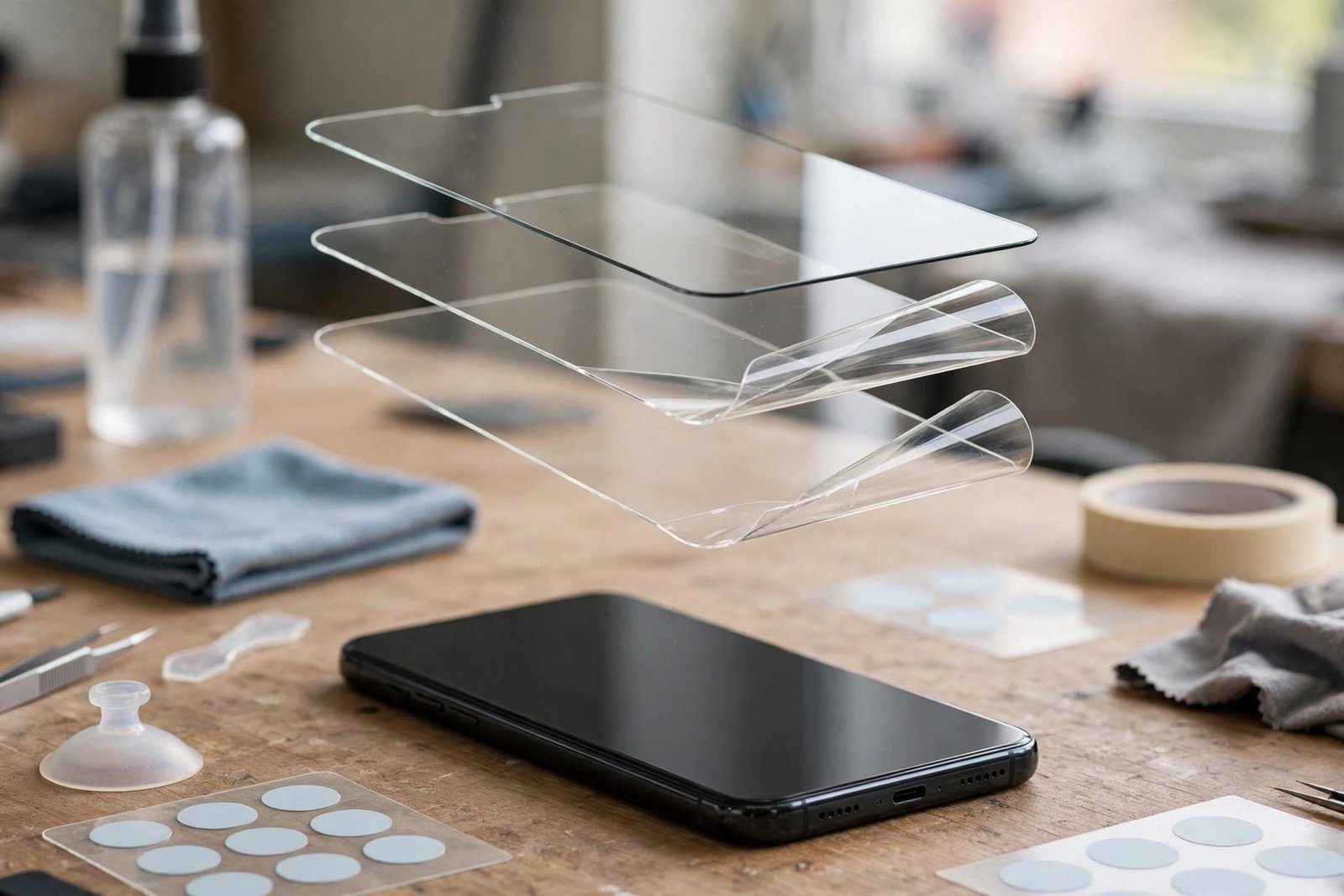
When a phone lands face-down, the danger is concentration: all the energy of the fall arrives at one small point or edge, and glass cracks where stress concentrates. A bonded sheet of tempered glass fights this in three ways. First, because it is stuck across the whole display, it spreads the force sideways over a much larger area, lowering the peak stress at any single point. Second, the glass itself can flex microscopically, buying the impact a fraction more time to dissipate. Third — the dramatic one — it can fracture sacrificially: cracking takes energy, and every crack in the protector is energy that did not reach the screen.
The “tempered” part matters too. Tempering puts the glass surface into compression, which makes it harder for small flaws to open into cracks, and makes it shatter into small, relatively blunt pieces rather than dangerous shards when it does fail. None of this guarantees survival — a corner-first landing on concrete concentrates force in a way no thin layer can fully manage — but it shifts the odds meaningfully in your favour for the common flat and glancing falls.
- Full adhesive coverage matters: a protector stuck down across its whole surface spreads impact far better than one held only by its edges, which can flex and focus force in the middle.
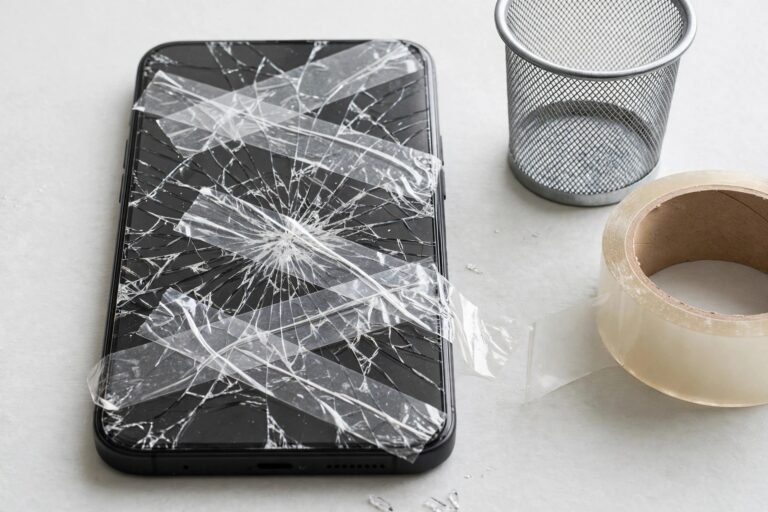
- This is also why a protector must be replaced once it cracks — a fractured sheet can no longer spread force, so its main trick is spent.
How Film and Liquid Coatings Work
Plastic film protectors are a tenth the thickness of glass or less, and liquid coatings are thinner still — measured in microscopic layers you cannot see or feel. Neither has the mass or rigidity to spread an impact, and it is misleading to expect drop protection from them. What they do, they do well: they present a replaceable surface to abrasion. Keys, grit and desk-sliding scuff the film or wear the coating instead of engraving fine scratches into your actual screen.
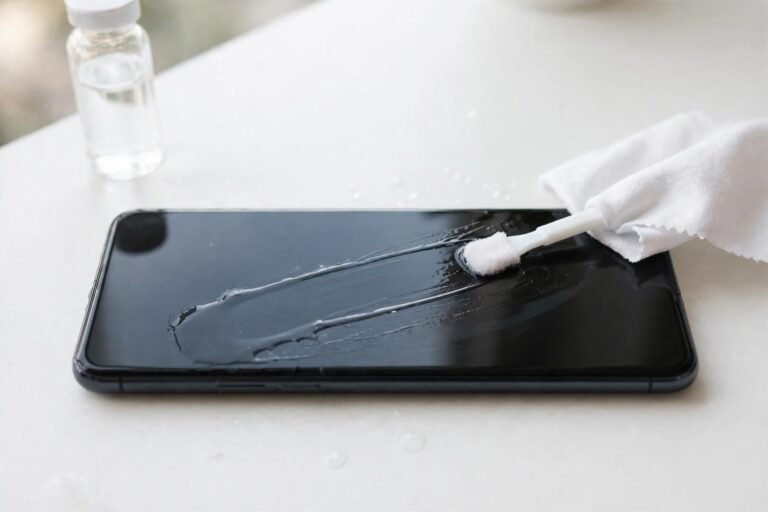
Some films add a self-healing top layer that slowly flows back over very fine marks, keeping the surface looking fresh. Liquid coatings work slightly differently again — they fill in the microscopic pores of the glass and cure into a smooth, slick layer that resists fine scratching and makes the surface easier to clean — but they wear away gradually over months and cannot be peeled off and renewed in one step like a sheet protector.
Hardness, Explained Simply
Protector packaging loves hardness ratings, so here is what they mean. Hardness, in this context, is resistance to being scratched: a material can only be scratched by something harder than itself. That is why sand is such a menace — it contains quartz, which is harder than phone glass — and why a protector with a harder surface coating picks up fewer marks from everyday grit.
What hardness does not measure is toughness — resistance to cracking on impact. In fact the two pull in opposite directions: very hard materials tend to be brittle, while drop-surviving glass is engineered to flex a little. So read any hardness claim as “this resists scratches well”, never as “this will survive a drop”. Anyone using a hardness number to promise shatter-proofing is mixing up two different properties.
- Match the protector to the threat: if your phone’s enemies are keys, grit and desks, film or a coating does the job. If drops are the enemy, only tempered glass (plus a case) is even playing the right sport.
Frequently Asked Questions
If the protector cracks, did it really save my screen?
Very likely, though it can never be proven for a single fall. The crack is evidence that impact energy went into fracturing the protector. Screens certainly can survive falls that crack protectors with no protector involved — but the physics of spreading and absorbing force means the screen faced a gentler impact than it would have bare.
Why do protectors not cover the very edges of curved screens?
Rigid glass cannot bend around a curve without lifting, so glass protectors stop where the screen flattens out, leaving the curved edge exposed. Flexible films and coatings can follow the curve, which is their one structural advantage — full coverage in exchange for far less impact help.
Does stacking two protectors double the protection?
No — and it usually makes things worse. A second layer degrades touch sensitivity and clarity, often fails to bond properly over the first, and does not meaningfully add impact spreading. One correctly fitted protector, replaced when damaged, outperforms a stack every time.
A screen protector is not magic armour; it is a planned casualty. It works by standing in front of your screen and taking the damage cheaply, so the expensive glass behind it never has to.