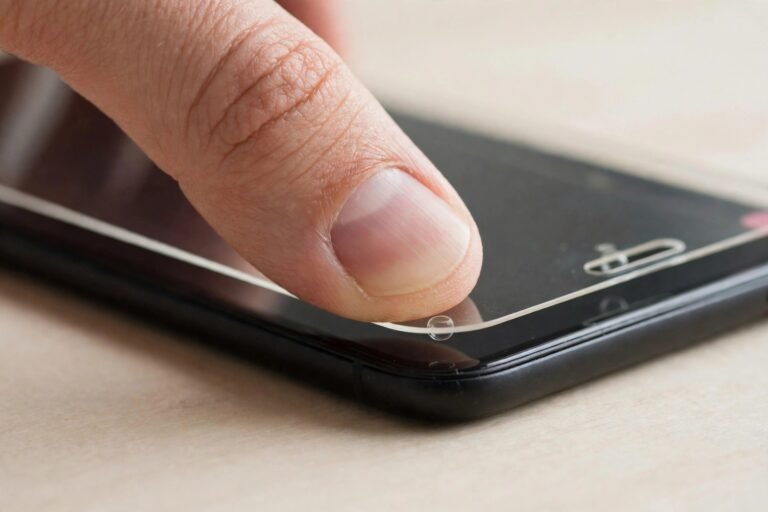
Most screen protectors peel off in seconds with a fingernail under one corner. But an old protector — one that has been on the phone for a year or more — is a different job entirely. The adhesive has hardened, the edges have sealed themselves down, and if the glass is cracked, the whole pane threatens to break apart the moment you start pulling.
This guide is for that stubborn case. It covers the three things that actually shift a well-stuck protector: warmth to soften the adhesive, tape to hold cracked glass together, and patience instead of force. No special tools are needed, and nothing here involves prising with anything metal.
Key Takeaways
- Warmth softens old adhesive — a warm room, warm hands, or a hairdryer on low makes a stuck protector release far more easily.
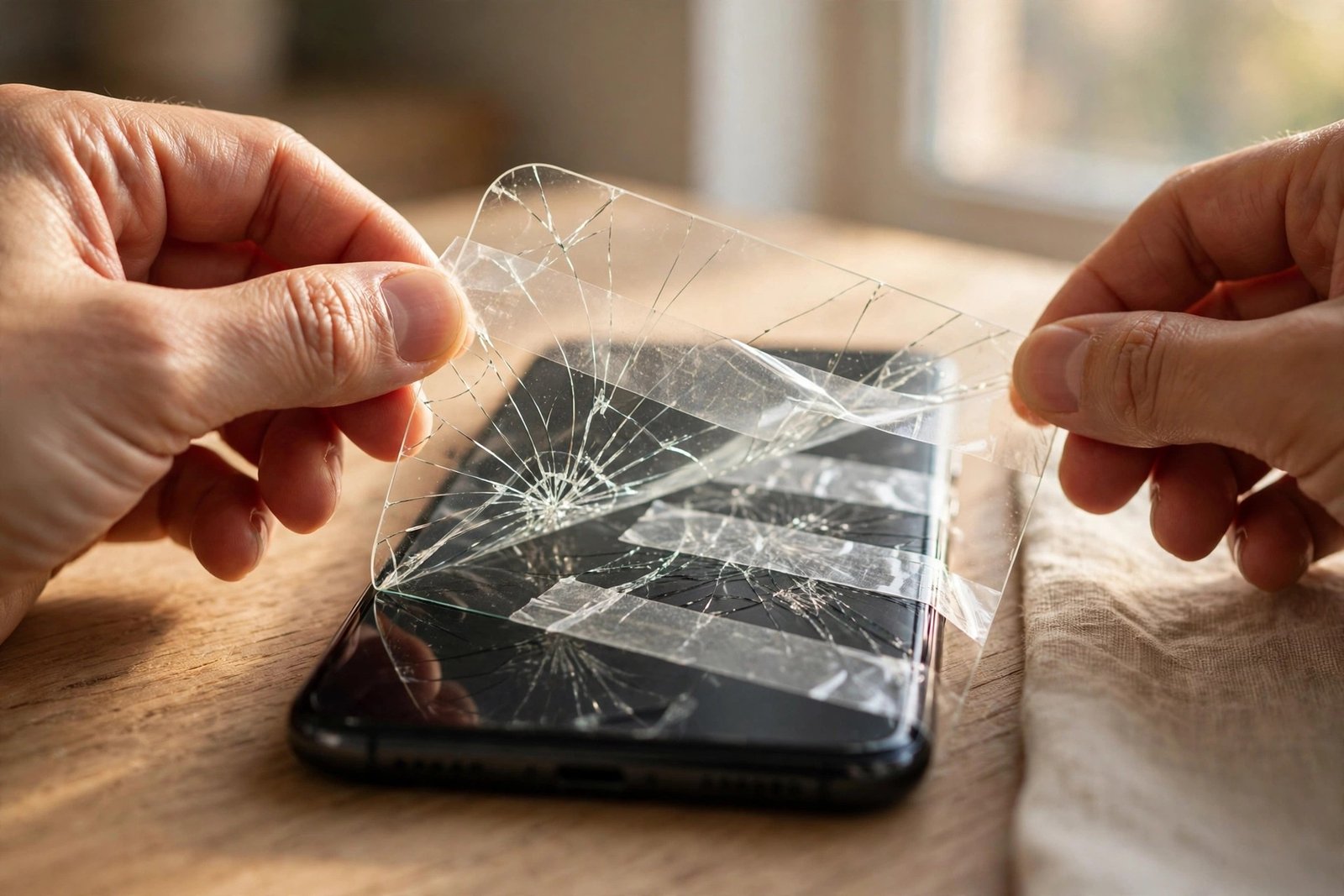
- If the glass is cracked, cover it with wide tape first so the pane comes away as one sheet instead of a scatter of shards.
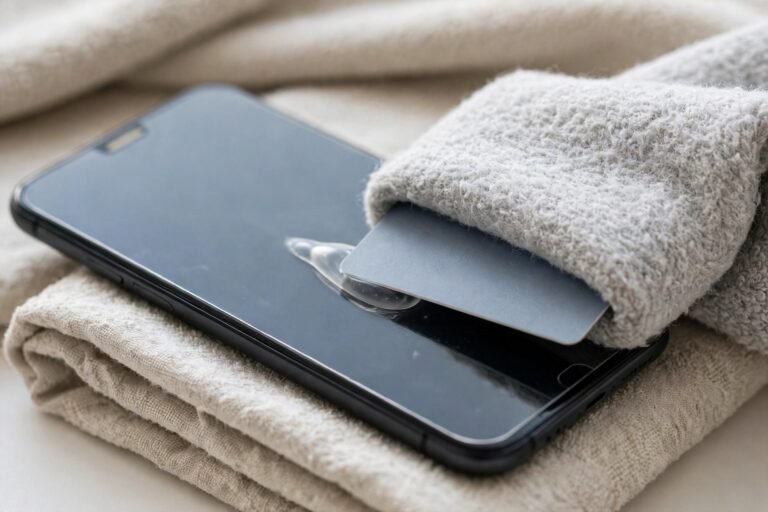
- Start at a corner with a fingernail, plastic card, or a length of dental floss — never a knife or metal scraper.
- Peel low and slow, keeping the protector folded back over itself. Speed is what snaps glass mid-peel.
- If it comes away in pieces, work fragment by fragment with tape — every piece is removable the same way.
- Finish by clearing adhesive residue with a dust-removal sticker and a microfibre cloth, not solvents.
Why Old Protectors Fight Back
Protector adhesive is designed to grip gently at first and then settle. Over months of use it does exactly that: heat from the phone, pressure from pockets and cases, and everyday temperature changes all press the adhesive layer into its most settled state. After a year, the bond is noticeably firmer than it was on fitting day, and the edges — which collect microscopic dust and oils — can feel almost fused to the screen.
Cold makes matters worse. Adhesive that is soft and slightly yielding when warm turns stiff and brittle when cold, so a stubborn protector tackled on a winter morning behaves at its worst. Understanding this is the whole secret of the job: you are not trying to overpower the bond, you are trying to change its state so it lets go willingly.
Warmth Is Your Best Tool
Before touching the protector, warm the phone gently. Using the phone for ten minutes, leaving it in a warm room, or holding it in cupped hands all help. For a genuinely stuck pane, a hairdryer on its lowest heat setting, held a hand’s width away and kept moving for twenty to thirty seconds, is the standard trick. The screen should feel warm to the touch, never hot.
Warmth works because protector adhesives are pressure-sensitive: they soften as they warm, and a softened bond releases in a smooth line rather than resisting until the glass flexes and cracks. If the peel stalls halfway, do not pull harder — stop, warm that section again, and continue. Two or three warming passes are normal on a protector that has been fitted for years.
- Take the phone case off first. Its raised lip overlaps the protector’s edge and will fight the peel at every stage.
- A length of dental floss, worked into a started corner and drawn slowly along under the edge, frees stubborn adhesive without any prising at all.
The Tape Method for Cracked Glass
If the protector is cracked or chipped, tape is not optional. Lay strips of wide, strong tape — ordinary packing tape is ideal — across the whole surface, overlapping them so the entire pane is covered, and press the tape firmly into the cracks. The tape now works as a skin holding every fragment together, so when you peel, the glass comes away as one taped sheet instead of shedding shards across the screen and the table.
Fold the ends of the tape around the edges of the phone to give yourself a grip tab, then lift from a corner and peel slowly, folding the pane back over itself. Even hairline cracks deserve this treatment: a pane that feels solid can give way halfway through a peel, which is precisely the worst moment to discover the tape was needed.
When It Comes Away in Pieces
Sometimes, despite warmth and tape, an old pane still breaks up. This is untidy, not disastrous. Deal with each remaining fragment individually: press a fresh piece of tape firmly over it, rub it down so it grips, and lift the fragment away. For a fragment that will not lift, warm it again and slide the edge of a plastic card underneath at a shallow angle so the tape catches it as it releases.
Once the screen is clear, expect some adhesive residue — faint smearing or tacky patches where the bond was strongest. Most of it rolls away under a clean fingertip rubbed in small circles. The rest wipes off with a barely damp microfibre cloth, and a dust-removal sticker pressed across the surface picks up any lingering slivers and lint. Avoid soaking the screen in strong solvents: they can attack the fingerprint-resistant coating, which is worth far more than the few minutes of wiping the residue takes.
- Before running a bare fingertip over the cleared screen, drag a microfibre cloth across it slowly — it snags on any tiny splinter still stuck to the glass.
- Fold the removed pane inside its own tape before binning it, so no sharp edges are waiting for the next person who reaches in.
Frequently Asked Questions
Can I use a knife or metal scraper to get under the edge?
No. Metal is harder than your screen’s surface coatings, so a single slip can scratch the display permanently — and a blade will chip the protector’s edge into sharp fragments. A fingernail, a plastic card, or dental floss are the only tools that belong near this job. If a corner will not start with those, the answer is more warmth, not a sharper tool.
Will warming the phone with a hairdryer damage it?
Not at the level described here. A hairdryer on its lowest setting, held a hand’s width away and kept moving for twenty to thirty seconds, leaves the screen merely warm — far below anything that troubles a phone. What you must avoid is parking a hot dryer in one spot or using a high setting; gentle, moving warmth is the whole technique.
The protector feels welded on. Is it actually glued?
Almost certainly not — it is held by its adhesive layer, which sets surprisingly firm after a year or more but does release with warmth and patience. The exception is a protector fitted by a shop using liquid adhesive cured under a UV lamp; those bonds are genuinely stronger. If yours refuses all reasonable effort, a repair shop can remove it in minutes.
A stubborn protector is a patience test, not a strength test. Warm it, tape it if it is cracked, peel it low and slow — and even the oldest, firmest pane will come away cleanly.