When you fitted this protector, it was flawless. But that was weeks ago — and now a bubble has crept in along one edge, another has bloomed near the corner, and no amount of thumb pressure seems to shift them. Late-appearing bubbles are a different problem from fitting-day bubbles: the protector went on clean, which means something has changed since — and finding what changed is the key to fixing it.
This guide is about bubbles that turn up days or weeks into an install: the three causes behind nearly all of them, how to tell which one you’re dealing with, and the fixes that work on an older, fully settled protector — including knowing when the honest answer is a replacement.
Key Takeaways
- Late bubbles have a cause — heat, case pressure and ageing adhesive account for nearly every case. Fix the cause or the bubble returns.
- Heat bubbles appear after the phone has been left in a hot car, in sun, or charging under a pillow — the adhesive softens and gases out tiny pockets.
- Edge bubbles that follow the case’s outline mean the case lip is touching the protector and slowly levering it up with every flex of the phone.
- On an old install, push bubbles out as you would on day one — but older adhesive re-bonds more weakly, so results are less certain.
- A bubble with a growing speck or a lifting edge that won’t reseat is a protector at the end of its life. Replacement, not pressure, is the fix.
Cause One: Heat — the Hot Car and the Charging Pillow
Screen protector adhesive is a pressure-sensitive layer that stays slightly soft for the whole of its life — and heat makes it softer. A phone baked on a dashboard, left on a sunny windowsill, or cooked slowly under a pillow while fast-charging can warm enough for the adhesive to relax, release microscopic gas, and let the protector float up in soft, round bubbles, often near the middle or along the sun-facing edge. These bubbles typically appear overnight or after a single hot afternoon, which is your diagnostic clue.
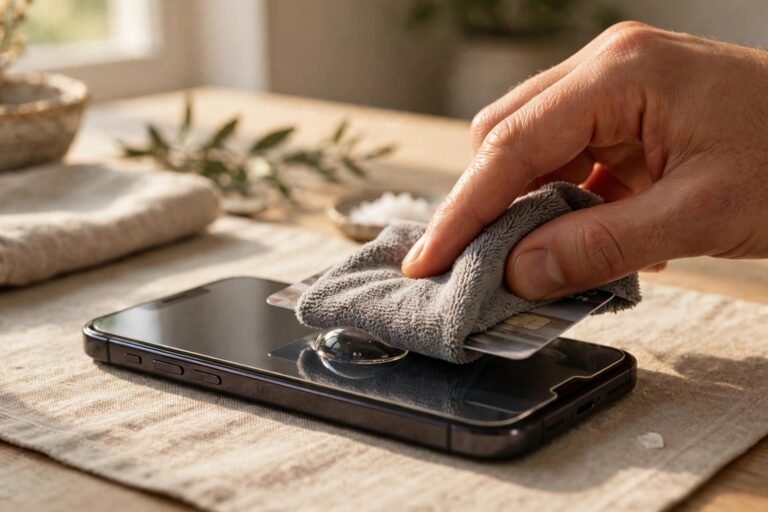
The fix is the classic one, and it often works well here because the area under the bubble is still clean: let the phone cool completely to room temperature first — pressing a warm protector just moves the bubble around — then push each bubble slowly to the nearest edge with a fingertip, or with a card wrapped in a microfibre cloth, and hold the edge down for half a minute. Then change the habit that caused it; a protector that gets baked weekly will keep bubbling no matter how well you press.
Cause Two: Case Pressure — the Slow Lever
Cases grip the phone by its edges — exactly where your protector ends. If the case’s lip overlaps the protector by even a fraction of a millimetre, every squeeze, pocket flex and table knock transfers a tiny lifting force to the protector’s edge. One knock does nothing; a thousand flexes over three weeks walk the edge up until air creeps underneath and a crescent-shaped bubble forms along that side. The giveaway is geography: case-pressure bubbles hug the perimeter, usually worst at the corners where cases grip hardest.
Test it in ten seconds: take the case off and press the bubble out. If it stays flat for days without the case but returns within hours of refitting, you’ve found your culprit. The remedies are to switch to a case-friendly protector cut slightly smaller, choose a case with a lower lip, or — as a stopgap — reseat the bubble each time, accepting it will wander back. Pressing harder is not among the remedies; the lever always wins eventually.
- Run a fingernail around the inside of your case’s lip. If it catches on the protector’s edge anywhere, that’s a pressure point — and the bubble will keep forming at exactly that spot.
- Bubbles that appear only in summer or only after long drives are almost always heat-related; check where the phone lives before blaming the protector.
Cause Three: Ageing Adhesive and Invading Dust
Protectors are consumables. Over months, the adhesive layer dries at its exposed edges, daily cleaning works moisture and oils under any microscopic gap, and pockets and handbags supply an endless ration of lint. The first sign is usually an edge that looks slightly cloudy; then a small bubble nucleates on a speck that has crept in, and that bubble grows slowly week by week as the compromised zone spreads. Unlike heat bubbles, these have a visible speck or a grey, dusty quality at their heart.
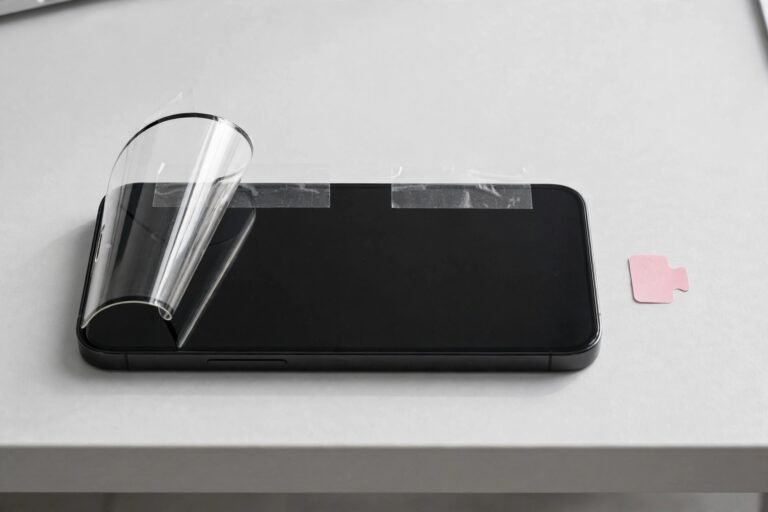
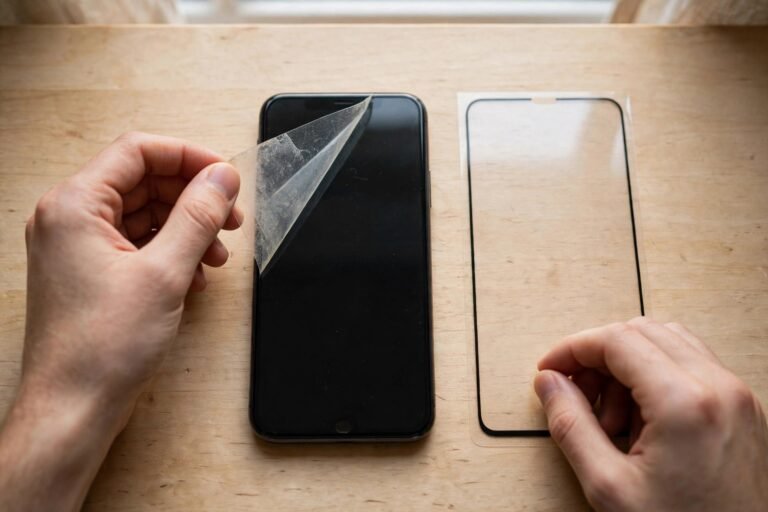
You can attempt the tape-lift rescue — lift the nearest corner with a tab of sticky tape, dab the speck away with a dust sticker, and reseat — but manage your expectations. On a fresh install the adhesive forgives this; on a six-month-old one, the lifted area often never bonds as invisibly again. If the protector has served well and the bubble is spreading, the two minutes and small cost of a fresh protector beats another month of pressing at a losing battle.
The Fixing Routine for an Older Install
Whatever the cause, work through the same order. First, remove the case and clean the screen and protector edges with a microfibre cloth — surface grime can masquerade as an edge bubble. Second, with the phone at room temperature, push each bubble to the nearest edge with slow fingertip strokes, holding the final edge down for thirty seconds. Third, leave the phone caseless for 24 hours and watch: bubbles that stay gone were heat or handling; bubbles that creep back with the case refitted are case pressure; bubbles with specks that never fully flatten are age and dust.
- Photograph the bubbles today and again in a week. Growth is the deciding evidence — a stable bubble is cosmetic, but a growing one means the bond is failing progressively and replacement is due.
- Never use a hairdryer to “re-melt” an old bubble flat. On settled adhesive, added heat usually expands the trapped air and enlarges the very bubble you’re chasing.
Frequently Asked Questions
Why did bubbles appear weeks after a perfect install?
Because something changed: the phone got hot, the case has been levering at an edge a fraction at a time, or the adhesive has aged and let dust creep under a border. A protector cannot bubble spontaneously on a clean, undisturbed install — the pattern of where the bubbles sit almost always names the culprit.
Will these bubbles go away on their own like new-install ones?
Almost never. The self-settling effect belongs to the first 24–48 hours, when the adhesive is still flowing. Once it has fully set, a late bubble stays until you push it out and remove its cause — and if its cause is a speck of dust, it stays until the protector is replaced.
When should I stop fixing and just replace the protector?
Replace it when an edge lifts and won’t reseat overnight, when a bubble grows week on week despite pressing, when several bubbles have dusty centres, or when the surface is scratched enough that you’re replacing it soon anyway. One persistent bubble on an otherwise healthy protector is worth a rescue attempt; a pattern of them is a protector telling you it’s done.
A bubble that arrives late is a message, not a mystery — read where it sits, fix the heat, the case or the ageing bond behind it, and it won’t keep coming back.